🦶 CRYPTID SIGHTING · EXP. Nº0555
ACTIVE
Gef the Talking Mongoose
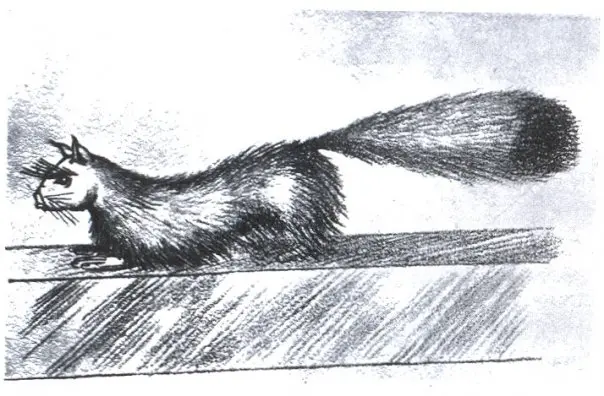
Gef the Talking Mongoose was reportedly a small, weasel-like animal, invisible to almost everyone, that spoke in a high voice and claimed to live inside the walls of the Irving family's farmhouse at Doarlish Cashen near Dalby, Isle of Man, from September 1931.
Where and when was Gef the Talking Mongoose sighted?
- Location
- Dalby, Isle of Man, Isle of Man
- Date sighted
- Unknown
- Coordinates
- 54.175, -4.73
- Last updated
LOCATION
What is Gef the Talking Mongoose?
James Irving, his wife and their daughter Voirrey described him as an "extra, extra clever mongoose" born in India in 1852, who sang, gossiped about the neighbours and left dead rabbits on the doorstep. The investigator Harry Price visited the farm in July 1935 and published the case in 1936 with R. S. Lambert of the BBC. The hair samples ended up with F. Martin Duncan of the Zoological Society, who identified them as probably from the family's sheepdog and noticed something telling: not one hair kept its root bulb — they had been cut, not pulled out, contrary to what Gef claimed. The case ended up in court by an unexpected route: Lambert won a slander suit after his sanity was questioned for taking it seriously, and the affair reached the Commons and a committee of inquiry into the BBC.
What is the history of Gef the Talking Mongoose?
Most cryptid cases are thin on paper. This one is the opposite: a talking mongoose in a Manx farmhouse ended up producing a published book, a slander verdict in the High Court, a question to the Prime Minister and a board of inquiry into the BBC.
Doarlish Cashen — Cashen's Gap, in English — stood seven hundred and twenty-five feet up on a bare down above Glen Maye, on the west coast of the Isle of Man. Harry Price and R. S. Lambert, who went there in July 1935 and wrote the book-length investigation published at the time, called it "one of the loneliest farmsteads in Britain". No cart could reach it; the nearest other farm was a mile off and invisible from the door; getting there meant about an hour of scrambling ascent from the head of the glen. The house was slate slab faced with cement, lit by a small paraffin lamp, with ceilings barely seven feet six inches high. Every interior surface was panelled in match-boarding stained almost black — and between that panelling and the stone there was a gap of a few inches, wide enough for a small animal to travel the whole house unseen. Nobody in this story ever disputed that detail. It is the physical fact on which everything else rests.
James T. Irving was not a farmer by trade. Born in Lancashire, of Scottish Border descent, he had been a commercial traveller for a Canadian piano manufacturer on some six hundred pounds a year until the First World War killed the trade. In 1915 he bought Doarlish Cashen from the executors of Pierre Baume, an eccentric and miserly Frenchman who had lived there and who died in 1875, leaving money to encourage music studies on the island. By the mid-1930s Irving's total money income for a year was, on his own account to Price and Lambert, thirty-nine pounds — fifteen shillings a week. He was sixty-three, white-haired, well read, a talker who spoke some German and scraps of Russian, Arabic and Hindustani. His wife Margaret, fifty-nine, walked the eight-mile round trip to Peel on foot and struck visitors as the most arresting person in the house. Their daughter Voirrey — the Manx form of Mary — had been born in 1918, years after her brother and sister; she had grown up with no playmates, roaming the hills with Mona, the three-year-old collie, and rising before dawn to check her father's rabbit snares.
The events began in September 1931, with barking, growling, spitting and blowing behind the match-boarding. In October the Irvings began to see something: a small yellow animal, a weasel or a ferret or a hybrid, with a long bushy tail. Then, Irving wrote to Price on 22 February 1932, came the part that made the case famous. He had started imitating farmyard calls and naming each animal; within days the thing behind the wall could produce the right call from the name alone, and Voirrey tried the same with nursery rhymes. "The voice is quite two octaves above any human voice, clear and distinct," Irving reported — and by the first week of November 1931 it was, he said, conversing "as rationally as most human beings".
The press called it the man-weasel; Irving at first called it Jack. The animal itself settled on Gef. In March 1932 Irving decided it was an Indian mongoose — not as wild a guess as it sounds, because a neighbouring farmer had released mongooses on those hills around twenty years earlier to control rabbits. Gef then improved on the theory by announcing that he had been born in Delhi on 7 June 1852 and had been shot at by natives.
The investigation began with a letter: on 12 February 1932 a Miss Florence Milburn of Peel wrote to Harry Price, then director of the National Laboratory of Psychical Research, about a farmer friend whose animal had "developed the power of speech". Price sent an emissary — a businessman and racing motorist who appears in the book as Captain Macdonald and in Price's surviving archive as Captain Dennis, the book having openly "altered the names of some of our witnesses". He came in February 1932 and again in May 1935. Price and Lambert themselves went up in July 1935; the introduction to their book is signed 15 November 1935, and Methuen published The Haunting of Cashen's Gap: A Modern 'Miracle' Investigated in 1936.
And then the case escaped into public life. R. S. Lambert was not a freelance ghost-hunter: he was the founding editor of The Listener, the BBC's own journal, and his contract forbade him to publish elsewhere. Sir Cecil Levita, a former chairman of the London County Council, suggested to a friend that a man who believed in a talking mongoose was unfit for that post. Lambert sued him for slander — and won. By 13 November 1936 a United Press wire out of London was reporting that Gef "returned to the front pages" as a second suit, over serialisation of the book by the Sunday Chronicle, was settled in the Chancery Division; in the previous fortnight, the same dispatch noted, the mongoose had "been the cause of intimations in Parliament, had had high court judges talking, and brought Prime Minister Stanley Baldwin into the discussion". On 23 November 1936 Baldwin told the Commons the terms of reference of a three-man board — Sir Josiah Stamp, Sir Maurice Gwyer and Sir Findlater Stewart — appointed to inquire into "statements made in the course of the recent case Lambert v. Levita affecting the British Broadcasting Corporation".
Gef's appearances faded roughly as James Irving's health failed; Irving died in 1945, his widow and Voirrey left Doarlish Cashen, and the house on the down was eventually pulled down. Nothing has been built on the site since.
Timeline: the documented record of Gef the Talking Mongoose
- 1915 James T. Irving, a former commercial traveller for a Canadian piano firm, buys Doarlish Cashen from the executors of Pierre Baume. He spends much of his remaining savings cementing the outside walls and panelling the interior with match-boarding — leaving a gap of a few inches between panelling and stone.
- September 1931 According to Irving's letter to Harry Price of 22 February 1932, the family first becomes aware of something behind the match-boarding "by its barking, growling, spitting, and persistent blowing". In October they begin to glimpse a small yellow animal with a long bushy tail.
- First week of November 1931 Irving reports that the animal, taught by imitation of farmyard calls and then nursery rhymes, begins to speak: "The voice is quite two octaves above any human voice, clear and distinct." News paragraphs about a Manx 'man-weasel' had already reached the London press in October.
- January 1932 A Manchester Daily Dispatch reporter hears the voice and is impressed. His second dispatch, published the next day, asks whether the answer lies in "the dual personality of the 13-year-old girl, Voirrey Irving", and describes watching her reflection in a mirror with her fingers over her lips.
- 12 February 1932 Miss Florence Milburn, of Glenfaba Road, Peel, writes to Harry Price about a farmer friend whose animal has developed the power of speech. Price writes to Irving; Irving replies on 22 February. The correspondence that will fill the Harry Price archive begins here.
- 26-27 February 1932 Price's emissary — a racing motorist and businessman, called Captain Macdonald in the book and Captain Dennis in Price's papers — makes his first visit. He hears the voice only while Mrs Irving and Voirrey are upstairs, and reports honestly that the evidence for its abnormality "was not of much value".
- March 1932 Irving concludes the animal is an Indian mongoose, descended from mongooses released on the neighbouring hills some twenty years earlier to kill rabbits. The animal itself then claims to be one of the originals, born in Delhi on 7 June 1852.
- 23 April 1935 F. Martin Duncan, F.Z.S., reports on the fur Gef claimed to have pulled from his own back: it "never grew upon a mongoose" and probably came from a long-haired dog. He adds that not one hair shows a root bulb, "which rather points to their having been cut off their animal owner". On 3 June he confirms canine origin with photomicrographs at ×350.
- July 1935 Harry Price and R. S. Lambert visit Doarlish Cashen. Gef is neither seen nor heard while they are on the island. They obtain hairs from Mona, the Irvings' collie, which Duncan finds identical to the 'mongoose' sample. Voirrey, then seventeen, tells them she would be glad if Gef left: "He is a nuisance."
- 1936 Methuen publishes The Haunting of Cashen's Gap: A Modern 'Miracle' Investigated, by Harry Price and R. S. Lambert, with the introduction dated 15 November 1935. The syndicated American press picks the story up in April: "Either quite the most remarkable 'spook' story ever recorded or else quite as remarkable a hoax."
- November 1936 R. S. Lambert, editor of the BBC's journal The Listener, wins damages for slander against Sir Cecil Levita, a former chairman of the London County Council, who had said he was unfit for the post because he believed in a talking mongoose. Days later a second suit, over serialisation of the book by the Sunday Chronicle, is settled in the Chancery Division.
- 23 November 1936 In the Commons, Prime Minister Stanley Baldwin gives the terms of reference of a board — Sir Josiah Stamp, Sir Maurice Gwyer and Sir Findlater Stewart — appointed to inquire into "statements made in the course of the recent case Lambert v. Levita affecting the British Broadcasting Corporation".
- 1945 James Irving dies after a long illness; Gef's appearances had faded as his health failed. Mrs Irving and Voirrey leave Doarlish Cashen. The house is later demolished, and nothing is built on the site.
- July 1970 Walter McGraw traces Voirrey for Fate magazine. She refuses to call it a hoax and says the case ruined her life: "Then they said I was 'mental' or a ventriloquist. Believe me, if I was that good I would jolly well be making money from it now… I do wish he had let us alone."
Is there a rational explanation for Gef the Talking Mongoose?
The unusual thing about Gef is that some of the evidence was physical, and physical evidence can be tested. It was tested, and it failed.
In March 1935 Gef obliged with a gift: fur pulled, he said, from his own back and tail, left in a bowl in the living room. Price sent it to Professor Julian Huxley, who passed it to F. Martin Duncan, F.Z.S., the Zoological Society's specialist in hair and fur. Duncan's reply of 23 April 1935 is quoted in full in the book: "I can very definitely state that the specimen hairs never grew upon a mongoose, nor are they those of a rat, rabbit, hare, squirrel, or other rodent, or from a sheep, goat, or cow. I am inclined to think that these hairs have probably been taken from a longish-haired dog or dogs." On 3 June he sent photomicrographs at ×350 alongside hairs from a golden cocker spaniel and a red setter, and concluded there was "little doubt that the 'talking mongoose' hairs originated on the body of a dog".
One line of Duncan's is worth more than the identification itself. "I could not detect in the hand a single hair showing the root-bulb, which rather points to their having been cut off their animal owner." Gef's story was that he had plucked the fur out — one long stiff hair, he said, pulled painfully from his eyebrow. Plucked hair keeps its root. These had been cut. Duncan also told Price what to do next: look out at the farm for a dog of that colour and get a sample. Price did. According to Christopher Josiffe, who worked through the original Price papers, the hairs taken from Mona, the Irvings' collie, came back "absolutely identical" to Gef's. The clay and dough impressions of Gef's paws fared no better: the front prints were grotesquely out of proportion to the rear ones, no known animal shows such a disparity, and under a lens they carried none of the folds and cellular texture that real skin leaves behind.
The voice had a candidate explanation from the very beginning, and it came from a newspaper reporter. In January 1932 the Manchester Daily Dispatch sent a reporter who heard the voice on his first visit and was impressed. He slept on it. His second dispatch asked whether the answer lay in "the dual personality of the 13-year-old girl, Voirrey Irving", and described watching her reflection in a mirror while the weasel-voice conversed with her unseen mother in another room: "She had her fingers to her lips. I kept my eyes on the face in the glass. The lips did not move, so far as I could see, but they were partly hidden by her fingers." A childhood friend of Voirrey's, Kathleen Green, told Manx Radio in 2001 that Voirrey had been an accomplished ventriloquist. Josiffe's answer, drawn from a ventriloquist's own manual, is that "the 'art' of throwing the voice is a myth": in "distant voice" ventriloquism the voice is muted so that it seems to come from farther off, "behind a wall, for instance", and the performer then misdirects the audience. Muting and misdirection are what a house panelled throughout in dark match-boarding, lit at night by one small paraffin lamp, would favour.
What about the incidents where Gef spoke with Voirrey demonstrably elsewhere? Josiffe counts at least two such instances as verified. He cites the May 1935 episode in which the Captain, sitting in the front room with both parents in view, heard a voice behind the wainscot remark "Plus fours. Oxford bags" — a description of his clothes — while Voirrey was a hundred feet away feeding hens. But that account comes from Irving's own report, and Price and Lambert, who printed it, immediately dismantled it: "there is no proof whatever that Voirrey was a hundred feet away when the 'voice' manifested. All that the Captain saw was the girl returning from somewhere, after the voice had manifested." They were equally cold about the coin-guessing trick (Gef called one right and one wrong — "exactly what chance would account for") and about Mrs Irving's uncanny knowledge of what her husband had eaten for lunch in Glen Maye. The men who wrote the book that Levita mocked were, on the evidence, harder on Gef than most of the people who have retold the story since.
Price's own conclusion was a hoax — but, unusually, a hoax with no money in it. Irving refused three guineas from a national newspaper for one of the Gef photographs, and turned down an American theatrical agent offering fifty thousand dollars, half in cash, for exclusive rights. Writing privately to a clergyman in April 1936, Price said: "I agree that the whole family must be mixed up in it but there still remains the question of motive. It certainly is not to draw people to Cashen's Gap, because they do their utmost to keep them away… The motive for the imposture lies much deeper than mere publicity." Nandor Fodor, who stayed a week and searched the family's drawers while they were out, took the opposite view of the people and a psychoanalytic view of the phenomenon, arguing that Gef behaved like no poltergeist ever did — "Poltergeists are an unmitigated affliction. Gef is an asset" — and later that he was a split-off fragment of Jim Irving's own thwarted personality.
What honestly remains unexplained is thinner than the legend but not nothing: Irving's repeated claim to have heard Gef when alone, the family friend Charles Morrison's insistence that he heard the voice too, and a scatter of neighbours who signed statements. None of that can be tested now. What can be tested was tested in 1935 by a man with a microscope, and it turned out to be a dog.
Can you visit Gef the Talking Mongoose?
There is no house to visit, and that needs saying plainly before anyone plans a walk.
Doarlish Cashen was demolished at some point after the Irvings left, and nothing has been built on the site. Christopher Josiffe, who went up during his research, found only the ground and some light brown wool from the sheep that graze there. The place sits on private farmland roughly two miles and an hour's climb above Glen Maye, on open, treeless down; the book of 1936 describes the route as a stony path that leaves the road beyond the village post office and winds up among the hills. It is working sheep country in a wet and windy corner of the island. Anyone walking there should stick to public rights of way, close gates, keep dogs on a lead and expect the weather to turn. There is nothing at the top to photograph.
The places worth going to instead are close by. Glen Maye, with its waterfall and wooded ravine, is the starting point the investigators used and remains one of the prettiest glens on the island; Dalby, the hamlet that gave the case its Manx nickname, the Dalby Spook, is a short way south along the coast road; Peel, four miles off, is where Miss Milburn wrote her letter to Harry Price and where Gef was said to ride the bus and eavesdrop on the depot staff.
For the documents, the island's institution is the Manx Museum in Douglas (Kingswood Grove, IM1 3LY; +44 (0)1624 648000), run by Manx National Heritage. It opens daily from 09:30 to 16:30, entry is free with a suggested voluntary donation of £10, and the National Library and Archives within it are open Wednesday to Saturday, 10:00 to 16:30. Buses 3, 3A, 22, 22H, 25 and 25H stop nearby, and there is step-free access by lift from the Chester Street car park. Be aware that Manx National Heritage does not present Gef as a heritage site or run anything about the case: the only mention of him we could find on its website is a passing line, in a 2016 notice about a British Film Institute archive lecture, calling him "the Island's own legendary curiosity".
The serious archives are off-island. The Harry Price Library of Magical Literature, held at Senate House Library, University of London, keeps Irving's letters and diaries, the photographs and the correspondence with Price, and is available to members of the public for reference. The Society for Psychical Research archive at Cambridge University Library holds a 'Talking Mongoose' file with more photographs and the Fodor material.
And the cheapest option is the best one. The Haunting of Cashen's Gap is long out of print, but its introduction and first two chapters — the description of the farm, the family, and the whole narrative of the haunting up to May 1935 — are transcribed and freely readable in A Manx Note Book, the digital archive of Manx material maintained by F. Coakley. Read the 1936 authors first, before anyone else's retelling; they are better company than their reputation suggests.
Sources consulted
- Harry Price and R. S. Lambert, «The Haunting of Cashen's Gap: A Modern 'Miracle' Investigated (introduction and chapters I-II, full transcription)» — Methuen, London; transcription by F. Coakley, A Manx Note Book, 1936 book
- Christopher Josiffe, «Gef: The Talking Mongoose (research based on the Harry Price archive, Senate House Library, and the SPR archive, Cambridge University Library)» — Fortean Times 269; deposited in SAS-Space, School of Advanced Study, University of London, 2010 academic
- House of Commons (Sir Patrick Hannon and Stanley Baldwin), «Lambert v. Levita — question to the Prime Minister on the terms of reference of the board of inquiry into the BBC» — Hansard, HC Deb 23 November 1936, 1936 archive
- United Press, «Talkative Mongoose Seems to Have London on Jolly Old Ear (United Press dispatch on the Chancery settlement and the parliamentary fallout)» — The Washington Daily News, 13 November 1936, p. 48; Library of Congress, Chronicling America, 1936 newspaper archive
- The China Mail, «More About 'Talking Mongoose' — Sequel to B.B.C. Slander Suit: Grave Libel, Publication Allowed» — The China Mail (Hong Kong), 14 December 1936; Internet Archive, 1936 newspaper archive
- The American Weekly, «Either Quite the Most Remarkable 'Spook' Story Ever Recorded or Else Quite as Remarkable a Hoax (syndicated feature on the Price-Lambert book)» — San Antonio Light, 12 April 1936, p. 75; Library of Congress, Chronicling America, 1936 newspaper archive
- Christopher Josiffe, «Of the Crowley and the Mongoose Cases (blog post quoting a Spectator review on Mr Justice Swift and the 'Mongoose Case' slander action; Lambert received £7,500 damages)» — gefmongoose.co.uk, companion site to Gef! The Strange Tale of an Extra-Special Talking Mongoose (Strange Attractor Press), 2016 web
- Manx National Heritage, «Manx Museum — visitor information, National Library and Archives opening hours and access» — manxnationalheritage.im, 2026 web
- Manx National Heritage, «British Film Institute: Cabinet of Curiosities Lecture (the only mention of Gef found on the Manx National Heritage website)» — manxnationalheritage.im, 30 August 2016, 2016 web
Reviewed by V. Serrano on 2026-07-31 · How we verify our content
📎 Source: Enigma Atlas
💬 Field testimonies (0)
No testimonies yet. Add the first.
Add your testimony
🔒 Log in to add a testimony