🦶 CRYPTID SIGHTING · EXP. Nº9046
ACTIVE
Mongolian Death Worm
The olgoi-khorkhoi ("large intestine worm"), known in the West as the Mongolian Death Worm, is described as a limbless creature that hides under the sand of the Gobi and kills at a touch.
Where and when was Mongolian Death Worm sighted?
- Location
- Gobi Desert, Mongolia
- Date sighted
- 1922-01-01
- Coordinates
- 43.5, 104.0
- Last updated
LOCATION
What is Mongolian Death Worm?
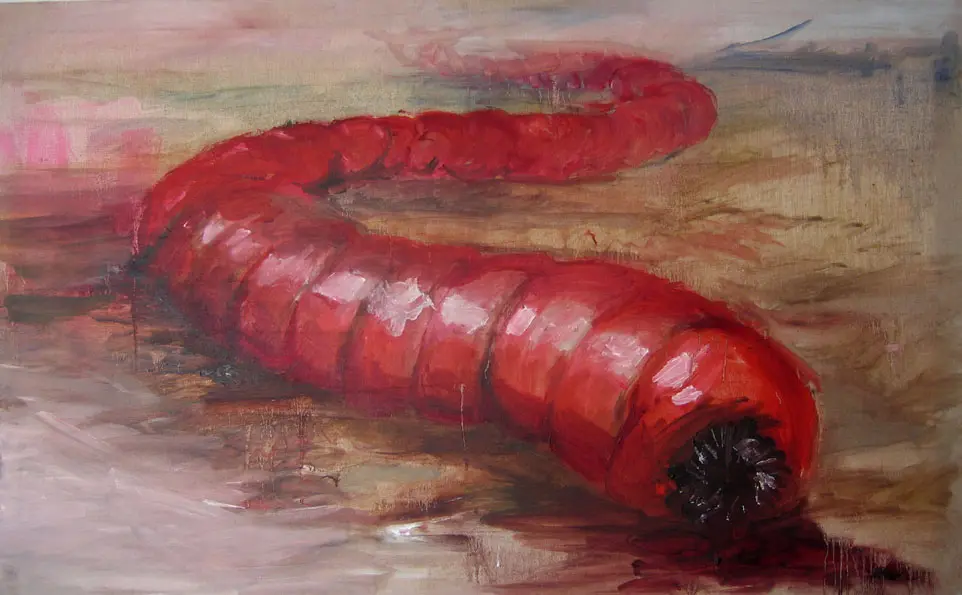
It was introduced to the West by the palaeontologist Roy Chapman Andrews, and how it happened matters: he did not collect herders' testimony in the desert — the Mongolian prime minister asked him about it at a cabinet meeting in Urga in May 1922, while the expedition's permits were being signed. Andrews wrote it down with explicit scepticism, and by 1932 called it "probably an entirely mythical animal", adding that he never found a Mongol willing to admit having seen it himself. The image that circulates today — dark red, a metre long, venom at a distance, electric shocks — is later, from Ivan Mackerle's expeditions in the 1990s, which found nothing either. And the most repeated zoological explanation does not hold: Mongolia has neither amphisbaenians nor skinks. The one serious candidate is the Tartar sand boa, Eryx tataricus, blunt at both ends and non-venomous.
What is the history of Mongolian Death Worm?
In May 1922, in Urga — the city that would become Ulaanbaatar — an American paleontologist sat down with the Mongolian Cabinet to sign the permits that would let him drive motor cars into the Gobi. The contract was agreed, and then the Premier asked him for a favour.
Roy Chapman Andrews was leading the Central Asiatic Expeditions of the American Museum of Natural History, and he was not looking for monsters. He was looking for the origins of humanity: his patron Henry Fairfield Osborn believed Central Asia was the cradle from which the great mammal groups, and perhaps our own ancestors, had spread. Andrews had cars, camels, a Swedish interpreter named F. A. Larsen who had lived in Mongolia for nearly forty years, and a shopping list of fossils. What the Premier wanted was something else entirely.
"Then the Premier asked that, if it were possible, I should capture for the Mongolian government a specimen of the allergorhai-horhai," Andrews wrote in On the Trail of Ancient Man, published by G. P. Putnam's Sons in 1926. He went on: "I doubt whether any of my scientific readers can identify this animal. I could, because I had heard of it often." Then the description: "None of those present ever had seen the creature, but they all firmly believed in its existence and described it minutely. It is shaped like a sausage about two feet long, has no head nor legs and is so poisonous that merely to touch it means instant death."
That paragraph is the doorway through which the olgoi-khorkhoi entered Western print, and almost everything written about the Mongolian Death Worm since has added things Andrews did not say.
The paragraph says nothing of acid, of killing at a distance, of electricity or of the colour red. Andrews recorded a description and, carefully, its provenance: the Premier "had never seen it himself, [but] knew a man who had and had lived to tell the tale", and a Cabinet Minister volunteered that "the cousin of his late wife's sister" had also seen it. Then Andrews made a joke — he would seize the thing with long steel collecting forceps and wear dark glasses so that the disastrous effects of even looking at it would be neutralised — and the meeting adjourned in good humour, permits signed.
Ten years later Andrews returned to the subject in The New Conquest of Central Asia (American Museum of Natural History, 1932), and this time he gave it a heading of its own and a verdict. "This is probably an entirely mythical animal, but it may have some little basis in fact, for every northern Mongol firmly believes in it and will give essentially the same description." Then the sentence that most retellings leave out: "I have never yet found a Mongol who was willing to admit that he had actually seen it himself, although dozens say they know men who have. Moreover, whenever we went to a region which was said to be a favorite habitat of the beast, the Mongols at that particular spot said that it could be found in abundance a few miles away." He closed with an unusual piece of scientific honesty: "Were not the belief in its existence so firm and general, I would dismiss it as a myth. I report it here with the hope that future explorers of the Gobi may have better success than we had." The book's own index files it as "a probably mythical animal".
So the man credited with discovering the Mongolian Death Worm never claimed it existed, never met a first-hand witness, and published it as a puzzle rather than a find.
What he did find that season is why anyone remembers the expedition. On 1 September 1922 the caravan left Artsa Bogdo; three days later, while Andrews asked directions at a cluster of yurts, the photographer J. B. Shackelford walked half a mile north, stepped over the lip of a red basin nobody had mapped, and picked a white skull off a sandstone pinnacle, the skull of a Protoceratops. Walter Granger gathered shell fragments that proved to be dinosaur eggs. They named the place the Flaming Cliffs; it is now Bayanzag, the most famous fossil locality in Asia. The same eight weeks produced the dinosaur eggs and the death worm.
The Mongolian side of this story is older and works differently. Ágnes Birtalan, a specialist in Mongol languages and folklore at Eötvös Loránd University in Budapest, told Atlas Obscura that oral traditions about the olgoi khorkhoi may go back generations, and that khorkhoi — usually translated "worm" — functions as a taboo name: a word many Mongol cultures used for animals considered dangerous, literally or metaphysically, and especially for snakes, including harmless ones. A taboo name is a way of speaking about something dangerous without naming it, and a failed species description is something else.
The Soviet layer came next. According to reporting by Mark Hay for Atlas Obscura, the geographer A. D. Simukov in the 1920s and the paleontologist and novelist Ivan Yefremov in the 1940s both recorded Gobi accounts. Hay quotes a man in Dalanzadgad telling Yefremov in the mid-1940s: "Nobody knows what they are. But the olgoi khorkhoi is horror." In 1983 the conservationist Yuri Gorelov, told of a nest nearby, reached bare-handed into a burrow and pulled out a Tatar sand boa — a stubby, burrowing, non-venomous snake. Mongols he showed it to reportedly named it olgoi khorkhoi.
The story then crossed into Central Europe. In 1990 the Czech engineer and adventurer Ivan Mackerle (1942-2013) flew to Ulaanbaatar with three companions and spent two months crossing the desert, borrowing a device from Dune to build a "thumper" that pounded the ground in the hope of drawing the animal up. He came back in 1992 with small explosives, and in 2004 with a light aircraft. He found nothing on any of the three trips, but his reports, photographs and documentaries turned a diffuse set of local accounts into a single marketable monster, red, fleshy and eyeless, even though, as Hay notes, most first-hand local accounts describe something short, brown and scaled. Richard Freeman's Centre for Fortean Zoology ran its own expedition in May 2005, distributing reward flyers in advance and setting traps, and also found nothing; the firsthand stories they gathered, dated 1930 to 2004, again mostly described short, brown-scaled, boa-like creatures.
Late in life, Mackerle told Atlas Obscura he had grown "more skeptical about everything", and he had no plans to go back.
Timeline: the documented record of Mongolian Death Worm
- May 1922, Urga At a Cabinet meeting in Urga, after signing the Central Asiatic Expedition's permits, the Mongolian Premier asks Roy Chapman Andrews to capture a specimen of the allergorhai-horhai. Andrews records that nobody present had seen it, that the Premier knew a man who had, and that a Cabinet Minister offered "the cousin of his late wife's sister" as a further witness.
- 1-4 September 1922 Three days after leaving Artsa Bogdo, the photographer J. B. Shackelford finds a Protoceratops skull on a sandstone pinnacle in an unmapped red basin. Walter Granger picks up shell fragments that prove to be dinosaur eggs. The expedition names the place the Flaming Cliffs — today's Bayanzag. The same season produced both the fossils and the death worm story.
- 1926 Andrews publishes On the Trail of Ancient Man (G. P. Putnam's Sons, New York). The Urga episode appears in chapter V: the creature is "shaped like a sausage about two feet long, has no head nor legs and is so poisonous that merely to touch it means instant death". This is the account through which the olgoi-khorkhoi enters Western print.
- 1932 In The New Conquest of Central Asia (American Museum of Natural History), Andrews gives the subject a heading of its own, "The Allergorhai Horhai", and calls it "probably an entirely mythical animal". He adds that he never found a Mongol willing to admit having seen it, and that the reported habitat always lay "a few miles away". The book's index files it as "a probably mythical animal".
- 1920s-1940s According to Mark Hay's reporting, the Soviet geographer A. D. Simukov (1920s) and the paleontologist and novelist Ivan Yefremov (1940s) both record Gobi accounts of the creature. Hay quotes a man in Dalanzadgad telling Yefremov in the mid-1940s: "Nobody knows what they are. But the olgoi khorkhoi is horror."
- 1983 The conservationist Yuri Gorelov, told of a nearby death worm nest, thrusts his hand into a burrow and pulls out a Tatar sand boa — a stubby, burrowing, non-venomous snake. Mongols he shows it to in the area reportedly identify it as an olgoi khorkhoi. It remains the only field test the identification has ever had.
- 1990 The Czech engineer and adventurer Ivan Mackerle (1942-2013) reaches Mongolia with three companions and spends two months crossing the Gobi. Unable to learn what the worm eats, he borrows a device from Dune and builds a "thumper" to pound the ground and draw the animal up. Nothing appears.
- 1992 Mackerle's second expedition swaps the thumper for small explosives. On this trip he meets a shaman who, as Mackerle told it, said the worm "is not a living creature of flesh and blood" but "a supernatural evil being. [A] demon of the desert", and warned him not to break local taboos.
- 2004 Mackerle's third and last expedition surveys the dunes and scrublands from a light aircraft. Again nothing. Late in life he told Atlas Obscura he had become "more skeptical about everything" and had no desire to return to Mongolia.
- May 2005 Richard Freeman and three colleagues from the British Centre for Fortean Zoology run their own expedition, distributing reward flyers across the Gobi in advance and falling back on small traps after their plan to dam streams collapsed. They find no evidence, and collect firsthand accounts dated 1930 to 2004 that mostly describe short, brown-scaled, boa-like creatures.
- 2006 The Mongolian Red List of Reptiles and Amphibians (Zoological Society of London) confirms 21 reptile species for the country. The only boid is Eryx tataricus, the Tatar sand boa, in Mongolian temeen suul mogoi ("camel-tail snake"), assessed as Near Threatened and living in exactly the arid, sandy Gobi habitats Andrews described. No amphisbaenian and no skink is recorded in Mongolia.
- 2014 Benjamin Radford, deputy editor of Skeptical Inquirer, publishes a skeptical analysis for Live Science: no specimen, no carcass and no photograph after a century, in a desert that preserves carcasses well and where locals know rewards are on offer. He also notes that no terrestrial snake delivers electric shocks and that venom corroding metal on contact is physically impossible.
- 2025 Professor Terbish Khayankhyarvaa of the National University of Mongolia publishes a review of the country's herpetofauna listing 24 reptile species in seven families: Gekkonidae, Agamidae, Lacertidae, Boidae, Colubridae, Crotalidae and Viperidae. Amphisbaenia, Scincidae and Elapidae are all absent — which removes the worm lizard, the sand skink and the spitting cobra from the list of possible explanations.
Is there a rational explanation for Mongolian Death Worm?
The primary record is thinner than the legend. Andrews recorded, in 1926 and again in 1932, a belief he found universal in northern Mongolia and a description he found consistent. He also recorded that he never found a Mongol willing to admit having seen the animal, and that wherever he went, the people "at that particular spot said that it could be found in abundance a few miles away". That second observation is the sharpest piece of evidence anyone has produced about the death worm, and it comes from the man usually cited as its discoverer: a habitat that moves off as the observer arrives is how a story about a neighbouring place behaves.
The zoological candidate that survives scrutiny is a real, protected, harmless snake. The Tatar sand boa, Eryx tataricus, is the only member of the family Boidae in Mongolia. The Mongolian Red List of Reptiles and Amphibians, compiled by Kh. Terbish and colleagues for the Zoological Society of London in 2006, places it in "cold desert habitats with low sandy hills, dry river beds associated with saxual plants, and oases with tamarisk plants" and reeds, in the Alashan and Trans-Altai Gobi. Andrews wrote that the death worm "is reported to live in the most arid, sandy regions of the western Gobi", and the overlap is close to exact. The snake's Mongolian name, recorded in the same Red List, is temeen suul mogoi, "camel-tail snake": blunt at both ends, which is precisely the shape people describe. It is a constrictor with no venom at all. In 1983 Yuri Gorelov ran the only field test the hypothesis has had, pulling one out of a burrow said to be a death worm nest and having local people identify it by name. Ágnes Birtalan's linguistic point completes the argument: khorkhoi was a taboo word applied to dangerous animals and especially to snakes, including harmless ones. On this reading the olgoi khorkhoi was never a mystery species but a way of talking.
The zoological candidate that does not survive scrutiny is the one repeated everywhere. Benjamin Radford, deputy editor of Skeptical Inquirer, summarised the standard position for Live Science in 2014: the consensus among researchers such as Karl Shuker and Richard Freeman is that the animal does not exist and that the belief rests on sightings of "a type of limbless reptile known as [a worm lizard]... or a type of sand boa snake". The sand boa half is defensible; the worm lizard half fails on geography. Amphisbaenians do not occur in Mongolia. The 2006 Red List settles on 21 confirmed reptile species for the country, and the most recent review of Mongolian herpetofauna, by Professor Terbish Khayankhyarvaa of the National University of Mongolia in the Proceedings of the Institute of Biology in 2025, tabulates 24 reptile species in seven families: Gekkonidae, Agamidae, Lacertidae, Boidae, Colubridae, Crotalidae and Viperidae. There is no Amphisbaenia in either list, and no skinks either, which disposes of the "sand skink" explanation that circulates alongside it. Whatever people are seeing in the Gobi, there are no worm lizards there to see.
The lethal traits have no zoological candidate at all, and they are absent from the earliest record. Neither of Andrews's books mentions acid, electricity or killing at a distance; his informants said the animal was poisonous to the touch. The spitting and the electric discharge belong to the modern literature. Radford makes the physical point that no terrestrial snake delivers a lethal electric shock, and that claims of venom corroding metal on contact are physically impossible. The same checklists answer the spitting cobra: the family Elapidae, which contains the spitting cobras, is absent from both. Mongolia's venomous snakes are pit vipers and true vipers — Gloydius halys, Gloydius ussurensis, Vipera berus, Vipera ursinii — and none of them spits.
Then there is the absence itself. Radford's argument is simple and hard to answer: after a century of interest, cash rewards distributed across the Gobi, three Mackerle expeditions, a Centre for Fortean Zoology expedition and a string of television productions, there is no specimen, no carcass, no bone and no photograph. A hot desert with few scavengers preserves carcasses unusually well, and the people who live there know perfectly well that foreigners are offering money.
Three claims that the record does not support. Atlas Obscura dates Andrews's Cabinet meeting to 1919; both of Andrews's own books place the Urga negotiations in May 1922. The claim that Mongolia's communist government banned discussion of the worm reaches Atlas Obscura at second hand, and the article hedges it. Mackerle concluded that "we are left with only one explanation... a completely unknown relict creature"; none of his three expeditions brought back anything to support it.
What the boa does not explain. The sand boa identification accounts for the name and the shape and leaves some reported traits unexplained, which is why Shuker and Freeman reject it: Freeman told Atlas Obscura he believes the animal is mundane, but that some unidentified reptile fits the stories better. The Gobi is enormous and thinly surveyed. What has failed every test is the specific creature the internet describes: red, eyeless, spitting acid, metres long. That one was assembled outside Mongolia, mostly after 1990, and Birtalan warned that the legend is increasingly being shaped by the outsiders who come looking for it.
Can you visit Mongolian Death Worm?
The death worm has no address, and Bayanzag — the Flaming Cliffs — is the one place in the story with fixed coordinates: 44°08′19″N, 103°43′40″E, in Bulgan sum of Ömnögovi province. Measured in a straight line from the published coordinates, that is about 84 km north-west of Dalanzadgad, the provincial capital, a town of 32,674 people at 1,470 metres and 540 km south of Ulaanbaatar. Andrews named the cliffs on the expedition of 1922, the same eight weeks in which he was asked to bring back an allergorhai-horhai, and his account of the basin floor "almost paved with bones" is chapter IX of On the Trail of Ancient Man. The cliffs are still an active fossil locality.
The animal behind the name, if there is one, is most likely the Tatar sand boa, Eryx tataricus, the temeen suul mogoi. The 2006 Mongolian Red List of Reptiles and Amphibians places it between 700 and 1,800 metres of altitude, in low sandy hills, in dry riverbeds with saxaul, chiefly in the Borzongiin Govi, at Nogoon Tsav, at Toli Bulag, along the Ekh River in the Trans-Altai Gobi, with roughly a third of its Mongolian range inside protected areas. That list assesses it as Near Threatened, after entries as Rare in the Mongolian Red Books of 1987 and 1997, and it stands on Appendix II of CITES. It names mining and drought among the threats, along with the drying of water sources.
Access to the strictly protected areas of the Trans-Altai Gobi runs on permits, and in practice on a vehicle with a local guide. Fees and seasons change, and none is reproduced here.
Khorkhoi is a taboo word rather than a species name. When Ivan Mackerle went looking in 1992, a shaman told him the thing was, in Mackerle's own report, "not a living creature of flesh and blood" but "a supernatural evil being. [A] demon of the desert", and warned him against breaking local taboos. Mackerle went back three times and found nothing at all.
Sources consulted
- Roy Chapman Andrews, «On the Trail of Ancient Man: A Narrative of the Field Work of the Central Asiatic Expeditions (chapter V, pp. 102-103; chapter IX, pp. 164-181)» — G. P. Putnam's Sons, New York, 1926 book
- Roy Chapman Andrews, «The New Conquest of Central Asia, Natural History of Central Asia vol. I — section "The Allergorhai Horhai", p. 62» — The American Museum of Natural History, New York, 1932 book
- Kh. Terbish, Kh. Munkhbayar, E. L. Clark, J. Munkhbat and E. M. Monks (compilers), «Mongolian Red List of Reptiles and Amphibians, Regional Red List Series vol. 5 (Eryx tataricus, pp. 48-49; species list, Annex II)» — Zoological Society of London, 2006 report
- Terbish Khayankhyarvaa (National University of Mongolia), «Species Composition, Distribution, and Conservation of Amphibians and Reptiles of Mongolia» — Proceedings of the Institute of Biology 41, pp. 76-81, 2025 academic
- Mark Hay, «Inside the Decades Long Hunt for the Mongolian Death Worm» — Atlas Obscura, 30 April 2024, 2024 web
- Benjamin Radford, «Mongolian Death Worm: Elusive Legend of the Gobi Desert» — Live Science, 2014 web
Reviewed by V. Serrano on 2026-07-31 · How we verify our content
📎 Source: Folclore (curado)
💬 Field testimonies (0)
No testimonies yet. Add the first.
Add your testimony
🔒 Log in to add a testimony