🦶 CRYPTID SIGHTING · EXP. Nº8141
ACTIVE
Yeti (Abominable Snowman)
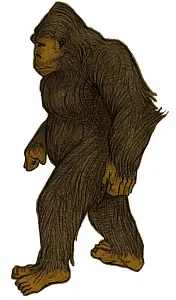
The Yeti, popularly known as the Abominable Snowman, is an ape-like, bipedal creature said to roam the high snowfields and forested valleys of the Himalayas, described in Sherpa and Tibetan folklore as a shaggy, powerful being that avoids human contact and leaves enormous footprints in the snow.
Where and when was Yeti (Abominable Snowman) sighted?
- Location
- Himalayas, Nepal
- Date sighted
- 1951-11-08
- Coordinates
- 27.988, 86.925
- Last updated
LOCATION
What is Yeti (Abominable Snowman)?
Sherpas reportedly call it meh-teh, "man-bear," a term at the root of the famous 1921 mistranslation that gave English speakers the name "Abominable Snowman." Belief in such a creature is deeply rooted in the region's religious traditions, where it is sometimes treated as a spirit-guardian of the mountains rather than simply an unknown animal. Western interest exploded after mountaineer Eric Shipton photographed a set of large, mysterious footprints near Everest in 1951, images that circulated worldwide and launched decades of expeditions searching for the creature. Alleged relics, hair samples and droppings collected over the years have, when tested, consistently matched known animals such as the Himalayan brown bear and Tibetan blue bear, or in some cases dogs, with no genetic evidence pointing to an unclassified primate. The Yeti remains a powerful symbol of the Himalayas, blending genuine regional folklore with the romance of high-altitude exploration.
What is the history of Yeti (Abominable Snowman)?
The photograph that made the yeti famous in the West was taken in 1951.
In 1951 Eric Shipton had led the Everest reconnaissance expedition to the top of the Khumbu Icefall. Instead of heading straight home, Peter Gillman writes, he diverted the party into the Menlung region, about 30 miles west of Everest, on the border between Nepal and Tibet. On the afternoon of 9 November, Shipton, Michael Ward and Sen Tenzing crossed the Menlung La at 19,960 feet and headed down the Menlung Glacier, and half an hour later they came upon tracks in the snow. Ward put the spot at about 15,000 to 16,000 feet (roughly 4,600 to 4,900 metres); W. H. Murray put it at 18,000.
Shipton took four photographs, Ward recalled in the Alpine Journal in 1999: two of the indistinct prints with Ward beside them for comparison, and two of one distinct print, one with Ward's ice axe and one with his booted foot for scale. Ward described that print as about the length of his boot, a continental size 42, about 12 to 13 inches long, "nearly twice as broad as my boot" and with clear edges, with "the definite imprint of a big toe, broader and sharper than the other rather indistinct toes".
Shipton's own report for The Times, published on 6 December, said that the tracks "were mostly distorted by melting into oval impressions", but that here and there, where the snow covering the ice was thin, they came upon a well-preserved impression of the creature's foot. The next day The Times printed three of the photographs under the headline "FOOTPRINTS OF THE 'ABOMINABLE SNOWMAN'".
The image carried the weight of its author: in 1951, Gillman notes, Shipton was the most revered of active British mountaineers and had been on all four British Everest expeditions of the 1930s. Two years later he was replaced as leader of the 1953 Everest expedition by John Hunt.
Timeline: the documented record of Yeti (Abominable Snowman)
- 8 November 1951 Eric Shipton and Michael Ward, on the Everest Reconnaissance Expedition, find a line of tracks in the Menlung Basin at around 4,600–4,900 m. Shipton photographs one with an ice axe for scale.
- 1953 Two years after the photograph, the same reconnaissance line leads to the first ascent of Everest. The witnesses' credibility is an essential part of the weight the image carries.
- 1999 Michael Ward publishes an analysis of the tracks in the Alpine Journal, "The Yeti Footprints: Myth and Reality", half a century after being there.
- 2014 Bryan Sykes (Oxford) analyses hairs attributed to the yeti. Most prove to come from known animals; two samples give bear DNA matching a Pleistocene polar bear fossil more than 40,000 years old.
- 2015 Edwards and Barnett rebut Sykes: these are old samples that may have suffered DNA degradation. They propose the Himalayan brown bear instead.
Is there a rational explanation for Yeti (Abominable Snowman)?
Two of the people closest to the 1951 photograph have offered explanations that need no unknown animal. Michael Ward, the doctor who stood beside the print, proposed in the Alpine Journal in 1999 that the Menlung tracks could have been made by "a local Tibetan with abnormally-shaped feet", and illustrated the deformed foot of a Nepalese highlander with both big toes twisted. He also listed the animals seen on snowfields up to at least 21,000 feet (yak, wild goat, snow leopard, fox and wolves) and noted that a bear or a langur monkey were possibilities, although no tail marks were seen. The Natural History Museum, according to Gillman, concluded at the time that the tracks could have been made by a langur.
Peter Gillman, in the Alpine Journal of 2001, argued that the crucial footprint was a hoax. It would have been "the work of moments", he wrote, to enhance one of the oval, melted prints by adding the toe-prints by hand, and the crisp indentations along the inner side of the print could have been made with Shipton's ice axe. Edmund Hillary, an early sceptic, had noticed that the single print looked new and fresh compared with the tracks in the long shots, and told Gillman that he could imagine Shipton "tidying up" the footprint. Gillman also noted that Shipton in The Times, and Murray and Bourdillon in their diaries, described a single line of tracks. Ward rejected the hoax theory: he pointed out that his own description of the prints was written at least a year before Shipton lost the leadership of the 1953 expedition.
The animals behind the wider legend came from genetics. In 2014 Bryan Sykes and colleagues sequenced 30 hair samples attributed to anomalous primates; two from the Himalaya, one from Ladakh and one from Bhutan, matched a Pleistocene polar bear fossil more than 40,000 years old, and they suggested a previously unrecognised bear species, colour variants of the polar bear, or hybrids of brown bear and polar bear. Ceiridwen Edwards and Ross Barnett replied in 2015 that the two sequences were identical to that of a modern polar bear and differed by one base from the Pleistocene fossil, that the single base separating them from brown bears sat exactly where DNA damage produces such errors in old hair, and proposed instead the Himalayan brown bear, Ursus arctos isabellinus, a rare subspecies of the high Himalaya long associated with the yeti myth. In 2017 Lan and colleagues analysed samples attributed to the yeti, nine of them supplied by the Reinhold Messner Museum and the Icon Film Company: one tooth from a stuffed exhibit matched a dog, all the rest were bears, and the authors concluded that their results strongly support "the biological basis of the yeti legend to be local, extant bears".
For the footprints themselves, the explanations remain several. Daniel Taylor, who looked for the yeti for sixty years, told National Geographic in 2017 that he believes they were made by an Asian black bear. Ward and Gillman each rejected the other's explanation of the 1951 print in the Alpine Journal.
Can you visit Yeti (Abominable Snowman)?
The pin on this file sits on the summit of Everest, at 27.9881, 86.925, and stands for the Himalaya as a whole. Shipton's tracks were found about 48 km due west of it, in the Menlung Basin below the peak the 1951 party named Menlung Tse. Michael Ward, who was there, describes crossing the Menlung La and walking down "the broad, easy and gentle slopes of the glacier that ended in the Menlung Chu" to an almost flat area "at about 15-16,000ft", where the prints lay. The Menlung Chu drains to the Rongshar valley in Tibet; on the way out the party was briefly "captured" by Tibetan levies and released for about five rupees. The basin is in the Tibet Autonomous Region of China today.
The country a trekker can reach is the Khumbu, the Sherpa region south-west of the summit, inside Sagarmatha National Park. The Nepal Tourism Board's page for the park, read on 23 September 2026, gives the entry fee as NPR 3,000 per person per entry for foreigners and NPR 1,500 for SAARC nationals. It names October to November and March to May as the seasons, puts the park headquarters at Mendalphu, Namche Bazaar, and describes the approach as a thirty-minute flight from Kathmandu to Lukla or a bus to Jiri followed by the walk in. Trekking operators list a second entry permit, issued by the Khumbu Pasang Lhamu rural municipality.
Two stops on the Base Camp route carry the yeti story. Tengboche monastery, at 3,867 m and about 23 km south-west of the summit, is the largest gompa in the Khumbu. Khumjung, at 3,790 m and about 27 km south-west, keeps in its monastery the object known as the yeti scalp. Edmund Hillary borrowed it for the 1960-61 Silver Hut expedition and took it to London with the village headman, Khumjo Chumbi; Marca Burns examined a sample from its margin and concluded that it "was probably made from the skin of an animal closely resembling the sampled specimen of Serow, but definitely not identical with it".
The photograph can be studied from anywhere. Ward's "The Yeti Footprints: Myth and Reality" (Alpine Journal, 1999) describes the four pictures Shipton took, two of the indistinct prints and two of the clearest one, with an ice axe and a booted foot for scale. Peter Gillman's reply in the Alpine Journal of 2001 argues that Shipton fabricated the close-up print. Both articles are free PDFs on the journal's website.
Sources consulted
- Michael Ward, «The Yeti Footprints: Myth and Reality» — Alpine Journal, 1999 academic
- Peter Gillman, «The Yeti Footprints — análisis de la fotografía de Shipton» — Alpine Journal, 2001 academic
- Bryan Sykes et al., «Genetic analysis of hair samples attributed to yeti, bigfoot and other anomalous primates» — Proceedings of the Royal Society B, 2014 academic
- Ceiridwen J. Edwards y Ross Barnett, «Himalayan 'yeti' DNA: polar bear or DNA degradation? A comment on Sykes et al. (2014)» — Proceedings of the Royal Society B, 2015 academic
- Simon Worrall, «This man searched for the yeti for 60 years — and found it (el oso negro asiático)» — National Geographic, 2017 newspaper archive
- T. Lan, S. Gill, E. Bellemain, R. Bischof, M. A. Nawaz y C. Lindqvist, «Evolutionary history of enigmatic bears in the Tibetan Plateau–Himalaya region and the identity of the yeti — análisis genético de muestras atribuidas al yeti (osos locales y un perro)» — Proceedings of the Royal Society B, 284 (1868): 20171804, 2017 academic
Reviewed by V. Serrano on 2026-07-28 · How we verify our content
📎 Source: Enigma Atlas
💬 Field testimonies (0)
No testimonies yet. Add the first.
Add your testimony
🔒 Log in to add a testimony