👻 HAUNTED PLACE · EXP. Nº0482
ACTIVE
Hessdalen Valley (Hessdalen Lights)
Hessdalen Valley (Hessdalen Lights) is a location reputed to be haunted in Trøndelag, NO. Its reputation comes from reported apparitions, unexplained phenomena and eyewitness accounts gathered over time.
Where is Hessdalen Valley (Hessdalen Lights)?
- Location
- Trøndelag, NO
- Type
- Other
- Coordinates
- 62.806, 11.182
- Testimonies
- 0
- Last updated
LOCATION
Why is Hessdalen Valley (Hessdalen Lights) said to be haunted?
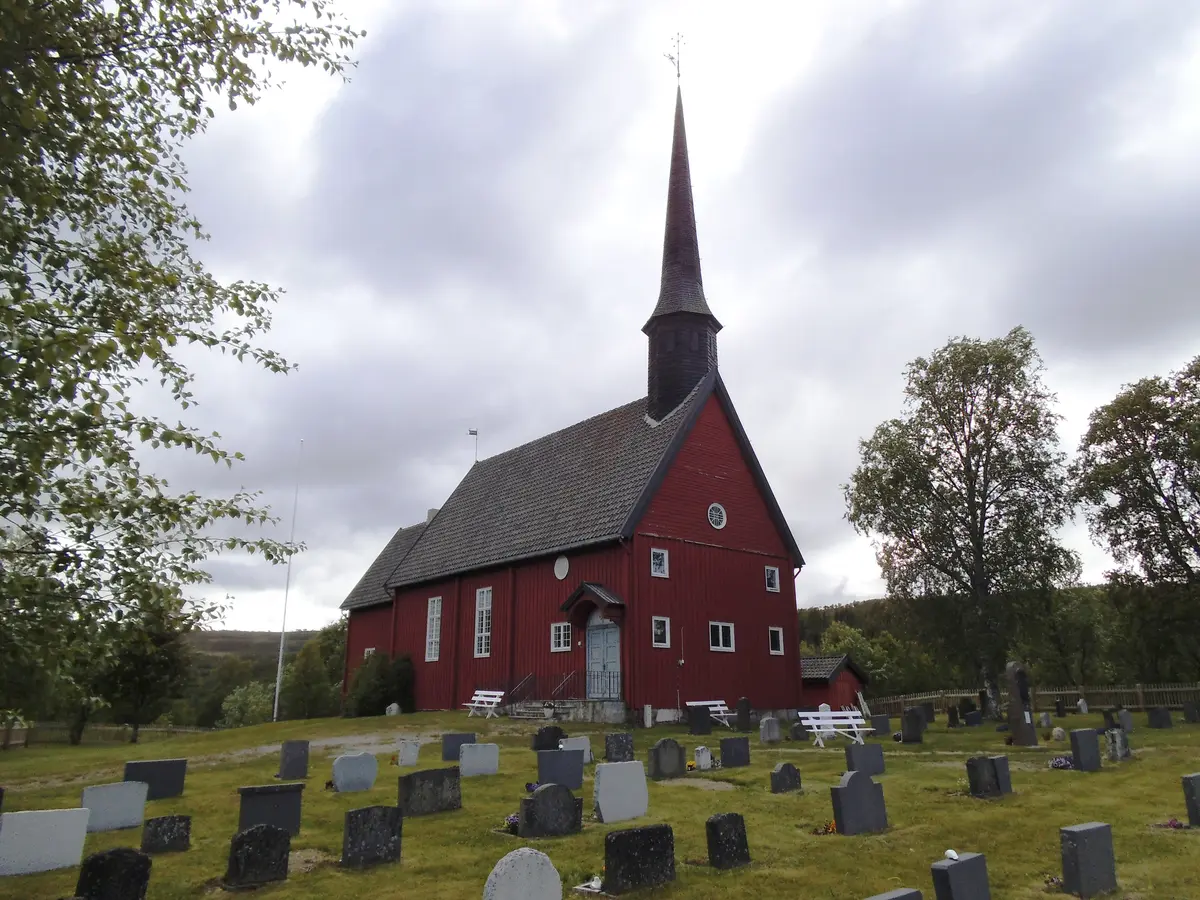
Hessdalen is a valley some 12 km long in the municipality of Holtålen, in Trøndelag county in central Norway, where unexplained lights began to be reported in December 1981. What sets the case apart is not the lights but the response to them: a group of private individuals founded Project Hessdalen in June 1983 and, over five weeks in early 1984, watched the valley with radar, a seismograph, a magnetometer, a spectrum analyser, Geiger counters and cameras fitted with diffraction gratings. Of the 188 reports logged, the investigators themselves classified 135 as ordinary lights, most of them aircraft, leaving 53 unexplained. Since 1998 an automatic station known as the Blue Box, run from Østfold University College, has monitored the valley continuously, and Italian radio astronomers joined the work between 2000 and 2002. Reports have fallen sharply since the early 1980s. Competing hypotheses include dust combustion, an ionised plasma and a geological natural battery, and the researchers have publicly disagreed over whether some of the photographed lights were car headlights. Project Hessdalen's own position is that no definitive, self-consistent theory yet accounts for everything observed.
What is the history of Hessdalen Valley (Hessdalen Lights)?
Hessdalen is not famous because strange lights were seen there. Strange lights are seen everywhere. Hessdalen is famous because a group of people took a radar, a seismograph, a magnetometer and a laser up a frozen Norwegian valley in January 1984 and wrote down, in a numbered technical report, exactly what the instruments did and did not record.
The valley itself is unremarkable. Erling Strand's report opens with the geography: "Hessdalen is a valley in the middle part of Norway, south-east of Trondheim, about 30 km northwest of the town Røros. The valley is about 12 km long, and about 150 people live there." It sits in the municipality of Holtålen, mining country: copper, zinc and iron ore have been worked in the region since 1644, and the last mine, Killingdal, closed in 1986.
According to Strand, the lights began in December 1981. Almost every later account paraphrases his description: the lights "could stand still for more than an hour, they could move around slowly, and sometimes they could stop", and once "a speed of about 8500 m/s was tracked by radar". They took shapes — "a form of a bullet, with the sharp end down", "round as a football", "a 'Christmas-tree' upside down" — and were mostly white or yellow-white. They were seen far more often in winter; in summer, Strand notes, "lights were seldom seen at all", and offers the obvious reason: "there is daylight almost whole night in summertime in Hessdalen."
The estimates of how often differ with the source. Caron and Faridi, writing in Frontiers in Earth Science in 2016, give "15 to 20 times per week from 1981 to 1984 and 10 to 20 times per year nowadays". The site run by Holtålen municipality itself speaks of "20-30 observasjoner i uka" at the peak in 1982-83. What can be checked directly is Project Hessdalen's own public register of reports: it holds 78 entries for 1982, 54 for 1983 and 49 for 1984 — and then 15 for 1985, 11 for 1986, 9 for 1987, 3 for 1988 and 1 for 1989. Recent years run to single figures: 2 in 2020, 2 in 2021, 6 in 2022, 4 in 2023. The project says of its own register: "These are just the ones we registered. There are probably many more observations that we did not get hold of." The shape of the curve was already visible to the investigators at the time: Strand wrote in 1984 that "suddenly, in the spring of 1983, the lights seemed to be much more seldom".
Nobody official wanted the problem. "As no official institutes with governmental support seemed to care about these unknown lights, five persons started their own project," Strand wrote. The project was born on 3 June 1983; the working committee was Leif Havik, Odd-Gunnar Røed, Håken Ekstrand, Jan Fjellander and Strand himself. It was presented at a UFO congress in England that August and to the people of the valley on 19 November; in January 1984 a bulletin and a simple report form went out to 3,300 households in the district. The advisory committee included the American astronomer J. Allen Hynek and the British earth-lights writer Paul Devereux, but the practical help came from elsewhere: the Norwegian Defence Research Establishment, the University of Oslo and the University of Bergen.
Field work ran from 21 January to 26 February 1984, with a caravan for a headquarters at Aspåskjølen and stations at Hersjøen and Litlfjellet. The instrument list is the point of the whole exercise: cameras fitted with diffraction gratings to take spectra; an MEQ-800 portable seismograph, installed the previous October, to test Devereux's tectonic-strain hypothesis; an Atlas 2000 3-cm radar; a Hewlett-Packard spectrum analyser sweeping 150 kHz to 1250 MHz; a Fluxgate FM100 magnetometer; three Geiger counters; two infrared viewers; and a 0.4-0.76 mW helium-neon laser.
The raw result was 188 reports, each scored twice — once for the quality of the documentation, once for how hard it was to explain. 135 of the 188 were filed as "a known light", 86 of them aeroplanes. Only 53 were treated as candidates for the Hessdalen phenomenon, and just four scored the maximum on strangeness. The radar produced 36 recordings, only three of which were also seen visually. The seismograph recorded no local activity at all. The Geiger counters and the infrared viewers registered nothing.
The episode most often repeated from that winter is the laser test of Sunday 12 February. Strand describes the protocol himself: Kurt Persson watched a regularly flashing light through binoculars, calling out what he saw and unable to see where the laser was aimed; Strand raised the beam; Persson's commentary changed from single flashes to paired flashes, and back again when the beam dropped. It was repeated nine times across two sightings, with a reaction eight of them. Strand's own comment is the honest one: "I personally thought that this test was only a coincidence. But we did also get a result, 8 out of 9 times."
His conclusion, signed 5 January 1985, is the sentence the whole case rests on: "We have not found out what this phenomenon is. That could hardly be expected either. But we know that the phenomenon, whatever it is, can be measured."
What followed was four decades of trying to do exactly that. An international workshop in 1994 brought researchers from eight countries. In August 1998 two lecturers at Østfold University College — Strand and the electronics engineer Bjørn Gitle Hauge — installed a permanent Automatic Measurement Station in the valley, a blue container that everybody calls the Blue Box, with cameras, a magnetometer and later a radar and an aircraft detector, running continuously ever since and streaming live. From 2000 to 2002 three joint Italian-Norwegian expeditions, code-named EMBLA, brought radio astronomers and engineers from the CNR Institute of Radioastronomy at Medicina — Stelio Montebugnoli, Jader Monari, Marco Poloni and the astrophysicist Massimo Teodorani. A base station was added on the summit of Skarven, and in 2024 a team from the Aristotle University of Thessaloniki, the French CNRS and Østfold published the first extensive geophysical survey of the valley in the Journal of Applied Geophysics.
Forty years of instruments. Still no agreed answer.
Timeline: the documented record of Hessdalen Valley (Hessdalen Lights)
- 1811 The 2024 geophysical survey states, citing Hauge (2010), that luminous phenomena in Hessdalen valley were first reported in 1811. The survey gives Hauge's 2010 paper in Acta Astronautica as its source for the date.
- October 1967 The project's register keeps a handful of retrospective reports from before the 1981 wave. Martin Bull of Ålen described an inexplicable light "like a floodlight of about 100 kilowatts" that stood completely still, and a second sighting of two lights in November 1969.
- December 1981 Unknown lights start being reported in the valley. Strand's report describes them standing still for over an hour, moving slowly, and on one occasion being tracked by radar at about 8,500 m/s.
- 3 June 1983 Project Hessdalen is founded by five private individuals — Leif Havik, Odd-Gunnar Røed, Håken Ekstrand, Jan Fjellander and Erling Strand — because, in Strand's words, "no official institutes with governmental support seemed to care about these unknown lights".
- 21 January – 26 February 1984 The field campaign runs with radar, seismograph, magnetometer, spectrum analyser, Geiger counters, infrared viewers and cameras with diffraction gratings. It logs 188 reports; the investigators classify 135 as known lights (86 of them aeroplanes) and 53 as candidates for the Hessdalen phenomenon.
- 12 February 1984 — the laser test Strand reports that pointing a helium-neon laser at a regularly flashing light made it switch to paired flashes, and back again when the beam was lowered — nine attempts across two sightings, with a reaction in eight. The observer at the binoculars could not see where the beam was aimed.
- 5 January 1985 Strand signs the final technical report: "We have not found out what this phenomenon is. That could hardly be expected either. But we know that the phenomenon, whatever it is, can be measured."
- 1986 — the wave subsides The project's public register lists 11 reports for 1986, down from 78 in 1982. It falls to 9 in 1987, 3 in 1988 and 1 in 1989, and has stayed in single figures in most years since.
- 1994 The first international workshop on the Hessdalen phenomenon brings together researchers from eight countries, among them the Russian physicist Boris Smirnov, and marks the point at which physicists accept the phenomenon as a legitimate object of study.
- August 1998 Erling Strand and Bjørn Gitle Hauge, of Østfold University College, install the permanent Automatic Measurement Station — the Blue Box — to monitor the west side of the valley automatically. It has run continuously ever since.
- August 2000 The first EMBLA mission brings radio instruments designed at the CNR Institute of Radioastronomy in Medicina, Italy, to the valley. Of four radio systems deployed, three produce no results at all.
- 5–18 August 2002 The EMBLA 2002 report by Teodorani and Nobili claims the light phenomenon can produce "a luminous power of up-to 100 kW" and notes that its three-peaked spectrum "might be attributed both to some kind of artificial illumination system" and to blended lines of several elements.
- 2003 Matteo Leone, scientific adviser to the Italian committee funding the missions, publishes a rebuttal: he observed the "blinking light" through a telescope and identified a pair of car headlights on a road 2.2 km away, and finds the power and spectrum consistent with halogen headlamps. The same paper still argues, from the anecdotal evidence he collected in the valley, that specific studies of anomalous aerial phenomena should be supported.
- 2004 Teodorani publishes a long survey in the Journal of Scientific Exploration. The maximum radiated power is now given as 18.8 ± 5 kW, not 100 kW, and a footnote argues that car headlights photographed as controls on the same film behave "totally different".
- Autumn 2019 A second research station of about 35 m², at roughly 1,000 m altitude on the summit of Skarven, is brought into use.
- 2024 A team from Thessaloniki, the French CNRS and Østfold publishes 100 km of VLF surveys in the Journal of Applied Geophysics, mapping conductive sulphide bodies in a ring around a gabbro intrusion — and calls its account of how they might generate lights a "provisional hypothesis".
Is there a rational explanation for Hessdalen Valley (Hessdalen Lights)?
The usual skeptical move with mystery lights is to point out that nobody ever measured them. That move does not work here, and that is precisely what makes Hessdalen interesting. The instruments went in, the data exist, and the case is still open — partly because the measurements were thin, and partly because the people who took them have argued fiercely about what they mean.
Start with the project's own arithmetic. Of 188 reports logged in the 1984 campaign, 135 were classified by the investigators themselves as ordinary lights, and 86 of those were aeroplanes. Strand went further in his discussion: with a direct line to the radar station covering the district, he wrote, "we could perhaps have picked out the planes easily", there would have been "few reports with a score between F2 and F8", and "then we would have got a more correct picture of the unknown light". In other words, he expected the middle of his own scale to shrink. The residue of genuinely puzzling cases was 53 reports, of which four scored the top strangeness mark. That is the denominator the project itself gives.
Several instruments simply found nothing. The seismograph, installed to test Paul Devereux's earth-lights hypothesis, recorded no local seismic activity whatsoever across the campaign; Strand noted that only four small quakes had been detected within 70 km in the previous six years. The 2024 geophysical survey reaches the same verdict about tectonic-stress models in blunter terms: seismicity in Hessdalen "is so weak that this hypothesis cannot be retained. For instance, no earthquake of magnitude above 2.5 has occurred since 2000". The Geiger counters recorded nothing; the infrared viewers, used twice, recorded nothing.
The 1984 spectra are far weaker than their reputation. Of seven films exposed through diffraction gratings, only four frames showed anything like a spectrum. The two strong ones were of a light one of the three observers thought was the spotlight of a snowmobile, scoring only F5 on the project's own scale — and Strand says so explicitly: those pictures "cannot be used as a proof that the Hessdals-phenomenon has a continuous spectrum". The best-documented weak spectrum was analysed at the University of Oslo and judged "too weak to say what kind of spectrum it is".
Then came the fight over EMBLA 2002. Teodorani and Gloria Nobili reported that the light photographed that August produced "a luminous power of up-to 100 kW" and hovered above the hills. Matteo Leone, scientific adviser to the Italian committee that funded the missions, went to Hessdalen, looked at the "blinking light" through a portable refractor and reported that it "turned out to be due to a pair of car headlights". His 2003 rebuttal reconstructs the geometry: a minor road on Vårhuskjølen at the right azimuth and elevation, about 2.2 km from the observing point; a luminous output consistent with the European regulation ceiling for a car's headlamps; a spectrum consistent with a halogen headlamp on the same film stock. His conclusion is unambiguous: "the whole evidence reported by Teodorani and Nobili (2002) is consistent with the car headlamps explanation", and he notes that the hypothesis "is easily verifiable (or falsifiable) through a controlled experiment by means of a pair of car headlights". Leone came back to the case twice, in November 2003 and in September 2004, and argued both times from the existing photographs, the topography and the European headlamp regulation; neither paper reports the controlled experiment. The first of them also gives ground on the geometry: after a topographical critique by Nicolosi and Ricchetti, Leone writes that the headlamps "were likely farther than previously conjectured" and that the Vårhuskjølen road "is no longer tenable a candidate", while holding to the headlamp explanation itself.
Teodorani answered, and his numbers moved. In his 2004 survey in the Journal of Scientific Exploration the maximum radiated power is no longer 100 kW but 18.8 ± 5 kW, and a footnote answers Leone directly: continuum sources "such as car headlights", photographed as controls on the same Kodak Ektachrome film, "show a totally different behavior". Leone's third paper, of September 2004, replies to that revision point by point. Two experienced people, the same photographs, opposite readings. That is the actual state of the Hessdalen spectroscopic evidence, and it is a good deal messier than "physicists have studied the lights".
Where the science was published matters too. Teodorani's 2004 survey appeared in the Journal of Scientific Exploration, the peer-reviewed journal of the Society for Scientific Exploration — a body founded to examine claims that mainstream journals decline, so its review process is not equivalent to that of a general physics journal. Caron and Faridi, arguing in 2016 for more funding, put the scarcity plainly: "only a handful of researchers have managed to identify the necessary resources to study the atmospheric 'anomaly' and communicate their findings in academic journals", and their list runs to seven papers.
The competing explanations are hypotheses, and they do not agree with each other. The scandium story that circulates most widely — dust from the valley floor containing scandium burning in air — is attributed by Caron and Faridi to Hauge (2007, 2010). The 2024 geophysical survey, which Hauge co-signed and which cites his 2010 paper in Acta Astronautica, does not contain the word scandium. Gerson Paiva and Carlton Taft proposed instead a dusty plasma, in papers titled "A hypothetical dusty plasma mechanism of Hessdalen lights" (2010) and "Cluster formation in Hessdalen lights" (2012) in the Journal of Atmospheric and Solar-Terrestrial Physics; the 2024 survey files that line of work under "piezoelectric and related electromagnetic fields" as driving mechanisms and adds that "the origin of the phenomena is still unclear". Monari and colleagues proposed that the valley works as a "natural battery", with iron and zinc mines oxidising on the west side and copper mines reducing on the east, in a 2013 report of the Italian committee. Teodorani, rebutting it in August 2026, notes that the proposal has never "appeared in a peer-reviewed journal" and calculates that such a geobattery falls "roughly six orders of magnitude short" of the potential needed to ionise air. Teodorani leaned on Turner's electrochemical model of ball lightning. The 2024 survey maps genuine conductive sulphide bodies forming a ring around a gabbro intrusion, and then calls its own account of how they might make lights a "provisional hypothesis" that "should initiate much more multi-disciplinary detail studies". Project Hessdalen's own theory page says the same thing without ornament: "a definitive, self-consistent, quantitative theory that accounts for all observed aspects is not yet available".
One negative result comes from the cameras. According to the 2024 survey, Østfold University College took about 600,000 pictures in the valley during the field campaigns of the previous ten years, and it is from those pictures that the survey describes the lights as mostly white. Nearly 90,000 of them were taken towards the sky with fish-eye lenses, and that set did not capture the phenomenon once. The authors read the fish-eye result as a sign that the lights appear relatively close to the ground.
And the phenomenon has faded. Whatever produced the 1982 wave has largely stopped: the project's own register drops from 78 entries in 1982 to single figures within a decade, and stays there through forty years of ever-better instrumentation. A skeptic will say a wave of misidentifications ended when the novelty and the press coverage did. A researcher will say the geophysical conditions changed. Neither has the evidence to close the argument, and the fairest summary is Strand's, unchanged since 1985: it can be measured, and it has not been explained.
Can you visit Hessdalen Valley (Hessdalen Lights)?
Hessdalen is a public valley with a public road and no gate, and it has no museum. The valley lies in Holtålen, a municipality of 1,970 people in Trøndelag county; Sør-Trøndelag was merged into Trøndelag on 1 January 2018, so older signs and older texts use a county name that has gone. Project Hessdalen's page on the district puts the valley "approximately 10 km from the municipality's centre", which is Ålen, and records the closure of the last local mine, Killingdal, in 1986.
The project's travel page gives the road as E6 south from Trondheim to Støren, 51 km; road 30 towards Røros, with Haltdalen 55 km further; then 12 km more to a signposted turn up into Hessdalen, which it totals at 118 km from Trondheim. From the turn it is 4.5 km to the north end of the valley and 2 km more to the measurement station. From Røros the same page counts 30.4 km to the Bjørgåsen mountain hotel road, then 4.5 km to the Red Cross cottage entrance and 1.9 km beyond that to the station. The nearest airport is Røros, whose number the travel page gives as +47 72413900. The Rørosbanen line from Trondheim or Oslo stops at Ålen and also at Reitan and Haltdalen, though not every service calls at Ålen. A local bus between Ålen and Hessdalen is run by Gauldal Billag AS, and the timetable the project publishes is dated 21 August 2000.
The Blue Box, the automatic measurement station on the valley floor, is a working research installation with a radar antenna "mounted on top of the 9 meter high tower". Its three CCD cameras "transmit live TV all the time (24/7)" to a streaming server at Østfold University College, which is how most people ever see the valley. The second station, about 35 m² at nearly 1,000 m on the summit of Skarven, came into use in the autumn of 2019. Neither is an exhibition, and the valley has no interpretation centre.
Statskog announced the UFO-hytta at Slætthælet on 8 October 2020: roughly 100 m² of timber, seven beds in four bedrooms, electricity, a wood stove, an outdoor privy and a water point outside, with panoramic windows towards the Skarvan massif and lake Øyungen. It is let through inatur.no, and a Statskog press release of 17 February 2022 recorded 244 nights let in 2021, the most of any cabin the company owns; its coordinator Eva Kristin Grøndal said "Pågangen på UFO-hytta har overgått det vi turte håpe på. 244 utleiedøgn er veldig inspirerende". Visit Hessdalen lists a UFO-camp of timber lavvos, a guided three-hour walk from Hessdalskjølen to Rogne, a two-day mountain safari, a minibus tour of the valley, snowmobile safaris, Icelandic-horse riding and a pub in the valley.
Project Hessdalen runs an annual field trip and conference open to outsiders. The 2026 edition ran from 28 August to 6 September, based in Trondheim and Hessdalen with a day in Røros: a conference day, a field trip into the valley, a tourist day and six days of field work. The advertised price was €395 for the full package and €165 for the conference alone, excluding train and attraction tickets, and food beyond the conference lunch; bus transport from Ålen was included, and the organiser is Fred Pallesen. Hessdalen remains a working farming and mountain district. Its houses and its land are private, and its public register of observations, running year by year from 1967 to 2023, is the part of it that is open to all.
Sources consulted
- Erling Strand, «Project Hessdalen 1984 — Final Technical Report (instrument list, the 188 scored reports, the laser test, the seismograph and spectral results, and the conclusion of 5 January 1985)» — Project Hessdalen, Norway, 1985 report
- Project Hessdalen, «Observations done in the Hessdalen area — the project's public register of reports, year by year from 1967 to 2023» — old.hessdalen.org, 2025 archive
- Massimo Teodorani, «A Long-Term Scientific Survey of the Hessdalen Phenomenon, Journal of Scientific Exploration, vol. 18, no. 2, pp. 217-251» — Journal of Scientific Exploration (Society for Scientific Exploration), 2004 academic
- Massimo Teodorani and Gloria Nobili, «EMBLA 2002 — An Optical and Ground Survey in Hessdalen (the 100 kW claim and the three-peaked spectrum)» — CNR — Istituto di Radioastronomia, Medicina (Bologna), 2002 report
- Matteo Leone, «A rebuttal of the EMBLA 2002 report on the optical survey in Hessdalen (the car-headlamp analysis; also the history of the 1984 project and the founding of the Automatic Measurement Station in August 1998)» — Italian Committee for Project Hessdalen (CIPH); Internet Archive copy, 2003 report
- G. N. Vargemezis, J. Zlotnicki, B. G. Hauge, A.-L. Kjøniksen and E. P. Strand, «Contribution of VLF electromagnetic survey to the investigation of Hessdalen lights (Norway), Journal of Applied Geophysics 226, 105398 (DOI 10.1016/j.jappgeo.2024.105398)» — Elsevier, 2024 academic
- Etienne Caron and Pouya Faridi, «To Investigate or Not to Investigate? Researchers' Views on Unexplored Atmospheric Light Phenomena, Frontiers in Earth Science 4:17 (the sighting rates, the scandium hypothesis attributed to Hauge, and the count of academic papers on Hessdalen)» — Frontiers in Earth Science, 2016 academic
- Bjørn Gitle Hauge, «10 Years of Scientific Research of the Hessdalen Phenomena — paper given at the meeting 'La Ricerca Italiana nella Valle di Hessdalen', Cecina (Livorno), March 2004» — Østfold University College / Italian Committee for Project Hessdalen; Internet Archive copy, 2005 report
- Bjørn Gitle Hauge and Anna-Lena Kjøniksen, «Low level observations of the atmospheric light phenomena in Hessdalen, Norway — EGU General Assembly 2022, abstract EGU22-8579» — European Geosciences Union, Vienna, 2022 academic
- Project Hessdalen, «Automatic Measurement Station (AMS) / Blue Box — technical description of the cameras, radar, weather stations and flight detector» — old.hessdalen.org, 2024 web
- Project Hessdalen, «Travel to Hessdalen — road distances from Trondheim, Oslo and Røros, Røros airport, the Rørosbanen railway and local transport» — old.hessdalen.org, 2019 web
- Holtålen kommune, «Forskning — the municipality's own account of the research history: the 1982-83 rate of 20-30 sightings a week, the 1994 workshop, the 1998 Blue Box and the Skarven station» — hessdalsfenomenet.no, 2026 web
- Holtålen kommune, «Fasiliteter — the Skarven base station (about 35 m² at roughly 1,000 m, in use since autumn 2019), the radar tower, the flight detector and the weather stations» — hessdalsfenomenet.no, 2026 web
- Statskog SF, «Utenomjordisk hytteopplevelse i Trøndelag — the UFO-hytta at Slætthælet: about 100 m², seven beds in four bedrooms, electricity, wood stove and outdoor privy, booked through inatur.no» — statskog.no, 2020 web
- Statskog SF, «UFO-hytte til himmels og økt pågang i hele landet — Statskog's press release recording 244 let nights for the UFO-hytta in 2021, the most of any of its cabins» — NTB Kommunikasjon, 2022 web
- Visit Hessdalen, «Opplevelser i Hessdalen — the guided three-hour UFO-safari from Hessdalskjølen to Rogne, the UFO-camp lavvos, minibus tours, snowmobile safaris and riding» — visithessdalen.no, 2026 web
- Project Hessdalen, «Field Trip & Conference 2026 — dates (28 August to 6 September 2026), programme, price and contact» — sites.google.com/hessdalen.org, 2026 web
- Project Hessdalen, «Theories — the project's own statement that "a definitive, self-consistent, quantitative theory that accounts for all observed aspects is not yet available"» — hessdalen.org, 2025 web
- Store norske leksikon, «Trøndelag — the merger of Sør-Trøndelag and Nord-Trøndelag into a single county on 1 January 2018» — snl.no, 2026 web
- Project Hessdalen, «Holtålen municipality — the district's mining history and the closure of the Killingdal mine in 1986, plus local accommodation and access» — old.hessdalen.org, 2024 web
- Matteo Leone, «A rebuttal of EMBLA 2002 report on the optical survey in Hessdalen: further comments (concedes that the headlamps were likely farther away and that the Vårhuskjølen road is no longer a tenable candidate)» — Italian Committee for Project Hessdalen (CIPH); Internet Archive copy, 2003 report
- Matteo Leone, «A rebuttal of the EMBLA 2002 report on the optical survey in Hessdalen: Part Three (reply to Teodorani's 2004 survey and its 18.8 kW figure)» — Italian Committee for Project Hessdalen (CIPH); Internet Archive copy, 2004 report
- Massimo Teodorani, «On the “Natural Battery” Hypothesis for the Hessdalen Lights: A Quantitative Reassessment (Monari et al. 2013 never peer-reviewed; the geobattery falls roughly six orders of magnitude short)» — Project Hessdalen, old.hessdalen.org, 2026 report
Reviewed by V. Serrano on 2026-08-01 · How we verify our content
📎 Source: Wikipedia (CC BY-SA)
💬 Field testimonies (0)
No testimonies yet. Add the first.
Add your testimony
🔒 Log in to add a testimony