📜 LEGEND · EXP. Nº0270
ACTIVE
Anansi the Spider
Anansi the spider belongs to the Akan of Ghana, but Anansesem — "Ananse stories" — is a genre label rather than a spider's biography: the Akan give the name to folktales whether or not the spider appears in them, and the narrator opens by saying that the story is not true.
Where does the legend of Anansi the Spider come from?
- Location
- Ashanti Region (Asokore, Sekyere East), Ghana
- Kind of legend
- Folk tale
- Coordinates
- 6.845, -1.387
- Last updated
LOCATION
What is the legend of Anansi the Spider?
The tale everyone repeats, in which Anansi pays the sky god for the world's stories, has no fixed text. The earliest printed versions disagree about the price. In the Accra collection of W. H. Barker and Cecilia Sinclair (1917) it is a jar of live bees, a boa-constrictor and a "tiger". In the version Melville and Frances Herskovits typed down at the village of Asokore in Ashanti in August 1931 it is mmoatia, a serpent and hornets. The familiar four — Onini, Osebo, the Mmoboro and Mmoatia — come from R. S. Rattray's Ashanti collection of 1930, where Anansi's wife Aso plans three of the four captures and he adds his own mother to the payment. The name crossed the Atlantic as a genre too: in Jamaica in 1816, Matthew Lewis wrote down four "Nancy stories" and not one of them has a spider in it.
What is the history of Anansi the Spider?
Start with the word. Anansesem means "Ananse stories", and among Twi-speaking Akan it names a whole class of narrative rather than a body of tales about a spider. Christopher Vecsey's 1981 survey of the Akan trickster puts it flatly: "All Anansesem, whether they deal with Ananse or not, are considered to be untrue stories. They are not myths in any sense of the word." Anyone may tell them, though only at night or at a ceremonial occasion such as the funeral of a respected story-teller, and before he begins "the narrator will say that the story is not true".
The tale in which Anansi obtains the sky god's stories is the one that travels, and it is nearly always told as though it were a single fixed text. It is not. Listing the printed versions in 1981, Vecsey wrote that Ananse captures "hornets, a python, a leopard, and other animals according to different versions" — and the versions printed in 1917, 1930 and 1937 disagree with one another about the price.
The oldest of them is also the frankest about its own unreliability. West African Folk-Tales, collected and arranged by W. H. Barker and Cecilia Sinclair (London: George G. Harrap, 1917), opens at page 29 with "How We Got the Name 'Spider Tales'". Barker is described on the title page as "formerly principal of the Government Institution, Accra", and the introduction explains that the government's new education policy had provided a Training Institution for Teachers there; the tales came from its first intake, experienced schoolmasters from various districts. The introduction explains the method without embarrassment: "By obtaining from these students a variety of versions of the same story it became possible to some extent to eradicate the superfluous and the spurious." It closes with "an apology to the scientific folk-lorist", because "the stories have been retold in order to appeal to a wider public". In that retold version Anansi is merely conceited, wants the tales renamed after himself, and Nyankupon sets three conditions: a jar full of live bees, a boa-constrictor and a tiger — the book's own footnote glossing "'Tiger' in West African stories is a leopard". There is no fairy, no python named Onini, no wife and no mother.
The version taken closest to an actual telling is the one Melville and Frances Herskovits recorded in the village of Asokore, in Ashanti, during August 1931, from residents of Asokore and the near-by settlement of Effiduasi, and published as the first item of "Tales in Pidgin English from Ashanti" (Journal of American Folklore 50, 1937, pp. 52-101). They typed the tales as they were spoken, partly because the storyteller "is so fascinated by watching the play of the mechanism as seen through the back of the typewriter that he quite forgets any embarrassment". Their deepest debt, they wrote, was to their interpreter Charles E. Donkoh. Here the price is again three things: mmoatia, the "small people" of the bush who make magic; inini, the serpent; and 'mobro, which the narrator glossed as ants and which the editors correct, citing Rattray, to hornets. The same collection carries a second version from the same village in which Anansi catches the mmoatia with a carved wooden figure smeared in rubber gum — the tar-baby, which Barker had already pointed to in 1917 as the ancestor of Brer Rabbit's.
The four named creatures — Onini the python, Osebo the leopard, the Mmoboro hornets and Mmoatia the fairy — belong to R. S. Rattray's Akan-Ashanti Folk-Tales (Oxford: Clarendon Press, 1930), where the tale is number 17, on pages 54-59. Herskovits corrects his own narrator's translation against Rattray's page 55; Vecsey cites pp. 54-59. In Rattray's text Anansi's wife Aso devises the capture of the python, the hornets and the leopard, and Anansi throws his own mother, Ya Nsia, "the sixth child", in on top of the price. Gail E. Haley's picture book A Story, A Story (New York: Atheneum, 1970) opens with the formula that precedes every tale in Rattray — "We do not really mean, we do not really mean that what we are about to say is true" — and, according to the University of Illinois Library's exhibit on the book, sets Ananse three tasks: "a jaguar, hornets, and an invisible fairy".
The god's name has its own history. In the older Gold Coast texts the name is Nyankupon or Nyankonpon, and Barker's 1917 introduction denied outright that he was an Akan god at all, quoting A. B. Ellis's The Tshi-speaking Peoples of the Gold Coast of West Africa (1887, p. 24) to the effect that Nyankupon was the Christians' god, "borrowed from them and adopted under a new designation" by the towns near the European forts. Later Akan scholarship rejected that colonial-era claim: Vecsey treats Nyame as the Akan Supreme Being and cites J. B. Danquah's The Akan Doctrine of God (1944). Rattray, in 1930, calls him "Nyankonpon, the Sky-god" throughout tale 17.
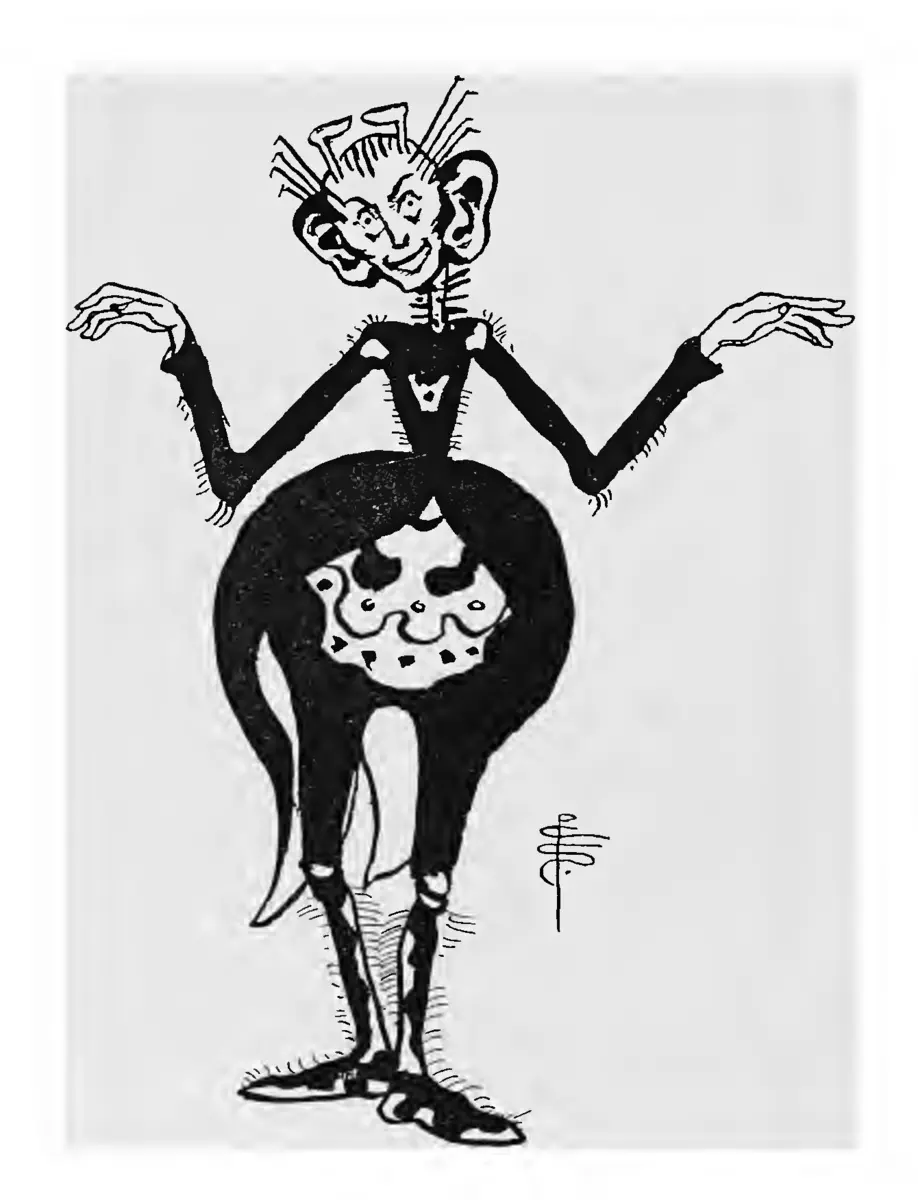
On the far side of the Atlantic the name travelled as a genre label too, and that is the most striking thing in the whole file. Matthew Gregory Lewis, an absentee Jamaican proprietor, wrote in his journal on 7 May 1816 that "the negroes are also very fond of what they call Nancy stories", and transcribed four of them. Not one contains a spider. He then set down the rule as he understood it: "It seems to be an indispensable requisite for a Nancy-story, that it should contain a witch, or a duppy, or, in short, some marvellous personage or other" — and distinguished them from the farcical trickster tales the enslaved called "Neger-tricks". A century later Martha Warren Beckwith opened Jamaica Anansi Stories (American Folk-Lore Society, 1924) with the same point: "To all such story-telling, as to riddling and song, the name of 'Anansi story' is applied, — an appellation at least as old as 1816, when Monk Lewis in his journal describes the classes of 'Nancy stories'". Beckwith worked with over sixty story-tellers in country districts of Jamaica during six weeks in the summer of 1919 and five in the winter of 1921, with Helen Roberts recording the music; among the predecessors she thanks is Pamela Smith, whose Annancy Stories (New York: R. H. Russell, 1899) supplies the drawing at the head of this page.
Timeline: the documented record of Anansi the Spider
- 7 May 1816 Matthew Gregory Lewis notes in his Jamaican journal that "the negroes are also very fond of what they call Nancy stories" and transcribes four of them. None contains a spider. He defines the genre as requiring "a witch, or a duppy, or, in short, some marvellous personage", and separates it from the farcical "Neger-tricks". This is the earliest dated use of the name that this review could read in full.
- 1834 Lewis's journals of his two Jamaican residences are published posthumously in London by John Murray, sixteen years after his death at sea. The 1816 passage becomes citable, and Beckwith will lean on it in 1924.
- 1887 A. B. Ellis publishes The Tshi-speaking Peoples of the Gold Coast of West Africa, arguing at p. 24 that Nyankupon, the god of the Anansi tales, was not an Akan deity but the Christians' god "borrowed from them and adopted under a new designation". The claim is quoted here from Barker's 1917 introduction, which endorses it; later Akan scholarship rejected it.
- 1899 Pamela Colman Smith, raised partly in Jamaica, publishes Annancy Stories with R. H. Russell in New York, illustrating it herself. The ink drawing of Annancy as a spider-legged man in waistcoat and buckled shoes that heads this page comes from that book: it is Jamaican and 1899, not Ghanaian.
- 1917 W. H. Barker and Cecilia Sinclair publish West African Folk-Tales (London: Harrap), assembled from versions told by the first intake of the government teacher-training institution at Accra. Its opening tale, at p. 29, sets the price at a jar of live bees, a boa-constrictor and a tiger. The editors state that they "eradicated the superfluous and the spurious" and apologise for having retold the stories.
- 1924 Martha Warren Beckwith publishes Jamaica Anansi Stories for the American Folk-Lore Society, from fieldwork with over sixty story-tellers during six weeks in the summer of 1919 and five in the winter of 1921, with music recorded by Helen Roberts. Her preface dates the genre name to Lewis in 1816 and calls Anansi "the culture hero of the Gold Coast".
- 1930 R. S. Rattray publishes Akan-Ashanti Folk-Tales (Oxford: Clarendon Press) with Twi and English on facing pages. His tale 17 is the version with Onini, Osebo, the Mmoboro and Mmoatia, with Aso planning three of the four captures and Anansi adding his mother Ya Nsia. In Rattray's text Aso devises the capture of the python, the hornets and the leopard; the fairy is caught with a carved doll smeared with latex. The tale runs on pp. 54-59.
- August 1931 Melville and Frances Herskovits record two versions of the tale at Asokore, Ashanti, from residents of Asokore and near-by Effiduasi, typing them as they were spoken, with Charles E. Donkoh as interpreter. In the first the price is mmoatia, a serpent and hornets; the second ends with the tar-baby, a wooden figure smeared in rubber gum.
- 1937 The Asokore texts appear as "Tales in Pidgin English from Ashanti" in the Journal of American Folklore 50, pp. 52-101. The editors note that the material was gathered for a study of linguistic adaptation "as it bears particularly upon the English of the Negroes of the New World", cross-referring it to their Suriname Folklore of 1936.
- 1964 (project) / mid-1960s (building) Efua Sutherland begins the Ekumfi Atwia Experimental Community Theatre Project and has the Kodzidan, an eleven-sided "story house", built for Anansesem performance. Village tradition dates the structure to 1966 and former Legon students say they attended performances there from 1963; the 2017 survey of the building settles for the mid-1960s.
- 1970 Gail E. Haley publishes A Story, A Story with Atheneum in New York, a picture-book retelling that opens with the Akan formula "We do not really mean, we do not really mean that what we are about to say is true". According to the University of Illinois exhibit on the book, Haley's Ananse is set three tasks: 'a jaguar, hornets, and an invisible fairy'.
- 1981 Christopher Vecsey publishes "The Exception Who Proves the Rules: Ananse the Akan Trickster" (Journal of Religion in Africa 12, fasc. 3, pp. 161-177). He records that all Anansesem are declared untrue before they are told, lists four printed versions of the story-purchase tale with their page ranges, and warns that the collections then available often gave no origin, place, people or date.
Is there a rational explanation for Anansi the Spider?
There is nothing here to debunk: the tradition says of itself that the tales are not true, and says it out loud before each telling. In Rattray's 1930 collection every tale is preceded by the formula "We do not really mean, we do not really mean, (that what we are going to say is true)". What can be examined is how the tales reached print, and three points about that need dating.
First, a measurement. It is repeated everywhere that Anansi crossed the Atlantic with enslaved Akan people; the genre label demonstrably did; the spider's name is harder to date. Lewis's Journal of a West India Proprietor (London: John Murray, 1834) contains 101,223 words of Jamaican observation from 1815-1818. In the Project Gutenberg text of the book (ebook 54500) the stem "anans-" occurs zero times, and so does the word "spider" — the search was run on stems rather than whole words, so a spelling variant would still have shown. "Nancy" occurs nine times, four of them heading tales, and none of those four tales has a spider in it. Controls run on the same file in the same pass: "negro-" 388 hits, "stor-" 55, "duppy" 7, which shows the file is searchable. What the 1816 record proves is the survival of a genre name; it does not by itself carry the spider.
Second, the version most people know: R. S. Rattray's Akan-Ashanti Folk-Tales (Oxford: Clarendon Press, 1930) prints it as tale 17, "How it came about that the Sky-god's stories came to be known as 'Spider-stories'", on pages 54-59, with Twi and English on facing pages. The Sky-god names the price: "Onini creature the Python; Osebo, the Leopard; Mmoatia, the Fairy; (and) Mmoboro, the Hornets." Aso, Ananse's wife, devises the capture of the python, the hornets and the leopard; the fairy is caught with a carved wooden doll plastered with sticky latex, the device the Herskovitses would record at Asokore a year later; and Ananse adds his mother, Ya Nsia, "the sixth child", to the price. Rattray's preface adds that the Anansesem "are also known as Nyankonsem (the words of the Sky-god)".
Third, the North American survival. Anansi is widely said to live on in the United States as "Aunt Nancy", the name reinterpreted as a woman's, and a dated record of the woman's name exists: Emma M. Backus printed "Animal Tales from North Carolina" in the Journal of American Folklore in 1898 (vol. 11, pp. 284-292), and in its fifth tale, "How come Mr. Buzzard to have a bald head", Ann Nancy is a she who looks for a place "to build her house" in a damp rock and takes note of "the points to throw her threads": a spider under a woman's name. Roger D. Abrahams's Afro-American Folktales (1985) points in its notes to "a rare 'Ann Nancy' version from Georgia".
Vecsey had already put the general caution in 1981: the few available collections of Akan folklore were "often not indicating the origin, place, people, date, and other important data", which made it impossible even to reconstruct a regional map of where the tales had been collected.
Can you visit Anansi the Spider?
Anansi belongs to stories, so the pin marks the place where one telling was written down. It sits on Asokore, in the Sekyere East district of the Ashanti Region, at 6.8449, -1.3869: there, in August 1931, Melville and Frances Herskovits took down two versions of the story-purchase tale from residents of Asokore and neighbouring Effiduase. Asokore lies about 31 km north-east of central Kumasi in a straight line. The Herskovitses called it a village; the Wikipedia article on the town today calls it the second-largest town of the district, whose capital is Effiduase. The point is marked because a text was taken down there on a known date.
The building made for performing Anansesem is the Kodzidan, the "story house" at Ekumfi Atwa, on the coast of the Central Region, some 186 km south-south-east of Asokore. Regina Kwakye-Opong and Elolo Gharbin, who surveyed it for a 2017 study, put Atwa at about 108 km west of Accra; in a straight line from central Accra to the OpenStreetMap point for the village the distance is about 88 km, to the west-south-west. The Kodzidan grew out of the playwright Efua Sutherland's friendship with Nana Okoampah Baah IV, the late queen mother and chief of Atwa, who had narrated Ananse stories on Ghana Broadcasting Corporation radio. Sources disagree on the year: the published chronology of Sutherland's life dates the Ekumfi Atwia Experimental Community Theatre Project to 1964; village oral tradition says the structure went up in 1966; former students of the School of Performing Arts at Legon say they attended performances there between 1963 and 1965. The two researchers settled on "the mid-1960s". They describe an eleven-sided structure with pillars, open at the sides behind a low surrounding wall, with two gates and a storyteller's pit in front of a small stage, and they put its capacity at about 300. The National Association of Black Storytellers of the United States performed there during the 2015 Pan African Historical Theatre Festival.
The same study describes how the building is used. It remains the property of the Atwa community, which maintains it, and the government has no part in running it. Because it is a community structure, no gate fees are charged when performances take place. Storytelling still happens there, though less regularly than in its early years; dances are performed regularly and the community holds its meetings in it. It stands in front of a shrine known locally as Pusuban, which is believed to be older than the theatre.
The early printed texts are online in full: Barker and Sinclair's West African Folk-Tales (1917) and Lewis's Journal (1834) at Project Gutenberg, and Beckwith's Jamaica Anansi Stories (1924) at Wikisource.
Sources consulted
- W. H. Barker and Cecilia Sinclair, «West African Folk-Tales (introduction; tale I, "How We Got the Name 'Spider Tales'", p. 29)» — George G. Harrap & Company, London, 1917 book
- Melville J. Herskovits and Frances S. Herskovits, «Tales in Pidgin English from Ashanti (tales I and Ia, pp. 52-57; recorded at Asokore, Ashanti, August 1931)» — Journal of American Folklore, vol. 50, no. 195, pp. 52-101, 1937 academic
- Christopher Vecsey, «The Exception Who Proves the Rules: Ananse the Akan Trickster» — Journal of Religion in Africa, vol. 12, fasc. 3, pp. 161-177, 1981 academic
- Martha Warren Beckwith, with music recorded by Helen Roberts, «Jamaica Anansi Stories (preface)» — Memoirs of the American Folk-Lore Society XVII, New York, 1924 book
- Matthew Gregory Lewis, «Journal of a West India Proprietor, Kept During a Residence in the Island of Jamaica (entries of 1816; "Nancy stories")» — John Murray, London, 1834 book
- Regina Kwakye-Opong and Elolo Gharbin, «The Atwa Kodzidan: A Unique African Storytelling Theatre Tradition and Architecture in Ghana» — Africology: The Journal of Pan African Studies, vol. 10, no. 2, pp. 164-181, 2017 academic
- Pamela Colman Smith, «File:Anansi-34.png — illustration for Annancy Stories (1899), source file Annancy Stories - Pamela Colman Smith.pdf» — Wikimedia Commons, 1899 web
- Gail E. Haley, «A Story, A Story (Rare Book & Manuscript Library exhibit entry)» — University of Illinois at Urbana-Champaign Library, 1970 web
- R. S. Rattray, «Akan-Ashanti Folk-Tales, tale 17, 'How it came about that the Sky-god's stories came to be known as "Spider-stories"', pp. 54-59 (Twi and English on facing pages)» — Clarendon Press, Oxford, 1930 book
- Emma M. Backus, «Animal Tales from North Carolina, tale V, 'How come Mr. Buzzard to have a bald head' (Ann Nancy as a she-spider), pp. 288-289» — Journal of American Folklore, vol. 11, no. 43, pp. 284-292, 1898 academic
Reviewed by V. Serrano on 2026-08-17 · How we verify our content
📎 Source: Enigma Atlas
💬 Field testimonies (0)
No testimonies yet. Add the first.
Add your testimony
🔒 Log in to add a testimony