📜 LEGEND · EXP. Nº3657
ACTIVE
The Nine-Tailed Fox and the Scholar
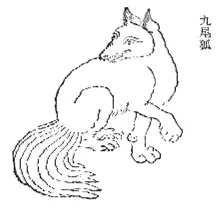
Korea's nine-tailed fox is real enough as a word: it turns up in the Veritable Records of the Joseon Dynasty as an insult thrown at corrupt officials, and in a thirteenth-century Buddhist chronicle as the spirit of a mountain near Gyeongju who sent a monk to China to study and then died as an old black fox.
Where does the legend of The Nine-Tailed Fox and the Scholar come from?
- Location
- Gyeongsangbuk-do, South Korea
- Kind of legend
- Creature legend
- Coordinates
- 35.935, 129.177
- Last updated
LOCATION
What is the legend of The Nine-Tailed Fox and the Scholar?
What Korea's written record and the 27,588 items of its national oral archive do not contain is the story usually told under this title: a fox who marries a travelling scholar and must hide her nature for a hundred nights, or a thousand, or until she has taken a hundred livers. The modern plot of a fox wife on a countdown has a first datable appearance on television, on 10 July 1979. The one script of it that a critic has been able to read, for the remake broadcast on 7 July 1997, has no scholar in it: the husband is Chilbok, a poor country bachelor, and the term is ten years.
What is the history of The Nine-Tailed Fox and the Scholar?
Korea has a nine-tailed fox and Korea has scholars. The modern plot that pairs a fox wife with a countdown — a fox who marries a man and will become human if she is not found out before the term runs out — has a first datable appearance, and it is on television, on 10 July 1979. In the one version of that script its critic has been able to read, the husband is a poor country bachelor, and the term is ten years.
Begin with the word. Gumiho, written 九尾狐, arrives in Korea as a Chinese term, and it arrives pointing back at Korea. In the classics that Korean scholars read, the nine-tailed fox belongs to Qingqiu: Guo Pu glosses Qingqiu as a mountain beyond the sea from which the nine-tailed fox comes, Fu Qian places the country of Qingqiu three hundred li east of the sea, and Kong Zhao says flatly that Qingqiu is a place name in Haedong, east of the sea. The line the Korean classical databases return most often is the tribute line: King Wen obtained the nine-tailed fox, and the Eastern Yi submitted. In every one of these it is Chinese authors writing about an animal that comes from the direction of Korea.
What Korea's own written record does with the word is unexpected, and it can be counted. A full-text search of 九尾狐 across the classical-sources tier of the Academy of Korean Studies' integrated platform returns 43 hits. Almost none of them is a story. In the Veritable Records of the Joseon Dynasty the phrase is an insult. The obituary of Jeong Yi-han, governor of Pyeongan Province, in Danjong sillok 6 (1453), ends with a couplet: his craftiness was a nine-tailed fox, his venom a two-headed snake — and the compilers add their own gloss, "a fox with nine tails; a creature that bewitches people". In Myeongjong sillok 28 (1562), an official who has attached himself to the strongman Yi Ryang is a man "whom people eye sidelong and point at, calling him a nine-tailed fox". In Sukjong sillok 4 (1675), Yi Ok's flattery is beyond compare, and "people called him a nine-tailed fox". In Yeongjo sillok 115 (1770) the king says it to a prisoner's face: even executed by law, the man is "no more than a nine-tailed fox". Earlier still, Yi Gyu-bo (1168–1241) uses the same figure in his Poem on the Old Shaman, written to celebrate an order expelling shamans from the capital: the woman who gathers crowds east of his house, he says, is if not the thousand-year rat of the burrow, then surely the nine-tailed fox of the grove. The eighteenth- and nineteenth-century vernacular court novels use it the same way, against scheming women. Across the 43 hits there is no fox who marries a scholar.
Korea does have a fox and a scholar, and it is older and stranger than the modern plot. In Book Four of the Samguk yusa, compiled around 1281, the monk Iryeon copies out the life of Wongwang from an old manuscript of the Suijeon then kept by a retired local officer in Gyeongju. Wongwang takes orders, and at thirty withdraws alone to Mount Samgi. Four years later a second monk settles nearby and practises loud incantations. A voice speaks to Wongwang in the night, praises his discipline, complains about the noise and asks him to move the neighbour on. Wongwang passes the message, and the neighbour laughs it off with the sentence that decides this entry: "How can a master of the Dharma trouble himself over the words of a fox spirit?" The spirit answers by bringing the mountain down on the man's hermitage overnight, and then explains itself: "My years are close to three thousand, and my powers are at their height." It tells Wongwang that piety in one valley is worth nothing, sends him to China, and gives him the plan for the journey. He stays eleven years, masters the Buddhist canon and Confucian learning too, and returns in 600. Coming back to thank the spirit, he asks to see its true shape and is shown an enormous arm reaching through the cloud — which is why, the text says, the valley is called Bijangsan, Long-Arm Mountain. The spirit then announces its own death and asks him to come and see it off. On the appointed day Wongwang finds one old black fox, black as lacquer, panting; it stops breathing and dies. Wongwang went on to draft the Silla king's petition for Sui troops, died at eighty-four and was buried west of Myeonghwal Fortress. The annotators of the National Institute of Korean History place Mount Samgi in Duryu-ri, Angang-eup, in modern Gyeongju, and identify it with Geumgok-san, where Geumgoksa holds Wongwang's memorial stupa.
That is a fox and a scholar, and it is the oldest one Korea has. The fox has no nine tails and marries nobody; it advises the scholar, sends him to China, and dies of old age with him as witness.
The oral record was gathered late and it can be searched. The Academy of Korean Studies' Compendium of Korean Oral Literature — collected in a first campaign from 1979 and a second from 2008 — holds 27,588 narrative items. Thirty-eight of them contain the word gumiho. Reading the list is the argument: the fox is exposed and killed by Kang Gam-chan, by Jiang Ziya, by Bak Mun-su, by a salt pedlar's staff, by a hunting dog, by a three-legged dog. In "The King's Daughter-in-Law is a Gumiho", recorded from Bae Gil-hwan, aged 67, at Unjeong 1-dong in Byeokjin-myeon, Seongju County, on 4 May 1979, the fox has married into a royal house and is eating one minister a night; her face is covered with a cloth, she is clubbed on the back of the head, a nine-tailed fox drops dead and the kingdom is at peace. In "The Maiden Who Detected a Gumiho by Chinese Verse", recorded from Jeong Jin-hyeon, aged 63, at Sajik-dong in Cheongju on 5 November 1980, the thousand-year fox of Mount Taebaek takes the shape of a beautiful young man and courts the daughter of a scholar named Yi; the father and mother are charmed and the daughter is not; she sets the suitor a couplet, and the fox travels to China and digs up Li Bai's grave to get the answering line; she then borrows the best hunting dog in the district, and the dog kills it. Here the fox is the suitor, the learning is the weapon used against it, and the person who sees through it is the bride. The one item in the whole archive titled "The Gumiho Bride", recorded from Yi Sun-rye at Buk-myeon in Inje County, Gangwon Province, in April 2013, survives as audio only: the archive record says there is no transcript.
The motifs of the modern plot do exist in Korea, but they belong to other tales. The hundred men come from the fox-bead type — number 258 in Choi In-hak's Korean type index, as Kim Hwan-hee reports after working through it — in which a schoolboy meets a beautiful woman on his way to the village school and they pass a bead between their mouths until he sickens; in one of the two branches described by Cho Hui-ung, the fox-woman is working through a hundred students. The livers come from the fox-sister type, in which a daughter obtained by prayer turns out to be a fox and empties the family's byre. Even that is not fixed: in "The Fox Sister", recorded from Yi Ok-ji at Seolcheon-myeon in Namhae County on 24 January 2011, she eats the horses whole, one a night, and then the parents, and the brother comes home three years later to a house with human bones in every corner.
The countdown and the marriage arrive from somewhere else. On 10 July 1979 KBS broadcast an episode of Jeonseol-ui gohyang (Hometown of Legends) called "Gumiho", scripted by Im Chung, with Han Hye-suk as the fox. The folklorist Kim Hwan-hee, who has gone through the collections and the type indexes looking for its plot, calls it flatly a created legend rather than a transmitted one: the motifs were pulled from Korean and foreign tales and the narrative was newly assembled, and what it drew on most is not Korean at all but Lafcadio Hearn's "Yuki-Onna" — a supernatural wife, a promise, a night when the husband speaks, and a wife who vanishes for ever. Kim writes that the episode was expanded and reproduced across media for the next forty years; in 2010 the Korea TV and Radio Writers Association found that the first episode of the drama Gumiho: Yeowoo Nuidyeon had partly plagiarised Im Chung's script. Yonhap traced the line in 2020 from Han Hye-suk to Lee Dong-wook: simple horror, then melodrama, then romantic comedy. The hundred livers and the thousand days are the grammar of that television line, and they change from production to production because nothing anchors them.
Timeline: the documented record of The Nine-Tailed Fox and the Scholar
- 600 Wongwang returns to Silla after eleven years in China, in the twenty-second year of King Jinpyeong. The Samguk yusa says he went because the spirit of Mount Samgi told him piety in one valley was worth nothing and gave him the plan for the crossing; when he came back to thank it, the spirit showed him an arm reaching through the clouds, announced its own death, and was found on the appointed day as an old black fox, black as lacquer, which stopped breathing and died. It is the oldest datable Korean pairing of a fox and a scholar, and the fox has no nine tails and marries nobody.
- c. 1281 The monk Iryeon compiles the Samguk yusa and copies the life of Wongwang from an old manuscript of the Suijeon then kept by a retired local officer in Gyeongju. The Suijeon itself is lost, so the Silla fox survives only through this quotation — and the text preserves the neighbouring monk's dismissal, «how can a master of the Dharma trouble himself over the words of a fox spirit?»
- 1453 Danjong sillok 6 records the death of Jeong Yi-han, governor of Pyeongan Province, and closes his obituary with a couplet: his craftiness was a nine-tailed fox, his venom a two-headed snake. The compilers gloss the term for their readers as «a fox with nine tails; a creature that bewitches people». The same insult recurs in the Veritable Records in 1562, 1675 and 1770.
- 1904 Lafcadio Hearn publishes «Yuki-Onna» in Kwaidan, noting in his preface that a farmer of Chofu, in Musashi, told it to him as a legend of his own village. A supernatural wife makes her husband promise never to tell; he tells her, after ten children; she reveals herself and vanishes. Seventy-five years later a Korean scriptwriter will build the same shape around a fox.
- 1930 Son Jin-tae publishes Joseon mindamjip in Tokyo, 154 Korean tales collected between 1920 and 1930. His nine-tailed fox material clusters in the north — Hamgyeong, Pyeongan, Hwanghae — while southern informants say simply «fox». Jeong In-seop's Ondol yahwa, 380 pages and 43 items, had appeared in Tokyo from Nihon Shoin on 18 March 1927. Neither collection yields the fox-wife countdown plot.
- 4 May 1979 Choi Jeong-yeo and Kang Eun-hae record «The King's Daughter-in-Law is a Gumiho» from Bae Gil-hwan, aged 67, at Unjeong 1-dong in Seongju County, North Gyeongsang — the same province as this entry's map pin. The fox has married into a royal house and eats a minister a night; Jiang Ziya covers her face, clubs the back of her head, and a nine-tailed fox drops dead. No countdown, no repentance, no bargain for humanity.
- 10 July 1979 KBS broadcasts the Jeonseol-ui gohyang episode «Gumiho», written by Im Chung, with Han Hye-suk as the fox. The folklorist Kim Hwan-hee, having searched the collections and the type indexes for its plot, calls it a created legend rather than a transmitted one, assembled from Korean and foreign motifs and owing its central shape to Hearn's «Yuki-Onna». It is the first datable appearance of the fox-wife countdown plot. In Im Chung's script for the 1997 remake, the only version Kim could read, the husband is a poor country bachelor and the term is ten years; Kim describes the episode as expanded and reproduced across media for the next forty years.
- 5 November 1980 Kim Yeong-jin records «The Maiden Who Detected a Gumiho by Chinese Verse» from Jeong Jin-hyeon, aged 63, at Sajik-dong in Cheongju. The thousand-year fox of Mount Taebaek courts a scholar's daughter in the shape of a beautiful young man; her parents are charmed, she is not; she sets him a couplet, he digs up Li Bai's grave in China for the answering line, and she has him killed by a borrowed hunting dog. In the recorded tradition the fox is often the suitor and the person who sees through it is a woman.
- April 2013 Hwang Ru-si and colleagues record an item from Yi Sun-rye at Buk-myeon in Inje County, Gangwon Province, catalogued as «The Gumiho Bride». It is the only record in the whole 27,588-item archive with that title, and the archive holds it as audio with no transcript, so its contents remain unread.
- 7 November 2020 Yonhap traces forty years of the televised gumiho, from Han Hye-suk in 1979 to Lee Dong-wook's male fox in 2020, describing the arc from simple horror to melodrama to romantic comedy. Each production resets the terms of the bargain — a hundred days, a thousand days, a hundred livers, a hundred essences.
Is there a rational explanation for The Nine-Tailed Fox and the Scholar?
There is nothing to disbelieve here, because there is nothing being claimed: no witness, no date, no place. The useful question is where the sentence came from, and that can be answered by counting.
Two corpora were searched on 16 August 2026, and both were controlled. In the classical-sources tier of the Academy of Korean Studies platform, 九尾狐 returns 43 records. Some are Chinese material quoted in Korean digests of Chinese history; the rest are, overwhelmingly, the word used as an insult against a named living person. None is a marriage plot. In the Compendium of Korean Oral Literature, gumiho returns 38 records, against 1,132 for "fox" and 3,078 for "tiger" in the same corpus on the same day; a nonsense string returned zero, and a term the corpus cannot contain returned a differently sized page, so the search was reading the query. All 38 titles were read. Not one is a fox who marries a scholar and counts down to becoming human.
The countdown itself gives the game away by refusing to settle. A hundred days in some retellings, a thousand in others; a hundred livers, or a hundred essences, or simply "the essence of a hundred men". Traditions transmitted by mouth do vary, but they vary around something; this number varies around nothing, because it is a scriptwriter's device that each new production resets. The English Wikipedia article "Gumiho", as read on 25 September 2026, says that a tale called "The Gumiho's 100 day wait" "was created in its modern form in the 1800s", and gives as its source a Miami University honours thesis of November 2010, Lauren Noelle Schmidt's East Asian Fox Legends. The thesis mentions the kumiho some thirty times; it has no hundred-day wait and no date in the 1800s.
Where a rational explanation is available it belongs to the earliest layer. In the Samguk yusa the sceptic is inside the story: the neighbouring monk who dismisses the night voice as "the words of a fox spirit" is using exactly the idiom the Joseon chroniclers would later use for a corrupt official — fox talk, the speech of something that flatters and deceives. The Silla text reports that a monk heard a voice, that a hillside came down, and that an old black animal was found dead where a spirit had said it would die. It gives the fox no tails at all.
The term of the countdown can be read in one script. Kim Hwan-hee could not obtain the 1979 film or its script, and in the eighth chapter of her series, posted on 27 December 2021, she summarises instead the script Im Chung wrote for the remake broadcast on 7 July 1997. There the husband is Chilbok, a poor country bachelor who looks after his mother. He sees the fox eat a human liver and is spared on a promise never to speak of it; the woman who then marries him is a gumiho who could have become human if he had kept the secret for ten years, and he breaks it as the tenth year closes, a day before her change. In that script the term is ten years and the husband is a peasant. No source quoted here gives the term of the 1979 broadcast. The archive's one recording actually titled "The Gumiho Bride", made in Inje County in 2013, is held as audio only, and the archive record consulted on 16 August 2026 gives no transcript.
Can you visit The Nine-Tailed Fox and the Scholar?
The pin for this entry is on Geumgoksa, a small temple in Duryu-ri, Angang-eup, in the north of Gyeongju. It marks the setting of the oldest documented Korean encounter between a fox spirit and a man of learning, the Mount Samgi episode of the Samguk yusa, in which the fox spirit speaks to the monk Wongwang. Kim Hwan-hee, whose essays this entry follows on the modern tale of the fox and the scholar, reports that she found no collected version matching its plot, so that tale has no place of its own to pin.
The annotators of the National Institute of Korean History identify Mount Samgi with Geumgok-san in Duryu-ri (Angang-eup), and they note, citing Jeong Yeong-ho's article of 1973, that the temple of Geumgoksa on that mountain holds Wongwang's stupa. The Korea Heritage Service lists the Stupa of Wongwangbeopsa at the Geumgoksa Site as a Gyeongsangbuk-do cultural heritage material, designated on 5 August 1985. Its address is 9-1 Duryu-ri; it is state-owned and managed by Gyeongju City. By our own calculation the pin is about 9.8 km north-north-west of Gyeongju City Hall and about 7.4 km south-west of the centre of Angang-eup. The Samguk yusa says Wongwang was buried west of Myeonghwal Fortress. The institute's note places the fortress on the summit of Myeonghwalsan, between the Cheongun-dong and Bomun-dong districts, about 3.5 km east-south-east of City Hall.
The documents behind this entry can be read online. The Samguk yusa passage is in the National Institute of Korean History's database as record sy_004r_0010_0010_0050, in Korean translation with the annotations cited above. The Compendium of Korean Oral Literature is published on the Academy of Korean Studies' platform. On 24 September 2026 its introduction described the 85 volumes of the 1980s campaign, drawn from more than 4,000 informants in some sixty cities and counties, and gave the narrative holding as 27,588 tales. The thirty-eight records containing "gumiho" that this entry relies on are consulted there, including the two quoted in the history. The same platform's classical-sources search for 九尾狐, which returned 43 records on 16 August 2026, returned 44 on 24 September 2026.
Sources consulted
- Iryeon, «Samguk yusa, book 4, «Wongwang seohak», quoting the old Suijeon manuscript» — Compiled c. 1281. Read in the annotated edition of the National Institute of Korean History (record sy_004r_0010_0010_0050), with the 1512 Kyujanggak woodblock (National Treasure 306-2) alongside. Source of the neighbouring monk's «the words of a fox spirit», of the spirit's «my years are close to three thousand», of the return in 600, of Bijangsan, of the old black fox found dead, and of the annotation placing Mount Samgi at Duryu-ri, Angang-eup, Gyeongju (citing Jeong Yeong-ho, Sachong 17-18, Korea University, 1973, pp. 202 and 210), 1281 book
- Academy of Korean Studies (Korean Studies Integrated Platform), «Full-text search of 九尾狐 in the classical-sources tier: 43 records (Joseon wangjo sillok, Dongguk Yi Sangguk jip, vernacular court novels)» — Danjong sillok 6 (1453), obituary of Jeong Yi-han, with the compilers' gloss; Myeongjong sillok 28 (1562); Sukjong sillok 4 (1675); Yeongjo sillok 115 (1770); Yi Gyu-bo (1168-1241), «Poem on the Old Shaman» in Dongguk Yi Sangguk jip. Search run and counted on 16 August 2026, 2026 archive
- Academy of Korean Studies, «Han'guk kubi munhak taegye (Compendium of Korean Oral Literature): 38 records containing «gumiho»» — First campaign from the late 1970s, published as 85 volumes covering more than 60 cities and counties and over 4,000 informants (15,107 tales, 6,187 songs, 376 shaman chants); second campaign from 2008. The narrative holding is now 27,588 items. All 38 titles read; two consulted in full: «The King's Daughter-in-Law is a Gumiho» (POKS.GUBI.GUBI.1_16617, Bae Gil-hwan, 67, Seongju, 4 May 1979, collectors Choi Jeong-yeo and Kang Eun-hae) and «The Maiden Who Detected a Gumiho by Chinese Verse» (POKS.GUBI.GUBI.1_21333, Jeong Jin-hyeon, 63, Cheongju, 5 November 1980, collector Kim Yeong-jin). Also «The Gumiho Bride» (POKS.GUBI.GUBI.2_22527, Inje County, April 2013, audio only, no transcript) and «The Fox Sister» (POKS.GUBI.GUBI.2_12198, Yi Ok-ji, Namhae County, 24 January 2011). Controls in the same corpus the same day: fox 1,132, tiger 3,078, nonsense string 0, 2018 archive
- Cho Hui-ung, ««Yeou guseul seolhwa» (the fox-bead tale)» — Encyclopedia of Korean Culture, Academy of Korean Studies; written 1995, revised February 2023. Describes the two branches of the type, one of which has the fox-woman working through a hundred students, places its densest distribution in Hamgyeong, Pyeongan and Hwanghae, and cites Han'guk kubi munhak taegye (1980-1988), Joseon mindamjip (1930) and Ondol yahwa (1927), 1995 web
- Son Jin-tae, «Joseon mindamjip (朝鮮民譚集)» — Kyodo Kenkyusha, Tokyo; 154 Korean tales collected between 1920 and 1930 and published in Japanese. The volume itself was not consulted for this entry: it is cited here at second hand, through Cho Hui-ung's bibliography for the fox-bead type and through Kim Hwan-hee, who quotes Son's observation that nine-tailed fox tales were told especially often in Hamgyeong, Pyeongan and Hwanghae while southern informants said simply «fox». Jeong In-seop's Ondol yahwa, the other collection in that bibliography, appeared in Tokyo from Nihon Shoin on 18 March 1927, 380 pages, 43 items, 1930 book
- Choi In-hak, «A Type Index of Korean Folktales» — Myong Ji University Publishing, Seoul; English version of the author's 1974 Tokyo Kyoiku University dissertation, held at HathiTrust in limited view. The index itself was not read for this entry. Its two nine-tailed fox types, 106 (the salt pedlar and the strange bone) and 258 (the gumiho and the magic bead), and the absence of any type matching a fox who marries a scholar, are taken from Kim Hwan-hee, who worked through the index looking for exactly that plot, 1979 book
- Lafcadio Hearn, ««Yuki-Onna», in Kwaidan: Stories and Studies of Strange Things» — Houghton Mifflin, Boston. Full text read. Hearn writes in his own preface that the tale «was told me by a farmer of Chofu, Nishitama-gori, in Musashi province, as a legend of his native village». In the story the promise is never to tell, not never to look; Minokichi speaks after ten children, and O-Yuki spares him for their sake and melts away through the smoke-hole, 1904 book
- Kim Hwan-hee, ««Is the Gumiho of Jeonseol-ui gohyang a story of the old people?» and following chapters of the same series» — Serialised essays, Brunch, 2021. Kim (PhD in comparative literature, University of Southern California, 1991; author of Yet-iyagi-ui balgyeon, Urikyoyuk, 2007) dates the episode to 10 July 1979, names Im Chung as its writer, argues it is a created rather than a transmitted legend, traces its debt to Hearn's «Yuki-Onna» and Kobayashi Masaki's film, reports that she found no collected version matching its plot, and gives Choi In-hak's type numbers 106 and 258, 2021 web
- Yonhap News, ««From Han Hye-suk to Lee Dong-wook: the gumiho that has never stopped evolving in 40 years»» — Yonhap wire story, republished by Kyeonggi Shinmun (kgnews.co.kr) on 7 November 2020. Traces the televised gumiho from Han Hye-suk's 1979 performance to Lee Dong-wook's gender-flipped 2020 version, describing the arc from simple horror to melodrama to romantic comedy, 2020 newspaper archive
- Wikipedia contributors, «Kumiho (English Wikipedia article)» — Consulted 16 August 2026 as the likely proximate source of the version this entry replaces. On that date it dated a «Gumiho's 100 day wait» tale to the 1800s with no source attached. By 25 September 2026 the article, now titled «Gumiho», cites for that sentence a 2010 Miami University honours thesis whose text mentions neither a hundred-day wait nor the 1800s, 2026 web
- Korea Heritage Service, «Geumgoksaji Wongwangbeopsa budotap (Stupa of Wongwangbeopsa in Geumgoksa Site): Gyeongsangbuk-do Cultural Heritage Material, designated 5 August 1985, 9-1 Duryu-ri, Angang-eup, Gyeongju; state-owned, managed by Gyeongju City» — National Heritage Portal (heritage.go.kr), consulted 24 September 2026, 2026 web
- Kim Hwan-hee, ««8. Im Chung's created old tale, Jeonseol-ui gohyang: Gumiho» — Kim could not obtain the 1979 film or script and summarises Im Chung's script for the remake broadcast on 7 July 1997: Chilbok, a poor country bachelor, is spared by the gumiho on a promise of silence; she marries him and could have become human if he kept the secret for ten years. Also reports the 2010 finding of the Korea TV and Radio Writers Association that the drama Gumiho: Yeowoo Nuidyeon partly plagiarised Im Chung» — Brunch series «Gumiho and Yuki-onna», chapter 8, posted 27 December 2021, 2021 web
- Lauren Noelle Schmidt, «East Asian Fox Legends: Read at Your Own Risk, Possession Possible — the source the English Wikipedia article «Gumiho» cites for a «Gumiho's 100 day wait» tale created in the 1800s; its full text mentions neither» — University Honors thesis, Miami University, Oxford, Ohio (OhioLINK ETD), 2010 academic
Reviewed by V. Serrano on 2026-08-16 · How we verify our content
📎 Source: Enigma Atlas
💬 Field testimonies (0)
No testimonies yet. Add the first.
Add your testimony
🔒 Log in to add a testimony