🦶 CRYPTID SIGHTING · EXP. Nº8141
ACTIVE
Mokele-mbembe
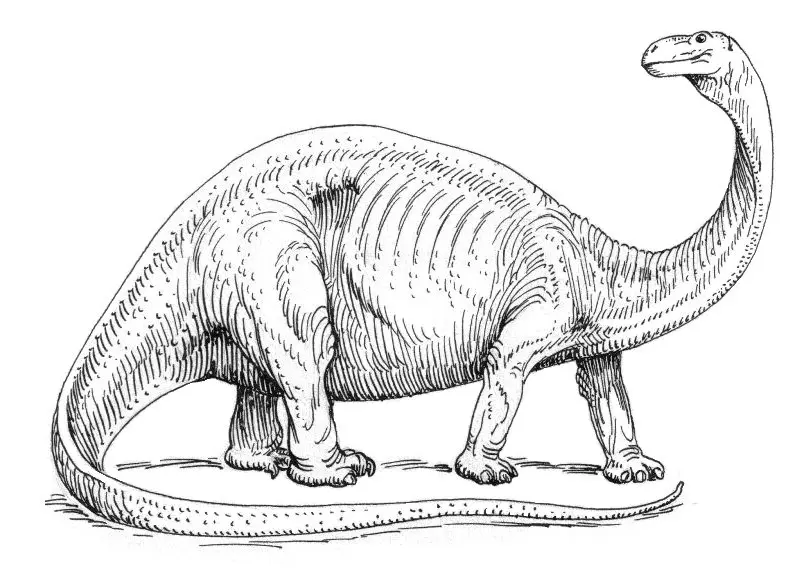
Mokele-mbembe is the animal said to live in the rivers and swamps of the Likouala, in the north of the Republic of the Congo: elephant-sized, with a long neck and a long tail, which is why searchers have compared it to a surviving sauropod dinosaur.
Where and when was Mokele-mbembe sighted?
- Location
- Congo Basin, Congo
- Date sighted
- 1980-01-01
- Coordinates
- 1.0, 16.5
- Last updated
LOCATION
What is Mokele-mbembe?
Its name is usually glossed as "one who stops the flow of rivers", although Willy Ley, summarising the 1913 report of Captain von Stein zu Lausnitz, wrote that whether the name had any special meaning was uncertain. The documentary trail is older and stranger than the usual account. In 1776 the Abbé Proyart printed the report of French missionaries in Loango who found claw prints "of about three feet in circumference" left by an animal they never saw. The dinosaur only arrives in 1909, in Carl Hagenbeck's Beasts and Men, and it arrives in Rhodesia, not the Congo. The much-quoted 1913 report was, according to Ley, still in manuscript, and every published version of it descends from Ley's translation. From 1985 the search passed largely to creationist expeditions seeking to refute evolution. In more than fifty expeditions, no photograph, bone or specimen has ever been produced.
What is the history of Mokele-mbembe?
No photograph, no bone, no scale, no scrap of tissue. After more than a century of searching, nothing physical has ever come out of the Congo swamps to support the existence of Mokele-mbembe, and nobody on any side of the argument claims otherwise. That makes the interesting question documentary rather than zoological: where did the idea of a surviving sauropod in central Africa come from, who kept it alive, and what did the expeditions actually bring home?
The oldest text everybody cites is not about a dinosaur. In 1776 the Abbé Liévin-Bonaventure Proyart published in Paris his Histoire de Loango, Kakongo, et autres royaumes d'Afrique, compiled from the memoirs of the French mission's apostolic prefects. On pages 38 and 39, wedged between a paragraph on frogs and a paragraph on lions, sits a single sentence with the marginal note Animal monstrueux: the missionaries, passing along the edge of a forest, saw "the track of an animal which they did not see, but which must be monstrous: the marks of its claws could be seen on the ground, and formed an imprint of about three feet in circumference". They judged from the spacing of the prints that it had not been running, and that it set its feet seven or eight feet apart. That is the whole of it: there is no neck, no tail, no water and no size comparison. And it happens on the Atlantic coast of the Loango kingdom, far to the south-west of the Likouala swamps where the modern search takes place.
The dinosaur arrives in 1909, and it arrives in Rhodesia. The man who put it there was not a naturalist but Carl Hagenbeck, the Hamburg animal dealer and showman who invented the barless zoo. In Beasts and Men he reports that two independent informants — one of his own collectors and an English big-game hunter — had been told by local people "that in the depth of the great swamps there dwelt a huge monster, half elephant, half dragon". His conclusion is the sentence that founded a genre: "From what I have heard of the animal, it seems to me that it can only be some kind of dinosaur, seemingly akin to the brontosaurus." He adds that he had already sent an expedition, "at great expense", which came back having "proved nothing, either one way or the other", beaten by fever and hostility. The index of the book files the episode plainly: "Dinosaur, reputed existence of a, in Rhodesia". On page 254, a hundred and fifty-eight pages later, Hagenbeck describes the attraction he was building at his Stellingen park: life-size prehistoric animals around a pond, including "the thunder-lizard, the monstrous brontosaurus of one hundred and fifty feet long". The same book that seeded a living African brontosaurus was also selling a concrete one.
The 1913 report is known only through Willy Ley. Every retelling of Mokele-mbembe passes through Captain Ludwig Freiherr von Stein zu Lausnitz, sent to survey German Cameroon, and through the passage he supposedly wrote about an animal "very much feared by the Negroes of certain parts of the territory of the Congo, the lower Ubangi, the Sangha, and the Ikelemba rivers" — brownish-grey, elephant-sized, long flexible neck, alligator-like tail, vegetarian, living in caves washed out of the clay riverbanks. Ley carried the passage into English in The Lungfish and the Unicorn (1941) and printed it again in Exotic Zoology (1959), where he says that the official report of the expedition "is still in manuscript". In Ley's account von Stein "worded his report with the utmost caution", calling the animal "a very mysterious thing" which "possibly does not exist except in the imagination of the natives", and his description carries details the modern retellings drop: "only one tooth but a very long one; some say it is a horn", and canoes whose crews it kills "but without eating the bodies". The expedition, von Stein wrote, could not explore the stretch of the Sanga where an animal had been reported "due to the brusque end of our expedition", which Ley's footnote attributes to the outbreak of the First World War. The creationist author William J. Gibbons, who reproduces the passage in the Institute for Creation Research's own pages, quotes it without giving any source at all for the wording. Every published version descends from Ley's translation of an unpublished manuscript.
1976-1981: the picture cards. The modern search begins when the Texan herpetologist James Powell, in Gabon to study crocodiles, hears Fang stories of a river beast called n'yamala and — his own account, as retold by Gibbons — has a local witchdoctor, in Gibbons's word, named Michael Obang pick "a picture of the diplodocus from a book on dinosaurs" as the animal he had seen in 1946. Powell took this to Roy P. Mackal, a University of Chicago biochemist turned cryptozoologist. Mackal and Powell mounted two expeditions to the Republic of the Congo, in 1980 and 1981; the University of Chicago Magazine records that the second was funded in part by the National Geographic Society. Their fixer at Impfondo was Pastor Eugene Thomas, who had ministered in the area since 1955 and who — in Mackal's own words, quoted by the magazine — "was with us not only to interpret, but also to spread Christianity". The same account notes that when a village near Lake Tele told Mackal nobody there had seen anything, a Congolese official attached to the party "made an impassioned plea for cooperation, first conciliatory and then threatening", after which testimony improved. The expeditions came back with footprints and interviews.
December 1981: the press conference. The aerospace engineer Herman Regusters, who had been slated to run sonar for Mackal before the partnership collapsed over "personal and professional differences", led his own team to Lake Tele and returned claiming photographs and a recording. Mackal told UPI on 21 December: "Do we have a picture? … He's not qualified." The Jet Propulsion Laboratory, where Regusters had worked, told the same agency it had refused to develop his film and had "given it no support at all". At the news conference the next day Regusters produced neither the photographs nor the twenty-second tape of a "huge roaring trumpeting noise"; asked to play it, he said he would produce it later and warned that "it did not sound very impressive". A UPI dispatch of 1985 records his account that on returning in 1981 he had photographed the animal but that "all 23 rolls of film were underexposed". In his own published report of 1982, quoted by the Skeptical Inquirer, the reasons multiply — "there were times when there were no cameras at hand", "the humidity destroyed all the film", and every member of the scientific team saw the animal "except the photographer".
1983: the macro setting. The Congolese biologist Marcellin Agnagna led the first Congolese expedition to Lake Tele and reported watching the animal for some minutes. No film survived; the explanation given at the time was that "the camera was accidentally set on macro".
And then the search changed hands. From 1985 the field passes to men who state their reason for being there. William J. Gibbons ran expeditions in November 1985-May 1986 and November 1992 in the Congo, and in November 2000 and February 2002 in Cameroon — the last of them "a four man Christian expedition" — and published the account in the Institute for Creation Research's pages under a plain thesis: "Perhaps the most exciting prospect for the world of creation science is the possibility that dinosaurs may still be living in the remote jungles of the world. Evolution and its accompanying necessity of long ages of evolutionary development would be hard pressed to accommodate a living dinosaur." His 2000 companion was Dave Woetzel, of the creationist outfit Genesis Park. In 2014 Daniel Loxton, co-author of the Columbia University Press study Abominable Science!, put the state of the field bluntly: Mokele-mbembe "is a case that's really by, of, and for creationists at this point. All the expeditions in recent years … they're really missionary expeditions." Darren Naish, writing in Scientific American, captions Mackal's 1987 book as "one of the few non-creationist books written on mokele-mbembe".
Timeline: the documented record of Mokele-mbembe
- 1776 Abbé Liévin-Bonaventure Proyart prints the report of French missionaries in Loango who found claw prints "about three feet in circumference" belonging to "an animal which they did not see, but which must be monstrous". No neck, no tail, no water and no dinosaur are mentioned.
- 1909 Carl Hagenbeck, the Hamburg animal dealer, publishes the sentence that founds the legend: the swamp monster "half elephant, half dragon" reported to him "can only be some kind of dinosaur, seemingly akin to the brontosaurus". His book places it in Rhodesia, not the Congo, and records that the expedition he had already sent "at great expense" proved nothing.
- 1913 — the report known only through Ley Captain Ludwig Freiherr von Stein zu Lausnitz leads a German survey of Cameroon, cut short by the outbreak of the First World War. Willy Ley, who carried his report into English in 1941 and printed it again in Exotic Zoology (1959), says the report "is still in manuscript" and quotes its description of an animal the local people called mokele-mbembe. Every later version, including the creationist one, descends from Ley.
- 1980 Roy P. Mackal, a University of Chicago biochemist, and the herpetologist James Powell mount the first modern expedition to the Likouala. Their fixer is the missionary Eugene Thomas, who in Mackal's words was there "not only to interpret, but also to spread Christianity".
- 1981 — the second expedition Mackal and Powell return, this time part-funded by the National Geographic Society. They reach neither Lake Tele nor any animal; they come back with footprints and interviews.
- 21-22 December 1981 Herman Regusters announces photographs and a tape from Lake Tele. Mackal tells UPI "Do we have a picture? … He's not qualified"; JPL says it refused to develop the film and gave the trip "no support at all". At the news conference Regusters produces neither the photographs nor the tape.
- 1982 Regusters publishes his own report. The reasons no photograph exists multiply: "there were times when there were no cameras at hand", "the humidity destroyed all the film", and every member of the scientific team saw the animal "except the photographer".
- 1983 The Congolese biologist Marcellin Agnagna leads the first Congolese expedition to Lake Tele and reports seeing the animal. No usable film survives; the explanation given is that the camera "was accidentally set on macro".
- 25 March 1985 UPI reports Regusters's account that all 23 rolls of film from 1981 came back underexposed, and his plan for a new trip with a team including a palaeontologist from Christian Heritage College in San Diego, an entomologist, and a 14-year-old boy to represent "all the American schoolkids who get worked up when we lecture about dinosaurs".
- November 1985 – May 1986 William J. Gibbons runs the first of his four expeditions. He reaches Lake Tele and sees no monster; by his own account the tangible result of the trip was a monkey skin sent to the natural history museum in London and classified as a new subspecies of mangabey.
- November 2000 In Cameroon, Gibbons and Dave Woetzel of the creationist project Genesis Park interview Baka informants with picture cards. The same witnesses who identify a sauropod also "immediately picked out a picture of the triceratops" as a local animal said to disembowel elephants.
- 2001 The Republic of the Congo creates the Lac Télé Community Reserve, about 4,511 km² of swamp forest co-managed with the Wildlife Conservation Society, holding one of the world's highest densities of western lowland gorillas.
- 2002 Gibbons publishes his expedition report through the Institute for Creation Research, opening it with the stated aim: a living dinosaur would leave evolution "hard pressed". It remains the clearest first-party statement of why the search continued.
- 28 December 2011 The BBC reports more than fifty expeditions and no scientific evidence. Rory Nugent, who searched the lake himself, says his guides "were screaming about a god beast" and calls guiding foreigners after the creature a good "money making operation".
- 2014 Daniel Loxton, co-author of Columbia University Press's Abominable Science!, states that Mokele-mbembe "is a case that's really by, of, and for creationists at this point" and that the recent expeditions are "really missionary expeditions".
- 2018 The palaeozoologist Darren Naish argues in Scientific American that the classic Mokele-mbembe is "an exact mirror of inaccurate sauropod reconstructions" of the early twentieth century, and that the whole idea grew from the dinosaur craze that followed the mounting of sauropod skeletons in 1905.
Is there a rational explanation for Mokele-mbembe?
We set out to test a specific claim: that from the 1980s the search for Mokele-mbembe was largely financed by young-earth creationists. The verdict is partly confirmed, and confirmed on better ground than funding. Declared budgets are almost impossible to check — the only expedition sponsor we could document from a published source is the National Geographic Society, which part-funded Mackal's second trip in 1981, and Mackal was not a creationist. What is fully documented, in the searchers' own words, is who organised the expeditions from 1985 onwards and why. Gibbons published his field reports through the Institute for Creation Research and opened them by stating that a living dinosaur would embarrass evolution; his 2002 team is described by him as "a four man Christian expedition"; his 2000 partner runs a creationist ministry. Loxton, co-author with Prothero of a Columbia University Press book on cryptids, described the recent expeditions in a 2014 interview as "purely … missionary expeditions … composed entirely of Christians". Darren Naish, a professional palaeozoologist, describes Mackal's 1987 volume as one of the few non-creationist books on the subject. The takeover is real; the money trail is simply not public.
The deeper problem is the method, and the searchers documented it themselves. The central evidence for Mokele-mbembe has always been testimony obtained through an interpreter with the help of a picture book. Gibbons records the founding instance approvingly: Powell's informant "picked out a picture of the diplodocus from a book on dinosaurs", and Mackal's witnesses were "absolutely emphatic that the illustrations of the apatasaurus and diplodocus in Mackal's book on dinosaurs were dead ringers". The creationist site Genesis Park states the point even more plainly: "It was not until missionaries showed natives a sauropod dinosaur that they identified this mysterious animal." That sentence is offered as evidence for the creature. It is in fact a description of how a leading question works.
Gibbons ran a control test, and it does not do what he thinks. In Cameroon in 2000 he showed informants a picture of a North American bear, which they did not recognise, and treated their failure as proof of accuracy. But the test only shows that people do not name animals they have never seen; it says nothing about whether a striking, unfamiliar image will attract the name of the local water-monster. The rest of that same expedition supplies the answer: with the same method, the same informants "immediately picked out a picture of the triceratops" as another animal of the region, one said to disembowel elephants. If the picture-card method is reliable, southern Cameroon also has ceratopsians. Nobody argues that. The method fails, and it fails in a way its own users have printed.
The description matches the palaeoart of its time. Naish's argument is that the classic Mokele-mbembe — amphibious, fat-limbed, swamp-bound, with clawed feet — "is very obviously an exact mirror of inaccurate sauropod reconstructions" from the late 1800s to the mid-twentieth century, and that its emergence tracks the 1905 unveiling of mounted sauropods in New York and London and the "dino-mania" that followed. Real sauropods, on current evidence, were not swamp waders. Gibbons offers as a triumph the pygmies' report of "dermal spikes" along the neck and back, "a physical feature of sauropod dinosaurs that was unknown to paleontologists until 1991" — but Naish dates that discovery to 1992, and the interviews were conducted in 2000, after the finding had been published and illustrated worldwide. A detail cannot corroborate a witness if the interviewer could have learned it from the newspapers first.
The legend also moved. Hagenbeck's swamp monster was in Rhodesia; as Sharon Hill notes in the Skeptical Inquirer, summarising Loxton and Prothero, the modern legend sits at Lake Tele, roughly 1,200 miles away. Between its first printing and its canonical form the creature changed address by that distance, which is how a story travels from book to book.
And the evidence keeps evaporating at the moment of capture. Floe Foxon assembled the pattern in the Skeptical Inquirer: Regusters' cameras that were not to hand, his film destroyed by humidity, his photographer who was the only one who did not see it, his recordings that came out "rather poor quality"; Agnagna's camera left on macro; a correspondent of Mackal's who had a camera and did not use it because "at this distance and with the haze it never works". Foxon's examples come from three expeditions and a letter between 1981 and 1987; each is possible on its own, and together they are the pattern he describes.
There are also strong local incentives that have nothing to do with zoology. Rory Nugent, who went to Lake Tele and wrote a book about it, told the BBC that his guides "were screaming about a god beast" and that he could not tell "whether it was part of the show"; he called guiding foreigners to hunt the creature a good "money making operation". The University of Chicago Magazine records that the travel writer Redmond O'Hanlon, in the Congo at the end of the 1980s, was told by the son of a village elder that the tales existed "to bring idiots like you here. And make a lot of money."
None of which means the testimony is worthless or the people are lying. Paul Ohlin, a development worker who spent more than a decade with the Bayaka, told the BBC that Mokele-mbembe is "a reality in everyday life" for them, while stressing their "spiritual connection" and "mystical relationship" with it — a category that need not be a flesh-and-blood species at all. The names also change from people to people: n'yamala among the Fang of Gabon, la'kila-bembe among the Baka of Cameroon, mokele-mbembe in the Likouala. The name is usually glossed as "one who stops the flow of rivers"; Willy Ley, summarising von Stein's report, wrote that "whether the name had any special meaning was uncertain".
The honest summary: something is being talked about in the Likouala, and it has been for a long time. The sauropod is not part of it. The sauropod was imported — by a Hamburg animal dealer in 1909, by picture books in the 1970s and 1980s, and by ministries with a doctrine to defend after that. The BBC counted more than fifty expeditions by 2011, and none of them has produced a specimen, a bone or an unambiguous photograph.
Can you visit Mokele-mbembe?
Lake Tele lies inside the Lac Télé Community Reserve, in the Likouala department of the Republic of the Congo (Congo-Brazzaville; the Democratic Republic of the Congo is a different country). The Key Biodiversity Areas factsheet for the site records a reserve created in 2001 and covering 4,511.23 km², about 70 % of it wetland, co-managed by the Ministry of Forest Economy with WCS Congo. It describes the wider complex as "the world's largest swamp forest, largest Ramsar site, and second largest wetland", and credits the reserve itself with "one of the highest known densities of gorillas in the world". The species that qualify the site are western gorilla, chimpanzee, African forest elephant, giant ground pangolin, grey-cheeked mangabey, Oustalet's red colobus and African grey parrot, plus two fish. Villages lie inside the reserve boundary, which is what makes it a community reserve.
Only one operator publishes a full itinerary for the lake. Congo Travel and Tours sells it as a twelve-day expedition out of Brazzaville, departing Thursdays or Sundays: a flight north to Impfondo, a Landcruiser run south past Epena to the launch at Matoko, five hours by river boat to the village the itinerary spells Bowa, then four days at or beyond the lake in tents, with porters carrying the bags. The same page calls the forest leg "a 50km path" in one line and a dry corridor "walkable for 25 miles" in another, which is 40 km, a fifth less. Two alternatives appear alongside it: a road approach from Ouesso and Pokola described as "a 2 day grueling horrible drive, which is not always safe", and a southern trek of "100km over 3-5 days or so in thick canopied pitch dark jungle that goes jet black shortly after 4pm".
Permits, entrance fees and taxes are inside the price. The itinerary collects the Lac Télé permit at the ministry office on day two, at Impfondo or Epena, and checks in with the village chief at Bowa on day three. Visas go through an invitation letter presented at an embassy beforehand. Food is included on the trek and excluded in the cities, where the page budgets "$280+". Two warnings sit on that same page in the operator's own words: the trip "is not possible due to rain from September until the end of the rainy season", and "there are at least 4 identified fake operators who have taken the money of clients CTT has rejected or denied to book and who had then found locals who promised the permits and program and vanished". Medical screening is explicit — an undeclared pre-existing condition means being "immediately ejected from the trip without right of refund".
How current the page is remains a fair question. Read on 22 September 2026, it still announces that the trip is "open for 2017" and still asks for help relocating a smaller lake found "just once" in January 2016.
The documents are easier to reach than the lake. Proyart's Histoire de Loango (1776) and Hagenbeck's Beasts and Men (1909) are free full-text scans on the Internet Archive. The UPI dispatches of December 1981 and March 1985 sit in the agency's own online archive. Mackal's A Living Dinosaur? (E. J. Brill, 1987) is a library book. Genesis Park hosts the audio file it presents as the Lake Tele recording, and the Institute for Creation Research still publishes Gibbons's expedition report.
Sources consulted
- Liévin-Bonaventure Proyart, «Histoire de Loango, Kakongo, et autres royaumes d'Afrique, pp. 38-39 — the missionaries' account of claw prints "of about three feet in circumference" left by an animal "which they did not see", with the marginal heading Animal monstrueux» — C. P. Berton et N. Crapart, Paris; Internet Archive, 1776 book
- Carl Hagenbeck (abridged translation by Hugh S. R. Elliot and A. G. Thacker), «Beasts and Men, pp. 96-97 — the "half elephant, half dragon" of the Rhodesian swamps, Hagenbeck's conclusion that it "can only be some kind of dinosaur, seemingly akin to the brontosaurus", and the failed expedition he sent after it» — Longmans, Green and Co., London (first printed November 1909; 1912 impression digitised); Internet Archive, 1909 book
- Joan Goulding, «Claims by a scientist that he photographed a dinosaur-like creature in Africa were met today with 'open minded skepticism' by his former partner» — United Press International (UPI Archives), 1981 newspaper archive
- Joan Goulding, «A man who claims he saw a huge creature resembling a prehistoric dinosaur… called a news conference today but did not produce the photographs and tape recordings» — United Press International (UPI Archives), 1981 newspaper archive
- Teresa Wippel Kunzl, «An amateur explorer who says he discovered a dinosaur-like animal in Africa's Congo four years ago plans another expedition» — United Press International (UPI Archives), 1985 newspaper archive
- William J. Gibbons, «In Search of the Congo Dinosaur — a first-party account of four creationist expeditions (1985-2002), the picture-card interviewing method, and the stated aim of embarrassing evolution» — Institute for Creation Research, 2002 report
- Floe Foxon, «Fringe Zoology: The (In)Convenience of Disappearing Evidence — the pattern of evidence lost at the moment of capture, with direct quotations from Regusters (1982), Agnagna (1983) and Mackal (1987)» — Skeptical Inquirer, vol. 49, no. 1, 2025 academic
- Kylie Sturgess (interviewing Daniel Loxton and Donald R. Prothero), «Mythbusting Monsters — Abominable Science with Daniel Loxton and Donald Prothero (interview): "the Mokele-Mbembe, in particular, is a case that's really by, of, and for creationists at this point"» — Skeptical Inquirer, 2014 interview
- Darren Naish, «Misreading the Mokele-Mbembe (the Mokele-Mbembe, Part 1) — Hagenbeck as the origin, the Rhodesian setting, and the creature as a mirror of obsolete sauropod art» — Scientific American, Tetrapod Zoology blog, 2018 web
- Maureen Searcy, «Roy Mackal's wild speculation — the two expeditions of 1980 and 1981, the National Geographic Society funding, the missionary interpreter Eugene Thomas, and the coerced village testimony» — The University of Chicago Magazine, Summer 2021, 2021 newspaper archive
- Cordelia Hebblethwaite, «The hunt for Mokele-mbembe: Congo's Loch Ness Monster — more than fifty expeditions, Rory Nugent on the "money making operation", Paul Ohlin on the Bayaka's "mystical relationship" with the creature» — BBC News / BBC World Service, 2011 newspaper archive
- Sharon Hill, «Prehistoric Survivors? They Are Really Most Sincerely Dead — the legend's move from Rhodesia to Lake Tele, and the funding of Congo expeditions by Christian backers» — Skeptical Inquirer, 2014 web
- Key Biodiversity Areas Partnership, «Lac Télé Community Reserve (KBA 24249) — factsheet: created 2001, 4,511 km², 70% wetland, co-managed by the Ministry of Forest Economy and WCS Congo» — keybiodiversityareas.org, 2023 report
- Genesis Park, «The Mokele-mbembe of the Congo — creationist exhibit page: "It was not until missionaries showed natives a sauropod dinosaur that they identified this mysterious animal", plus the audio presented as the Lake Tele recording» — genesispark.com, 2026 web
- Congo Travel and Tours, «Lake Tele Expedition — route via Impfondo, Epena and Boha, the 50 km trek, permits, seasonality and warnings about fraudulent intermediaries» — congotravelandtours.com, 2026 web
- Willy Ley, «Willy Ley's Exotic Zoology, pp. 69-70 — von Stein zu Lausnitz's 1913 report, "still in manuscript", the description of mokele-mbembe, the footnote on the outbreak of the First World War, and the remark that whether the name "had any special meaning was uncertain" (portions derived from The Lungfish and the Unicorn, 1941)» — Viking Press, New York, 1959; Bonanza Books reprint, 1987; Internet Archive, 1959 book
Reviewed by V. Serrano on 2026-08-01 · How we verify our content
📎 Source: Enigma Atlas
💬 Field testimonies (0)
No testimonies yet. Add the first.
Add your testimony
🔒 Log in to add a testimony