🦶 CRYPTID SIGHTING · EXP. Nº0555
ACTIVE
Storsjöodjuret
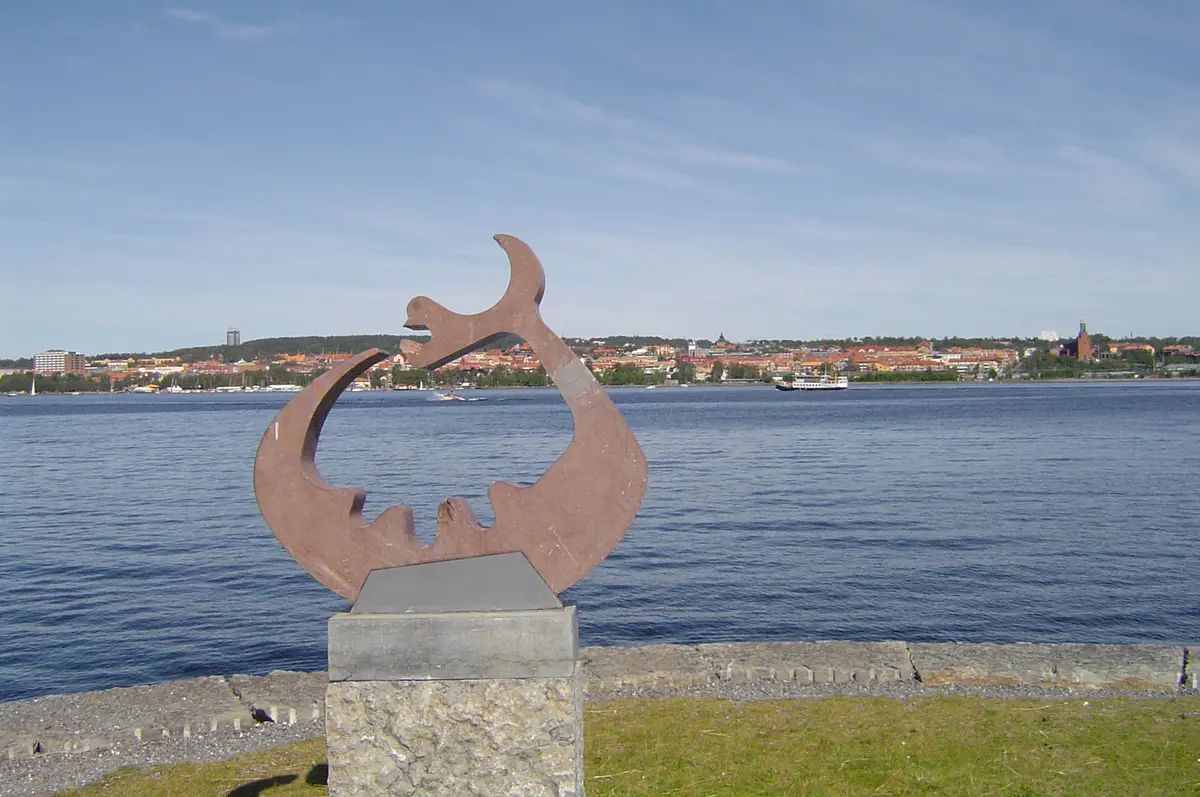
Storsjöodjuret, the Great Lake Monster, is said to live in Storsjön, the lake that Östersund and the island of Frösön share in central Sweden.
Where and when was Storsjöodjuret sighted?
- Location
- Östersund, Jämtland, Sweden
- Date sighted
- Unknown
- Coordinates
- 63.179, 14.619
- Last updated
LOCATION
What is Storsjöodjuret?
Its best-documented episode is not a sighting but an administrative one. On 22 January 1986, acting on an application from Östersund's tourist office, the Jämtland county administrative board banned killing, injuring or capturing the creature, and removing or damaging its eggs, roe or nest. The rule stood for almost twenty years, until a man asked permission to take the eggs and hatch them; the courts found there was no verified species to protect, and in November 2005 the parliamentary ombudsman told the board to repeal its own regulation. Before the lawyers came the hunters: baited iron chains wrapped in red cloth in the winter of 1893, and in 1894 a capture company headed by the innkeeper Maria Helin, with a raft lit by electric lamps, a harpooner brought from Norway and a baited steel trap that the Jamtli museum still exhibits. Two naturalists tried to name the animal. Peter Olsson concluded in 1899 that it was a seal; the antiquarian Carl Wibling proposed in 1900 a family of beavers — an animal shot out of Sweden in 1871.
What is the history of Storsjöodjuret?
Storsjön is a big, cold, island-strewn lake in central Sweden, and the town on its eastern shore, Östersund, faces the island of Frösön across a narrow sound. On Frösön stands the northernmost runestone in Sweden, and almost everything written about the Great Lake Monster begins there — with a stone that says nothing about it.
The inscription, raised in the eleventh century, is short and entirely administrative: Östman, Gudfast's son, had this stone raised and this bridge made, and he had Jämtland christened; Åsbjörn made the bridge; Tryn and Sten carved these runes. There is no creature in it. What there is, is a rundjur — the ornamental beast whose body forms the coil the runes are written along — and the Swedish National Heritage Board says plainly on its own page for the stone that several folk legends are attached to it, among them that this carved beast has been taken as a picture of the Storsjöodjuret. Taken as. The legend is a reading of the ornament, not a translation of the text. The stone was drawn as early as 1643 in a book on runestones published in Copenhagen, appears on a survey map of 1646 standing on Frösön's easternmost point by the ferry sound, and has stood since 1987 outside the county council building.
Now the date everyone repeats. Every retelling of this legend says the oldest written trace is a manuscript of 1635 by a clergyman named Mogens (or Morten) Pedersen "in Herdal", and then splits in two about what that manuscript actually says. One line — the one the scholarly literature follows, via Arvid Enqvist's 1938 study of the Kettil Runske legend in the journal Rig — has it describing a lake serpent bound magically to the bottom of Storsjön by a rune-master who carved the spell into the Frösö stone. The other, which is what Swedish popular sources and museum leaflets tell, has it recording the tale of two trolls, Jata and Kata, brewing at the lakeside until a black serpent-bodied, cat-headed thing leapt from the cauldron. These are not variants of one story; they are two stories, and only one of them can be the 1635 text. I have not been able to read the manuscript, and I could not establish from a source I had actually read which of the two it contains. What can be said is smaller and firmer: "Herdal" is the old form of Härjedalen, the province south of Jämtland — seventeenth-century church documents from the area are signed in Herdalia — so the man credited with the earliest record was not writing from the shore of Storsjön.
The earliest description of the belief that can be checked is later and institutional. In 1666 an order went out to every Swedish parish to inventory its antiquities, repeated in 1669; the resulting reports, the rannsakningar efter antikviteter, are where the Frösö stone is located and described in detail, and the runologist Marit Åhlén notes that the serpent legend was already fastened to the stone by the middle of that century. The account usually quoted, credited to Anders Plantin and dated 1685, has the serpent's head lying under the stone, its body stretching across the lake and its tail buried at the village of Knytta — and adds the practical part of the belief: while the stone lay broken on the ground, strange things happened in the water and nobody could cross the lake in peace.
In the nineteenth century the sjörå, the spirit that ruled the water, was quietly replaced by a species. The ethnologist Sanna Händén-Svensson, who worked through the county archives and the digitised Swedish press for a 2025 study of the hunts, traces the shift: what had explained hard winds on the lake became, under a scientific worldview, a career opportunity for zoologists. The reports piled up. In the daily press there were 217 recorded observations in 1898, 219 in 1899 and 224 in 1900 — a national story, not a local one.
The hunts began before the reports peaked. In the winter of 1893 baited iron chains with grapnels were fixed at two points in the lake and wrapped in red cloth so they would show up. In 1894 a capture company was formed in Östersund, and it is worth naming who was in it, because the usual summary — "a company of local notables" — hides the most interesting member. It was headed by Miss Maria Helin (1854–1906), an entrepreneur who ran a beer parlour in town and held a licence to sell coffee, alongside the steamboat captain Anders Dedering, Vilhelm Sköld (1861–95) and the merchant O. Dahlin. They anchored a raft on piles and lit it with electric diving lamps to draw the animal in; they sent for a harpoon, decided on arrival it was too small and had a bigger one forged locally; and they contracted a harpooner from Norway and posted him at the lake. They are also credited with the baited steel trap that Jamtli still displays. Helin got a ballad for her trouble: a song of the period jokes that the idea went to her head and that she had fallen in love with the monster. Hers is the only woman's name in the whole century of hunting.
Two naturalists arrived. Aftonbladet sent Einar Lönnberg from Uppsala in December 1898; Jämtlandsposten had already appealed in print that September for accounts, preferably with witnessed signatures. Peter Olsson (1838–1923), a Lund-trained zoologist teaching in Östersund, published his own 47-page pamphlet the following year. Then, in 1900, the antiquarian Carl Wibling (1859–1920) printed a rival explanation, and the Swedish king paid 300 kronor towards sending a lieutenant north to test it. The trap-setting had by then become a public nuisance: in October 1900 the steamer Carl XV ran into one of the devices and had its paddle wheels torn apart.
Timeline: the documented record of Storsjöodjuret
- 11th century The Frösö runestone is raised by the ferry sound on Frösön. Its text records that Östman, Gudfast's son, had the stone raised and a bridge built and had Jämtland christened. It names no creature; the beast the legend points to is the ornamental coil the runes are written along.
- 1635 (attributed) Every retelling dates the oldest written trace to a manuscript by the clergyman Mogens Pedersen "in Herdal" — the old name of Härjedalen, the province south of the lake. Sources disagree irreconcilably about what it contains: a serpent bound to the lake bed by rune-magic, or the tale of the trolls Jata and Kata brewing the creature into being. The manuscript itself could not be consulted for this entry.
- 1643–1646 The Frösö stone is drawn in a book on runestones published in Copenhagen — the oldest surviving image of it — and appears three years later on a survey map, standing on the island's easternmost point.
- 1666–1685 Sweden orders every parish to inventory its antiquities, repeating the order in 1669. In these reports the Frösö stone is described in detail, and the serpent legend is already attached to it: the head under the stone, the body across the lake, the tail buried at Knytta. The account usually quoted is credited to Anders Plantin and dated 1685.
- 1860s The member of parliament Jöns Bromée and the people of his farm, coming home from the haymaking, see something splashing in the lake, load their guns and give chase by boat until it disappears. His written account is one of those Peter Olsson later collected; the papers of the collection are now in the Zetterström collection at Östersund city library.
- Winter 1893 The first documented capture attempt: baited iron chains fitted with grapnels are fixed at two points in the lake and wrapped in red cloth so they can be seen. Reported by Jämtlandsposten on 29 December 1893.
- 1894 A capture company is formed in Östersund, headed by Maria Helin (1854–1906), an innkeeper, with the steamboat captain Anders Dedering, Vilhelm Sköld and the merchant O. Dahlin. They moor a raft on piles lit by electric diving lamps, have a larger harpoon forged when the one they ordered proves too small, contract a harpooner from Norway, and set the baited steel trap now displayed at Jamtli. A ballad of the period mocks Helin for having fallen in love with the monster.
- 12 September 1898 Jämtlandsposten appeals in print for anyone who can give information about the creature to send it in, "preferably furnished with witnessed signatures". That December Aftonbladet sends the zoologist Einar Lönnberg from Uppsala to investigate; his findings run in the paper through December and January.
- 1899 Peter Olsson publishes a 47-page pamphlet at the Jämtlandsposten press in Östersund. On page 42 he concludes that the animal "most probably belongs to the seals (Pinnipedia)".
- 1900 The antiquarian Carl Wibling publishes a rival pamphlet titled, in effect, "a beaver family?" — although the last known Swedish beaver had been shot in Jämtland in 1871. The king contributes 300 kronor towards sending Lieutenant Otto von Mentzer north to test the idea; he finds neither beavers nor a monster. The daily press logs 224 reported observations that year, after 217 in 1898 and 219 in 1899.
- 1984 Einar Hagnestad's three-metre wooden climbing sculpture of the monster is installed in Badhusparken, Östersund. It grows out of the design that won the tourist office's 1982 competition for a symbol.
- 22 January 1986 Acting on an application filed by Östersund's tourist office in 1985, the Jämtland county administrative board uses §14 of the Nature Conservation Act to ban killing, injuring or capturing living animals of the species Storsjöodjuret within Storsjön, and removing or damaging its eggs, roe or nest. Published as 23 FS 1986:3, file 11.122-142-85.
- 11 November 2002 A private individual living in Sollentuna asks the county board for an exemption from the ban, so as to take eggs from the nest, hatch them and raise the young in a game enclosure open to school groups and researchers. The board rejects the request on 2 June 2003.
- 11 July 2003 The environmental court at Östersund district court dismisses his appeal in case M 3033-03: the rule concerns a scientifically unverified species, so the applicant has no legally protected interest — and the court sets the rule aside under the constitution for breaching the requirement of objectivity.
- 9 November 2005 Parliamentary ombudsman Nils-Olof Berggren issues decision 1636-2004, agreeing that the 1986 rule has no legal effect and asking the board to settle the matter. The board repeals its own decision days later, citing "manifestly incorrect application of the law". In its submission the county museum had argued that the creature exists as long as people say it does.
- 2008–2009 Underwater cameras stream online in August 2008 and a project spokesman reads their infrared images on television as showing heat and cells; the following year boats sweep the lake bed for two days with sonar and a camera robot. Neither search produces anything.
- 2022–2023 The Storsjöodjurscenter at Svenstavik, opened in 2012, closes after the local business association gives up on it: visitor income never covered the running costs. Part of the collection moves into Svenstavik's new library, which opens in autumn 2023.
Is there a rational explanation for Storsjöodjuret?
Two rival explanations were published within a year of each other, and both are readable today because the National Library of Sweden has digitised them.
Peter Olsson's Storsjöodjuret. Framställning af fakta och utredning (Östersund, 1899) collected witness statements — farmers, and at least one member of parliament — and ended, on page 42, with a sentence that is worth having exactly: from the available material "it seems to us to follow that this animal most probably belongs to the seals (Pinnipedia)". Not a reptile, not a survivor from the deep past: a seal in a lake. The word rötmånadsskämt, the Swedish term for a silly-season hoax, appears on his last page, which is itself useful — the hoax reading was already on the table in 1899 and had to be argued against.
The following year the antiquarian Carl Wibling published Bidrag till kännedomen om det s.k. storsjöodjuret. En bäfverfamilj? — "a beaver family?" — and proposed that what people saw from the shore was more likely a surviving beaver family in the Storsjön catchment than any unknown serpent. It is the most elegantly self-defeating theory in the file, because Sweden had no beavers. The last known Swedish beaver had been shot at Sjoutnäset in Frostviken, in Jämtland itself, in 1871; a protection order in 1873 came too late, and beavers only returned in 1922 when two Norwegian animals were released. The Swedish king paid 300 kronor towards sending Lieutenant Otto von Mentzer north in 1900 to look for them. He found neither beavers nor a monster: one absent animal offered to explain another.
Einar Lönnberg, sent by Aftonbladet in December 1898, put his finger on the real mechanism. He recorded the case of a man who, early in the century, saw something under thick ice, took careful bearings and returned to fish there — and found nothing. At the time, Lönnberg wrote, it was thought to be some trick of the näck or the water spirit; "the generation now living", he added, believes it was the monster's back seen under the ice. The sighting had not changed. The available explanation had.
The numbers deserve the same care. Jamtli, the county museum, states on its own exhibition page that there have been "just over 260 observations over the years" and that the creature's existence has never been proved. Those are catalogued observations, held in the museum's own database. They are not the same thing as the 217, 219 and 224 press reports logged in 1898, 1899 and 1900 — a national newspaper story could produce many reports from a single incident. An earlier version of this entry said the local press logged "more than two hundred a year"; the figure is defensible only for those three specific years, only for the press, and only with a name attached to it.
The most quotable scepticism, though, is in a legal file, and it does not come from a sceptic. Asked by the county board in 2005 whether the 1986 protection order should stand, the county museum answered that the Storsjöodjuret exists as long as there are, and have been, people who say it exists, whether or not its physical existence can be proved in a natural-science sense, and argued that phenomena which appear magical and inexplicable are worth conserving as such. The county board itself concluded that the creature "exists in the sense that it exists in people's mental world". The parliamentary ombudsman's objection was never zoological: it was that a public authority may not use its regulatory power on an unverified species, and he weighed that against the board's acknowledged duty to promote local tourism. The board then repealed its own rule on the grounds of "manifestly incorrect application of the law, since there is no legal basis for protecting an unverified animal species".
As of August 2026 no specimen, carcass or bone has ever been produced. The two most technically ambitious searches came late and found nothing: underwater cameras streaming online in August 2008, whose infrared images a project spokesman read on television as showing heat and cells, and a two-day sonar and camera-robot sweep of the lake bed in 2009.
Can you visit Storsjöodjuret?
Nothing on the water marks the creature; the places connected with it are on land, in Östersund, on Frösön and at Svenstavik at the southern end of the lake.
The Frösö runestone, the northernmost in Sweden, has stood since 1987 outside the county council building on Frösön, according to the Swedish National Heritage Board; a survey map of 1646 shows it on the island's easternmost point, by the ferry sound. The Board's page says a wheelchair user can reach it, though short stretches may be on gravel paths or level lawn. Its Swedish rendering of the inscription reads "Östman, Gudfasts son, lät resa denna sten och göra denna bro, och han lät kristna Jämtland", and the coiled rune animal on the stone has long been read as a picture of the monster.
Jamtli, the county museum, is at Museiplan 2, 831 31 Östersund, telephone 063-15 01 00. Its Storsjöodjuret exhibition, shown in the county museum building, opens with the question "Finns det?" and counts roughly 260 observations over the years. The exhibition page pictures the "väldiga sax", the huge trap with which the company formed in 1894 tried to catch the animal, baited with "en hel gris"; the museum's explanation for the failure is the theory that the animal lives only on fish (ref. 6). On Wednesday 23 September 2026 the museum's calendar gave the indoor exhibitions as open 11.00–20.30 and warned that times and prices vary with the season and with events. Adults paid 160 SEK that day and students and over-65s 130 SEK; 13–18-year-olds on their own paid 80 SEK, and under-18s with an adult went free. The ticket covers the county museum and Nationalmuseum Jamtli, while the open-air museum is free all year except during special events. Historieland, the summer living-history season, ran from 22 June to 16 August in 2026.
In Badhusparken on the Östersund waterfront stands a three-metre wooden climbing sculpture of the monster by Einar Hagnestad. The municipality's public art register dates it to 1984 and traces it to the competition for a symbol that the reorganised tourist office announced in autumn 1982, which Hagnestad won.
At Svenstavik, the Storsjöodjurscenter opened in 2012 and was run by the local business association until 2022, when Länstidningen Östersund reported that visitor income had never covered the running costs and that the concept would move to the new library (ref. 9). The municipal library service of Berg now describes a Storsjöodjursrummet at Svenstavik library, Mellanvägen 3B, with a shelf of objects and a "Vittnesmålsbion" in which seven people tell of their encounters with the animal.
Sources consulted
- Peter Olsson, «Storsjöodjuret. Framställning af fakta och utredning» — Jämtlandspostens boktryckeri, Östersund (digitised by the National Library of Sweden), 1899 book
- Carl Wibling, «Bidrag till kännedomen om det s.k. storsjöodjuret. En bäfverfamilj?» — Digitised by the National Library of Sweden, 1900 book
- Nils-Olof Berggren, Justitieombudsmannen, «Länsstyrelsen i Jämtlands län har i en föreskrift beslutat om fridlysning av Storsjöodjuret. Fråga om föreskriftens rättsliga verkan (dnr 1636-2004, JO 2006/07 s. 362)» — Riksdagens ombudsmän (JO), 2005 report
- Sanna Händén-Svensson, «Att fånga det som kanske inte finns? Natursyner och vetenskapssyner i fångstförsök och fridlysning av Storsjöodjuret» — Budkavlen. Tidskrift för etnologi och folkloristik 104, pp. 27–49, 2025 academic
- Riksantikvarieämbetet, «Frösön (Runstenar i Sverige): inscription, dating and the folk legends attached to the stone» — Swedish National Heritage Board, 2013 report
- Marit Åhlén, «Storsjöodjuret sitter fast i sten» — Språktidningen, 2007 web
- Jamtli, Jämtlands läns museum, «Utställning – Storsjöodjuret (the museum's own text on the trap, the 1894 company and the number of observations)» — jamtli.com, 2026 web
- Jamtli, «Öppettider och biljettpriser» — jamtli.com (checked 14 August 2026), 2026 web
- Konstwebben, Östersunds kommun, «Storsjöodjuret (Einar Hagnestad, 1984): public art record» — Östersund municipality, 2026 web
- Jens Stenman, «Storsjöodjurscenter i Svenstavik stänger – men konceptet flyttas» — Länstidningen Östersund, 2022 newspaper archive
- «Hernösands stifts historia och herdaminne (17th-century clergy of Härjedalen signing in Herdalia)» — Digitised full text, Internet Archive, 1923 book
Reviewed by V. Serrano on 2026-08-14 · How we verify our content
📎 Source: Enigma Atlas
💬 Field testimonies (0)
No testimonies yet. Add the first.
Add your testimony
🔒 Log in to add a testimony