📜 LEGEND · EXP. Nº0270
ACTIVE
La Patasola
In the mountains and forests of Tolima and the Colombian coffee country, people speak of the Patasola, a being with a single leg.
Where does the legend of La Patasola come from?
- Location
- Tolima, Colombia
- Kind of legend
- Creature legend
- Coordinates
- 4.439, -75.232
- Last updated
LOCATION
What is the legend of La Patasola?
Almost everything the internet says about her turns out to be recent. The oldest dated text cited for her is chapter I of Tomás Carrasquilla's novel La marquesa de Yolombó, serialised from 1926, and there the Patasola is masculine, has no seduction and no biography, smashes fruit trees, fences and roofs with a cloven hoof, and — Carrasquilla's last word on him — nothing works against him. A Manizales newspaper used her in 1931 to mock Liberal night patrols in the coffee town of Fresno; a Pasto magazine put her among the beings that come out at nightfall in the Tolima of 1938. The origin stories, among them the unfaithful wife killed by her husband, appear in the sources cited only from 2005 onwards, in compilations and encyclopaedia articles that contradict each other. What does have a long life is smaller: the eye-curse she casts, the crickets she puts in people's ears, and a protective prayer that nobody manages to finish.
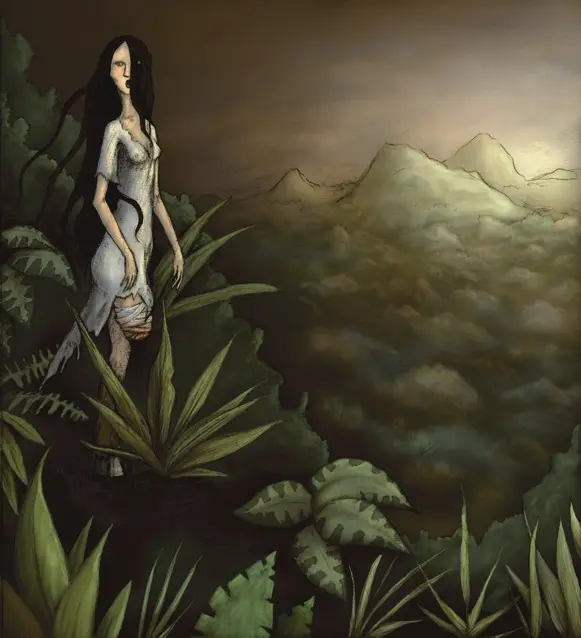
What is the history of La Patasola?
Start with the word, because the word is older and plainer than the monster. In rural Colombian Spanish patasola means hopping on one foot. Célico Caycedo's Juegos y diversiones, a booklet printed in Bogotá by Acción Cultural Popular for country schools and radio schools, uses it that way throughout: in the hopscotch game el avión the player "salta al cuadro 2 y al 3 en patasola o pata de gallo (levantando un pie)", and among the forfeits at the end of the book is "andar en patacoja o patasola o pategallo".
The oldest dated text cited here that uses the name for a being is chapter I of Tomás Carrasquilla's La marquesa de Yolombó, which the Medellín paper Colombia began serialising in 1926. It contains a surprise: Carrasquilla's Patasola is not a woman. It is masculine, and it is not seductive at all: "Aquí habita el Patasola, que, disparándose del monte, en tres zancadas, desgaja los frutales, rompe cercos, hunde techos y cuanto topa, con su única pezuña, hendida como la de un marrano babilónico. No se conoce contra que le valga." No beauty, no adultery, no blood. A hoofed thing that smashes fruit trees, fences and roofs — and, in the last sentence, nothing works against it.
That sentence matters, because it is the one the legend later loses. The passage sits inside a catalogue of the spirits of an eighteenth-century Antioquian mining camp — los ilusiones, the Patasola, the Madremonte, the Patetarro (a giant with one leg of flesh and a length of guadua cane for the other) and the invisible Bracamonte — and Carrasquilla explicitly says where he thinks they came from: "Los terribles genios del África no dejan en paz a los negros, arrancados de su suelo por los civilizados, cazadores de hombres. Con los barcos negreros han atravesado el Atlántico Océano… a oír sus nombres traducidos al castellano, a mezclarse con las deidades indígenas." In the passage the Patasola has no human past.
The next dated appearances are journalistic, and both are in the digitised historical press of the Biblioteca Luis Ángel Arango. On 14 September 1931 the Conservative daily La Patria, of Manizales, printed a "Crónica del Fresno" — Fresno is a coffee town in northern Tolima — datelined 6 September and signed only "Corresponsal". Its list of subheads includes "Los espantos de la patasola". The correspondent has been investigating why local Liberals were patrolling the streets at night armed with shotguns and peinillas during the electoral registration, and offers his explanation: they have seen "la PATASOLA que sube por el camino de La Sierra", who takes chocolate at one house, dines at another, walks down the butchers' street and goes to sleep at a Liberal leader's house; "es fama que la Patasola pasea la población a altas horas de la noche", and the armed men are her "guardia de honor". The piece is a joke, and the joke is the evidence: in 1931 a Caldas newspaper built a partisan gag on the Patasola and printed it without a word explaining who she was.
Seven years later she turns up in a magazine at the other end of the country. In Idearium, a monthly published in Pasto, number 8 of 1 January 1938 carries Cesáreo Rocha Castilla's essay "El San Juan en el Tolima" (pp. 367-375), a long, affectionate description of the June festivities of the Tolima plain — La Chamba, Coyaima, the Saldaña, Chenche, Yaguará. Night falls on the cockfight and the horsemen, and Rocha Castilla runs through the beings that come out with it: "sale de un bosquecillo la madremonte, y en el peñón está el poira, y trisca por las lomas la patasola, y vuela bajito la candileja, y sale mandingas a hacer diabluras". Trisca — she frisks, she gambols. She is one item in a nocturnal roll-call, with no biography and no crime.
Then comes a gap: in 1942 Colombia's Ministry of Education ran a national folklore survey, the Encuesta Folclórica Nacional, and asked schoolteachers to write down what their towns believed; 286 returns survive, and the Patronato Colombiano de Artes y Ciencias has digitised a set of them, eight from Tolima. Two are from Honda, on the Magdalena. The Centro de Estudios Pedagógicos return, sent on 19 October 1942 by Salomón Rengifo Reina and signed by fifteen teachers, has a section headed "BRUJERÍA Y ADIVINACIÓN" that lists a dozen omens — the hummingbird that announces a visit, the black butterfly that announces a death, the ring on a thread that sexes an unborn child — and says flatly: "La superstición poco se conoce, y aunque se nombran muchos agüeros en realidad la mayoría de la gente no los toma en serio." No Patasola, no Madremonte, no Mohán. The second Honda return, from the travelling schools, is blunter still: under the same heading a teacher typed four words, "No exite ninguna superstición", and somebody reading the file in Bogotá wrote in the margin, in pencil, "¡Qué raro!"
Of the biography — the adulteress, the axe, the blood — the oldest dated version cited here is Alexander Prieto Osorno's article for Rinconete, the Instituto Cervantes' online magazine, on 25 October 2005, and it gives two mutually exclusive origins: a beautiful, "extremadamente perversa" woman whose leg the community cuts off with an axe, and a daughter who curses her mother while chopping firewood until "el Diablo le tuerce el hacha" and she cuts off her own leg. In neither is there a husband. The husband arrives with the Spanish Wikipedia article, where he kills his wife's employer and takes off her leg with a machete; the English article lists three origins, gives the axe to the second, a wicked temptress mutilated by the people she had wronged, and gives the third, the unfaithful wife, a husband who murders her.
What does have a continuous documentary life is smaller and stranger: the ojeo. Prieto Osorno prints the protective prayer — "Yo, como si, / pero como ya se ve… / Patasola, no hagas mal / que en el monte está tu bien" — and adds that fear has always stopped the victims finishing it. The same complex survives in fieldwork: a 2024 study of Ibagué's legends by Néstor Guarnizo Sánchez and colleagues, in the journal Modulema, describes a blonde one-legged woman who "se desplaza rápidamente con un vuelo de bruja", is used by farmers to frighten children into behaving, and can "retorcer sus ojos o introducir grillos en sus oídos"; the defence is "la oración del monte", which, they note, people forget precisely when they need it. Crickets in the ears and a prayer nobody can finish are odd things to invent twice.
In Ibagué the legends now live in school and in the June festival. The 2024 Modulema study found that residents link the teaching of the myths mainly to schools, universities and the Festival Folclórico Colombiano, with its comparsas and floats, and that respondents proposed parades with floats devoted to the local myths as a way of promoting them. Rocha Castilla's roll-call of 1938 was also written about the San Juan festivities.
Timeline: the documented record of La Patasola
- 1926-1928 Tomás Carrasquilla begins serialising 'La marquesa de Yolombó' in the Medellín paper 'Colombia'. Chapter I contains the oldest dated description of the being cited in this file, and it is masculine: 'Aquí habita el Patasola… con su única pezuña, hendida como la de un marrano babilónico. No se conoce contra que le valga.' No woman, no adultery, no blood — and no remedy.
- 14 September 1931 The Conservative daily 'La Patria' of Manizales prints a 'Crónica del Fresno' from northern Tolima, datelined 6 September and signed 'Corresponsal', with the subhead 'Los espantos de la patasola'. It mocks local Liberals patrolling at night by claiming they have seen 'la PATASOLA que sube por el camino de La Sierra' and that the armed men are her 'guardia de honor'. It is the oldest dated use of the name for the being in the Colombian press cited in this file.
- 1 January 1938 'Idearium', a monthly published in Pasto, prints Cesáreo Rocha Castilla's essay 'El San Juan en el Tolima' (pp. 367-375). Describing nightfall over the Tolima plain it lists the beings that come out: 'sale de un bosquecillo la madremonte, y en el peñón está el poira, y trisca por las lomas la patasola, y vuela bajito la candileja, y sale mandingas a hacer diabluras'. She has no story here, only a place in a roll-call.
- 19 October 1942 Colombia's national folklore survey reaches Honda, Tolima. The Centro de Estudios Pedagógicos return, signed by fifteen teachers, lists a dozen omens and concludes that 'la superstición poco se conoce'; a second Honda return, from the travelling schools, answers the heading 'Brujería y adivinación' with four words, 'No exite ninguna superstición', beside which a reader in Bogotá pencilled '¡Qué raro!'. Neither names the Patasola.
- c. 1950 (and reissued 1976) Acción Cultural Popular publishes Célico Caycedo's 'Juegos y diversiones' for rural schools. It uses 'patasola' throughout in its ordinary sense — hopping on one foot — in hopscotch and in the list of forfeits: 'andar en patacoja o patasola o pategallo'. The catalogue marks the 1950 date as approximate.
- 25 October 2005 Alexander Prieto Osorno publishes 'Bestiario latinoamericano (III). La Patasola' in Rinconete, the Instituto Cervantes' online magazine. It gives two incompatible origins — a community amputating a 'perverse' woman's leg with an axe, and a daughter whose axe the Devil twists — prints the protective prayer, and quotes Carrasquilla while cutting the sentence that says nothing protects against him.
- 14 October 2006 and 8 August 2009 The Spanish Wikipedia article is created on 14 October 2006 and blanked seven minutes later by an administrator with the note 'Copyvio encontrado'. It is restarted on 8 August 2009 by an editor whose edit summary reads 'comienzo art con material desde wiki :en' — the Spanish text begins as a translation of the English one. The husband-and-machete origin now printed there descends from that restart.
- 12 December 2024 Néstor Guarnizo Sánchez, Fabio Lizcano Prada, Robert Gutiérrez Ortiz and Misael Ariza Rodríguez publish a study of Ibagué's legends in the journal Modulema. Their Patasola is blonde, one-legged, flies 'con un vuelo de bruja', is used to frighten children into obeying, and inflicts crickets in the ears and twisted eyes; the defence is 'la oración del monte', which people forget when they most need it. There is no adultery and no husband.
Is there a rational explanation for La Patasola?
There is nothing here to test with instruments. Nobody claims a photograph, a cast of the hoof or a specimen, and the being has never been proposed as an undescribed animal — which is itself worth saying, because that conversion has happened to other one-legged and hairy figures. The honest scepticism about the Patasola is documentary, and it cuts in two directions.
Against the modern story: its most quoted element, the murdered adulteress, is the part with the shallowest paper trail. The three oldest dated texts cited here — Carrasquilla in 1926, La Patria in 1931, Idearium in 1938 — give her no origin at all, and Carrasquilla's is not even female. The versions that supply a motive are late and mutually exclusive (a community with an axe, a daughter and the Devil, a husband with a machete). The vampire framing has a traceable address too: the English Wikipedia article sources its "vampire-like lust for human flesh and blood" to Vampire Legends and Myths, a 2012 popular compendium, and the Spanish article supports one of its statements with a link to a Chilean wedding-planning forum. The chain also drops a sentence. When Rinconete quotes Carrasquilla it stops one sentence early, leaving out "No se conoce contra que le valga", and in its next paragraph states, on the authority of oral tradition, that "sólo hay una forma para protegerse": learning a prayer by heart. The sentence removed is the one that contradicts the claim being made.
Against over-correction: the ojeo complex is not an invention of the internet. Crickets in the ears, twisted eyes and a protective prayer nobody manages to finish appear in a 2005 Instituto Cervantes article and again in a 2024 university field study of Ibagué, and they are too specific and too useless to be a copy-paste artefact.
On age, the 2005 Rinconete article says the myth "prosperó en la segunda mitad del siglo xix y comienzos del siglo xx" with the colonisation of the forests of central Colombia, and cites no document for that dating. The measurable signals point later: in the Spanish-language Google Books corpus the string patasola is flat at zero before the 1920s apart from two isolated years, 1834 and 1846; the neighbouring madremonte first registers in 1926, while mohán, a colonial word, is there from 1818. That is weak evidence: the corpus is heavily weighted towards imprints from Spain and under-represents Colombian ones, so what it shows is an absence of early print in the books it holds. The searches themselves add two points: patasola is an ordinary word for hopping on one foot, so hits are noisy, and the single pre-1920 match in 987 issues of digitised Colombian press (La Organización, Medellín, 2 November 1910, "hasta el Patasola alcanza copa") is the nickname of a one-legged man at a party. The sweep covered 16.8 million words; madremonte, mohán and duende returned 33 hits across 29 issues in the same pass, so the search was working.
The most interesting negative result is the 1942 survey. A national programme built to collect precisely this material asked the teachers of Honda, Tolima, what their town believed, and got "la superstición poco se conoce" from one school and "No exite ninguna superstición" from another. It does not prove the Patasola was unknown there — Honda is a river port and a commercial town, the covering letter says the place has no notable customs at all, and both returns read like educated people declining to admit to superstition. But it is a reminder that the belief lived in the monte and among people who were not the ones filling in ministry forms, and that the confident maps of "where the myth comes from" rest on very little archival ground.
Can you visit La Patasola?
The pin on this page sits at 4.4389° N, 75.2322° W, inside the urban area of Ibagué, some 3.5 km west of the point the Spanish Wikipedia gives for the city. Ibagué is the capital of Tolima, the department most often named as the Patasola's ground, and the monte where she is said to walk is working farmland and forest in private hands, with no marker, museum or trail anywhere.
The fixed date in Ibagué is the Festival Folclórico Colombiano. The festival's own site describes a San Juan parade on 24 June with monumental floats given over to the region's beings: the Mohán, the Patasola, the Madremonte, the Llorona and the Tunjos. The official programme of the 52nd edition, published by the Ibagué daily El Nuevo Día, does not list that parade. It runs the festival from 29 May to 29 June 2026, concentrates the main week between 22 and 28 June, and gives "Desfile de San Pedro (10:00 a.m.)" on 28 June. Checked on 11 September 2026, the festival's own homepage carries no dated programme for a San Juan parade. This is the same June feast that Cesáreo Rocha Castilla was describing in 1938 when he listed the Patasola among the things that come out at nightfall.
The rest of the itinerary is archival and free. The Hemeroteca Digital Histórica of the Biblioteca Luis Ángel Arango has the 1931 La Patria and the 1938 Idearium in full, as page images with searchable text; the Biblioteca Nacional de Colombia publishes the complete text of La marquesa de Yolombó under a Creative Commons licence; and the Patronato Colombiano de Artes y Ciencias has put the surviving questionnaires of the 1942 Encuesta Folclórica Nacional online as PDFs arranged by department and municipality, eight of them from Tolima. Those questionnaires are scans without a text layer, so they cannot be searched at all, and a good many of them are handwritten.
Fresno and Honda both lie on the road between Manizales and the Magdalena, and both turn up in the documents above. The 1931 newspaper item, filed from Fresno on 6 September and summarised in the paper as «Los espantos de la patasola», is one; the 1942 questionnaires from Honda, one of which carries a ministry official's «¡Qué raro!» in the margin, are the other. Neither town commemorates any of it.
Sources consulted
- Tomás Carrasquilla, «La marquesa de Yolombó, capítulo I (pasaje de los genios del monte: el Patasola, la Madremonte, el Patetarro, el Bracamonte)» — Serializada en el periódico Colombia (Medellín) desde 1926; edición digital íntegra de la Biblioteca Nacional de Colombia, Bogotá, 2015 (ISBN 978-958-8959-01-6), licencia Creative Commons, 1926 book
- «Corresponsal», ««Crónica del Fresno» (sumario: «Los espantos de la patasola»), corresponsal anónimo, fechada en Fresno el 6 de septiembre de 1931» — La Patria, Manizales, año 11, núm. 2723, 14 de septiembre de 1931 — leído en la Hemeroteca Digital Histórica de la Biblioteca Luis Ángel Arango, 1931 newspaper archive
- Cesáreo Rocha Castilla, ««El San Juan en el Tolima», págs. 367-375» — Idearium: revista mensual, Pasto, núm. 8, 1 de enero de 1938 — leído en la Hemeroteca Digital Histórica de la Biblioteca Luis Ángel Arango, 1938 newspaper archive
- Maestros de Honda, Tolima; Ministerio de Educación Nacional, «Encuesta Folclórica Nacional de 1942: dos cuestionarios del municipio de Honda (Tolima) — el del Centro de Estudios Pedagógicos, remitido el 19 de octubre de 1942 por Salomón Rengifo Reina, y el de las escuelas ambulantes» — Colección digitalizada del Patronato Colombiano de Artes y Ciencias (286 respuestas conservadas entre el Patronato y el Archivo General de la Nación; ocho del Tolima). PDFs de imagen sin capa de texto, 1942 archive
- Célico Caycedo, «Juegos y diversiones (Biblioteca del Campesino, Colección Alegría): «patasola» como saltar a la pata coja, en el juego del avión y en las penitencias» — Acción Cultural Popular / Editora Dosmil, Bogotá, [h. 1950] y reedición de 1976 — fecha de 1950 marcada como aproximada por el catálogo, 1950 book
- Alexander Prieto Osorno, «Bestiario latinoamericano (III). La Patasola» — Rinconete, Centro Virtual Cervantes, Instituto Cervantes, 25 de octubre de 2005, 2005 web
- Néstor Andrés Guarnizo Sánchez, Fabio Andrés Lizcano Prada, Robert Gutiérrez Ortiz y Misael Fernando Ariza Rodríguez, «Patrimonio cultural: un estudio integral de las leyendas del Tolima en la ciudad de Ibagué, Modulema 8, art. 7, págs. 122-146» — MODULEMA. Revista Científica sobre Diversidad Cultural, Universidad de Granada, 12 de diciembre de 2024, 2024 academic
- Wikipedia en español (consultado vía la API de MediaWiki), «Historial de ediciones y texto actual del artículo «Patasola» de la Wikipedia en español (creación y borrado por copyvio el 14 de octubre de 2006; reinicio el 8 de agosto de 2009 «con material desde wiki :en»)» — es.wikipedia.org, historial de 432 revisiones consultado el 16 de agosto de 2026, 2026 web
- Google Books Ngram Viewer, «Curva de frecuencia de «patasola», «madremonte» y «mohán» en el corpus español (es-2019), 1800-2022» — Consultado el 16 de agosto de 2026. Corpus muy escorado hacia lo impreso en España; sirve como indicio de ausencia de letra impresa temprana, no como prueba, 2026 web
- Festival Folclórico Colombiano / Alcaldía de Ibagué, «Festival Folclórico Colombiano de Ibagué: desfile de San Juan del 24 de junio, con carrozas del Mohán, la Patasola, la Madremonte, la Llorona y los Tunjos» — Programación oficial de la 52.ª edición, junio de 2026, 2026 web
Reviewed by V. Serrano on 2026-08-16 · How we verify our content
📎 Source: Enigma Atlas
💬 Field testimonies (0)
No testimonies yet. Add the first.
Add your testimony
🔒 Log in to add a testimony