📜 LEGEND · EXP. Nº3657
ACTIVE
The Mermaid of Warsaw
The Mermaid of Warsaw is a legend from Casco Antiguo, Varsovia, PL — a folk story passed down over generations. This file collects its origins, its meaning and how it has been retold.
Where does the legend of The Mermaid of Warsaw come from?
- Location
- Casco Antiguo, Varsovia, PL
- Kind of legend
- Myth
- Coordinates
- 52.25, 21.012
- Testimonies
- 0
- Last updated
LOCATION
What is the legend of The Mermaid of Warsaw?
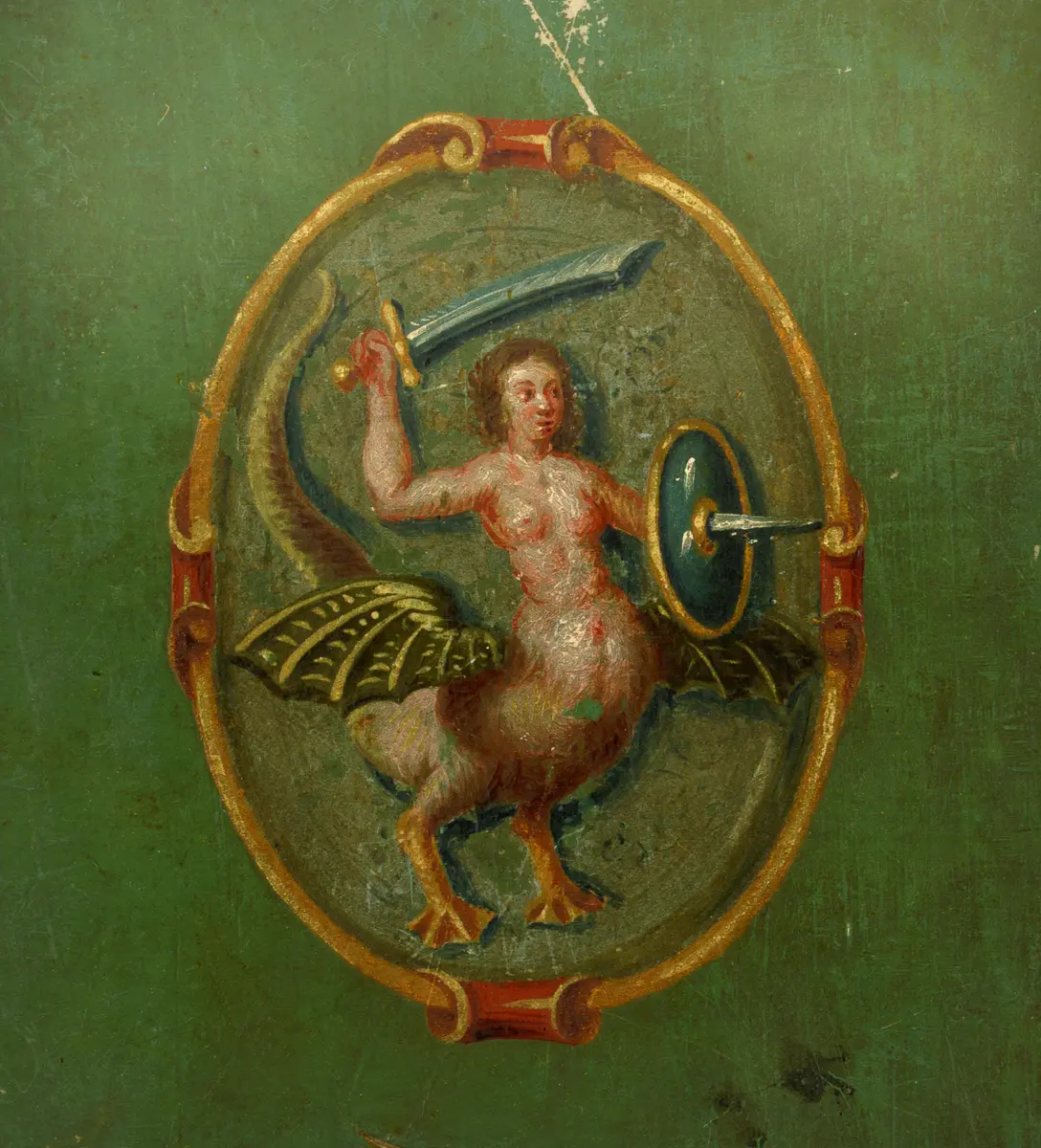
Warsaw's coat of arms shows a mermaid, Syrenka, holding a sword and shield, and the legend behind it has been told since at least the 14th century. According to the story, a mermaid swimming up the Vistula River from the Baltic Sea stopped to rest near what is now Warsaw's Old Town and fell in love with the riverbank, deciding to stay. Local fishermen, the tale goes, heard her singing and at first tried to capture her to sell her voice, but a young man's son freed her, and in gratitude she promised to defend the settlement forever, arming herself with a sword and shield whenever the city was threatened. Other versions tie her to a merchant who trapped her for money and to a fisherman named Wars who, with his wife Sawa, is said to have given the city its name after the mermaid blessed their marriage. A bronze statue of Syrenka has stood in Warsaw's Old Town Market Square since 1855, and residents still call on her image, half-jokingly, whenever the city faces hardship — from wartime destruction to floods.
What is the history of The Mermaid of Warsaw?
Warsaw's Syrenka resembles no other mermaid in Europe, and the difference is in what she is holding: a sword and a shield.
This is not decoration. She is an armed guardian, and that is the whole story.
According to the legend, the mermaid swam from the Baltic Sea and up the Vistula. On reaching what is now Warsaw she was captivated by the landscape and the river's course and decided to stay. In the most widespread versions, a merchant captured her to exhibit her and make money from her, and it was local fishermen who set her free. In gratitude she promised to protect the city and its people. Hence the weapons.
The relationship between the creature and Warsaw is old and documented from the fourteenth century, but something the guidebooks skip is worth saying: the figure on those seals was not yet a mermaid. On the oldest surviving seal, from the late fourteenth century, the creature has bird attributes — a feathered lower body and wings — closer to the classical siren of antiquity than to a fish-tailed woman, and its feminine features are barely discernible. On the seal of 1459 the human half is clearly female. And the fish-tailed woman everyone recognises today arrives much later, on a date that is not even settled: the Museum of Warsaw dates her to the 1720s, while other readings bring her forward to the mid-seventeenth century.
The two statues everyone now knows are later still. The first is the bronze statue by the sculptor Konstanty Hegel, from 1855, in the Old Town Market Square: the classic Syrenka, the one on the postcards.
The second, and the one that truly matters, was raised on the riverbank in 1939.
Timeline: the documented record of The Mermaid of Warsaw
- c. 1390 The oldest surviving municipal seal shows the city's emblem: a creature with bird attributes — wings and a feathered lower body — closer to the classical siren of antiquity than to a fish-tailed woman, its feminine features barely perceptible.
- 1459 On the Old Warsaw seal the creature's human half clearly acquires feminine features.
- 17th-18th centuries The form we recognise today, half woman and half fish, appears. The date is unsettled: the Museum of Warsaw puts it in the 1720s and other readings in the mid-seventeenth century.
- 1855 The sculptor Konstanty Hegel raises the bronze Syrenka in the Old Town Market Square, the classic version of the emblem. What stands there today is a replica; the original is in the Museum of Warsaw.
- 29 June 1939 The 2.75-metre bronze Syrenka by Ludwika Nitschowa is unveiled at Powiśle, on the Vistula bank. Her model was Krystyna Krahelska, twenty-three, a poet and ethnography student. The German invasion is two months away.
- 1944 Krystyna Krahelska takes part in the Warsaw Uprising and is killed fighting. The woman who modelled for the city's armed guardian took up arms and died defending it.
- 1945 Warsaw is left more than eighty per cent destroyed. The Powiśle Syrenka survives with minor damage, probably because of its riverside position.
Is there a rational explanation for The Mermaid of Warsaw?
There is nothing to debunk here, and saying so is part of the job. Nobody in Warsaw maintains that there was a mermaid in the Vistula. The Syrenka is a civic emblem, not a claim about the world, and she has been one since the municipal seals of the fourteenth century.
What does deserve debunking is the brochure version, the one that says Warsaw has carried the same mermaid on its shield for six hundred years. It has not: the creature on the oldest seal is a hybrid with wings and a bird's lower body, and its human half does not turn clearly female until 1459, and the fish tail is an addition of centuries later, on a date that is not even settled — the Museum of Warsaw puts it in the 1720s and other readings in the mid-seventeenth century. The emblem does not illustrate the legend: the legend gradually accommodated itself to an emblem that already existed.
The interesting question is a different one: why a mermaid with a sword? The mermaids of the European imagination are dangerous or passive creatures: they sing, they seduce, they drown sailors, they fall in love with princes. Warsaw's does something none of the others does: she defends a city. And that iconographic choice — an armed woman as guardian of the capital — is telling in a country whose history is, to a considerable extent, the history of defending a capital that kept being taken away.
And then there is 1939, which is where the legend stops being a legend.
The sculptor Ludwika Nitschowa raised on the Vistula bank at Powiśle a bronze Syrenka 2.75 metres tall, unveiled on 29 June 1939. Two months before the German invasion.
Her model was Krystyna Krahelska, twenty-three years old, a poet and ethnography student. Nitschowa slightly altered the sculpture's face because she did not want Krystyna to feel self-conscious at recognising herself in it.
In 1944, Krystyna Krahelska took part in the Warsaw Uprising and was killed fighting.
The woman who had modelled for the city's armed guardian took up arms and died defending it. There is no metaphor here and no interpretation is required: it happened literally.
And the statue survived. In a city the Germans systematically levelled to rubble — Warsaw was more than eighty per cent destroyed — the Powiśle Syrenka came through the war with minor damage, probably because of its riverside position.
A medieval legend about a creature who promises to protect the city; a sculpture unveiled nine weeks before catastrophe; a model who dies fighting for that same city; and a bronze that stays standing while everything else falls. That is not folklore: it is history. And it is better than any legend.
Can you visit The Mermaid of Warsaw?
Warsaw has two mermaid monuments, and the Polish record on each differs from the version usually repeated to visitors.
The older one stands in the middle of the Rynek Starego Miasta, the Old Town Market Square. Konstanty Hegel designed it in zinc for the city's first modern waterworks of 1851-1855, engineered by Henryk Marconi; it was cast at Karol Juliusz Minter's Warsaw workshop and was on the square by 7 August 1855. The figure is close to two metres tall, and what stands there now is a copy: in May 2008 the statue was replaced and Hegel's original was moved into the collection of the Muzeum Historyczne m.st. Warszawy, today the Muzeum Warszawy, whose building faces the same square at Rynek Starego Miasta 42. The granite pedestal in its round basin came from a competition won by Maria and Jan Mazur with Anna and Krystian Jarnuszkiewicz, and it was unveiled on 12 December 1999.
The second monument is at Wybrzeże Kościuszkowskie in Śródmieście, on the Vistula bank beside the Świętokrzyski bridge. Ludwika Nitschowa made it at the prompting of mayor Stefan Starzyński, modelling it in a disused boiler hall of the Filter Station at 81 Koszykowa Street. The bronze stands 2.75 metres and was cast in 1938 at the Bracia Łopieńscy foundry at 55 Hoża Street. It went up by the river at the beginning of April 1939 with no unveiling ceremony; the Warsaw press ran short notices and photographs. Its shield carries a crowned eagle ringed by the word Warszawa; the pedestal of three sandstone blocks is by Stanisław Pomian-Połujan.
The face is the detail most often got wrong. Krystyna Krahelska, then an ethnography student at Warsaw University, posed for the head and the torso, kneeling with a sword in her right hand. The Polish Wikipedia article on the monument states flatly that "Twarz Syreny nie jest jednak jej twarzą" — the Mermaid's face is not hers. The identification spread after the war, when Nitschowa named her model in an interview. A reduced copy of the figure is on display at the Warsaw Rising Museum, on the mezzanine covering the August 1944 fighting, in the section devoted to Krahelska.
Both figures came through the war because they stood by the Vistula, which was the front line from September 1944, and neither appeared on the German list of monuments for demolition. Afterwards the Old Town figure went back to the Bracia Łopieńscy workshop for a new sword, a new left arm, a new shield, and for more than fifty bullet holes to be patched; it was then coated in phosphor bronze. The Powiśle figure had 35 smaller holes filled in 1949 without being taken off its pedestal. On 8 March 2024 it was doused with paint by activists.
Sources consulted
- Muzeum Warszawy, «Pięćdziesiąt twarzy Syreny — la sirena en los sellos municipales desde el siglo XIV, el emblema de la ciudad y las versiones de la leyenda» — Museo de Varsovia, 2026 web
- In Your Pocket, «The Warsaw Mermaid: the story of Syrenka, symbol of Warsaw» — Warsaw In Your Pocket, 2024 report
- In Your Pocket, «Syrenka de Powiśle — la escultura de Ludwika Nitschowa de 1939 y su modelo» — Warsaw In Your Pocket, 2024 archive
- Am-Pol Eagle, «Statue model Krystyna Krahelska fought and died for Poland» — Am-Pol Eagle, 2021 newspaper archive
- Mateusz Markowski, «Monument to the Mermaid in Warsaw — Ludwika Nitschowa, la escultura de 1939 y su modelo Krystyna Krahelska» — WhiteMAD, 2024 web
- Krzysztof Zwierz, «Logo dla Warszawy, czyli ewolucja warszawskiego herbu — la evolución del escudo: del híbrido con atributos de ave a la mujer-pez» — Muzeum Warszawy (kolekcje), 2023 archive
- Adam Węgłowski, «Czy syrenka warszawska jest mężczyzną? — los sellos de h. 1400 y de 1459 y la llegada de la cola de pez» — National Geographic Polska, 2024 newspaper archive
Reviewed by V. Serrano on 2026-07-28 · How we verify our content
📎 Source: Enigma Atlas
💬 Field testimonies (0)
No testimonies yet. Add the first.
Add your testimony
🔒 Log in to add a testimony