📜 LEGEND · EXP. Nº0270
ACTIVE
La Llorona
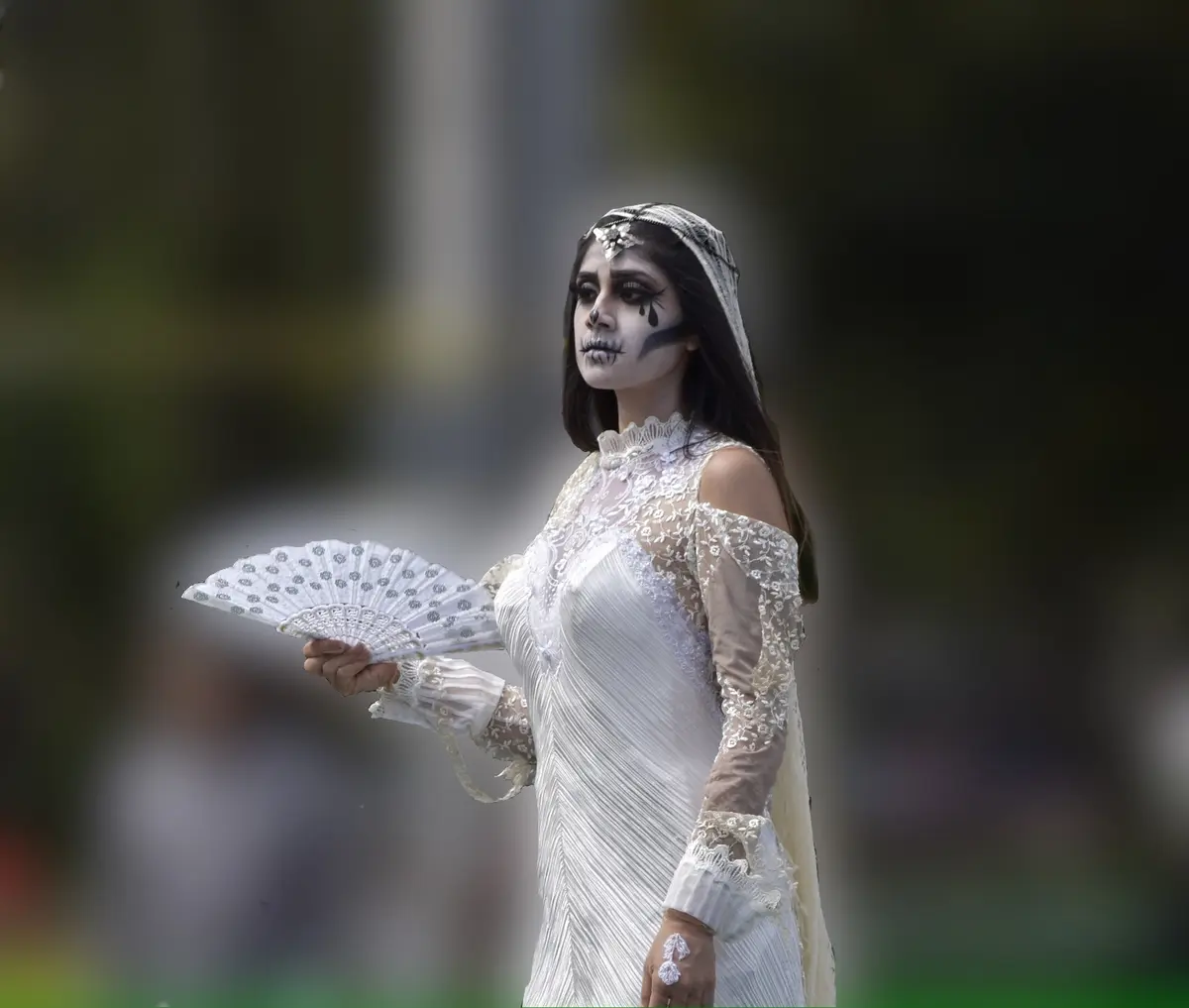
La Llorona, "the Weeping Woman," is one of the most widespread legends of Latin America, told for centuries across Mexico and beyond.
Where does the legend of La Llorona come from?
- Location
- Xochimilco, Mexico City, Mexico
- Kind of legend
- Ghost story
- Coordinates
- 19.265, -99.103
- Last updated
LOCATION
What is the legend of La Llorona?
In the best-known version a beautiful woman named María drowns her own children in a river to be with a man who then rejects her; consumed by grief and guilt, she dies and is condemned to wander waterways for eternity, weeping and crying out for her lost children. Parents have long used the tale to keep children away from rivers and canals after dark, warning that La Llorona will mistake a wandering child for her own and carry it off. The legend blends pre-Hispanic and colonial elements, and some scholars link it to Aztec accounts of a wailing goddess said to foretell the fall of Tenochtitlan. Her mournful cry — "¡Ay, mis hijos!" — remains a fixture of ghost stories told at night, and reported encounters near rivers, lakes and the canals of Xochimilco keep the figure alive in modern folklore as both a warning and a symbol of inconsolable loss.
What is the history of La Llorona?
Before she was a guilty woman, La Llorona was an omen of destruction. And the difference between those two versions is the whole history of Mexico.
Fray Bernardino de Sahagún recorded in the Florentine Codex the eight tetzahuitl — ill omens — that, according to his Nahua informants, announced the fall of Tenochtitlan. The sixth runs like this: at night a woman's voice was heard crying "My little children, now we must go far away!", and sometimes "where shall I take you?".
Sahagún identified the woman. She was Cihuacóatl — "serpent woman" — also called Tonantzin, "our mother", who "cried out and bellowed in the air at night". Cihuacóatl was no ghost: she was a first-rank Mexica deity, goddess of women alongside the Cihuateteo — those who died in childbirth — and protector of labour. She was depicted carrying a cradle, and in the cradle there was no child: there was a sacrificial flint knife.
In the Nahua reading, that night-time weeping announced the end of the known world. It was not one mother's lament for her own children, but the lament of a people's mother for an entire people about to be lost.
After the conquest the figure went on travelling. A grieving woman weeping for her children along the roads at night worked far too well as an image of colonial catastrophe to disappear. It blended with European motifs — the infanticidal mother, the abandoned woman — and with the historical figure of La Malinche, until it set into the version told today from northern Mexico to the Southern Cone: María, a beautiful woman who drowns her children for a man who then rejects her, and who wanders forever crying out for them.
Timeline: the documented record of La Llorona
- The years before 1519 According to Sahagún's Nahua informants, eight ill omens announce the fall of Tenochtitlan. The sixth is a woman's voice crying at night: "My little children, now we must go far away!".
- 1521 Tenochtitlan falls. The world the omens announced disappears, and the figure of the woman weeping for her children becomes available as an image of catastrophe.
- 16th century Sahagún records the omens in the Florentine Codex and identifies the woman as Cihuacóatl, "serpent woman", or Tonantzin, "our mother", who "cried out and bellowed in the air at night", carrying a cradle holding a flint knife.
- 2013 Eduardo Matos Moctezuma qualifies, in Arqueología Mexicana, the direct continuity between the Mexica omen and the colonial legend: some omens arise from collective imaginaries "that did not occur in reality".
- 2025 The La Llorona show at Xochimilco reaches its 32nd season, "El Último Latido del Agua", on the Laguna de Tlilac. The legend sustains a cultural industry more than three decades old on its own.
Is there a rational explanation for La Llorona?
The commonest error with La Llorona is not believing in her: it is accepting a straight line running from the Mexica goddess to today's legend.
Eduardo Matos Moctezuma, the archaeologist who excavated the Templo Mayor, addressed exactly that question in Arqueología Mexicana (no. 122, 2013), and his answer is more nuanced than it is usually quoted as being. He distinguishes between legends "forged from important facts" and those born of collective imaginaries "that did not occur in reality, as seems to be the case with some omens". He accepts that the tradition carried over into the colonial world and persists, but does not claim identical continuity: what there was, was evolution across different periods and contexts.
There is also a source problem worth keeping in mind. The omens were not written down before the conquest: they were collected decades afterwards, from informants who had already lived through the fall, in a text compiled by a Spanish friar. A defeated people retrospectively explaining that their defeat had been foretold is a well-known historiographical phenomenon, and it requires nobody to have heard anything.
But the most revealing thing is what the legend lost along the way. In the Nahua version, the weeping announces a collective catastrophe inflicted from outside. In the modern popular version, the fault is La Llorona's own: she killed her children, she pays for it, and the destruction of Tenochtitlan and the arrival of the Europeans have vanished from the story. A warning about what some people did to a nation became a punishment for what one woman did to herself.
That shift — from political omen to individual female guilt — explains the legend far better than any argument about whether somebody really weeps in the canals.
Can you visit La Llorona?
The pin of this file, 19.2647° N 99.1031° W, falls in the canal zone of Xochimilco, about 2 km north-north-west of the centre of the borough, measured between coordinates. Its canals, left from the old lake system of the Valley of Mexico, and the artificial islands called chinampas are what made Xochimilco a World Heritage Site.
The show that ties the legend to these canals ran its 32nd season in 2025. Infobae's guide of 6 October 2025, by Lorna Huitrón, gives the title "El Último Latido del Agua" and dates of 3 October to 16 November 2025, on the Laguna de Tlilac inside the chinampa zone. Boats left only from the Embarcadero Cuemanco, on Periférico Sur beside the Virgilio Uribe rowing and canoeing course. Performances ran from Friday to Sunday: a single one at 19:00 on most dates, two at 18:30 and 20:30 on 11, 18 and 25 October and 8 November, and three on 31 October plus 1 November, the last at 22:30. The general ticket was 550 pesos plus a service charge, 616 pesos in all, sold at the Cuemanco box office. The same guide put the trajinera ride to the lagoon at about 45 minutes each way, recommended arriving an hour before the performance and listed parking, food, toilets and medical care at the landing stage and at the venue.
For 2026 the producer Xochimilco Experience advertises on its own site, consulted on 24 September 2026, a season called "La Cihuacóatl, Leyenda de La Llorona" from 31 May to 22 November 2026 at the Embarcadero Cuemanco. The ticket is 750 pesos per person and includes the trajinera ride, the play and a bilingual Spanish and English guide. The site speaks of 50 actors on stage, a pyramid of 10 by 8 metres and figures up to 15 metres high on the canal El Bordo, with night performances from Thursday to Sunday. It gives no season number and does not name the Laguna de Tlilac, so it cannot be confirmed from the site whether this is a continuation of the production that reached its 32nd season in 2025.
The Island of the Dolls, a site in the same canals with a legend of its own, lies about 1.8 km east-north-east of the pin.
Sources consulted
- Fray Bernardino de Sahagún, «Códice Florentino (Historia general de las cosas de Nueva España), libro XII — los ocho presagios» — Nueva España, siglo XVI, 1577 book
- Eduardo Matos Moctezuma, «¿La leyenda de la Llorona es de origen prehispánico?» — Arqueología Mexicana, nº 122, 2013 academic
- Lorna Huitrón, «La Llorona Xochimilco 2025: fechas, horarios y todo lo que debes saber» — Infobae, 2025 newspaper archive
- Infobae México, «La diosa mexica recolectora de almas que predijo la caída de Tenochtitlan y creó la leyenda de La Llorona» — Infobae, 2021 newspaper archive
- Latino Book Review, «The Origins of La Llorona» — Latino Book Review, 2020 web
- Xochimilco Experience, «Xochimilco Experience — La Cihuacóatl, Leyenda de La Llorona · 2026: season dates, ticket price and what it includes» — Producer's official site (consulted 24 September 2026), 2026 web
Reviewed by V. Serrano on 2026-07-28 · How we verify our content
📎 Source: Enigma Atlas
💬 Field testimonies (0)
No testimonies yet. Add the first.
Add your testimony
🔒 Log in to add a testimony