👻 HAUNTED PLACE · EXP. Nº1189
ACTIVE
Island of the Dolls
The Island of the Dolls is a small chinampa (artificial island) in the canals of Xochimilco, south of Mexico City.
Where is Island of the Dolls?
- Location
- Xochimilco, Mexico
- Type
- Island
- Coordinates
- 19.273, -99.088
- Last updated
LOCATION
Why is Island of the Dolls said to be haunted?
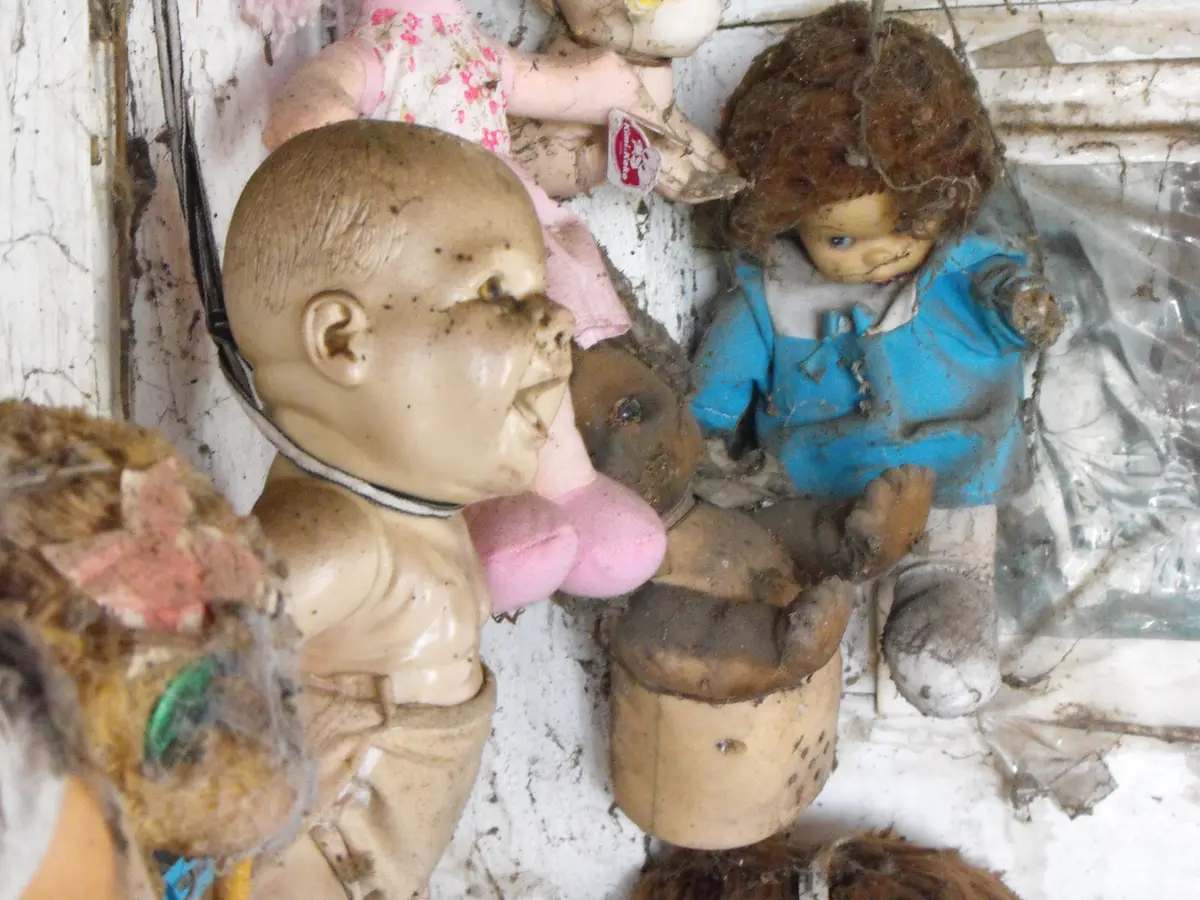
Its reclusive former caretaker, Don Julián Santana Barrera, reportedly began hanging discarded dolls from the trees after a girl drowned in the canal nearby, believing her spirit still lingered on the island and that the dolls would keep her company — or ward off her restless ghost. Over decades he covered the island with thousands of mutilated, weathered dolls, and locals claim the figures move their heads and whisper after dark. Santana was found dead in that same canal in 2001, reportedly on the spot where he had found the girl. In 2022, Guinness World Records recognized the site as home to the world's largest collection of haunted dolls, and it remains a fixture of Xochimilco's dark-tourism boat tours.
What is the history of Island of the Dolls?
Xochimilco lies 28 km south of Mexico City. Its network of canals and artificial islands, the chinampas, was inscribed on the World Heritage List in 1987 together with the historic centre of the capital, and UNESCO describes its lake landscape as "the only reminder of traditional ground occupation in the lagoons of the Mexico City basin before the Spanish conquest".
Julián Santana Barrera was born in Xochimilco in 1921, the son of Candelaria and Julián, farmers who grew maize, tomatoes and coriander and took the harvest to the Jamaica market. He learned the trade from his father while at school, which he left after the sixth grade of primary, and he worked as a night watchman in Xochimilco before shutting himself away on his chinampa. The plot lies in the Teshuilo lagoon, inside the protected natural area of the Ejidos de Xochimilco y San Gregorio Atlapulco.
The story told on the boats has two versions. In El Universal's account of 2026, "se dice" that at the start of the 1950s Santana found the body of a drowned girl in front of the island, that paranormal events followed soon afterwards, and that he began to collect dolls to calm her soul and to protect his property and himself. The Guinness World Records page of 2022 places the drowning years before he arrived: the girl became tangled in the water lilies, and Santana said he heard her cry "I want my doll".
What he said himself survives through two interviews summarised by Milenio. To Cristina Pacheco, in 1994, he said that he had grown tired of wandering and had come out there because he no longer wanted to go out, and that he had wanted to make a home like his parents'. In the documentary Jeanette Russ directed in 1998 he described the dolls as a kind of saints, to whom he prayed for a miracle, that they would not kill him, and he spoke of the "storms" of his life, among them his father's death, which he put down to witchcraft.
The same documentary gathered the people around him. Felipe Altamirano, a native of Xochimilco, said Julián had gone to live there from the age of nineteen after disappointments in love: "Son muchos años de estar ahí escondido". Armando Cortés, who owns trajineras, said he was "un poquito trastornado" and had started picking up papers and little dolls in the street before hanging them on his chinampa. His nephew Anastasio Santana said the dolls looked after him and protected him from evil spirits, that he loved them and cleaned them every day, and that a doll called Agustinita and another small one had started kicking him, though he thought it was some animal.
The dolls came from rubbish and from the canals, according to Mexico News Daily; Guinness adds that he traded his vegetables for them, and El Universal that neighbours and visitors gave him more. He went on hanging them, on huts and from trees, for the better part of fifty years, until his death in 2001. Milenio gives the date and the cause as April 2001 and heart failure. El Universal describes a heart attack while he was fishing at the edge of the chinampa: his body fell into the water and he drowned, "presumiblemente" at the spot where he had found the girl some fifty years earlier.
Timeline: the documented record of Island of the Dolls
- 1921 Julián Santana Barrera is born in Xochimilco, son of Candelaria and Julián, smallholders who grew maize, tomatoes and coriander. He completes sixth grade and works for a time as a night watchman.
- 1987 UNESCO inscribes the Historic Centre of Mexico City and Xochimilco on the World Heritage List. Criterion (v) singles out Xochimilco as the only surviving reminder of traditional land occupation in the lagoons of the basin.
- 1994 The journalist Cristina Pacheco interviews Santana. He explains his move to the chinampa as exhaustion rather than haunting: he was tired of moving around and no longer wanted to go out, and he had wanted a home like his parents'.
- 1998 Jeanette Russ films a documentary on the island. Santana describes the dolls as "a kind of saints" and talks about the storms of his life, including his father's death, which he attributed to witchcraft.
- April 2001 Julián Santana Barrera dies of heart failure on the island after roughly half a century there.
- 26 October 2022 Guinness World Records publishes the island as home to the largest collection of claimed haunted dolls. Editor-in-chief Craig Glenday states that it is of course impossible to prove the dolls are haunted, but that as claimed haunted dolls this is the largest collection they have seen. No count is published.
- November 2024 UNAM researchers led by Luis Zambrano begin a new axolotl census, the first in a decade, for the Xochimilco canals: from about 6,000 individuals per square kilometre in 1998 to a few dozen in 2014, with urban growth, water quality and introduced species as the drivers.
- September 2025 Lady Gaga shoots the video for "The Dead Dance", directed by Tim Burton, on the island.
- 2026 El Universal reports that the original island — run by Rogelio Santana, whom the paper calls Julián's nephew — holds a copyright registration certifying its authenticity, and documents at least two imitation doll islands operating in the canals.
Is there a rational explanation for Island of the Dolls?
The drowned girl has no name in any of the published versions, and the two fullest disagree on the basic sequence. El Universal (2026) has Santana find the body himself, in front of the island, at the start of the 1950s; Guinness World Records (2022) has her drown years before he arrived. Milenio's summary of the 1994 interview and the 1998 documentary, the only source in which Santana and his family speak for themselves, does not mention a girl, and his nephew explained the dolls as protection from evil spirits.
His arrival on the chinampa is dated three ways. Guinness says he moved there in the 1950s. El Universal puts the finding of the body, already on his land, at the start of that decade. Felipe Altamirano, interviewed for the 1998 documentary, said he had lived there since the age of nineteen, which for a man born in 1921 means about 1940.
The two sources that describe the dolls explain their appearance by the weather. El Universal says most of them are deteriorated, covered in earth, moss and lichen, damp and even dismembered. Guinness writes that Santana hung them up "in the various states of disrepair he found them in, which, along with their exposure to the elements, created the terrifying scene we see today". The same Guinness page names the fear of dolls, pediophobia, and says it "is considered to be caused by the blank, yet lifelike stares on dolls' faces".
Guinness published no count, and its 2022 page speaks of "thousands of mutilated, decaying dolls". Mexico News Daily nonetheless attached "approximately 4,000" to the Guinness recognition in 2025, and El Universal in 2026 estimated "unas 6,000" while noting that there is no exact count.
Announcing the record, Guinness's editor-in-chief, Craig Glenday, said: "It's of course impossible to prove if the dolls themselves are haunted. We're not saying ghosts are necessarily real and that they're possessing these plastic bodies, but as claimed haunted dolls, this certainly is the largest collection we've ever seen." The island is also a business: according to El Universal, entry costs 100 pesos for Mexicans and 150 for foreigners, at least two imitation islands have appeared on the canals, and the original displays a certificate from the Registro Público del Derecho de Autor attesting that it is the legitimate one. In 2025 Lady Gaga filmed the video for "The Dead Dance" there, directed by Tim Burton.
Can you visit Island of the Dolls?
The original island lies in the Teshuilo lagoon, inside the protected area Ejidos de Xochimilco y San Gregorio Atlapulco. Rogelio Santana — a nephew of Julián Santana Barrera — runs it. The chinampa displays a certificate issued by the Registro Público del Derecho de Autor for the name "Isla de las Muñecas de don Julián", and Julián's old house is kept there as a small museum. The dolls hung around it are offerings left by earlier visitors; the man who began hanging them lived on the chinampa for half a century and drowned in front of it in 2001.
At least two replicas have appeared in the last few years. El Universal places one on the Apampilco canal on the way to the original and the other in the wetlands of the Parque Ecológico de Xochimilco, near the Cuemanco landing.
El Universal puts the crossing by trajinera at "entre 1 hora y 30 minutos y 2 horas, aproximadamente". The full circuits sold by the operators run about four hours. Any of Xochimilco's eleven embarcaderos serves as a departure point, and the same report advises stating which island the boat is for before boarding.
Prices as published by El Universal on 7 February 2026, still on the page when it was read again on 9 September 2026: the trajinera rate is standardised across Xochimilco at "750 pesos por hora, ya sea para 1 o hasta 18 personas". Trajineras Elizú Fernando runs a daytime circuit every day of the week from 10:00 to 16:00 at 3,000 pesos per boat; trajineras.com sells evening departures lasting four to five hours at the same price per boat. Admission to the island is charged apart from the boat: 100 pesos for Mexicans and 150 for foreigners.
The water around the island carries the heavier protection. UNESCO inscribed the historic centre of Mexico City together with Xochimilco on the World Heritage List in 1987 under reference 412, and the axolotl is endemic to these canals. Gaceta UNAM reported in 2024 that the population "bajó de manera significativa al pasar de seis mil ejemplares por kilómetro cuadrado (cifra obtenida por la Universidad Autónoma Metropolitana) a 36 (de acuerdo con el número registrado por la UNAM en 2014)".
Sources consulted
- Milenio Digital, «Julián Santana, el fundador de La Isla de las Muñecas en Xochimilco» — Milenio, 2025 newspaper archive
- Omar Moreno, «¿Cuál es la verdadera Isla de las Muñecas en Xochimilco?» — El Universal, 2026 newspaper archive
- Sanj Atwal, «The haunting story of the man who built the Island of Dolls» — Guinness World Records, 2022 report
- Mexico News Daily, «Xochimilco's haunted Island of the Dolls steals the spotlight in Lady Gaga's newest music video» — Mexico News Daily, 2025 newspaper archive
- Diana Saavedra, «Levantan nuevo censo del axolote en Xochimilco» — Gaceta UNAM, 2024 newspaper archive
- UNESCO World Heritage Centre, «Historic Centre of Mexico City and Xochimilco» — UNESCO World Heritage List, ref. 412, 1987 archive
Reviewed by V. Serrano on 2026-07-29 · How we verify our content
💬 Field testimonies (0)
No testimonies yet. Add the first.
Add your testimony
🔒 Log in to add a testimony