🦶 CRYPTID SIGHTING · EXP. Nº6501
ACTIVE
Basajaun
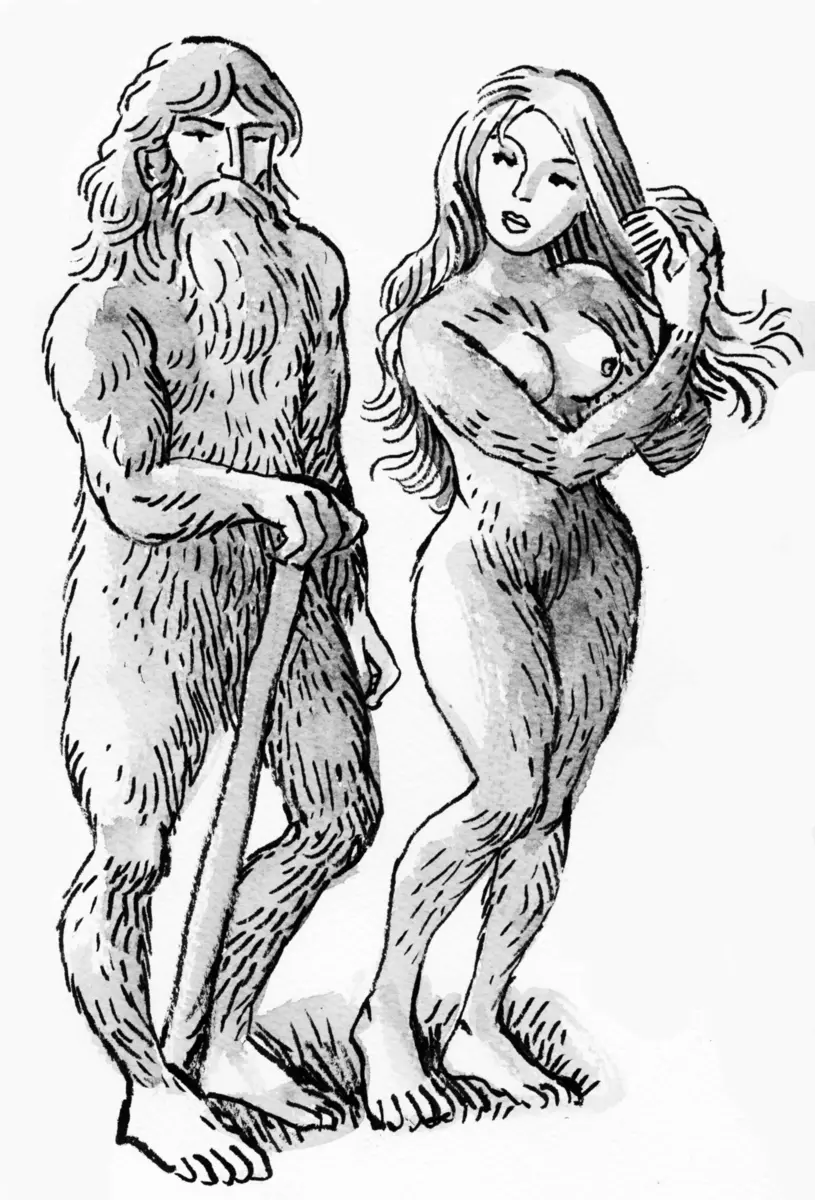
Basajaun is not a forest monster. The name comes from Basque baso (forest, upland) plus jaun (lord), and the word entered writing in 1715 not as a mythological being but as a social category: a rustic, half-wild man.
Where and when was Basajaun sighted?
- Location
- País Vasco, Spain
- Date sighted
- Unknown
- Coordinates
- 42.978, -2.181
- Last updated
LOCATION
What is Basajaun?
What modern popular culture — above all Dolores Redondo's Baztán trilogy — knows as a guardian spirit was, for Basque shepherds, the owner of the mountain: someone to keep on good terms with by sharing bread and fire, not someone to fear. The oldest written traces are a Latin-Basque glossary from London; the oldest stories come from the Goierri region around Ataun, collected by José Miguel de Barandiarán, whose museum now preserves the tradition.
What is the history of Basajaun?
The basajaun that Basque shepherds knew was not a forest monster. He was a landowner.
The name says so: baso (forest, upland) plus jaun, which in Basque means lord, the same respectful form of address given to a person. Basajaun is lord of the woods in the sense that a farmhouse has an owner.
The oldest written trace of the word is not mythological either. In the Dictionarium Latino-Cantabricum that Pierre d'Urte compiled in London around 1715, the Latin agrestis is glossed as “basa jauna, basagizona”, and mulier agrestis as “basandréa, larreandréa, basemaztéa”. Before it was an entry in a bestiary, in other words, basajaun was a way of saying “rustic, half-wild man”. The three senses recorded by Resurrección María de Azkue in his Diccionario vasco-español-francés (Bilbao, 1905-1906) confirm that double life: “a fantastic being, Lord of the forests”; “a rustic, half-savage, unsociable man”; and, noted specifically in the Gipuzkoan Goierri — Ataun's own district — “master of the hunters”. All of it is documented, with sigla and citations, in Euskaltzaindia's Orotariko Euskal Hiztegia.
Who collected the tradition, where, and from whom
Without two men, none of this would survive.
The first was Jean-François Cerquand, who between 1875 and 1887 serialised his Légendes et récits populaires du Pays Basque in the Bulletin de la Société des Sciences, Lettres et Arts de Pau. In one of those texts, taken down at Esterenzubi, a wild man called Antxo shares fire and food with some cowherds; the boy who gives up his own portion is rewarded with a hazel wand that multiplies his cattle. The tale opens with a formula worth a whole treatise: “in those days the wild lords conversed with Christians”.
The second, and decisive, was José Miguel de Barandiarán, born in Ataun on 31 December 1889, ordained in 1914 and doing fieldwork from 1916. In April 1921 he founded the Sociedad de Eusko-Folklore at the seminary of Vitoria and, that same year, the Anuario de Eusko Folklore, the oldest humanities journal still published in the Basque Country. In volume I he printed “Brief practical instructions for the folklore investigator” (pp. 11-29): a manual so that village priests and seminarians could collect material systematically. His stated criterion, quoted in the indexes later compiled by Gurutzi Arregi and Ander Manterola, was to publish “raw material, just as it came out of the quarry of the people”, because “for now we are doing neither history, nor psychology, nor art properly speaking; we only want to lay solid foundations for the science of the future”. Mythological material reached print mostly through the monthly sheets Eusko-Folklore. Materiales y cuestionarios.
In parallel, Azkue was publishing Euskalerriaren Yakintza (Espasa-Calpe, 1935-1947). Its second volume gathers 241 folk tales — the fruit, as Wilhelm Giese noted when he reviewed it in 1950, of fifty years of work — printed in their original dialect with a Spanish translation alongside. Among the native figures of the wonder tales, Giese lists the Basajaun next to the laminak and the Lady of Amboto.
Barandiarán spent 1936 to 1953 in exile (from 1941 at Sara, in Labourd), returned to Ataun in October 1953 and died there on 21 December 1991, aged 101. In between he published Mitología vasca (Minotauro, Madrid, 1960, with a preface by Julio Caro Baroja) and the Diccionario ilustrado de mitología vasca (Bilbao, 1972) — the two books from which nearly everything now repeated about the basajaun descends.
The two documented functions
Guardian of the flocks. The pastoral basajaun does not attack livestock; he defends it. He keeps the wolf away, calls out from the mountainside when a storm is coming so the shepherd can bring the sheep in, and, in the recorded tradition, secures the fertility of the herd. In return he receives offerings: bread, milk, the warmth of the hearth. The tales describe an exchange that runs both ways. And he teaches trades — cheese, butter and curd-making, and the domestication of animals.
Keeper of the secrets. The second function is more ambitious. The basajaun owns wheat, the saw, iron soldering and the mill, and men take them from him by trickery. The protagonist is San Martin Txiki (Sanmartintxiki, San Martinico), a swindling saint. Barandiarán located the story with the precision of a land registry: “the basajaunak grew wheat on the mountain of Muskia, in Ataun. A bold man — San Martinico — a friend of theirs, went to visit them in their cave”. There he bet that he could leap across the heaps of grain without touching a single one, lost on purpose, and walked out with his wide shoes full. An axe was thrown after him; it missed and lodged in the trunk of a chestnut at Mekolalde, in the San Gregorio quarter of Ataun, a kilometre from the cave. Later he eavesdropped on the song by which the basajaunak fixed the sowing calendar — when the leaf sprouts, when the leaf falls, by Saint Lawrence — and so became the first to sow wheat. By the same method he obtained the saw (copying the serrated edge of a chestnut leaf), the soldering of iron (using clay) and the alder axle of the mill.
Basandere, and the place in the pantheon
The Basandere is usually presented as his female counterpart, and that is how she appears in Barandiarán (“the wife of the basajaun”, “a genie who appears at the mouth of certain caves”) and in Caro Baroja: “beside the Basajaunak come the basanderiak, their female partners”. But the academic dictionary forces a qualification. In Lower Navarre, around Garazi, basandere is simply one of the names for the lamia; in d'Urte it meant no more than “a rustic woman”; elsewhere it names a carnival character. There is no single, stable Basandere — there is a semantic field.
Something similar applies to Mari, the lady of the summits and caves. Barandiarán organised the Basque pantheon by putting her at the centre, as chief of the genies and the axis of very diverse mythic themes. Barandiarán's own definition of the basajaun, quoted in Euskaltzaindia's dictionary, gives him a domain of his own: “Baxajaun, lord of the forest, is the genie who dwells in the deepest woods or in caves in prominent places.” In the Ataun tales he keeps to the forest and the sheepfold.
The geography is not scenery, either. Ataun lies at the foot of the Aralar range, a massif dense with dolmens and caves occupied since the Palaeolithic. Barandiarán, ethnographer and archaeologist at once, would spend a morning excavating caves with 27,000 years of human occupation and the afternoon writing down what his neighbours said about those same caves. The basajaun lives where real people lived.
Timeline: the documented record of Basajaun
- c. 1715 Pierre d'Urte, an exiled Basque in London, compiles his Dictionarium Latino-Cantabricum and glosses the Latin agrestis as "basa jauna, basagizona" and mulier agrestis as "basandréa, larreandréa, basemaztéa". The oldest written trace of the word is a social category — a rustic, half-wild person — not a mythological being.
- 1875-1887 Jean-François Cerquand serialises his Légendes et récits populaires du Pays Basque in the Bulletin de la Société des Sciences, Lettres et Arts de Pau, the first systematic printed collection of these tales. One text from Esterenzubi tells of the wild man Antxo who shares fire and food with cowherds and rewards the boy who gives up his portion.
- 1883 A Souletin text collected by Cerquand appears in the journal Euskal-Erria. It is the oldest literary attestation of basajaun cited by Euskaltzaindia's historical dictionary.
- 31 December 1889 José Miguel de Barandiarán is born in Ataun, the village whose caves and pastures will supply the best-documented basajaun stories. He is ordained a priest in 1914 and begins fieldwork in 1916.
- 1905-1906 Resurrección María de Azkue publishes his Diccionario vasco-español-francés in Bilbao, recording three distinct senses of basajaun: "a fantastic being, Lord of the forests", "a rustic, half-savage, unsociable man", and — noted in the Gipuzkoan Goierri, Ataun's own district — "master of the hunters".
- April 1921 Barandiarán founds the Sociedad de Eusko-Folklore at the seminary of Vitoria and launches the Anuario de Eusko Folklore. Volume I carries his "Brief practical instructions for the folklore investigator" (pp. 11-29). His declared aim is to publish "raw material, just as it came out of the quarry of the people".
- 1935-1947 Azkue publishes Euskalerriaren Yakintza (Espasa-Calpe). Reviewing volume II in 1950, Wilhelm Giese notes it gathers 241 tales after fifty years of collecting, printed in dialect with a Spanish translation, and lists the Basajaun among the native mythological figures of the wonder tales.
- 1936-1953 The Civil War sends Barandiarán into seventeen years of exile, first in Biarritz and from 1941 in Sara. He returns to Ataun in October 1953 and resumes the collecting work.
- 1960 Barandiarán publishes Mitología vasca (Minotauro, Madrid, Biblioteca Vasca V), prefaced by Julio Caro Baroja. Its definition — "Baxajaun, lord of the forest, is the genie who dwells in the deepest woods" — becomes the standard reference, quoted verbatim by Euskaltzaindia's historical dictionary.
- 1972 The Diccionario ilustrado de mitología vasca appears in Bilbao as volume I of Barandiarán's Obras Completas. It is the source of the Muskia wheat story and of nearly everything repeated about the basajaun since.
- 21 December 1991 Barandiarán dies in Ataun at the age of 101. His house, his mill and his field notes become the Barandiaran Museum and the waymarked route that bears his name.
- 2013 Dolores Redondo's novel El guardián invisible makes the basajaun the invisible guardian of the Baztán valley. The rights list on the author's website names publishers in thirty-two languages, and the trilogy fixes the figure in global popular culture as a forest monster rather than a pastoral lord.
Is there a rational explanation for Basajaun?
The basajaun works as an explanation, and what it explains is a boundary: the one dividing the baso — the uncultivated upland — from the farmhouse, the sown field and the sheepfold. It explains it in the most effective way available to a peasant society, by saying that the other side also has an owner. The weight of the name falls on jaun, “lord”. A forest with a lord cannot be taken from freely: whatever comes out of it enters a transaction that binds the taker. That is why the stories collected at Esterenzubi and Ataun turn on shared bread, milk left out, borrowed fire and the hazel wand received in return.
Its social function is just as concrete. The shepherd on Aralar slept alone on the mountain with wolves and storms overhead. A protective genie turns an uncontrollable risk into a relationship that can be managed: somebody up there gives warning, and the shepherd keeps on good terms with him. The tales are also normative. In the text Cerquand took down at Esterenzubi, the boy who gives up his own portion is precisely the one who is rewarded, which makes the tale a lesson in good conduct.
The San Martin Txiki cycle does a different job again: it explains the origin of technique. Wheat, the saw, iron soldering and the mill are stolen from whoever held them first, and the thief is a saint, which sets the theft after Christianisation. The subject is an epochal change, with the old lords of the forest dispossessed by the new Christians; Cerquand's Esterenzubi tale opens on the same frontier, “in those days the wild lords conversed with Christians”. Antxon Aguirre Sorondo pointed out how the myth “sacralises the origin of wheat cultivation”, which archaeology dates in the Basque area to around 5,000-4,500 BC.
The dictionary itself places the word outside zoology. The oldest written sense, Pierre d'Urte's around 1715, translates the Latin agrestis, “rustic, half-wild man”, and names no creature. The word worked as a social category — the one who lives outside, the unsociable one, the man from the mountain — before it entered a bestiary. And the descriptions vary enormously from valley to valley: a malignant giant of colossal strength in some places, a helpful neighbour in others, the first farmer and first blacksmith elsewhere. That spread is what an oral tradition shared by dozens of valleys produces; a zoological species would come with one body.
That leaves the cryptozoological rereading, which is an anachronism. The category “cryptid” — an unclassified primate awaiting capture — is a twentieth-century Western invention, contemporary with the yeti and Bigfoot. When catalogues of hairy hominids annexed the basajaun to that family, and when mass fiction fixed him as a forest monster — Dolores Redondo's novel El guardián invisible (2013), whose rights list on the author's website names publishers in thirty-two languages, made him the invisible guardian of the Baztán valley — the character gained an audience and lost almost everything else: the pastoral economy that sustained him, the reciprocity of bread and milk, the technological myth of San Martin Txiki, the geographical precision of Muskia and Mekolalde, and above all the names of the people who told it and of the man who bothered to write it down.
There is no physical evidence for the basajaun, and the record never offered any. What it holds is documentation of what was said, where it was said, and in what year it was collected.
Can you visit Basajaun?
Ataun, in the Goierri district of Gipuzkoa at the foot of the Aralar range, is the village where José Miguel de Barandiarán was born and where he took down the Muskia stories of the basajaunak. His foundation's biography gives his birth on the last day of 1889 at the Perune-Zarre farmhouse; the Ataun tourist office's route page says that he went into exile in 1936, lived for almost twenty years at Sara in Lapurdi and came back to Ataun in 1953. According to Gipuzkoa Natura, he died in 1991 in the Sara house he had built on his return.
The Barandiaran Museum occupies the Larruntza mill in the San Gregorio quarter, about 3 km from the San Martín quarter where the town hall stands: Larruntza Errota z/g, San Gregorio, 20211 Ataun, telephone 943 18 03 35 or 688 895 069, email [email protected]. The provincial page, consulted on 24 September 2026, says that the mill is first mentioned in the fifteenth century and that the Basque Government declared the group a monumental ensemble in 2003. The upper floor covers Barandiarán's life with an audiovisual and a biographical room; the ground floor deals with his archaeological and ethnographic work through replicas and videos. A second mill called Errotatxo and a hydraulic sawmill stand beside it. The guided visit to the museum and the old mill, during which the mill and sawmill are run. It lasts an hour and a half and costs €4 for adults and €3 for children aged 5 to 12. The page publishes ETRS89 coordinates of X 566693, Y 4758717 for the museum, which fall about 90 metres from the pin on this file. Road access is from the N-1 at Beasain along the GI-120 towards Lazkao, or from Navarre by the NA-120.
The tourist office's Barandiaran route, consulted the same day, runs 7.69 km between 166 and 331 metres of altitude, with 211 metres of ascent. It takes about two and a half hours and is graded easy. It starts at the Plaza de San Martín, where the legend of the Lady of Zaindegi is told, and passes the Aldakotxo farmhouse, the Sara house and the Larruntza museum. At the Lauztierreka bridge the route faces Mount Muski with its antenna, which the page calls the home of the basajaun and of Tartalo; at the church of San Gregorio it tells the stories of Sanmartintxiki and the basajaun, and it ends by the dam at Gaztiñerre. The same office lists three further mythological routes, Sarastarri, Jentilbaratza and Berrenoa. Gipuzkoa Natura also runs a guided walk of about 4.4 km from San Martín to San Gregorio along the Sara route, lasting three hours, at €6 for adults and €4 for children aged 3 to 12.
Muskia is the mountain of the story. In the text by Barandiarán that Antxon Aguirre Sorondo reproduced in Euskonews in 2009, the basajaunak grew wheat "en la montaña de Muskia, sita en Atáun", and Sanmartintxiki visited them "en su caverna".
Sources consulted
- Euskaltzaindia / Real Academia de la Lengua Vasca, «Orotariko Euskal Hiztegia — entradas «basajaun» y «basandere»» — Diccionario General Vasco (corpus histórico-lexicográfico), 2026 academic
- Juan Inazio Hartsuaga Uranga, «Basajaun (concepto, textos, interpretación y bibliografía)» — Auñamendi Eusko Entziklopedia, Eusko Ikaskuntza, 2026 web
- Gurutzi Arregi y Ander Manterola, «Anuario de Eusko Folklore (1921-1935, 1955-1986), tomos I-XXXIII: índices de autores y materias» — Revista Internacional de los Estudios Vascos (RIEV), 33, 1988 academic
- Wilhelm Giese, «Reseña de R. M. de Azkue, «Euskalerriaren yakintza», tomo II: Cuentos y leyendas» — Thesaurus. Boletín del Instituto Caro y Cuervo, VI, 3, pp. 458-460, 1950 academic
- Antxon Aguirre Sorondo, «El trigo (San Martinico y los basajaun de Muskia)» — Euskonews, nº 491, Eusko Ikaskuntza, 2009 newspaper archive
- Fundación José Miguel de Barandiaran, «Biografía de José Miguel de Barandiarán» — Archivo institucional de la Fundación, 2026 archive
- José Miguel de Barandiarán, «Diccionario ilustrado de mitología vasca y algunas de sus fuentes (Obras Completas, t. I)» — La Gran Enciclopedia Vasca, Bilbao (citado a través del Orotariko Euskal Hiztegia y de la Auñamendi), 1972 book
- Antxon Aguirre Sorondo, «Personajes mitológicos e inventos (San Martinico y el robo de la sierra, la soldadura y el molino)» — Euskonews, nº 656, Eusko Ikaskuntza, 2013 newspaper archive
- Jean-François Cerquand, «Légendes et récits populaires du Pays Basque (texto de Esterenzubi sobre Antxo)» — Bulletin de la Société des Sciences, Lettres et Arts de Pau, 1875-1887 (texto reproducido en la Auñamendi), 1875 book
- Dolores Redondo, «El guardián invisible (Trilogía del Baztán)» — Ediciones Destino / web oficial de la autora, 2013 book
- Ataun Turismoa, «Ruta Barandiaran (7,69 km) y rutas mitológicas de Ataun» — Oficina de turismo de Ataun, 2026 web
- Gipuzkoa Natura (Diputación Foral de Gipuzkoa), «Museo Barandiaran de Ataun: dirección, contacto, calendario y actividades» — Red de parketxes de Gipuzkoa, 2026 web
Reviewed by V. Serrano on 2026-07-29 · How we verify our content
📎 Source: Enigma Atlas
💬 Field testimonies (0)
No testimonies yet. Add the first.
Add your testimony
🔒 Log in to add a testimony