👻 HAUNTED PLACE · EXP. Nº9475
ACTIVE
Bélmez Faces
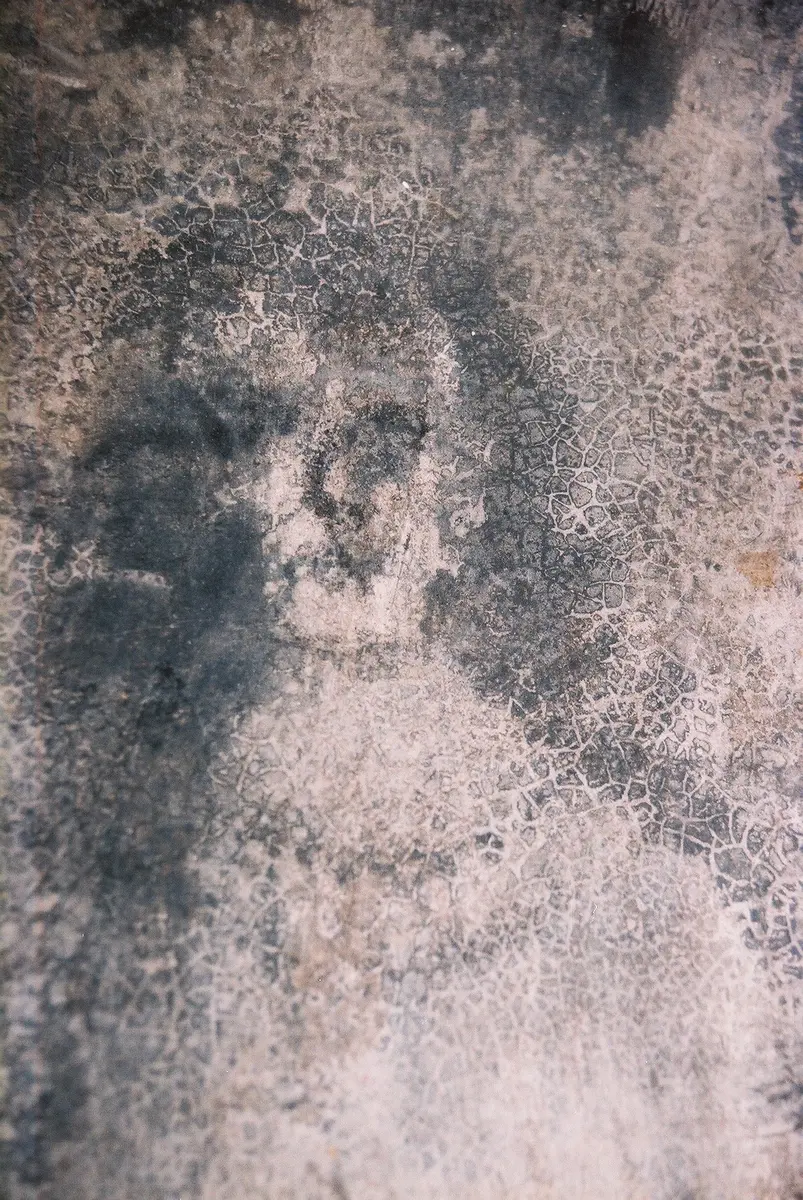
On 23 August 1971 María Gómez Cámara noticed a face-like stain on the concrete floor of her kitchen in Bélmez de la Moraleda, a small olive-growing village in Jaén.
Where is Bélmez Faces?
- Location
- Jaén, Andalucía, Spain
- Type
- House / mansion
- Coordinates
- 37.724, -3.381
- Last updated
LOCATION
Why is Bélmez Faces said to be haunted?
When her son broke up and re-laid the floor, a new image appeared within days, and the village curiosity became a national affair after the Madrid daily Pueblo put it on its front page on 31 January 1972. Parapsychologists such as Hans Bender defended the faces as "teleplasties" produced by the owner's mind. Six months after the first face, on 25 February 1972, Pueblo itself published a silver-salts formula as the solution, although no silver had been found in the samples, and the analyses of 1975, 1991, 1994 and 2014 found neither silver nor paint. The story kept flaring in step with the media for decades, and after María's death in 2004 a second wave of "faces" in another house ended in court, and that wave is where fraud has been proved. Today the original home is still family property, and the village runs a publicly funded interpretation centre.
What is the history of Bélmez Faces?
On 23 August 1971 María Gómez Cámara noticed a stain on the concrete floor of her kitchen at number 5 Calle Real, in Bélmez de la Moraleda, that seemed to form a face. More than fifty years later, the genuinely puzzling part of the case is not the stain. It is the machinery that assembled around it.
Bélmez was a village of some 2,200 people in the Sierra Mágina range of Jaén province, living off its olive groves. By the family's account, her son Miguel broke up the floor and laid fresh concrete, and three days later the image was back. Neighbours came first, then people from the surrounding district, then visitors who left a donation to get in.
The national press did the rest. On 31 January 1972 the Madrid daily Pueblo put the faces on its front page, and a local curiosity became a national affair. Journalists revisiting the episode on its fiftieth anniversary point to Pueblo's editor, Emilio Romero, as the man who "really staged" the case; without that front page it is hard to imagine there would have been a case at all. Behind the journalists came the parapsychologists. Germán de Argumosa, who said he had recorded voices inside the house, called the faces "teleplasties". The German researcher Hans Bender, of the Freiburg institute, judged them clearly paranormal: he compared them with the "thought photography" of Ted Serios, stressed the role of María as the focus person and rejected a spiritualist explanation. Fernando Jiménez del Oso and Joaquín Grau carried the supernatural reading into magazines and television.
The faces received names: the first was La Pava, and another, La Pelona, was later cut out of the floor for laboratory analysis. Miguel Pereira has said that the ground beneath the house was dug down to 2.8 metres and bones appeared, which fed the idea, the basis of the classic spiritualist reading of the case, that the building stands on an old burial ground. Pereira himself keeps his distance: "They say the house is built over an old cemetery, but I don't know about that any more."
The case dimmed and flared repeatedly for three decades, always in time with the media: esoteric magazines in the 1980s, a popular revival in the 1990s and, in this century, the hours of radio and television that Iker Jiménez devoted to it.
María Gómez died in 2004, and soon afterwards new faces appeared in another house of the village, María's birthplace at Calle Cervantes 7. The journalist Javier Cavanilles wrote in El Mundo that Pedro Amorós and several members of the Spanish Society of Parapsychological Research had created them and vouched for them. That sequence ended in court, and in an interpretation centre paid for with European funds. Calle Real is now called Calle María Gómez Cámara.
Timeline: the documented record of Bélmez Faces
- 23 August 1971 María Gómez Cámara reports a stain resembling a face on the concrete kitchen floor of her home at number 5 Calle Real. By the family's account the floor is broken up and re-laid, and the image returns within days.
- 31 January 1972 New faces appear in a different house in the village. El Mundo publishes Javier Cavanilles's reports alleging that they were made by the town council and some ghost hunters, and that Pedro Amorós and several members of the Spanish Society of Parapsychological Research, which he said he presided, created them and vouched for them.
- 2004 María Gómez Cámara dies. According to El Español in 2016, the faces gradually lost intensity after her death.
- Autumn 2004 The Spanish Society of Parapsychological Research, led by Pedro Amorós, announces new faces in a different house in the village. In late November El Mundo publishes Javier Cavanilles's reports alleging the new faces were faked with the town council's knowledge.
- 11 September 2006 Court of First Instance number 3 of San Vicente del Raspeig (Alicante) dismisses Pedro Amorós's 60,000-euro claim against Cavanilles and El Mundo, ruling the reports truthful and of public interest, and orders him to pay more than 14,000 euros in costs.
- 10 February 2013 The Centro de Interpretación de las Caras opens, built by the town council and the Jaén provincial council with more than half a million euros of European funds, on the site where a school once stood.
- 8 September 2014 The television programme Cuarto Milenio broadcasts an analysis by the chemist José Javier Gracenea, who concludes that the samples examined were not made with paint and show no external manipulation.
- 2016 Forty-five years on, Miguel Pereira keeps the original house open to visitors who leave a donation, rejects any accusation of fraud in it, and calls the 'Casa 2', another house in the village, a fraud where the faces are proven to be painted; its owners did not make them public until 2004, when María died.
- 2018 Researchers José Luis Anta Félez and José Manuel Crespo Guerrero publish an academic study of Bélmez as a dark-tourism destination, based on the interpretation centre's visitor book and 38 semi-structured questionnaires.
Is there a rational explanation for Bélmez Faces?
The case has a sceptical record from its first months, and the record is uneven. On 25 February 1972, six months after the first face, the Madrid daily Pueblo ran an article headed "Se acabó el misterio" ("The mystery is over") describing a formula of silver salts that, under ultraviolet light, could make faces appear on a cement floor, and the international press took it up as the solution. The psychologist Gerhard Mayer, who reconstructed the case from the files of the Freiburg parapsychology institute (Zeitschrift für Anomalistik, 2018), records that no trace of silver had been found in the samples, and that the reporter responsible, Antonio Casado, later told Iker Jiménez and Luis Mariano Fernández that the paper's management had ordered the story wound up because it had become "a problem of public order".
The material analyses that followed found neither paint nor silver. In 1975 a team led by J. J. Alonso, then director of the hydrological institute of the Polytechnic University of Valencia, cut out the slab carrying the face known as La Pelona: they found no silver, noted that its outline resembled a size 39 shoe sole, and proposed that someone may have stepped on the cement while it set. The editors of Psi Comunicación, where the report appeared in 1976, presented that possibility as Alonso's conclusion. In February 1991 samples sent by the Grupo Hepta of the Jesuit José María Pilón to the CSIC's Instituto de Cerámica y Vidrio gave small percentages of zinc, barium, copper, chromium, phosphorus and lead, quantities that Mayer and Pilar Ramiro de Pano judge too small to come from applied paint; a further analysis for Pilón in 1994 found the ordinary minerals of cement. In 2014 the chemist José Javier Gracenea concluded for the programme Cuarto Milenio that the samples showed no silver salts, no organic residue of paint and no external manipulation. Mayer and Ramiro de Pano point out that the 1991, 1994 and 2014 analyses were commissioned by supporters of the paranormal reading, and Ramiro de Pano herself keeps the archive of Germán de Argumosa, one of the case's first parapsychologists.
The ordinary explanation for the first face is pareidolia: a stain of grease or damp on a concrete floor is the kind of irregular surface in which human vision readily finds faces. The fraud that has been proved belongs to the second wave. Miguel Pereira, María's son, told El Español in 2016 that the faces in a second house, made public after her death in 2004, are "demonstrably" painted, and in 2006 a court at San Vicente del Raspeig dismissed the claim of the parapsychologist Pedro Amorós against the journalist Javier Cavanilles, who had reported that the new faces were made with the town council's knowledge. Cavanilles and Francisco Máñez concluded in their book Los caras de Bélmez (2007) that "what we are talking about in Bélmez is an attempt to use some stains on the floor to make money".
The money is documented. From the start the family asked visitors for a donation to enter the kitchen and sold photographs of La Pava at 10 pesetas each; by February 1972 Juan Pereira and a local photographer had sold 10,000 prints, according to the daily El Alcázar as collected by the sociologist Manuel Martín Serrano and cited by Magonia. In 2010 the town budgeted its interpretation centre at 858,000 euros, 587,000 of them from the European Union, according to Ideal as reported by Magonia.
Can you visit Bélmez Faces?
Bélmez de la Moraleda is a village of 1,504 inhabitants in the Sierra Mágina, 825 metres above sea level. It stands 69 kilometres from Jaén by road, and the A-401 runs through it. There is no railway station, and the drive from Granada takes a little over an hour and a half. Parking at the entrance to the village is free.
The Centro de Interpretación de las Caras occupies the old village school at Calle Alonso Vega 2. It opened in 2013 with European money, which is what the sceptical press of the time objected to. The entry on the Jaén provincial tourist board's site, read on 22 September 2026, gives it as open daily from 10:00 to 14:00 and from 16:00 to 20:00, and from 9:00 to 15:00 in July and August, with the telephone 654 559 814 and the address [email protected]. Commercial listings read the same day give only Saturday and Sunday, and send the caller to the town hall on 953 394 002. Inside there are newspapers of the period, photographs and audiovisual displays.
The house where the stains appeared is at number 5 of the street that used to be Calle Real and now carries María Gómez Cámara's name. It remains family property. It is opened by a grandson of María Gómez Cámara, who died in 2004; the telephone published for it is 678 62 13 58. A traveller who was shown round and wrote the visit up on 27 October 2021 records about half an hour in the house. No admission was charged and a voluntary contribution was left for the trouble. The visit therefore depends on somebody being at home, and it means entering a private dwelling.
The images are much fainter now than in the photographs of the 1970s.
Sources consulted
- Luis Alfonso Gámez, «Pedro Amorós y Bruno Cardeñosa pierden el juicio» — Magonia, 2006 web
- Luis Alfonso Gámez, «Las caras de Bélmez ya tienen museo: dinero de la UE para fomentar la incultura y la superstición» — Magonia, 2013 web
- Redacción, «Cincuenta años del misterio de Bélmez, el pueblo de las caras» — Diario de León, 2021 newspaper archive
- David López Frías, «Las Caras de Bélmez vuelven a aparecer en versión 2.0» — El Español, 2016 newspaper archive
- José Luis Anta Félez y José Manuel Crespo Guerrero, «Las Caras de Bélmez (España): construcción social y alcance territorial de un atractivo turístico» — Teoría y Praxis, n.º 24, pp. 229-260, 2018 academic
- Cuarto Milenio, «Dr. Gracenea: «Las caras de Bélmez no muestran manipulación externa»» — Cuatro, 2014 web
- Luis Alfonso Gámez, «Un alcalde del PSOE destina 587.000 euros de fondos de la UE a un museo sobre las caras de Bélmez — presupuesto de 858.000 euros: 587.000 de la UE, 208.000 de la Diputación y 42.000 del ayuntamiento, según Ideal» — Magonia, 2010 web
- Gerhard Mayer and Pilar Ramiro de Pano, «Gesichter ohne Ende … Materialanalysen zu den „Gesichtern von Bélmez“ — the 1975 Alonso analysis (no silver; shoe-sole outline offered as a possibility), the 1991 and 1994 Grupo Hepta analyses at the CSIC, and the 2014 Cuarto Milenio analyses» — Zeitschrift für Anomalistik, 18, 304–319, 2018 academic
- Gerhard Mayer, «Die Gesichter von Bélmez: eine historische Rekonstruktion — Pueblo, 25 February 1972, 'Se acabó el misterio' and the silver-salts formula; Antonio Casado's account» — Zeitschrift für Anomalistik, 18, 104–132, 2018 academic
Reviewed by V. Serrano on 2026-07-29 · How we verify our content
💬 Field testimonies (0)
No testimonies yet. Add the first.
Add your testimony
🔒 Log in to add a testimony