👻 HAUNTED PLACE · EXP. Nº0482
ACTIVE
Cortijo Jurado
Cortijo Jurado is a location reputed to be haunted in Andalusia, ES. Its reputation comes from reported apparitions, unexplained phenomena and eyewitness accounts gathered over time.
Where is Cortijo Jurado?
- Location
- Andalusia, ES
- Type
- House / mansion
- Coordinates
- 36.713, -4.529
- Testimonies
- 0
- Last updated
LOCATION
Why is Cortijo Jurado said to be haunted?
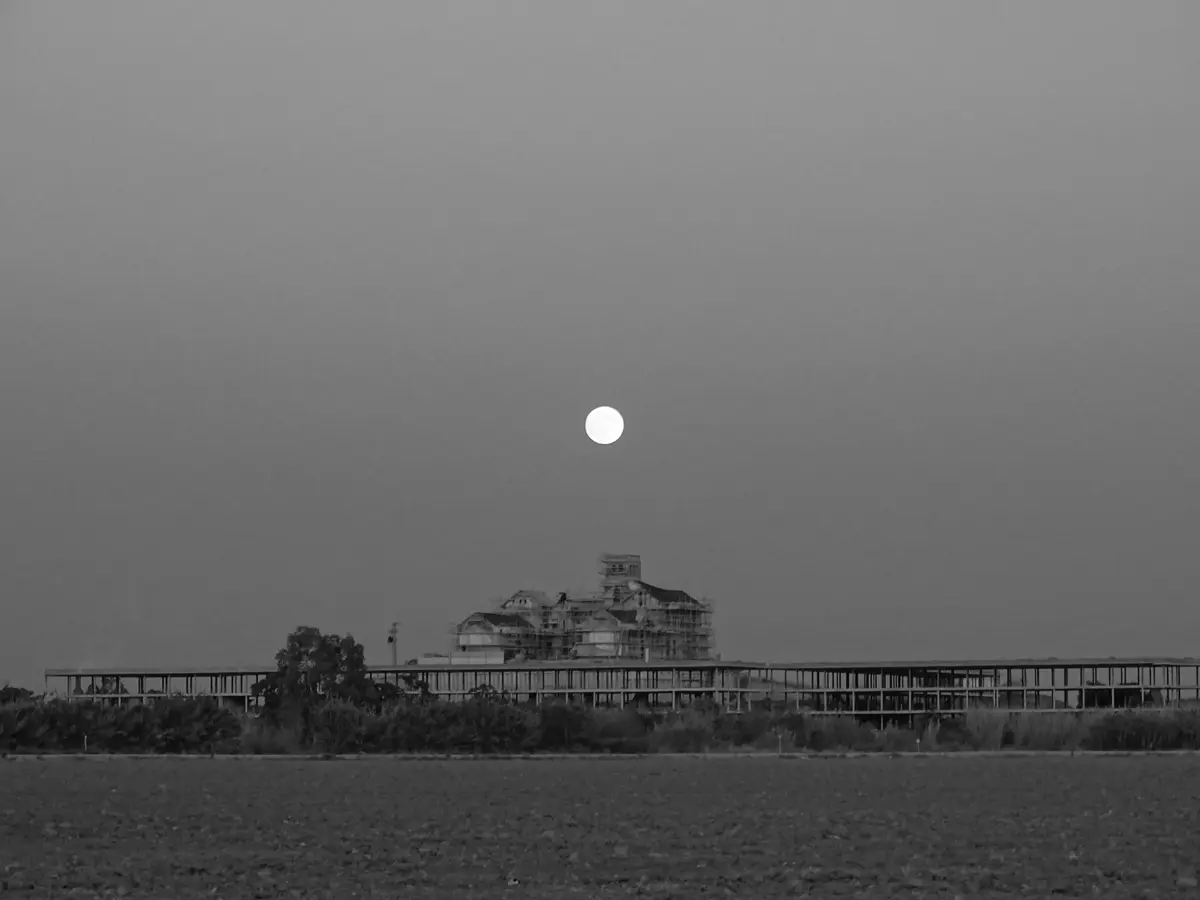
On a rise beside the road into Campanillas, on the outskirts of Málaga, stands Cortijo Jurado, a mid-nineteenth-century bourgeois agricultural estate built by the Heredia family — reputedly to the design of a French architect — in an eclectic style mixing English neo-Gothic with Nordic touches. The city's register of protected buildings gives it 1,900 square metres, an unknown architect and poor condition. A branch of the Heredias sold it in 1925. The dark chapters begin underground: local tradition speaks of a two-kilometre passage to Cortijo Colmenares, now blocked with concrete, and of a torture chamber a neighbour is said to have seen in 1942. That legend carries with it the disappearance of young women in the nineteenth century — but it is worth stating what cannot be found: not one named victim, not one complaint, not one court case, not one news report. Even the name of the setting postdates the supposed crimes: the estate has been called "Jurado" only since the 1970s, after the Vega Jurado family. Since 2022 it has belonged to the Sinerba group, which plans an office complex there and will restore the house as its headquarters.
What is the history of Cortijo Jurado?
Cortijo Jurado has two files, and only one of them was ever written down.
The first is that of a nineteenth-century farm and pleasure house that Málaga City Council calls 'the most monumental surviving example of lowland rural architecture using a learned language for its formalisation'. That file genuinely exists: it has a reference number — H05 in the catalogue of protected buildings of the city's General Urban Development Plan — and you can download it as a PDF. The second is the file of 'the crimes at the cortijo': girls who vanished in the nineteenth century, cellars fitted with torture machines, a family of industrialists turned into a cult. Of that second file, having gone looking for it, we have not found a single page.
Start with the one that exists. The municipal record describes a large building set on a hilltop, commanding its surroundings, on a terraced platform that absorbs the slope. Rectangular plan around a central courtyard of the same shape, with four ranges around it. Two storeys and 1,900 square metres. Above them rise the lookout tower and the chapel, the latter with both an external door and direct internal access to the choir: it is in English Gothic style, with ogival openings and doorway crowned by a slender gable, and inside a plain masonry altarpiece in the same idiom. The remaining façades distribute segmental openings at regular intervals, and an elaborate string course decorated with heavy dentils separates the two floors. Pitched roofs of curved tile. Style: eclectic, with a neo-Gothic chapel. Period: mid-nineteenth century. Architect: unknown. State of conservation: poor.
That 'unknown' is worth underlining, because almost everything told about the cortijo begins with a French architect. Sergio Martos Nogueras — a primary schoolteacher and the grandson of labourers who lived on the estate, who published an article about it in 2023 in the magazine of the Andalusian Institute of Public Administration — uses the correct verb: popular memory has it that a French architect built it for the Heredia family. He adds that no documents of its construction survive. Reviewing the case the same year, the legal magazine Economist & Jurist said the same thing: the papers that would explain the property's origins have disappeared.
The ownership, as the municipal record gives it, does the legend no favours either. The cortijo belonged initially to a minor branch of the Heredia family, which sold it in 1925; during its last years of use it belonged to the Jurado family, which is where the name comes from; then came long years of abandonment and decay of its fabric. It had a double use: agricultural and stock-raising enterprise, and country retreat. Martos lengthens the chain and supplies a date worth keeping: Heredia, Larios, Quesada and Vega Jurado, and it is the last of these families that gives the estate the name Cortijo Jurado in the 1970s. Before that, he writes, it was known as Lagar de Jurado or finca Jurado, because after Mendizábal's disentailment it had passed to one Diego Jiménez de Jurado.
About two kilometres away stands Cortijo Colmenares, which in the municipal catalogue is the immediately preceding entry, H04, and whose history is documented from top to bottom: it appears under that name as early as 1581 and in the Ensenada cadastre of 1747 as a farmhouse; in 1835 it belonged to Antonio Colmenares and later passed to the Larios family, who radically transformed the eighteenth-century building. In 1987 a company bought it, turned the estate into a golf course, completed the restoration of the building in 1990 and commissioned the course from the Finnish architect Koski Kuronen. Today it is the Guadalhorce golf club. That, it is worth knowing, is the far end of the legendary tunnel.
Because the other story runs, in the signed versions we have been able to read, like this: that in the late nineteenth and early twentieth centuries several girls disappeared around the cortijo and their bodies turned up on the bank of the river Campanillas; that the Heredias — and by extension the Larios — had imported from their contacts in France and England satanic rites practised in the cellars; that a two-kilometre passage linked the cortijo to Colmenares and served to move the corpses; and that in 1942 a local man got into the galleries and found a chamber with human bones and torture machinery. On that frame the layers accumulated: executions nearby during the Civil War, use as a hospital, the cellars turned into holding cells, a gambling den, a brothel. And then, in the twentieth century, poltergeists and electronic voice phenomena.
The rest of the building's history is pure town planning. In 2002 paperwork began for a luxury hotel that would rehabilitate the cortijo as its reception area and social lounge; the scheme belonged to Grupo Mirador — 200 rooms, four stars — with works from 2005, and at the end of 2007 the catalogue record itself described them as under way. The developer's debts brought the project down and the building sat still for almost two decades. In 2019 it was offered for sale or rent at 12.5 million euros, advertised as a nineteenth-century estate with a luxury hotel licence across 45,000 square metres. In August 2022 the city's planning councillor confirmed to El Español that a buyer was interested and was asking to change the hotel use for something else, on condition that it was not residential and could demonstrate 'general interest for the city'.
That buyer was the Málaga group Sinerba, which acquired the estate in 2022. Its property arm, SUBA, commissioned Ángel Asenjo y Asociados to design a 32,229-square-metre business campus around the manor house: some 20,000 square metres of lettable office space, 40,000 of open ground, underground parking, catering and an auditorium, plus temporary coliving accommodation for people working there. The regional environment department issued a favourable environmental report on 3 January 2025, and the estimated initial investment is 25 million euros. What awaits the historic building is a full restoration and a distinctly prosaic fate: becoming the company's registered head office.
Timeline: the documented record of Cortijo Jurado
- 1581 and 1747 Neighbouring Cortijo Colmenares, some two kilometres away, is already recorded under that name in 1581 and appears in the Ensenada cadastre of 1747 as a farmhouse. In 1835 it belonged to Antonio Colmenares and later passed to the Larios family. It is the only one of the two estates whose early history is documented.
- Mid-19th century The date Málaga City Council's catalogue of protected buildings assigns to the construction of the cortijo, in eclectic style with a neo-Gothic chapel. Architect: unknown. No documents of its building survive; the 'French architect' usually cited comes, as those who repeat it acknowledge, from popular memory.
- Late 19th and early 20th century The period in which the legend places the disappearance of several girls nearby and the appearance of their bodies on the bank of the river Campanillas. No complaint, court case or press report supporting it has been located, and the sources that relate it concede it has never been proven.
- 1925 A minor branch of the Heredia family, the original owners, sells the cortijo, according to the historical summary in the municipal record. The account by a labouring family published in the IAAP magazine adds that the sale was to the Larios, the Heredias being crushed by their failing finances and by phylloxera.
- 1942 A local man — described in other versions as a workman — is said to have entered the galleries of the cortijo and found a chamber with human bones and torture machinery. The episode is transmitted orally, with no record, complaint or photograph, and those who repeat it note that it has never been proven.
- 1970s The estate takes the name Cortijo Jurado from the Vega Jurado family, according to the article published in the magazine of the Andalusian Institute of Public Administration; before that it was known as Lagar de Jurado or finca Jurado. The municipal record agrees that the Jurados owned it in its last years of use.
- 1987-1990 A company buys Cortijo Colmenares and turns it into a golf course; the restoration of the building is completed in 1990 and the layout of the course is commissioned from the Finnish architect Koski Kuronen. The far end of the supposed two-kilometre passage is today the Guadalhorce golf club.
- 2002-2007 Paperwork begins for a luxury hotel that would rehabilitate the cortijo as its reception area and social lounge; Grupo Mirador plans 200 rooms and four stars and starts work in 2005. At the end of 2007 the municipal catalogue describes the works as under way. The developer's debts kill the project and the building stands idle for almost two decades.
- 2019 The estate is offered for sale or rent at 12.5 million euros, advertised as a nineteenth-century manor with a luxury hotel licence across 45,000 square metres. It finds no buyer.
- 12 August 2022 The city's planning councillor confirms to El Español that a buyer is interested and is asking to change the hotel use for a different one, on the municipal condition that it not be residential and that it demonstrate 'general interest for the city'. That same year the Sinerba group buys the estate.
- 3 January 2025 The Andalusian regional environment department issues a favourable environmental report on the area's planning study. The scheme by SUBA, Sinerba's property arm, provides for a 32,229-square-metre business campus designed by Ángel Asenjo y Asociados around the manor house, with some 20,000 square metres of lettable offices, 40,000 of open ground, an auditorium and coliving, and an initial investment of 25 million euros. The manor house is to be restored as the company's head office.
Is there a rational explanation for Cortijo Jurado?
With Cortijo Jurado there is no need to argue about ghosts. It is enough to ask for the case file.
Not one victim has a name. The legend speaks of 'the missing girls', plural and unspecified: no name, no date, no age, no complaint, no court, no newspaper report. In a country whose nineteenth-century parish, civil and judicial registers survive reasonably well, and where the provincial press in Málaga was abundant and noisy, a series of ritual murders of children would have left a trace somewhere. The very sources that tell the story concede as much without being pressed: Martos writes that it is 'a fact that has never been proven' and puts a question mark in his own title; the Economist & Jurist piece offers not a single document and rests on oral accounts. Nobody has ever produced the paperwork, because there is none.
The name of the crime scene is an anachronism. This is the detail that, to our mind, settles it. According to Martos the estate has been called Cortijo Jurado only since the 1970s, after the Vega Jurado family; and the municipal catalogue record confirms, independently, that the Jurados were the owners of the last years of use, not the first. In other words, 'the crimes at Cortijo Jurado' are nineteenth-century crimes committed at a location christened a century later. When a legend cannot get the name of the building right, it has probably not travelled out of it.
The documentation that does exist says nothing. Cortijo Jurado is catalogued, measured, photographed and described by Málaga City Council, which gives it a record sheet with its floor area, its height, its style, its historical summary, its heritage value and its conditions of protection. That sheet compresses the building's life into four lines — the Heredias, the sale of 1925, the Jurado family, the abandonment, the double use as farm and retreat — and mentions no crime, no disappearance and no tunnel. Neither does the regional environmental report, nor the planning file. The house has spent twenty years passing through the hands of judges, valuers, developers and municipal technicians, and not one of them has run into the case file.
The tunnel is an engineering claim, not a rumour. Two kilometres of underground gallery between two farmhouses on the Guadalhorce floodplain, beside a river and over alluvial ground, is not a decorative detail: it is a work that a nineteenth-century agricultural estate had neither reason nor means to undertake, and that nobody has walked, measured or photographed. What does exist — and what people saw — are cellars, cisterns, wells and service galleries, standard on estates of this kind, which at some point were closed off with concrete walls. The press that has visited the property describes exactly that: visible passages, sealed. From blocked-up cellars to a two-kilometre tunnel is a leap nobody has made with evidence.
The Inquisition does not fit the calendar. Martos records that some attributed the chamber of bones and the torture instruments to the presence of the Holy Inquisition at the cortijo. The Spanish Inquisition was abolished for good in 1834; the building is, according to the catalogue, of the mid-nineteenth century. The tribunal had ceased to exist before the walls that supposedly housed it went up. And the legend's other great motif — freemasonry and satanism imported from France and England by a family of industrialists — is a recognisable narrative mould, the same one applied across Europe to merchants, foreigners and minorities: it does not describe the Heredias, it describes the suspicion directed at them.
The strongest testimony comes from the people who actually lived there. Four labouring families lived on the estate at one point. One of them was that of Martos's grandfather Manuel, who arrived from Nerja aged eight or nine to mind the livestock and in time became the farm's tractor driver. His grandson puts it plainly: of all the stories his grandfather told him about the cortijo, none referred to ghosts, recorded voices or beings from the beyond; they were about life at the time, work from dawn to dusk, and the rural world. Haunted houses tend to have the opposite problem: the people who sleep in them never notice.
The phenomenon has a date, and it is recent. What is datable is the popularisation. Martos places the surge in the twentieth century, with the alleged poltergeist cases and the electronic voice phenomena, and points to Iker Jiménez's television programme Cuarto Milenio as the amplifier that made the estate famous; behind it came the curious, the mediums and the investigators in quantity. It is the same sequence as in other Spanish cases: first the medium, then the myth, never the other way round.
And it had real consequences. The municipal catalogue already rated the state of conservation as poor; two decades of halted works, looting and night-time visits did not help. Martos relates that one of the young people who went to see the place fell into a well and was left with a spinal injury for life. That is, as far as we can establish, the only verified victim Cortijo Jurado has produced, and no rite harmed him: he was maimed by a ruined building he should never have entered.
One final note, in nobody's defence. Unlike other Spanish mystery sites, there is no business here: no museum, no tickets, no interpretation centre, no town hall working the legend. The current owner has in fact chosen to leave the grim stories behind and build an office campus. When a legend earns nobody anything and still keeps growing, the explanation is not money: it is that an enormous, empty, ruined manor house with a Gothic chapel on top of a hill is simply irresistible.
Can you visit Cortijo Jurado?
Cortijo Jurado is private property and has no public entrance.
The protected-buildings catalogue of Málaga's general plan lists it as entry H05 of Zone H, Campanillas-Guadalhorce, under the address "Ctra. Campanillas, s/n". That road is signposted today as Avenida José Ortega y Gasset, postcode 29590, in the Campanillas district of Málaga, about 9.7 km (6 miles) west of the city centre. The entry records a floor area of 1,900 m² over two storeys, an isolated layout, a mid-nineteenth-century date, an unknown author and a state of conservation of "malo". Protection is graded Arquitectónica-I, and what it covers is set out as "Fachadas, volumen envolvente, elementos ornamentales".
The catalogue's own description is a fair account of what the road gives: "En la cima de un cerro y dominando sus contornos se asienta esta gran edificación sobre una plataforma aterraza que salva el desnive del terreno." Above the two storeys rise the lookout tower and the chapel, whose pointed-arch doorway is finished with a slender gable. The land is fenced, and since late 2022 the estate has belonged to the Sinerba group. The architects' file for the scheme —Campus Cortijo Jurado— gives 32,229 m² of floor area and a span of 2022 to 2026, and the Junta de Andalucía cleared its environmental assessment in January 2025 with conditions attached.
The "malo" rating predates the collapse of the hotel project whose paperwork began in 2002. The house then stood open for the better part of twenty years, with unprotected voids, decayed floors, cellars and wells. One of the young people who went in to explore it fell into a well and was left with a permanent spinal injury. Entry without the owner's permission is trespass under Spanish law.
Two more buildings in the same catalogue file stand nearby. H04, listed as "Ctra. Cártama km 7 — Golf Guadalhorce", is Cortijo Colmenares, the far end of the supposed tunnel: a company bought it in 1987 and finished restoring the house in 1990, having commissioned the golf course from the Finnish architect Koski Kuronen. Its state of conservation is recorded as "bueno" and it is a private sports club. H06 is the parish church of Nuestra Señora del Carmen in Campanillas itself; its address in the catalogue is calle Ruiz y Mayquez 29.
Sources consulted
- Ayuntamiento de Málaga, Gerencia Municipal de Urbanismo, «Catálogo de edificaciones protegidas del PGOU de Málaga — Zona H Campanillas-Guadalhorce, fichas H04 (Cortijo Colmenares) y H05 (Cortijo Jurado): descripción, superficie, estado de conservación, autor, época, síntesis histórica, valor patrimonial y condiciones de la protección» — Plan General de Ordenación Urbanística de Málaga, Documento D — Los catálogos, pp. 220-229, 2011 report
- Sergio Martos Nogueras (CEIP La Atunara, La Línea de la Concepción), «Cortijo Jurado, ¿realidad o leyenda?» — [email protected]. Revista digital por y para emplead@s de la Junta de Andalucía, n.º 15, Instituto Andaluz de Administración Pública (ISSN 3020-9587), 2023 report
- Sebastián Sánchez, «¿Adiós al abandono de Cortijo Jurado? Málaga confirma el interés de una empresa por comprarlo» — El Español — Málaga, 2022 newspaper archive
- Sebastián Sánchez, «La Junta allana el camino al gran complejo de oficinas de Cortijo Jurado en Málaga» — El Español — Málaga, 2025 newspaper archive
- Antonio J. Aranda, «La casa más encantada de España causa furor al ponerse en venta» — Economist & Jurist, 2023 newspaper archive
- Ángel Asenjo Arquitectos Asociados, Estudio de Arquitectura y Urbanismo, «Campus Cortijo Jurado — proyecto para Suba Proyectos Compartidos, S.L. (32.229 m², 2022-2026)» — asenjo.net, 2026 web
Reviewed by V. Serrano on 2026-07-31 · How we verify our content
📎 Source: Wikipedia (CC BY-SA)
💬 Field testimonies (0)
No testimonies yet. Add the first.
Add your testimony
🔒 Log in to add a testimony