🦶 CRYPTID SIGHTING · EXP. Nº6501
ACTIVE
Chonchón
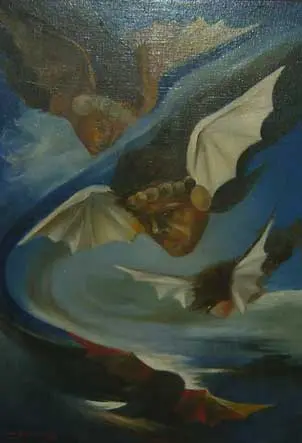
The chonchón is the flying head of a kalku, a Mapuche sorcerer: it comes off at night, its outsized ears beating like wings, and crosses the dark announcing itself with a cry of "tué, tué, tué".
Where and when was Chonchón sighted?
- Location
- Chile (mapuche), Chile
- Date sighted
- Unknown
- Coordinates
- -38.7, -72.6
- Last updated
LOCATION
What is Chonchón?
It belongs to the folklore of the Mapuche and of rural central and southern Chile, and it is far older in print than the usual retellings suggest. The Jesuit Miguel de Olivares, writing between 1758 and 1767, already listed the chonchón among the birds of Chile — an owl-like creature that shuns light and sings at night in a plaintive, doleful voice, about which, he adds, the Indians hold various superstitious fancies. After him come Zorobabel Rodríguez in 1875, Rodolfo Lenz in 1904, Tomás Guevara in 1908 and Julio Vicuña Cifuentes in 1910 and 1915. The countermeasures the record actually preserves are not the ones repeated online: turn the headless body face down, hide or destroy the ointment, trace Solomon's cross, sing the Magnificat, burn canelo branches, throw ash into the air. Salting the body is a Philippine motif, not a Chilean one. In 1999 the story was still being told at Nehuentúe, in La Araucanía.
What is the history of Chonchón?
No one in Chile invented the chonchón in the twentieth century, and the folklorist usually credited with recording it was not the first to do so.
The oldest description of the chonchón in this file is a Jesuit's. Miguel de Olivares, born in Chillán at the end of the seventeenth century and a missionary who knew the language and the customs of the Mapuche, began writing his Historia militar, civil y sagrada de Chile in 1758 and was expelled from Chile with the rest of his order in 1767; the manuscript was printed only in 1864, in the fourth volume of the Coleccion de historiadores de Chile. In his survey of Chilean birds, on page 32, between the diuca that sings at daybreak and the pajaro nino of the coast, he writes: "El nuco y el chonchón, aves semejantes a la lechuza, en color, y figura, y aborrecen la luz, se diferencian en que nunca habitan en poblado, y en que cantan de noche; pero en voz querula y funesta, y los indios tienen en ello varias quimeras superticiosas." For Olivares the chonchón is a bird — a real one, an owl in colour and shape — and the marvel is something the Mapuche say about it.
That is the shape the belief keeps for the next two centuries: a real nocturnal bird, and behind it a flying head. Zorobabel Rodríguez put it in his Diccionario de chilenismos in 1875. Rodolfo Lenz gave it an entry in his Diccionario etimolójico de las voces chilenas derivadas de lenguas indíjenas americanas (Santiago, 1904), filed under chucho, and recorded that a good many Chileans identified the chonchón with the chuncho, the small owl Reed called Glaucidium nanum, whose "chun, chun, chun" was held to announce a death in the house. Lenz did not derive the word directly: he traced it through Febrés to Mapudungun chuchu, which means both a bird and a maternal grandmother — a gloss Félix José de Augusta confirms in his Diccionario araucano-español of 1916, where chuchu is "abuela materna". Augusta also gives the headword plainly, on page 25: "chonchón, s., cierto pájaro grande, nocturno." His dictionary sits it inside a whole Mapudungun vocabulary of night birds: kilkil, the chuncho; koñkoñ, the owl; kou, the nuco; deñ, the night tiuque, "mirado como ave de mal agüero".
The fullest Mapuche testimony was published by Tomás Guevara in Psicolojía del pueblo araucano (Santiago, 1908). On page 326 he sets out the belief — a person, "comunmente mujer", makes a pact with the brujos to learn to fly; the head comes off in bed, sprouts wings and travels to the reni, the sorcerers' underground meeting place — and then he prints the stories themselves, each with the name of the person who told it. "El hombre i la mujer chonchón" is credited to José María Lonquitué, of Pillanlelvún; "La mujer chonchón i su marido" to the same man; "Una mujer chonchón" to Quilaqueo, "del otro lado del Cautín"; another to an unnamed Mapuche of Maquehua. One of those texts carries a countermeasure: on finding his wife's body without its head, the husband remembers that "según virtud indíjena, poniendo el cuerpo boca abajo no podría unirse la cabeza al tronco", and turns it over.
Julio Vicuña Cifuentes published after all of them except Augusta. His chapter on the chonchón appears in Estudios de folk-lore chileno. Primera serie: Mitos (1910) and again, expanded, in Mitos y supersticiones recogidos de la tradición oral chilena (1915), pages 42 to 46. His informants were not from the Araucanía at all but from Buin, Ovalle, Angostura de Paine and Limache, in central Chile. And his appendix reprints an earlier newspaper piece, José Silvestre's "Algo de mitología zoológica en Ovalle", published in El Obrero of Ovalle on 19 February 1904, which supplies the ointment on the throat, the flight formula "sin Dios, sin Santa María", and the folk quatrain: "Tu padre sería brujo, / cómo Chonchón se volvía, / y hacía: tué, tué, tué, tué, / cuando de noche salía."
A word about vocabulary, because it is not neutral. Kalku is a category of Mapuche religion; the Spanish "brujo" that Olivares, Guevara, Lenz and Vicuña all reach for is a colonial gloss carrying the baggage of the Inquisition, and it is the word under which Mapuche people were and are accused. The tradition is not extinct. Constantino Contreras, of the Universidad de La Frontera, recorded a chonchón story in Nehuentúe, in the commune of Carahue, from doña Yolanda Muñoz Salazar, aged 79, and published his analysis in Estudios Filológicos in 2000.
Timeline: the documented record of Chonchón
- c. 1758–1767 The Jesuit Miguel de Olivares, a missionary who knew Mapudungun, writes his Historia militar, civil y sagrada de Chile. Among the birds of Chile he lists "el nuco y el chonchón, aves semejantes a la lechuza", nocturnal, of "voz querula y funesta", about which the Mapuche hold "varias quimeras superticiosas". It is the oldest description of the chonchón in this file. He was exiled from Chile in 1767 and the text was printed only in 1864.
- 1875 Zorobabel Rodríguez defines the chonchón in his Diccionario de chilenismos as an "ave fatídica nocturna creada por la imajinacion de nuestros campesinos", and argues that persecuting owls is bad business for farmers. He quotes Claudio Gay for the practice of throwing ash into the air on hearing one at night.
- 19 February 1904 José Silvestre publishes "Algo de mitología zoológica en Ovalle" in the newspaper El Obrero, of Ovalle. It gives the ointment applied to the throat, the flight formula "sin Dios, sin Santa María", the rule that hiding or destroying the ointment kills the brujo, and the popular quatrain about the father who turned into a chonchón. Vicuña Cifuentes reprinted it in 1915.
- 1904 Rodolfo Lenz gives the chonchón an entry in his Diccionario etimolójico de las voces chilenas derivadas de lenguas indíjenas americanas. He records the dispute over identifying it with the chuncho (Glaucidium nanum), traces the word through Febrés to Mapudungun chuchu — 'a bird' and 'maternal grandmother' — and lists Solomon's cross with a knife, and burning canelo branches, as the ways to keep it off.
- 1908 Tomás Guevara publishes Psicolojía del pueblo araucano. Page 326 sets out the belief; the story section prints the narratives with their narrators named — José María Lonquitué of Pillanlelvún, Quilaqueo from the far side of the Cautín, an unnamed Mapuche of Maquehua. One of them supplies the countermeasure the later summaries lose: turning the headless body face down so the head cannot rejoin it.
- 1910 Julio Vicuña Cifuentes prints his chapter on the chonchón in Estudios de folk-lore chileno. Primera serie: Mitos — five years before the book he is usually credited with, and a century and a half after Olivares.
- 1915 The expanded Mitos y supersticiones recogidos de la tradición oral chilena devotes chapter XIV, pages 42–46, to the chonchón. Vicuña Cifuentes records the phonetic objection to the chuncho identification, the tale of the girls who taunted a chonchón with "Vuelve mañana por sal", and, in a note added while the book was at press, the Limache case in which the thing that fell in the yard was described as a large bird with a bare red head.
- 1916 Félix José de Augusta's Diccionario araucano-español records, on page 25, "chonchón, s., cierto pájaro grande, nocturno", and around it a Mapudungun vocabulary of night birds: kilkil (the chuncho), koñkoñ (the owl), kou (the nuco), deñ (the night tiuque, "mirado como ave de mal agüero").
- 1999 Constantino Contreras, of the Universidad de La Frontera, records "El huinca y el brujo" from doña Yolanda Muñoz Salazar, aged 79, at Nehuentúe, commune of Carahue, province of Cautín, and presents his analysis at the SOCHIL congress in La Serena that October. In her telling a settler jokingly offers milk to a chonchón flying past; the next day a Mapuche man arrives with a small jug to collect.
- 2000 Contreras publishes the analysis in Estudios Filológicos 35, pages 23–39. He classifies the chonchón story as a myth narrative rather than a tale, in which two traditions meet — the Hispanic witch who turns into a bird and the Mapuche kalku — and reads it as a statement about the power relation between wingka landowner and Mapuche neighbour.
Is there a rational explanation for Chonchón?
A Chilean lexicographer called the chonchón an invention in print in 1875. Zorobabel Rodríguez opens his entry, on page 170 of the Diccionario de chilenismos, by defining it as an "ave fatídica nocturna creada por la imajinacion de nuestros campesinos" — a fateful night bird created by the imagination of our country people — and then, on the next page, mounts a defence of owls that has aged extremely well: "tan inveteradas preocupaciones en contra del chonchón no solo carecen de causa sino hasta de pretexto. Las lechuzas, por la caza incesante que dan a ratas i ratones, prestan a los agricultores preciosos servicios."
The sources argue among themselves about which bird people were hearing. Olivares, in the 1760s, simply files the chonchón as an owl-like bird alongside the nuco (Asio flammeus). Lenz reports in 1904 that many Chileans equated it with the chuncho — Glaucidium nanum in Reed's naming, today the austral pygmy owl Glaucidium nana — and Claudio Gay, quoted by Rodríguez, had already described country people running out of their huts to throw ash in the air when they heard an owl call at night.
Vicuña Cifuentes then records the objection to that identification, and it is a phonetic one. Those who rejected it argued that an animal that sings "tué, tué, tué" could not be the same as one that says "chun, chun, chun"; besides, in stories about brujos the word is always chonchón and never chuncho, while in talk of bad omens it is always chuncho and never chonchón. He concluded that the identifiers were in the minority. The other candidates split the chonchón's attributes between them without any one bird carrying them all: the tucúquere, Bubo magellanicus, is the largest owl in Chile and raises its head feathers into ear shapes exactly as the chonchón is described, but Lenz gives its cry as "tucucurú"; the pequén, Athene cunicularia; the concón, which Reed identified as Syrnium (today Strix) rufipes; the nuco. Augusta's dictionary shows the Mapudungun side of the same problem: several distinct names for several distinct night birds, all ill-omened.
Two misidentifications are documented inside the sources themselves. Guevara's informant describes the returning head arriving as a "hueitrúfe, guairavo", a night heron, which Guevara glossed as Ardetta exilis. And Vicuña Cifuentes adds, in a note written while the 1915 book was already at press, a case from a house in Limache: the household heard a chonchón shrieking, someone traced Solomon's cross on the ground, and something heavy fell in the yard — "un ave grande, del tamaño de un pavo, o tal vez de un jote (gallinazo), al que se asemejaba por tener la cabeza roja i desnuda". The witnesses' own description is of a turkey vulture, Cathartes aura, the jote de cabeza colorada. They cut its head off and threw the body on the roof, and the story proceeded from there.
Finally, the salt. None of the Chilean texts cited here — Olivares, Rodríguez, Lenz, Guevara, Vicuña Cifuentes in 1910 and in 1915, where he reprints Silvestre, and Augusta — has anyone salting the abandoned body: in their Internet Archive transcriptions, searched on 25 September 2026, salt turns up near the chonchón only in the taunt "Vuelve mañana por sal". In the best-known tale, girls who call that after a passing chonchón get a visitor next morning who comes to collect the salt they promised. The countermeasures these texts do keep are turning the body face down (Guevara's informants), hiding or destroying the ointment (Silvestre, 1904), Solomon's cross, the Magnificat, the Doce palabras redobladas, a waistcoat spread out in a certain way (Vicuña Cifuentes), burning canelo branches (Lenz) and throwing ash into the air (Gay). Salting the abandoned lower body belongs to the Philippine manananggal and the Malay penanggalan. On the same day, the Internet Archive's full-text search returned 15 results containing both "chonchon" and "manananggal", thirteen distinct items: popular vampire and creature compendia — among them Jonathan Maberry's Vampire Universe (2006), Neil Arnold's Monster! (2007), Deborah Kespert's Vampires, Zombies, and Werewolves (2011) and Javier Arries' Vampiros —, a Tagalog novel, and uploaded collections of creepypastas, occult compilations and personal documents. The parallel lives in that popular literature; the Chilean texts keep remedies of their own.
What the record allows anyone to test is transmission. The chonchón is documented from the 1760s to a tape recorder in Carahue in 1999, and Contreras reads that last telling as a statement about power: in it a wingka landowner mocks a passing bird, a Mapuche man turns up the next day to hold him to his word, and the supernatural power of the poorer party is the only power that answers back.
Can you visit Chonchón?
The chonchón has no site: it is a belief, and the geography of the record is wider than the label "Mapuche legend" suggests.
Vicuña Cifuentes took his versions from informants in Buin and Ovalle, and from Angostura de Paine and Limache — central Chile, hundreds of kilometres north of the Araucanía. José Silvestre's newspaper account of 1904 comes from Ovalle, in the Coquimbo region. The Mapuche narrators Guevara names lived at Pillanlelvún and at Maquehua and on the far side of the Cautín, in the Araucanía proper. Contreras recorded his 1999 version at Nehuentúe, in the commune of Carahue; two more came from the province of Osorno. Mapuche and non-Mapuche country people hold the belief alike, from Coquimbo down to Osorno.
Two museums in Chile hold the material context of the belief. The Museo Regional de La Araucanía occupies the Casa Thiers at Alemania 084, Temuco, a building whose architecture the museum's own site compares to "las villas construidas en Viña del Mar a inicios del siglo pasado"; its telephone is +56 45 2896780 and its address [email protected]. The site advertises guided visits and workshops alongside talks and a virtual tour. Neither opening hours nor an admission price appeared on it when it was read on 9 September 2026.
The Museo Chileno de Arte Precolombino stands at Bandera 361, Santiago, on the corner of Compañía, one block from the Plaza de Armas; its telephone is +56 2 2928 1500. Its permanent exhibition, Chile antes de Chile, "abarca desde los más antiguos grupos de pescadores hasta los actuales pueblos originarios". The prices on its own page on 9 September 2026 were 1,000 Chilean pesos for Chileans and residents; 8,000 for foreigners; 500 for Chilean and resident students; 4,000 for foreign students. That same page publishes no opening hours for the museum.
The kalku and the machi are categories of a religion in current use, and "brujo" is the word under which people are accused. What the belief cost the birds was written down by Rodríguez in 1875: "tan inveteradas preocupaciones en contra del chonchón no solo carecen de causa sino hasta de pretexto. Las lechuzas, por la caza incesante que dan a ratas i ratones, prestan a los agricultores preciosos servicios."
Sources consulted
- Miguel de Olivares, «Historia militar, civil y sagrada de Chile (Coleccion de historiadores de Chile, tomo IV), p. 32» — Imprenta del Ferrocarril, Santiago, 1864 book
- Zorobabel Rodríguez, «Diccionario de chilenismos, s. v. «Chonchón», pp. 170-171» — Imprenta de «El Independiente», Santiago, 1875 book
- José Silvestre, «Algo de mitología zoológica en Ovalle (reproducido en Vicuña Cifuentes, Mitos y supersticiones, 1915, pp. 337-338)» — El Obrero (Ovalle), 19 de febrero de 1904, 1904 newspaper archive
- Tomás Guevara, «Psicolojía del pueblo araucano, cap. XIV «Concepciones míticas», p. 326, y relatos «El hombre i la mujer chonchón», «La mujer chonchón i su marido» y «Una mujer chonchón»» — Imprenta Cervantes, Santiago, 1908 book
- Rodolfo Lenz, «Diccionario etimolójico de las voces chilenas derivadas de lenguas indíjenas americanas, s. v. «chucho / chonchón / chuncho», «nuco», «pequen», «tucuquere», «concón»» — Imprenta Cervantes, Santiago (publicado por fascículos, 1904-1910), 1910 book
- Julio Vicuña Cifuentes, «Estudios de folk-lore chileno. Mitos y supersticiones recogidos de la tradicion oral. Primera serie: Mitos, § 7 «El Chonchón»» — Imprenta Universitaria, Santiago, 1910 book
- Julio Vicuña Cifuentes, «Mitos y supersticiones recogidos de la tradición oral chilena, cap. XIV «El Chonchón», pp. 42-46, y apéndice pp. 337-338» — Imprenta Universitaria, Santiago, 1915 book
- Félix José de Augusta, «Diccionario araucano-español, tomo I, p. 25 («chonchón, s., cierto pájaro grande, nocturno»)» — Imprenta Universitaria, Santiago, 1916 book
- Constantino Contreras, «Unidad temática y variedad textual: un tópico social en tres relatos orales» — Estudios Filológicos, n.º 35, pp. 23-39, Universidad Austral de Chile, 2000 academic
- Museo Chileno de Arte Precolombino, «Museo Chileno de Arte Precolombino — visítanos (dirección, tarifas y exposición permanente «Chile antes de Chile»)» — precolombino.cl, 2026 web
- Servicio Nacional del Patrimonio Cultural, «Museo Regional de La Araucanía — sitio oficial (dirección y contacto)» — museoregionalaraucania.gob.cl, 2026 web
Reviewed by V. Serrano on 2026-08-11 · How we verify our content
📎 Source: Enigma Atlas (folclore)
💬 Field testimonies (0)
No testimonies yet. Add the first.
Add your testimony
🔒 Log in to add a testimony