🦶 CRYPTID SIGHTING · EXP. Nº6501
ACTIVE
Yeren
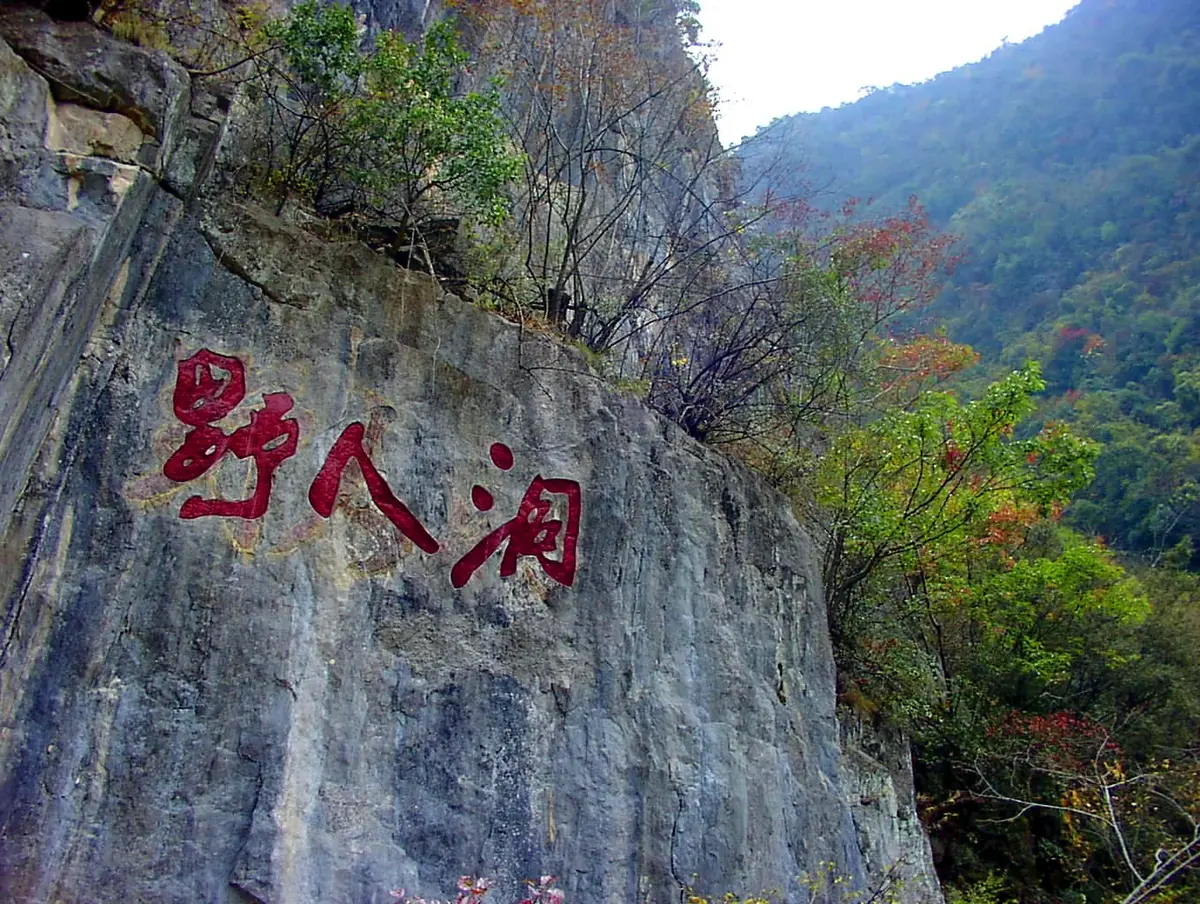
The yeren 野人, or "wild man", is the hairy, upright, red-haired ape-man reported from the forests of Shennongjia, in north-western Hubei.
Where and when was Yeren sighted?
- Location
- Hubei, China, China
- Date sighted
- Unknown
- Coordinates
- 31.7, 110.5
- Last updated
LOCATION
What is Yeren?
What sets it apart from Bigfoot is not the creature but the search: China looked for it with public money. Before dawn on 14 May 1976, six cadres of the Shennongjia Forestry District met a red-haired biped on the road as they drove home from a meeting. A month later palaeoanthropologists from the Chinese Academy of Sciences were in the mountains, and in 1977 the Academy fielded some 110 people — scientists, museum and zoo staff, soldiers, local hunters — under a secretary of the Hubei provincial party committee. A year of fieldwork produced no evidence of the yeren, and turned up the golden snub-nosed monkey instead. The physical evidence was then dismantled largely by the expedition's own anthropologist, Zhou Guoxing: dyed human hair, serow, goral, wild boar, a fungus, a black bear's paw, a macaque's hands and feet. Shennongjia is a UNESCO World Heritage site today, and its scenic area hires people to dress up as the yeren for 500 yuan a day.
What is the history of Yeren?
The yeren 野人 — literally "wild man" — is normally filed next to Bigfoot and the yeti, and the filing hides what makes the Chinese case unusual. For about fifteen years the search for it was state science: paid for by the Chinese Academy of Sciences, fronted by a provincial party secretary, staffed with palaeoanthropologists, zoologists, museum curators, zookeepers and soldiers, and argued out in print by people who published under their own names. Nothing remotely comparable ever happened to Bigfoot.
How old the tradition actually is. Hairy man-like beings appear in Chinese writing from the fourth and third centuries BCE. The Yi Zhou Shu and the Erya describe the feifei 狒狒, long-haired, fast-moving and man-eating; the Erya also has the xingxing 猩猩, which a second-century commentary on the Huainanzi gives a human face on the body of a beast. Around 650 CE Li Yanshou, in the Nan Shi, recorded a band of maoren 毛人, "hairy men", climbing a city wall. It is tempting, and wrong, to read these as one animal under successive names: modern Chinese usage translates feifei as "baboon" and xingxing as "orangutan", and Oliver D. Smith, following Robert van Gulik's study of ape lore in China, notes that the oldest surviving pictures of both are more human than simian — so the equations fail in both directions. What can be dated is the local record. Following Frank Dikötter, the gazetteer of Fang County 房县, ninety kilometres north of Shennongjia and the source of the oldest yeren reports, first mentions the creature in 1555. Li Shizhen's Bencao Gangmu (1578) describes a being "more than a zhang tall, which laughs when it meets a man, called the great man of the mountain"; the Chinese Academy of Social Sciences' own newspaper credits him with the first use of the word yeren in this sense. Qing-era sources mostly say maoren, and they are frankly literary. The Fangxianzhi, the Yunyang Prefecture Gazetteer and Yuan Mei's Zibuyu agree that the hairy men of the Fang mountains live in cave-houses, come down to eat people's chickens and dogs, and cannot be hurt by guns — the shot falls to the ground — but flee from anyone who claps and shouts "Build the Great Wall! Build the Great Wall!", because they are held to be descendants of labourers who fled the Qin work gangs. Chen Renlin, who chairs the Shennong Culture Research Association in the district, singles out the shot that cannot wound and the Great Wall as details plainly added while the story was being passed on. The tradition is genuinely centuries old. A single unknown ape called yeren is not.
1974: a letter climbs the ladder. The modern file opens not with a monster but with paperwork. A deputy production-brigade leader in Shennongjia said he had met an upright wild man and told the head of the provincial work team; the work-team leader wrote to the Hubei propaganda department; the propaganda department passed the letter to the provincial film studio; the studio decided there was no film in it and told the director of the provincial museum to come and collect it; and at the museum the letter landed on the desk of Wang Shancai 王善才, who was doing palaeoanthropology there. Wang went to the site and sent a report to the Chinese Academy of Sciences. He told the story himself to The Beijing News in 2010, and it traces the route by which a village report became an item of national scientific business.
14 May 1976. Before dawn, six cadres and staff of the Shennongjia Forestry District, driving a jeep back into the district, met a red-haired animal walking upright on the road; by the account collected by Yuan Zhenxin and Huang Wanpo, they nearly ran it over on the way home from a meeting. Two of them, Shu Jiaguo 舒家国 and She Chuanqin 佘传勤, both hunters in their youth, gave the same description to the Chinese Academy of Social Sciences' newspaper thirty-seven years later: heavy-set, broad in the hindquarters, red-haired, bipedal, and unlike anything they had seen in the forest. According to Wang Shancai, it was their report to the Chinese Academy of Sciences that made the Academy take the matter up.
One month and a day later, on 15 June 1976, Huang Wanpo 黄万波 and Zhang Zhenbiao 张振标 of the Institute of Vertebrate Paleontology and Paleoanthropology arrived in Shennongjia at the head of an expert group. In September a twenty-seven-strong team spent sixty days in the mountains and concluded that settling the question would need far more people and far more time. Wang Shancai, who was on it, adds the detail that closes the political circle: that first campaign was cut short by the fall of the Gang of Four in October 1976.
1977: a hundred and ten people. The following year the Academy of Sciences put into the field a joint expedition of about 110 — scientists from universities, research institutes, natural history museums and zoos, together with Shennongjia technicians, local cadres and experienced hunters — working for a year across Shennongjia and the primeval forests of the Daba and Wu mountains. According to Wang Shancai the group was headed by Han Ningfu 韩宁夫, then a secretary of the Hubei provincial party committee and, from 1980, governor of the province. The anthropologist Zhou Guoxing 周国兴, later of the Beijing Museum of Natural History, ran its scientific side and would spend the next fifty years on the problem. A third campaign ran from May 1980 to the end of 1981. After that the state stopped paying, and the search passed to associations, enthusiasts and, eventually, the tourist board.
Why the state paid at all is explained by the scientists who took part. Wang Shancai's own definition, given in 2010, is unambiguous: the yeren would be "a large primate capable of walking upright", higher than the four great apes and "lower than, or close to, man". Wang Fangchen 王方辰, secretary of the Strange and Rare Animals committee of the Chinese Scientific Exploration Association, put the same thing more carefully in 2013: the yeren question "is not so simple; it may bear on the question of human origins". A living wild man in Hubei would have been a claim about human evolution made on Chinese soil, in the years when Chinese palaeoanthropology was rebuilding itself after the Cultural Revolution. Wang Shancai put it in those terms in the same 2010 interview: the yeren would be a side branch of human evolution, "a relative of Peking Man".
Timeline: the documented record of Yeren
- 1555 The gazetteer of Fang County, ninety kilometres north of Shennongjia, records the yeren for the first time — the oldest local written mention that can be dated, according to the historian Frank Dikötter.
- 1578 Li Shizhen's Bencao Gangmu describes a being "more than a zhang tall, which laughs when it meets a man"; the Chinese Academy of Social Sciences' newspaper credits him with the first use of the word yeren in this sense.
- 1974 A Han-dynasty bronze lamp with two long-haired figures on it is excavated from tombs at Qilihe, Fang County; Zhou Guoxing later cites it as a two-thousand-year-old image of a "hairy man".
- 1 May 1974 Yin Hongfa, of Qiaoshang commune in Fang County, says he fought off a white-haired wild man with a sickle and tore out its hair. The hair is later identified as serow; Yin eventually admits to the zoologist Feng Zuojian that he invented the encounter to frighten children into coming home at night.
- 1974 A deputy production-brigade leader's report of an upright wild man travels from the provincial work team to the Hubei propaganda department, from there to the provincial film studio, and finally to the provincial museum, where it reaches the palaeoanthropologist Wang Shancai, who visits the site and writes to the Chinese Academy of Sciences.
- 14 May 1976 Before dawn, six cadres and staff of the Shennongjia Forestry District, driving back into the district by jeep, meet a stout, red-haired animal walking upright on the road. Two of them, Shu Jiaguo and She Chuanqin, repeat the same description to the Chinese Academy of Social Sciences' newspaper in 2013.
- 15 June 1976 Huang Wanpo and Zhang Zhenbiao, of the Institute of Vertebrate Paleontology and Paleoanthropology, arrive in Shennongjia with an expert group. In September a twenty-seven-strong team surveys the mountains for sixty days; Wang Shancai says the campaign was cut short by the fall of the Gang of Four.
- 1977 The Chinese Academy of Sciences fields a joint expedition of about 110 people — scientists, museum and zoo staff, local technicians, cadres and hunters, with military participation — for a year across Shennongjia and the Daba and Wu mountains. Wang Shancai names Han Ningfu, a secretary of the Hubei provincial party committee, as its head. It produced no objective evidence of the yeren, and the discovery of the golden snub-nosed monkey.
- October 1980 The preserved hands and feet of the animal killed at Jiulong Mountain in 1957 resurface and are briefly reported worldwide as proof of the wild man. Zhou Guoxing measures and X-rays them and identifies a large terrestrial macaque, publishing the analysis in Cryptozoology in 1984.
- May 1980 – end of 1981 A third state-organised campaign works the region without a breakthrough. After it, the Chinese state stops funding yeren expeditions and the search passes to associations and private enthusiasts.
- 2007 Forty-six specialists, Wang Shancai among them, petition to restart a large-scale search. The State Forestry Administration and the Hubei provincial forestry department refuse.
- 2012 Zhou Guoxing publishes his fifty-year balance sheet in The Relict Hominoid Inquiry: every hair, hand, foot, paw and skull he collected belongs to a known animal or to a human being, and he puts the odds of a Chinese relict hominoid at five per cent.
- 17 July 2016 Hubei Shennongjia is inscribed on the UNESCO World Heritage List under criteria (ix) and (x): 73,318 ha, a 41,536 ha buffer zone, and 1,550 golden snub-nosed monkeys found nowhere else.
- June 2025 The Shennongjia scenic area advertises for sixteen "yeren" performers at 500 yuan a day — forbidden to speak in front of visitors, expected to accept food from tourists. About ten thousand people join the recruiting groups.
Is there a rational explanation for Yeren?
The best sceptic on the yeren is the scientist the Academy of Sciences sent to find it. Zhou Guoxing 周国兴 spent half a century on the case and, in 2012, published the inventory of what the physical evidence turned out to be. It is a demolition carried out almost entirely by its own author.
The hair that Yin Hongfa of Qiaoshang commune, Fang County, said he tore from a wild man he fought off with a sickle on 1 May 1974 was identified by the Institute of Zoology of the Chinese Academy of Sciences as the nape hair of a Chinese serow (Capricornis milneedwardsii); when the zoologist Feng Zuojian 冯祚建 went back to see Yin years later, Yin admitted he had invented the whole fight to frighten children into coming home before dark. The famous bright red Shennongjia hair — the colour of the flag, as people kept saying — was sent twice to laboratories in the United States and came back both times as dyed human hair; under a lens the shafts still hold melanin where the dye did not take. Seven long hairs collected in 2003 and passed to the cameraman Jiang Yong went to the School of Wildlife Resources of Northeast Forestry University in Harbin, which identified a goral (Naemorhedus). Hair from Leigong Mountain in Guizhou turned out to be wild boar mane. A 1.4-metre bundle of black, silky "hair" from Xiaodangyang village was a fungus, the local "tree hair" (Pterula umbrinella). A preserved "wild man's foot" brought from Henan in 1982 and passed down for generations was the right hind paw of an Asian black bear (Ursus thibetanus); Zhou issued the identification in writing on the letterhead of the Beijing Museum of Natural History.
The most consequential case was the pair of hands and feet from Jiulong Mountain in Zhejiang. On the afternoon of 23 May 1957 a black-haired, man-like animal came at a twelve-year-old cowherd, Wang Congmei 王聪美, near Zhuantang village; her mother, Xu Fudi 徐福娣, and others killed it in the mud of a paddy field, the villagers ate it, and a biology teacher, Zhou Shousong, preserved the paws. They resurfaced in October 1980 and were briefly world news as the first physical proof of the Chinese wild man. Zhou Guoxing measured them, X-rayed the bones and examined the fingerprints, palm prints and hair, and published the result in Cryptozoology in 1984: a large terrestrial macaque, about 1.2 m tall and 25–30 kg. A "hairy man" bought at high price in Hunan in 1985 was an ordinary macaque too. The skulls of the "monkey boys" offered as human–yeren hybrids belonged to people with spinocerebellar ataxia, whose small braincase, low forehead and heavy brow ridges superficially resemble those of archaic hominids. As for the footprints, Zhou's explanation is mechanical: a bear places its hind foot over the print of its fore foot, and the merged track, weathered and then cast in plaster, easily exceeds forty centimetres; in a 2008 experiment at Liuzhou Zoo a brown bear's overlapping prints came out far larger than Zhou's own size-44 shoe. Worse, he found that casts made during the 1977 expedition itself differed markedly from the prints examined on the ground — "artificially altered during the process of production". In 2012 Zhou put the odds that a relict hominoid exists in China at five per cent.
The other camp deserves its own names rather than a shrug. Liu Minzhuang 刘民壮 and Cao Hanmin 曹汉民, both of East China Normal University, argued that hair was the strongest indirect evidence and worked out how to distinguish modern human hair from other primates' by its submicroscopic structure; Yuan Zhenxin 袁振新 and Huang Wanpo reported that the hairs picked up in 1976 at Gong Yulan's sighting site in Fang County differed sharply from brown and black bear and lay closer to the primates. But the two working scientists interviewed on the point by the Academy of Social Sciences' newspaper in 2013 were candid about the limits: Feng Zuojian noted that 1980s identifications were morphological because that was all the technology allowed, and Liu Jinyi 刘金毅, curator of the IVPP specimen collection, explained that DNA identification works by exclusion and that no yeren sequence exists in any database to compare against. As of this review (August 2026) no published genetic analysis has ever assigned Shennongjia material to an unknown primate.
The zoology is not exotic. The World Heritage citation for the site lists the Asian black bear, the Chinese goral and the Chinese serow — precisely the animals Zhou kept finding at the end of the hair samples — and it records 1,550 golden snub-nosed monkeys (Rhinopithecus roxellana) inside the property, a population that is the most endangered of China's three subspecies and occurs nowhere else. Chen Renlin, who regards the red-haired reports as the more credible, puts the spread of colours in the testimony down to light and distance, and his example is the golden monkey, whose coat looks gold up close and red at a distance; grouping the witness statements loosely, he says, red covers more than eighty per cent of them. The American anthropologist Frank E. Poirier, who came to Hubei to investigate, found that bears, stump-tailed macaques and golden monkeys were all called "yeren" locally — and villagers who had never seen a European reported him.
And the expedition found something. Wang Shancai, who took part in all three campaigns and still believes in the animal, said it twice for the record, in 2010 and in 2013: in a year of fieldwork the 1977 expedition obtained no objective evidence of the yeren — apart from the discovery of the golden monkey.
The scepticism is also institutional and dated. The ornithologist Tang Zhaozi 唐兆子 argued during the 1977 expedition that no ape could have freed its hands in terrain that steep. Hu Hongxing 胡鸿兴, zoologist at Wuhan University, points out that thirty years produced neither a body nor a bone. The science writer Fang Zhouzi 方舟子 objects to public money going into it at all. In 2007, when forty-six specialists petitioned to restart the search, the State Forestry Administration and the Hubei forestry department turned them down. And in 2014 the Shennongjia reserve's own research institute examined a collector's "fossilised yeren footprint" and reported an ordinary water-worn siliceous pebble.
Which leaves the economics, and they are not subtle. In June 2025 the Shennongjia scenic area advertised for sixteen "yeren" performers at 500 yuan a day, to roam the six main scenic spots in costume: strictly forbidden to speak in front of visitors, communication limited to grunts, expected to accept food from tourists, candidates who like eating raw preferred. Some ten thousand people joined the recruiting groups. The year before, the same operation had hired three "nature observers" at 6,000 yuan a month, one requirement being "in good shape, runs fast if you meet a yeren". The district's own intangible-heritage office, meanwhile, has entered the yeren legend on the municipal register as folk literature — which is, in the end, an official and rather elegant verdict.
Can you visit Yeren?
The yeren has no site of its own. The pin on this file, 31.7 N, 110.5 E, is a rounded point inside the Shennongjia Forestry District of north-western Hubei: an OpenStreetMap reverse lookup made on 24 September 2026 returns the district and the postcode 442400. In a straight line the point lies about 17 km west-south-west of Songbai, the district seat, and about 17 km east-north-east of Shennongjia Hongping Airport.
UNESCO inscribed Hubei Shennongjia on the World Heritage List on 17 July 2016 under criteria (ix) and (x). The inscription described a property of 73,318 ha in two components, Shennongding/Badong (62,851 ha) in the west and Laojunshan (10,467 ha) in the east, with a buffer zone of 41,536 ha; after a minor boundary modification in 2021 the property page gives 79,624 ha and a buffer zone of 45,390 ha, in the Wayback Machine capture of 15 September 2026. The same page records 3,767 vascular plant species, more than 600 vertebrates including 92 mammals and 399 birds, and 1,550 golden snub-nosed monkeys, and it lists the Asian black bear among the animals of the property. It names two pressures that concern visitors: National Highway 209, which divides the site with "the associated 10 km wide corridor", and the opening of Shennongjia Airport in 2014, which "has the potential to dramatically increase visitation". The page also records the Shennongjia UNESCO Global Geopark and the Hubei Dajiu Lake Ramsar wetland among the area's other designations. Shennongjia had entered UNESCO's World Network of Biosphere Reserves in 1990 as a unit of 70,467 ha running from 420 metres in the lowest valleys to 3,106 metres at the highest peak, and UNESCO's biosphere page, read on 24 September 2026, states that "ecological tourism is currently the main industry" there.
The creature is part of what the scenic area sells. The Beijing News reported in June 2025, in an article reprinted by the Yangtse Evening Post, that the Shennongjia scenic area was recruiting sixteen costumed "yeren" at 500 yuan a day, working from about 8am to about 5pm in the six main scenic spots and forbidden to speak in front of visitors; in April 2024 it had advertised for three "nature observers" at 6,000 yuan a month. Chinese Social Sciences Today reported in December 2013 that a stone near the place in the Tianyan scenic area where Luo Yongbin, head of the district government's press office, said he glimpsed a yeren in 2003 had been carved with the words "yeren sighting site" (野人目击地), above a slope of more than 50 degrees. In 2010, speaking to the Beijing News about the planned restart of the search, Wang Shancai said that the local government was indeed playing the yeren tourism card and was more willing to publicise the creature than to fund research on it.
Sources consulted
- Zhou Guoxing (周国兴), «Fifty Years of Tracking the Chinese Wildman» — The Relict Hominoid Inquiry, vol. 1, pp. 118-141, 2012 academic
- Ming Haiying (明海英), «目击「野人」 惊险难忘 (Ver al «hombre salvaje»: un susto inolvidable)» — 中国社会科学报 (Chinese Social Sciences Today), n.º 539, 2013 newspaper archive
- Ming Haiying (明海英), «神农架「野人」寻踪尚未有直接证据的突破 (La búsqueda del «yeren» de Shennongjia sigue sin pruebas directas)» — 中国社会科学报 (Chinese Social Sciences Today), n.º 539, 2013 newspaper archive
- Ming Haiying (明海英), «毛发或是「野人」的关键证据 (El pelo podría ser la prueba clave del «yeren»)» — 中国社会科学报 (Chinese Social Sciences Today), n.º 539, 2013 newspaper archive
- Ming Haiying (明海英), «历经千年的「野人」传说 (Una leyenda del «yeren» de mil años)» — 中国社会科学报 (Chinese Social Sciences Today), n.º 539, 2013 newspaper archive
- 新京报 (The Beijing News), «神农架科考专家称有八成把握揭秘野人 (Entrevista a Wang Shancai sobre las expediciones al yeren)» — 新京报, 12-X-2010, 2010 interview
- Oliver D. Smith, «The Wildman of China: The Search for the Yeren» — Sino-Platonic Papers, n.º 309, University of Pennsylvania, 2021 academic
- UNESCO World Heritage Centre, «Hubei Shennongjia (World Heritage List, ref. 1509)» — UNESCO, 40.ª sesión del Comité del Patrimonio Mundial, 2016 report
- 新京报 / 扬子晚报, «日薪500元招聘「野人」,神农架景区:已有近万名意向者 (500 yuanes al día por hacer de «yeren»)» — 扬子晚报, 9-VI-2025, 2025 newspaper archive
- UNESCO, «Shennongjia Biosphere Reserve (Man and the Biosphere Programme)» — World Network of Biosphere Reserves, 2026 report
Reviewed by V. Serrano on 2026-08-11 · How we verify our content
📎 Source: Enigma Atlas
💬 Field testimonies (0)
No testimonies yet. Add the first.
Add your testimony
🔒 Log in to add a testimony