👻 HAUNTED PLACE · EXP. Nº1189
ACTIVE
Chaonei No. 81
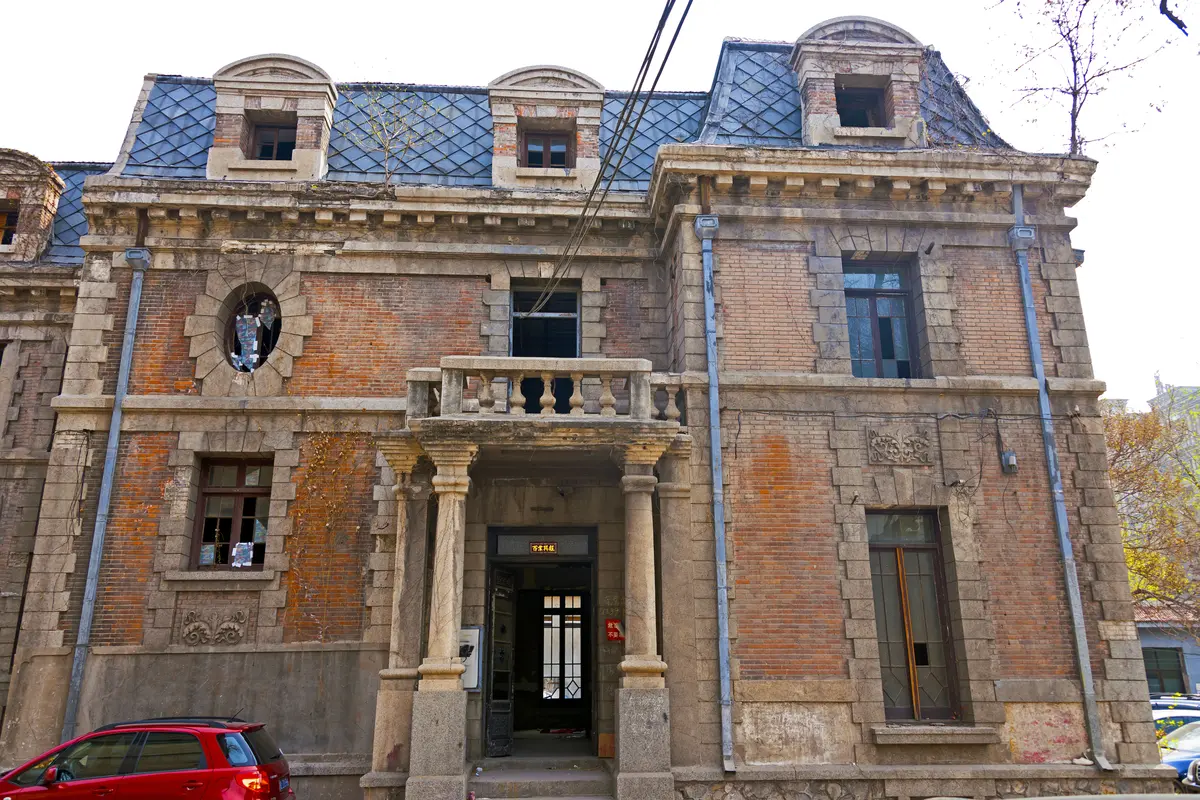
Chaonei No. 81 is a two-and-a-half-storey brick house with a mansard roof and stone trim on Chaoyangmen Inner Street, in Beijing's Dongcheng District, listed since 2009 as a district-protected historic building and owned by the Roman Catholic Archdiocese of Beijing.
Where is Chaonei No. 81?
- Location
- Beijing, China
- Type
- House / mansion
- Coordinates
- 39.924, 116.423
- Last updated
LOCATION
Why is Chaonei No. 81 said to be haunted?
Its origin is disputed: the account now promoted by Beijing's authorities and press dates it to 1921 as the home of Georges Bouillard, the French engineer who ran the Beijing-Hankou railway, while an older tradition places it around 1910 as the North China Union Language School for Western missionaries. The legend that made the address famous claims a Kuomintang officer fled in 1949 leaving a wife or concubine behind, and that she hanged herself inside. In 2014 Shi Hongxi, of the Beijing Catholic Patriotic Association, which oversees the owner, told the Beijing Daily that no murder and no encounter with a ghost had ever happened in the building and that the stories had been made up. The derelict house attracted urban explorers from about 2005, and the 2014 horror film The House That Never Dies, although filmed in Wuxi rather than here, brought crowds to the gate. Restored in 2016-17, it reopened to the public in October 2024 as Wenyuan 81, a cultural venue with an art museum, restaurants and cafés.
What is the history of Chaonei No. 81?
Chaonei No. 81 is a two-and-a-half-storey brick house with a mansard roof and stone trim, standing on Chaoyangmen Inner Street in Beijing's Dongcheng District. The municipality of Beijing has protected it as a historic building since 2009, and it is now owned by the Roman Catholic Archdiocese of Beijing. It is best known for the belief that it is haunted, and the 2014 horror film The House That Never Dies was set there.
Its origins are disputed because pre-1949 records are fragmentary. Beijing's official press, reporting the reopening in 2024, dates the main house to 1921 as the residence of Georges Bouillard, the French engineer who managed the Beijing-Hankou Railway. An older account, which the Catholic Patriotic Association gave the Beijing Daily in 2014 from its own records, places it in 1910, built with money from American Benedictine missionaries, as the North China Union Language School, an institution that taught Mandarin to Western missionaries and later evolved into the California College in China, part of the Claremont Colleges system. Other accounts date the building to about 1900 as a gift from the Imperial Chinese government to the British or to the Catholic Church, a version the Catholic Patriotic Association called untrue in 2014. By the late 1930s it had passed to a Catholic organisation, possibly an American Benedictine group, and an Irish-born priest is recorded as attempting to use it in 1937. During World War II Belgian Augustinian nuns ran a clinic there until at least 1946, and by 1949 the Irish Presbyterian Mission was in charge.
After the Communist victory in the Chinese Civil War the house came under government control in 1949, and for decades, The New York Times wrote in 2013, the buildings shifted between use and disuse as the property rights passed between a number of government ministries. By the time of the Cultural Revolution the property had stood empty for some time, but local memory holds that Red Guards lived in it during the Cultural Revolution and left because they were frightened. The story comes from a resident: Li Yongjie, who grew up in an alleyway behind the house, told The New York Times in 2013 that "even the Red Guards who lived in the house during the Cultural Revolution got scared and left".
From 1949 onward ownership records are more consistent, though the path to the present owner was complicated. A 1980 government order required properties used for religious purposes before 1949 to be returned to their former religious owners, but incomplete archives made this difficult. The complex was finally transferred to the Beijing Catholic Patriotic Association in 1994, by which time Deng Xiaoping's economic reforms had created a booming real-estate market and the buildings were close to demolition. The archdiocese argued that the site would make an ideal Vatican embassy if relations with Rome improved, but it lacked the funds to renovate. Between 2003 and 2005 the project was listed as a top priority, but the death of Fu Tieshan, the association secretary who had championed the building, pushed it back.
During those years the neglected, overgrown house acquired its supernatural reputation. Legends about a suicidal woman and mysterious disappearances began to circulate among local teenagers, who started using the property for urban exploration despite the diocese's ban on entry and graffiti warning of ghosts. In 2011 Hong Kong filmmakers Raymond Yip and Manfred Wong began three years of preproduction for The House That Never Dies. They visited the house, and Yip reviewed three thousand pages of material about it, but ultimately filmed at another location in Beijing and in Wuxi. The film's Chinese title was changed from the house's name to Jing Cheng 81 Hao, or Capital City No. 81, at the diocese's request. Released in July 2014, it grossed 154 million RMB in its opening weekend, a record for a Chinese horror film, and crowds of young viewers began turning up at the real address. The diocese closed the gates and allowed only small groups inside because of structural dangers.
Restoration ran from March 2016 to March 2017. In August 2024 the complex was rebranded as Wenyuan 81 and opened to the public on 19 October as a cultural venue combining art and hospitality, with an exhibition on the building's history inside the main house.
Timeline: the documented record of Chaonei No. 81
- c. 1910 According to one tradition preserved by the Catholic Archdiocese of Beijing, the house was built around this date as the North China Union Language School to teach Mandarin to Western missionaries; it later became the California College in China.
- 1921 Beijing's current official account dates the main house to this year as the residence of Georges Bouillard, the French engineer who managed the Beijing-Hankou Railway; this version is now circulated by the municipal government and the press.
- 1937 An Irish-born priest is recorded as attempting to use the property; by the late 1930s it had become the possession of a Catholic organisation, possibly an American Benedictine group.
- 1946 Belgian Augustinian nuns are documented as running a clinic on the premises at least until this year, after which the property was managed by the Irish Presbyterian Mission.
- 1949 After the Communist victory in the Chinese Civil War the new government took control of the house; for decades, The New York Times wrote in 2013, the buildings shifted between use and disuse as the property rights passed between a number of government ministries.
- Late 1960s According to local residents, Red Guards lived in the house during the Cultural Revolution and left because they were frightened: Li Yongjie, who grew up in an alleyway behind the house, told The New York Times in 2013 that "even the Red Guards who lived in the house during the Cultural Revolution got scared and left".
- 1994 The property was transferred to the Beijing Catholic Patriotic Association after it proved the Catholic Church's prior use to the government's satisfaction; demolition was imminent at the time.
- 2009 The municipal government listed Chaonei No. 81 as a protected historic building, halting demolition plans and making renovation more difficult because strict preservation rules now applied.
- July 2014 The horror film The House That Never Dies, inspired by the house's legends, was released in China. Filmed in Wuxi rather than at the real address, it grossed 154 million RMB in its opening weekend and drew crowds of young visitors to the actual property.
- 19 October 2024 Rebranded as Wenyuan 81, the restored complex opened to the public as a cultural venue combining art and hospitality, with a history exhibition in the main house and a market in the garden.
Is there a rational explanation for Chaonei No. 81?
The central story, of a Kuomintang officer who fled to Taiwan in 1949 and left a wife or concubine behind to hang herself in the house, has nothing documentary behind it. Shi Hongxi, secretary general of the Chinese Patriotic Catholic Association in Beijing, which oversees the owner, told a local newspaper in 2009, as The New York Times reported in 2013: "In terms of the history, there is no such thing as a Kuomintang official living there." In July 2014, as the film The House That Never Dies was filling cinemas, he told the Beijing Daily that "no murder ever happened in the building, and no encounter with a ghost either; it was all made up by busybodies". The same report quoted the notice the association had posted on the closed gate: the building had no connection with the film, its houses were dangerous, and visits were refused.
What visitors met inside that month is described in a report carried by Xinhua on 23 July 2014: a corridor in the west building with two holes a metre wide fenced off with planks, dust and small stones falling from the ground-floor ceiling of the east building when people walked upstairs, broken wooden steps, red writing left on the walls by explorers, and women visitors screaming on purpose. According to Meng Qi, director of the Beijing diocese's construction office, explorers who climbed the walls had pulled down the warning signs, and the previous weekend police had been called to disperse the crowd. In the same report Gao Wei, secretary general of the Beijing Folklore Society, said the address had been a mere pretext for a novel and a film whose story had nothing to do with the real courtyard or its history.
Since its reopening in October 2024 as Wenyuan 81, the restored complex has housed the Mumu Art Museum, restaurants and a café called ghost cafe, according to the Dongcheng district news account of January 2026.
Can you visit Chaonei No. 81?
Chaonei No. 81 is the compound at 81 Chaoyangmen Inner Street (朝阳门内大街81号), Dongcheng District, Beijing; the Chinese Wikipedia article records that the address was number 69 until the renumbering of 1965. The site has been a protected cultural relic of Dongcheng District since 2009, and the English Wikipedia article gives its owner as the Catholic Archdiocese of Beijing. In its report of 20 October 2024, the Beijing Evening News dated the restoration from March 2016 to March 2017 and gave the name adopted in August 2024, Wenyuan 81 (闻园81号).
The compound opened to the public for the first time on 19 October 2024. The Beijing Evening News reporter Zhang Xue found a history exhibition titled 八十一號 in the main building and in the garden a car-boot market of more than ten stalls selling coffee and craft beer as well as accessories and design goods. A feature published by the Dongcheng district's news account on the Beijing Daily platform on 9 January 2026 describes the site as open from 9:00 to 2:00. It names the Mumu Art Museum, then showing "Wen Ling and His Friends", among the tenants; the others include a shop and several restaurants as well as a café called ghost cafe. The same feature gives the nearest metro as Chaoyangmen station, on Lines 2 and 6, the bus routes 4, 26, 63, 110, 113, 115 and 118, and three places to park: the roadside car park on Chaoyangmen Inner Street, the car park south of 3 Shaojiu Hutong and the car park of the Jialong Hotel.
The English Wikipedia article, read on 24 September 2026, records a message beside the main entrance stating that there are no ghosts inside.
Sources consulted
- Wikipedia contributors, «Chaonei No. 81» — Wikipedia, The Free Encyclopedia, 2024 web
- Amy Qin (additional reporting by Edward Wong), «Dilapidated Mansion Has Had Many Occupants, Maybe Even a Ghost — the legend of the abandoned wife, the Red Guards who 'got scared and left', the 1910 language-school account of the Catholic Patriotic Association and the rival private-residence account» — The New York Times, 2013 newspaper archive
- Beijing Municipal Administration of Cultural Heritage, «Historic building listing: Chaoyangmen Inner Street No. 81» — Dongcheng District heritage register, 2009 archive
- China Daily, «'Haunted house' in Beijing: Chaonei No. 81 — photo report on the amateur adventurers drawn to the address after the release of The House That Never Dies» — China Daily, 2014 newspaper archive
- Zhang Xue, «朝内81号院修缮后首次开放 (Chaonei No. 81 opens to the public for the first time after restoration) — opening of 19 October 2024; built 1921 to Georges Bouillard's design; district-level protected relic since 2009; restored March 2016 to March 2017; renamed Wenyuan 81 in August 2024» — Beijing Evening News, 20 October 2024, reproduced by visitbeijing.com.cn, 2024 newspaper archive
- Beijing Dongcheng (district news account); editor Zhou Lin, «朝内大街闻园81号:当老建筑遇上前卫艺术 (Wenyuan 81 on Chaonei Street: an old building meets avant-garde art) — tenants (Mumu Art Museum, ghost cafe, restaurants), opening hours 9:00-2:00, metro, bus routes and car parks» — Beijing Daily news platform (xinwen.bjd.com.cn), 9 January 2026, 2026 newspaper archive
- Chinese Wikipedia contributors, «朝阳门内大街81号 — Chinese Wikipedia article: former street number 69 until the 1965 renumbering, 1994 title deed, 2009 district listing» — zh.wikipedia.org, 2026 web
- Liu Ke (刘可), «朝内81号因产权纠纷荒废 鬼宅之名属虚构 (Chaonei No. 81 derelict over a property dispute; the haunted-house name is fiction) — Shi Hongxi: no murder and no ghost encounter ever happened in the building; the notice on the gate» — Beijing Daily, 28 July 2014, reproduced by rmzxw.com.cn, 2014 newspaper archive
- Liu Zhenni (刘珍妮) and others, «北京朝内81号院因惊悚电影吸引大批“探险迷” (Chaonei No. 81 draws crowds of 'explorers' after the thriller) — holes in the corridor, falling debris, police called to disperse visitors; Meng Qi and Gao Wei» — Xinhua, 23 July 2014, reproduced by rmzxw.com.cn, 2014 newspaper archive
Reviewed by V. Serrano on 2026-08-26 · How we verify our content
💬 Field testimonies (0)
No testimonies yet. Add the first.
Add your testimony
🔒 Log in to add a testimony