📜 LEGEND · EXP. Nº3657
ACTIVE
Meng Jiangnü and the Great Wall
Meng Jiangnü and the Great Wall is a legend from Hebei, CN — a folk story passed down over generations. This file collects its origins, its meaning and how it has been retold.
Where does the legend of Meng Jiangnü and the Great Wall come from?
- Location
- Hebei, CN
- Kind of legend
- Folk tale
- Coordinates
- 39.994, 119.768
- Testimonies
- 0
- Last updated
LOCATION
What is the legend of Meng Jiangnü and the Great Wall?
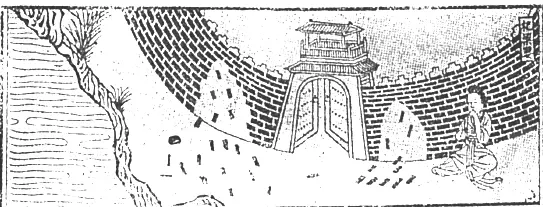
The story of Meng Jiangnü is traditionally set during the building of the Great Wall under the Qin, in the third century BCE. Meng Jiangnü had only just married when her husband was conscripted and sent north to labor on the Wall. Months passed without word, so as winter came she sewed him warm clothes and set out alone, walking a great distance to reach the construction site near present-day Shanhaiguan. There the laborers told her he had died of exhaustion and been buried anonymously inside the Wall. She wept so bitterly, and for so long, that a section of it collapsed and gave up his bones. In some versions she then drowns herself in the sea rather than marry the emperor. The husband's name changes from telling to telling — Qi Liang in the oldest sources, Fan Qiliang in the mainstream later tradition, Wan Xiliang in the southern versions. Calling this one of China's four great folk legends is a modern habit rather than an old title: Wilt L. Idema, who has translated ten versions of it, wrote in 2012 that he does not know when the term was coined, only that it seemed firmly in place by the 1950s. A temple to her still stands near Shanhaiguan.
What is the history of Meng Jiangnü and the Great Wall?
The legend of Meng Jiangnü runs as follows. Her husband, Fan Qiliang, is conscripted to build Qin Shi Huang's Great Wall. Time passes and he does not return. She travels the country to the wall to bring him winter clothes, and discovers that he has died of exhaustion and that his body has been buried inside the wall itself. Then she weeps. And she weeps so hard that the wall collapses for miles, exposing the bones of the dead.
It is a story of grief, but above all it is a political story: a woman without power brings down the most monumental work of the first emperor with nothing but her sorrow.
The label is modern, and somebody has dated it. This file used to open by calling Meng Jiangnü "one of the four great folk legends of China", with no source, as though the title were as old as the story. It is not. Wilt L. Idema, who translated ten versions of this legend into English, treats the list as an artefact of twentieth-century classification and says so in the first person: "China's 'Four Great Folk Legends' are one such case. I do not know when and where this term was first coined, but it would appear to have been firmly in place by the 1950s" (Idema 2012, p. 10). He reads the grouping as what happens when "a new classificatory terminology, developed on the basis of one or more European traditions but touted as having universal validity" is applied to "originally quite disparate materials", helped along by "the Chinese preference for lists"; the two standard Chinese studies of the four he cites are from 1986 and 1995. The other three items on the list are Buffalo Boy and Weaving Maiden, Liang Shanbo and Zhu Yingtai, and the White Snake.
Where Meng Jiangnü stands inside that list can be dated too, and it lands on the same scholar this file already credits further down: "The legend of Meng Jiangnü had established its status as Chinese premier folktale in the 1920s because of the research of Gu Jiegang." The grouping is a real scholarly convention and worth mentioning — but it is roughly seventy years old, not two thousand, and it belongs to the history of Chinese folklore studies rather than to the history of the legend.
What is extraordinary about the case is that its genealogy is documented, text by text, across more than two thousand years — and that at its point of origin there is no wall, no Qin Shi Huang and no weeping.
The oldest traces are in the Zuo Zhuan, and reappear in the Book of Rites (Tan Gong chapter), in Mencius and in Han dynasty works such as the Shuo Yuan and the Biographies of Exemplary Women. In all of them the protagonist is not called Meng Jiangnü: she is the wife of Qi Liang, a warrior of the state of Qi. She is Meng Jiangnü's prototype, and her husband is Fan Qiliang's. And the husband's name is not a fixed point either: Idema, who translated ten versions of the legend, states it plainly — "the name of her husband is different in almost every text". The chain runs from Qi Liang in the ancient sources to Fan Qiliang in the mainstream later tradition and Wan Xiliang in the southern versions, where wan ("ten thousand") lets the story turn on a pun: the emperor is told he need conscript only this one man instead of ten thousand. Where this file once wrote "Fan Xiliang" it was blending two of those forms into a fourth that belongs to no version in particular.
Timeline: the documented record of Meng Jiangnü and the Great Wall
- Spring and Autumn period The Zuo Zhuan records the episode of Qi Liang's wife, who refuses to receive condolences for her fallen husband in an improper place. There is no weeping in the account, no wall and no emperor.
- Warring States period The lament passage is added to the account, under the influence of the era's musical customs: the state of Qi was famous for its funeral laments. Gu Jiegang will describe this as inverted cause and effect.
- Han dynasty The account reappears in the Book of Rites (Tan Gong), in Mencius and in Han works such as the Shuo Yuan and the Biographies of Exemplary Women, becoming established as moral and ritual material.
- Later generations Through errors of transmission, Qi Liang's wife comes to be placed in the time of Qin Shi Huang, three centuries later, and the story becomes one of weeping before the Great Wall.
- 20th century Gu Jiegang, a founder of modern folklore studies in China, reconstructs the account's entire genealogy and demonstrates that each defining element of the legend was added at a datable moment.
- by the 1950s The grouping "China's Four Great Folk Legends" is in general use. Wilt L. Idema, writing in 2012, says he does not know when or where the term was coined, only that it "would appear to have been firmly in place by the 1950s"; the two standard Chinese monographs on the four appear later still, in 1986 and 1995. Meng Jiangnu's primacy within the group he attributes to Gu Jiegang's research of the 1920s.
Is there a rational explanation for Meng Jiangnü and the Great Wall?
This is not a ghost case, and that is exactly why it is so valuable: it is probably the best documented demonstration in existence of how a legend forms, and it was made by a first-rank Chinese historian.
Gu Jiegang, one of the founders of modern folklore studies in China, traced the legend's original form back to the account in the Zuo Zhuan and followed its transformation step by step.
What he found is this.
In the Zuo Zhuan, Qi Liang's wife does not weep. There is no weeping in the original account. She appears as a woman who refuses to receive condolences for her fallen husband in an improper place, and that is the whole story: an episode about ritual correctness.
The weeping is added in the Warring States period. And Gu Jiegang identified why: through the influence of the musical customs of that era, in which the state of Qi was famous for its funeral laments. The woman's ability to wail is not a feature of her story: it is a reflection of her region's musical fashion, retroactively written into the account.
Gu described it as a flagrant case of inverted cause and effect: it is not that Qi Liang's wife wept so much that her weeping became famous, it is that the fame of Qi's laments caused the weeping to be attributed to her.
And the wall arrives through an error of transmission. In later generations, Qi Liang's wife — a woman of the Spring and Autumn period — came to be placed in the time of Qin Shi Huang, three centuries later, and with that leap the story became one of weeping before the Great Wall.
In other words: every element that defines the legend today — the name, the weeping, the emperor, the wall — can be dated, and none of them was there at the beginning. And yet the final result is one of the most powerful works in the Chinese imagination, precisely because each layer was added when somebody needed it.
Can you visit Meng Jiangnü and the Great Wall?
The legend is attached to one building and to one stretch of wall. The Temple of Meng Jiangnü (Mengjiangnü Miao) stands on Fenghuang Shan above Wangfushi village in Mengjiang town, Shanhaiguan district of Qinhuangdao, about 6.5 km east of the old walled town. Hebei province listed it as a provincial protected monument on 23 July 1982. Its older name was Zhennü Ci, the shrine of the chaste woman; sources disagree over whether the surviving halls are Ming or Qing work.
The stretch of wall is Shanhaiguan itself, where the Ming rampart reaches the Bohai Sea. The pass was founded in 1381, when Xu Da built a walled town at the old Qianmin garrison; its east gate, Zhendong Men, carries the tablet reading Tianxia Diyi Guan, First Pass Under Heaven, written in 1472 by the jinshi Xiao Xian. The town wall is 4,727 m round; it stands 14 m high and 7 m thick (Shanhaiguan scenic area, shgjq.com, consulted 10 September 2026). Laolongtou, Old Dragon's Head, is the southern arm that runs into the sea, the only place where the Great Wall does so. The State Council listed Shanhaiguan in the first group of national key protected monuments on 4 March 1961, and UNESCO inscribed the Great Wall as a World Heritage Site in December 1987 under reference 438.
The story itself carries a heritage listing. China's national inventory of intangible cultural heritage registers Meng Jiangnü chuanshuo under code Ⅰ-8, in the second batch of 2008, declared by Qinhuangdao in Hebei; the same code also covers declarations from Shandong and from Hunan (ihchina.cn, consulted 10 September 2026). Shanhaiguan has its own station on the Beijing–Harbin railway. Travelchinaguide listed twenty trains a day from Beijing on 10 September 2026 and a fastest time of two hours and eight minutes. The Qinhuangdao city guide bendibao listed the temple's admission at 30 yuan and its opening from 07:30 to 17:30 on the same date.
The wall standing at Shanhaiguan is Ming work laid from 1381 onward; the legend places Meng Jiangnü some sixteen centuries earlier, under the Qin.
Sources consulted
- Baidu Baike, «The Legend of Meng Jiangnu — genealogía textual del relato» — Enciclopedia con referencias a fuentes clásicas, 2024 web
- Wilt L. Idema, «Meng Jiangnu Brings Down the Great Wall: Ten Versions of a Chinese Legend» — University of Washington Press, 2008 book
- China Daily, «Is there any relationship between Meng Jiangnu and the Great Wall?» — China Daily, 2024 newspaper archive
- Anónimo, «Zuo Zhuan — la fuente más antigua del episodio de la esposa de Qi Liang» — Período de Primaveras y Otoños, -400 book
- Wilt L. Idema, «Old Tales for New Times: Some Comments on the Cultural Translation of China's Four Great Folktales in the Twentieth Century, p. 10 and n. 12» — Taiwan Journal of East Asian Studies, vol. 9 no. 1 (issue 17), pp. 1-23, 2012 academic
Reviewed by V. Serrano on 2026-07-28 · How we verify our content
📎 Source: Enigma Atlas
💬 Field testimonies (0)
No testimonies yet. Add the first.
Add your testimony
🔒 Log in to add a testimony