🦶 CRYPTID SIGHTING · EXP. Nº0555
ACTIVE
Memphre
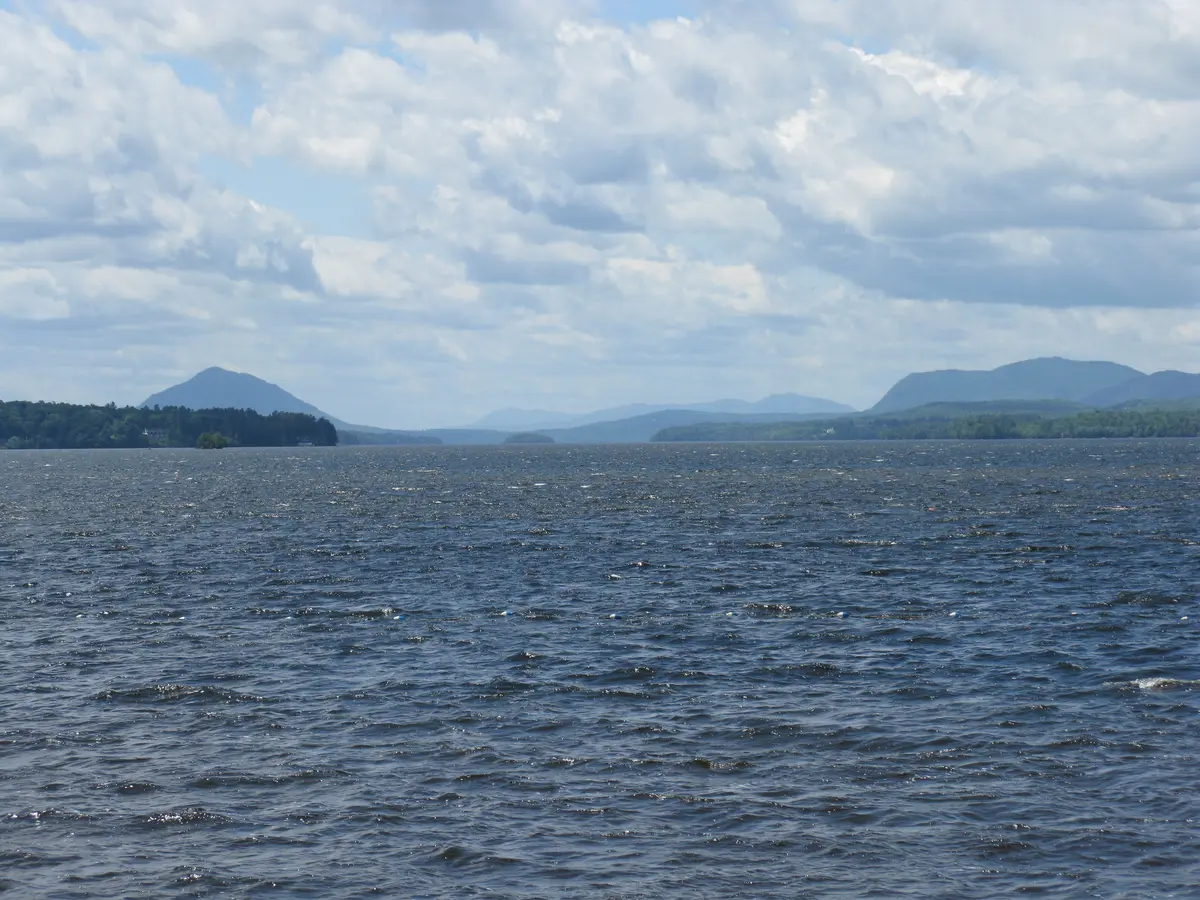
Memphre is the serpent said to live in Lake Memphremagog, the 40-kilometre glacial lake that carries the Quebec-Vermont border down the middle of its water.
Where and when was Memphre sighted?
- Location
- Lake Memphremagog, Quebec, Canada
- Date sighted
- Unknown
- Coordinates
- 45.088, -72.282
- Last updated
LOCATION
What is Memphre?
The name is much younger than the tradition it is attached to: the Magog diver and local historian Jacques Boisvert coined it, and his own historical society calls him, in quotation marks, the creature's creator. He founded the International Dracontology Society of Lake Memphremagog on 19 June 1986, three years after publishing a newspaper article expressly to see what testimony would come back. Before him the animal had no name at all. What it had was a nineteenth-century reputation, and that reputation was largely comic: the Georgeville farmer Uriah Jewett baited traps for it along the shore, and in 1856 used it in a satirical ballad to send a runaway debtor to Minnesota through a tunnel under Owl's Head. The oldest document anyone cites is a family journal about four sightings reported by eight people around 1816, held by the Stanstead Historical Society - but a single source has described its author as Ralph Merry's son, as his nephew, and as Ralph Merry IV himself. As of August 2026 there is no carcass, no accepted photograph and no published sonar survey.
What is the history of Memphre?
Lake Memphremagog is a glacial trench about 40 km long, average depth 15.5 m, deepest point 107 m, carved by ice that pulled back some 10,000 years ago and frozen over most winters. Roughly three quarters of it is in Quebec and the southern end in Vermont; the international border crosses open water. It is not scenery only: the lake is the drinking-water source for more than 175,000 people in Magog and Sherbrooke, and that fact shapes almost everything that has been done on it with instruments.
Every account of Memphré opens on the same document, and the document does not hold still. Boisvert's own site, as the Internet Archive captured it on 12 February 2003, says that "le fils de Ralph Merry" — the son — wrote in his journal (1816), kept by the Stanstead Historical Society, that he had met eight people who told him of four appearances of a sea serpent in the lake. The July 2004 version of the same page, reprinted in full by the Potton Heritage Association in Histoire Potton History (spring 2017), says "le neveu de Ralph Merry": the nephew. The memphre.com run by the present owners of the name says the 1816 sightings "were mentioned in an 1854 journal written by Ralph Merry IV". Kingdom Games, which organises the Newport swim, says the same and adds that the notebook was found hidden in the floorboards of the old Merry House during renovations and handed to the Stanstead Historical Society on 2 August 1969. Son, nephew, the man himself; 1816, 1854. I have not read the manuscript and none of these versions quotes more than a sentence of it. What they all agree on is the arithmetic: four appearances, eight people.
The oldest press notice anyone cites is a line from the Stanstead Journal of 21 January 1847 — "I am not aware whether it is generally known that a strange animal something of a sea serpent....exists in lake Memphremagog" — which Boisvert reproduced and which Matthew Farfan quotes independently for the Quebec Anglophone Heritage Network. Boisvert also listed further newspaper items in 1850, 1853, 1855, 1866, 1871, 1877, 1879 and 1892, and summarised a Stanstead Journal report of 20 August 1868 in which a group of mowers saw, from the shore near Lord's Island, a head a few feet out of the water on a body the thickness of a log and covered in shining scales. I could not open the Stanstead Journal itself in any digitised newspaper archive; those datelines rest, as far as I can check, on his compilation.
The mid-nineteenth-century serpent does have a face, and it is not a frightening one. In 1917 a Newport physician, John McNab Currier, printed a small book from the notebook of the late George C. Merrill, purser on the lake steamer Mountain Maid: Uriah Jewett and the Sea Serpent of Lake Memphemagog. Jewett was a New Hampshire schoolmaster turned farmer who settled on the eastern shore around the middle of the century, never married, and left his name on Jewett's Point. Merrill's note is blunt: "Jewett was a crank on the sea serpent; he was watching the shores of the lake all the time for its trails in the sand." He set traps — the book spells them culheaghs — baited with lambs, calves, pigs and poultry, and held that the animal had come in from the Atlantic through a subterranean channel under Owl's Head and could never find its way back. In 1856 Jewett wrote a satirical ballad about J. B. Hoyt, the Owl's Head hotelkeeper who faked his own drowning and resurfaced in Minnesota, and in it the serpent is the getaway vehicle: "I had a fine dive, I caught the serpent by the tail... My passage was under subteranean cliffs, And I popped up in Minnesota with money enough." A geography treatise of 1871, quoted by Boisvert, keeps the same register: there are no rattlesnakes here, it says, but do not forget the big snake called the Anaconda, "qui se montre gratis au lac Memphrémagog" — which shows itself free of charge. Currier's preface of 1917 records what happened next: the story, "so famous sixty years ago has now almost become ledgendary and many do not believe that Uriah Jewett was ever a living personage on the shores of that beautiful lake."
The revival is one man's work and he never hid it. Jacques Boisvert (Magog, 11 October 1932 – 4 February 2006) sold insurance, began diving in 1964 and kept at it until the autumn of 2005, logging by his own count more than 6,000 dives; he founded the Société d'histoire du lac Memphrémagog in 1980. A Benedictine linguist at the abbey of Saint-Benoît-du-Lac, on the lake's own shore, built him the word dracontologie, accepted by the Office de la langue française du Québec on 3 December 1984. On 18 August 1983, after a thousand dives that had turned up nothing, Boisvert published a piece in the Newport Daily Express headed "Lake Memphremagog's Anacondo" for the declared purpose of seeing what would come back. A woman in Newport wrote to him within days. "Similar testimonies followed," he wrote. On 19 June 1986 he founded the International Dracontology Society of Lake Memphremagog and gave the animal the name it now has. His own historical society, in its obituary, calls him "le créateur du monstre Memphré" — creator, in quotation marks — and adds that he admitted never having seen it.
The totals belong to that archive and they do not agree with each other. The French page says that by the end of 2001 the society had compiled 223 appearances involving at least 465 people; the English page of the same site, dated February 2003, says 229 sightings and specifies that only signed and recorded declarations were kept, "we do not keep hearsay evidence". Kingdom Games credits Barbara Malloy of Newport and the society jointly with "over 150 sightings or encounters" across three decades. Boisvert also stated that the Vermont legislature adopted a resolution, J.H.R. 19, unanimously on 17 March 1987 to protect Memphré, and that an equivalent request to Quebec went unanswered; I could not find that resolution in Vermont's own records, though Vermont did adopt a comparable resolution for Champ on 29 April 1986.
What the name became is a matter of record. On 19 May 2003 the CBC reported that Malloy claimed exclusive rights to Memphré and that Boisvert had lawyers involved. After his death the family sold the name and the logo. The society itself has closed; the brand is held today by Marcel Boisvert with Frank Dorey. "I acquired it a bit the way you acquire a work of art," Marcel Boisvert told Radio-Canada in June 2024. "I see it as a mascot for a sports team." In 2011 the Royal Canadian Mint issued Memphré on a coloured 25-cent piece, sold in a folder with a pull-out map of sightings.
Timeline: the documented record of Memphre
- 1816 The document at the root of the whole case: a Merry family journal, held by the Stanstead Historical Society, in which the writer records having met eight people who told him of four appearances of a sea serpent in the lake, and adds that he has heard it said that the Indians did not bathe in the lake because of giant serpents and alligators. Boisvert's own site has attributed the journal to Ralph Merry's son, to his nephew, and to Ralph Merry IV himself, and dated it both to 1816 and to 1854.
- 21 January 1847 The Stanstead Journal prints the oldest press line anyone cites: "I am not aware whether it is generally known that a strange animal something of a sea serpent....exists in lake Memphremagog". Quoted by Boisvert and, independently, by Matthew Farfan for the Quebec Anglophone Heritage Network; I could not open the paper itself in a digitised archive.
- 1856 Uriah Jewett of Georgeville composes a satirical ballad on the flight of the hotelkeeper J. B. Hoyt, who faked his drowning at Owl's Head and reappeared in Minnesota. The serpent is the getaway vehicle: "I had a fine dive, I caught the serpent by the tail... My passage was under subteranean cliffs, And I popped up in Minnesota with money enough." It is the earliest datable use of the Memphremagog serpent in a text, and it is a joke.
- 20 August 1868 Boisvert summarises a Stanstead Journal report in which a group of mowers see, from the shore near Lord's Island, a head a few feet out of the water on a body the thickness of a log and covered in shining scales. He also lists further press items in 1850, 1853, 1855, 1866, 1871, 1877, 1879 and 1892.
- 1917 John McNab Currier prints Uriah Jewett and the Sea Serpent of Lake Memphemagog in Newport, Vermont, from the notes of the late George C. Merrill. Its preface records that the story, "so famous sixty years ago has now almost become ledgendary and many do not believe that Uriah Jewett was ever a living personage".
- 2 August 1969 According to Kingdom Games, the notebook containing the 1816 accounts, found hidden in the floorboards of the old Merry House in Magog during renovations, is given to the Stanstead Historical Society.
- 18 August 1983 After more than a thousand dives with nothing to show, Jacques Boisvert publishes "Lake Memphremagog's Anacondo" in the Newport Daily Express, by his own account to see what would come back. A woman in Newport writes to him within days. "Similar testimonies followed." This is where the modern series of sightings begins.
- 3 December 1984 The Office de la langue française du Québec accepts dracontologie, a word built for Boisvert by a Benedictine linguist at the abbey of Saint-Benoît-du-Lac, on the lake shore. Boisvert's claim that the American Heritage Dictionary accepted the English form a year later does not hold: the dictionary returns no entry for it.
- 19 June 1986 Boisvert founds the International Dracontology Society of Lake Memphremagog and gives the animal the name Memphré. There is no recorded use of the name before him; his own historical society calls him, in quotation marks, the creature's creator.
- End of 2001 Boisvert's French page reports that the society has compiled 223 appearances involving at least 465 people. The English page of the same site, dated February 2003, gives 229 sightings; Kingdom Games credits Barbara Malloy and the society jointly with over 150 across three decades. All three figures descend from the same archive.
- 19 May 2003 The CBC reports that Barbara Malloy of Newport, Vermont claims exclusive rights to Memphré and has threatened to sue anyone cashing in on the creature; Boisvert says lawyers are involved. The same report repeats, without a source, that North American Indians warned settlers not to bathe in the lake.
- 4 February 2006 Jacques Boisvert dies at his home in Magog, aged 73. His family later sells the name and the logo. The Société internationale de dracontologie has since closed.
- 2011 The Royal Canadian Mint issues Memphré on a coloured 25-cent piece in its Canadian Mythical Creatures series, sold in a folder with a pull-out map of sightings. The Mint's own copy states that official records begun in 1816 reveal as many as eight sightings a year — a figure an order of magnitude above the total the society it descends from ever claimed.
- 21 June 2024 Radio-Canada reports that the society has closed and that the Memphré brand — name and logo — is now owned by Marcel Boisvert with Frank Dorey. "I acquired it a bit the way you acquire a work of art," he says. "I see it as a mascot for a sports team." The historian Julien Bazile notes in the same piece that the first testimonies Boisvert collected were mostly second-hand and became more direct over the years.
- July 2026 Nature publishes the finding that the black skin growths on the brown bullhead of Lake Memphremagog are a transmissible cancer — the fourth known to science, the first in a fish and the first in fresh water — present in a quarter to a third of the fish surveyed between 2014 and 2017 and apparently introduced around 2012. It is the only genuinely anomalous animal the lake has yielded, and it was found with nets and sequencers.
Is there a rational explanation for Memphre?
The whole case turns on a gap that nobody advertises: the name is from 1986 and the tradition is sold as immemorial. Boisvert never claimed otherwise — the Société d'histoire de Magog calls him the creature's creator, and he said himself that he had never seen it — but almost nothing written about Memphré since keeps that order of events visible.
The clearest damage is to the Indigenous claim. Dozens of pages state that the Abenaki warned settlers not to bathe in the lake because of the creature. It has one traceable origin, and it is a single line inside the 1816 document as Boisvert rendered it in French: "J'ai ouï-dire que les Indiens ne se baignaient pas dans le lac à cause des serpents géants et des alligators" — I have heard it said. That is hearsay, flagged as hearsay by the settler who wrote it, about people he was not quoting. The English page of Boisvert's own site drops the flag: "When the white people settled, the Natives told them they that would not bathe or swim in the lake because it was inhabited by a sea serpent. A document relating to this fact in 1816 confirms their fear." Same site, same author, two languages, and the qualifier disappears between them. From there it is a straight line: the CBC printed it as fact in May 2003 ("Long before that, North American Indians in the region warned early settlers not to bathe in Lake Memphremagog"), and by 2011 the Royal Canadian Mint was selling a coin whose blurb says First Nations legends speak of monsters in the lake. I have found no Abenaki source, written or oral, behind any of it. It is worth noting the standard Boisvert set for himself on the same English page: "We only keep signed declarations and declarations recorded on radio-cassette. We do not keep hearsay evidence." The foundation stone of his own case is hearsay.
The Mint's copy also fails arithmetic. It says official records begun in 1816 reveal "as many as eight sightings every year". Eight a year from 1816 to 2011 is over 1,500. Boisvert's own total, the source the Mint is downstream of, was 223 by the end of 2001.
For an outside reading, the most useful named voice is Julien Bazile, historian and head of research at the Musée d'histoire de Sherbrooke, interviewed by Radio-Canada in June 2024: the first testimonies Boisvert collected, he says, were mostly second-hand, and they became more and more direct as the years passed. That is the shape a story takes when a collector is known to be collecting. Bazile also makes the point that Boisvert was not trying to prove the animal existed; he wanted people to look at the lake, and increasingly to look at its water quality. On the folklore side the standard work is Michel Meurger and Claude Gagnon's Lake Monster Traditions (Fortean Tomes, 1988; from Monstres des lacs du Québec, 1982), which treats lake monsters as a cultural-historical production rather than as misidentified animals. I have not been able to read it; the folklorist Sharon Hill's annotated entry describes its premise as tracing the modern lake monster to the Enlightenment, when dragons and water spirits were converted into elusive but real animals. Note also, for the tenth check, that Boisvert wrote he had supplied the documentation for the book's Memphremagog chapter: even the scholarly treatment ran partly on his archive.
Two smaller things fail on inspection. Boisvert's site claims the English form "dracontology" was accepted by the American Heritage Dictionary a year after the Quebec ruling of 1984; the American Heritage Dictionary online returns no entry for it. I ran the search twice; the controls "cryptozoology" and "plesiosaur" both return entries in the same corpus. And the Potton reprint's editorial note dates his death to 4 April 2006, which was a Tuesday; his own historical society says he died on a Saturday evening, and Loren Coleman's obituary gives Saturday 4 February 2006, when a man born on 11 October 1932 was 73.
As of August 2026 there is no carcass, no photograph anyone outside the enthusiast literature accepts, and no published sonar or instrumented survey of the lake aimed at the creature — the systematic work on Memphremagog is limnological, because 175,000 people drink it. That work has produced the one genuinely strange animal story the lake can document: in July 2026 Nature published the finding that the black skin growths on its brown bullhead are a transmissible cancer, the fourth known to science and the first in fresh water, present in a quarter to a third of the population surveyed between 2014 and 2017 and apparently introduced around 2012. It is contagious, it is spreading, and it was found with nets and sequencers rather than with signed declarations.
Can you visit Memphre?
On the Quebec side the lake meets Magog at its north outlet. Pointe Merry and the quai MacPherson form the public waterfront there. Escapades Memphrémagog boards Le Grand Cru at Quai MacPherson, 1032 route Verte 1, Magog, QC J1X 2C3, telephone 819 843-7000. Its 2026 sailings run from an hour and a half for the Bubbly Hour to three and a half hours for the evening Offshore cruise, and Murmures, an on-board immersive show built with the Quebec studio FLOAT4 around the legends of the lake, now runs on the meal sailings. A mosaïculture of Memphré unveiled in 2013 stands in the parc de la Baie-de-Magog, 45 feet long by 8 feet high; it is green through the summer and lit through the winter. Newport, Vermont sits at the south end of the lake; it has its own waterfront, plus its own claim on the animal.
The Merry notebook at the centre of the story belongs to the Stanstead Historical Society, at the Colby-Curtis Museum, 535 Dufferin Street, Stanstead, QC J0B 3E0, telephone 819 876-7322, [email protected]. The society published its 2026 season on 10 September 2026 as Wednesday to Saturday from 10:00 to 16:00 between 1 March and 31 May and again between 1 October and 19 December; from 1 June to 30 September it opens Wednesday to Friday 10:00 to 17:00 and at weekends 10:00 to 17:30, with Mondays and Tuesdays closed. No admission price appears on the site. The notebook is a manuscript in a historical society's holdings; consultation of archives and rare books is arranged separately from the house tour. Ten minutes away the Haskell Free Library sits astride the international border.
The abbey of Saint-Benoît-du-Lac stands on the western shore at 1 rue Principale, Saint-Benoît-du-Lac, QC J0B 2M0, telephone 819 843-4080. It is the house of the Benedictine who coined dracontologie, and it describes itself as a community of some thirty monks. The shop sells its cheeses and ciders; guided tours are offered; Lauds at 7:30, Mass at 11:00 and Vespers at 17:00 are sung in Gregorian chant.
Kingdom Games runs In Search of Memphre, a 40.2 km international crossing from Newport to Magog begun in 2011 and now spread over eleven three-day windows, with a 2026 entry of $3,450 and a $500 deposit due at registration. The border runs across open water; a boat or a swimmer crossing it clears customs on the far side. This lake is drinking water for more than 175,000 people, and the transmissible melanoma found in its brown bullhead is reported by the researchers to pose no known risk to humans; blue-green algae and the zebra mussel are both recurrent in it.
Sources consulted
- Jacques Boisvert, «Memphré — Le serpent de mer du lac Memphrémagog (texte de juillet 2004 tiré de www.memphre.com, réimprimé en tiré à part)» — Histoire Potton History, vol. 5 no 1, printemps 2017, Association du patrimoine de Potton, 2017 archive
- Jacques Boisvert, «"Memphré": The sea serpent of Lake Memphrémagog (English page of the International Dracontology Society, dated February 2003; Internet Archive capture of 12 February 2003)» — memphre.com/ang.html, 2003 archive
- John McNab Currier (comp.), «Uriah Jewett and the Sea Serpent of Lake Memphemagog, from notes left by the late George C. Merrill, purser on the Mountain Maid» — City of Newport, Vermont, 1917 book
- Kingdom Games / Northeast Kingdom Open Water Swimming Association, «About Memphre©» — kingdomgames.co, 2024 web
- Jacques Boisvert, «Dracontologie / Dracontology (Internet Archive capture of 29 June 2003)» — memphre.com/drac.html, 2003 archive
- Maurice Langlois, Société d'histoire de Magog, «Jacques Boisvert (1932-2006)» — histoiremagog.com, 2006 web
- CBC News, «'Lake monster' triggers cross-border fight» — CBC News, 2003 newspaper archive
- Royal Canadian Mint, «Memphré - Coloured Coin (2011)» — mint.ca, 2011 web
- Antoine Desrosiers, «L'organisme qui s'intéresse au Memphré célèbre ses 40 ans» — Radio-Canada (Estrie), 2024 newspaper archive
- Nature (research article), «Brown bullhead catfish melanoma represents a novel transmissible cancer» — Nature, 2026 academic
- Matthew Farfan, «The Serpent of Lake Memphremagog» — Quebec Anglophone Heritage Network (QAHN), 2016 web
- Loren Coleman, «Dracontologist Jacques Boisvert Dies Suddenly» — Cryptomundo, 2006 web
- Matt Bille and Sharon Hill, «Lake Monster Traditions – M. Meurger and C. Gagnon (annotated bibliography entry on the 1988 Fortean Tomes edition)» — Modern Cryptozoology, 2016 web
- Michael Quinion, «Dracontology» — World Wide Words, 2002 web
- University of Vermont, «More Like Parasites Than Tumors: Vermont Scientists Discover Transmissible Cancer in Catfish» — UVM News, 2026 report
- Stanstead Historical Society, «Colby-Curtis Museum / Musée Colby-Curtis — Plan your visit (hours and contact, 2026 season)» — colbycurtis.ca, 2026 web
- Kingdom Games, «In Search of Memphre — 40.2 km international crossing, Newport (VT) to Magog (QC)» — kingdomgames.co, 2026 web
Reviewed by V. Serrano on 2026-08-14 · How we verify our content
📎 Source: Enigma Atlas
💬 Field testimonies (0)
No testimonies yet. Add the first.
Add your testimony
🔒 Log in to add a testimony