👻 HAUNTED PLACE · EXP. Nº9476
ACTIVE
Dundurn Castle
Dundurn Castle sits on Burlington Heights in Hamilton, Ontario, on ground the British army fortified in 1813 and where eight men convicted at the Ancaster Bloody Assize were hanged in July 1814.
Where is Dundurn Castle?
- Location
- Ontario, Canada
- Type
- House / mansion
- Coordinates
- 43.269, -79.885
- Last updated
LOCATION
Why is Dundurn Castle said to be haunted?
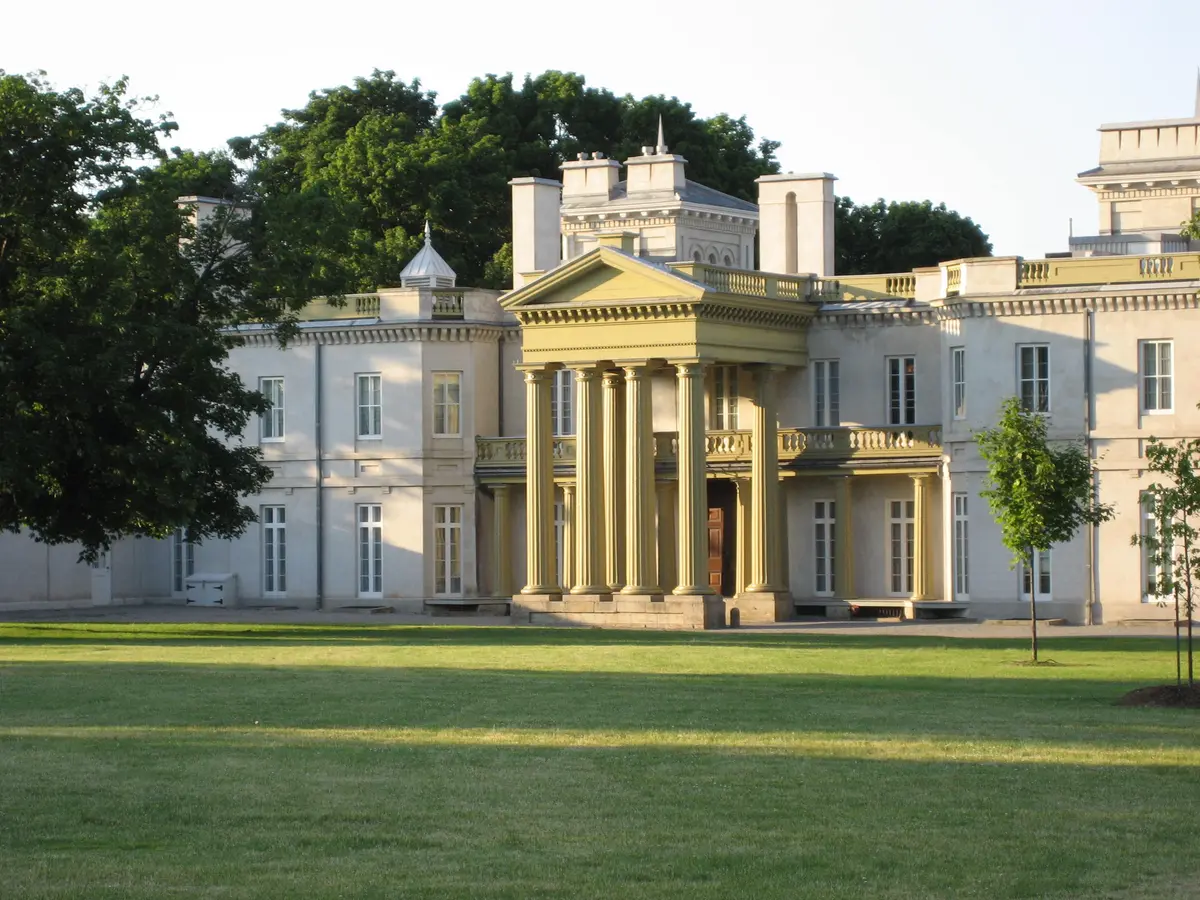
Sir Allan Napier MacNab built his Italianate villa over it between 1834 and 1835, and the museum restores the rooms to 1855 — not, as is often written, a year of decline, but the year he was Premier of the United Canadas and added the great portico for his daughter Sophia's wedding to Viscount Bury. The ruin came afterwards: he resigned in 1856 and died at Dundurn in August 1862 a penniless debtor, hours after a deathbed conversion that set two churches quarrelling in the newspapers over his body. The City of Hamilton, which has owned the house since 1899, never mentions a ghost; commercial tours have been selling one inside it since about 1999. The stories they tell — a chill outside the room where Lady MacNab died in 1846, a woman singing where no one is singing — have no named witness on record before the ghost-tour trade arrived.
What is the history of Dundurn Castle?
Dundurn was not built on empty ground. It stands on Burlington Heights, the 2.5-kilometre isthmus between Hamilton Harbour and Cootes Paradise that the British army fortified in 1813 as the supply depot for the defence of the Niagara peninsula; the Heights were designated a national historic site in their own right on 17 May 1929, and the defensive earthworks and a powder magazine are still visible in the park around the house. On 20 July 1814, after the treason trials known as the Ancaster Bloody Assize, eight men — Dayton Lindsey, Noah Payne Hopkins, John Dunham, Aaron Stevens, Benjamin Simmons, George Peacock Jr., Isaiah Brink and Adam Crysler — were hanged at Burlington Heights and buried near the gallows. People were being buried on this hill twenty years before there was a house on it.
Allan Napier MacNab, born at Newark (Niagara-on-the-Lake) on 19 February 1798, bought the property from J. S. Cartwright in November 1832 for £2,500 — five hundred pounds more than he had meant to pay, according to Peter Baskerville's biography of him in the Dictionary of Canadian Biography. Robert Charles Wetherell designed the Italianate villa that went up over the foundations of an earlier brick house between 1834 and 1835. Parks Canada calls the result "a rare surviving example of a picturesque estate in Canada exhibiting a remarkable degree of integrity": not just the villa but a whole scenographic estate, with a dovecot, a gardener's cottage, a gatehouse called Battery Lodge, stables and a two-storey pavilion built for cockfighting, the Cockpit. The room count is not agreed: the museum and most popular accounts say forty, while Baskerville and Edward Smith's illustrated study of the house both say seventy-two.
MacNab married twice. Elizabeth Brooke died in January 1825 giving birth to their second child; Mary Stuart, whom he married in September 1831, died at Dundurn in 1846 after a long illness. Their elder daughter Sophia, then thirteen, kept a diary through that year in which most entries turn on "dearest Mamma's" health; it was published in Hamilton in 1968 and is the closest thing the house has to a contemporary interior voice. In 1855 the pillars and portico that dominate the south front were added for Sophia's wedding to William Coutts Keppel, Viscount Bury, celebrated at Dundurn on 15 November of that year. That is why the museum restores the rooms to 1855 — the year MacNab was Premier of the United Canadas, married his daughter into an English earldom and rebuilt his own façade to do it.
The fall came afterwards and it was steep. Baskerville records that MacNab's political control "began to slip in 1855 and 1856", that gout kept him out of the assembly, and that he resigned in May 1856, whereupon John A. Macdonald formed a new ministry with most of the old members and without him. He returned to public life in 1860 and raised $20,000 from a land sale, "but it was not enough to satisfy his many creditors". "In August 1862 the laird of Dundurn died, a penniless debtor."
His death produced the strangest documented episode in the history of the house. On Thursday 7 August 1862, between ten and noon, Bishop John Farrell received MacNab into the Roman Catholic Church at Dundurn; MacNab died there the next afternoon at four o'clock. The Anglican rector of Hamilton, the Rev. J. Gamble Geddes, publicly disputed the conversion — his letter ran in the Toronto Globe on 15 August 1862 — and Farrell answered in the Hamilton Evening Times on 16 August. Brother Alfred (Dooner) reconstructed the quarrel from the newspapers for the Canadian Catholic Historical Association in 1942-43 and records that at the funeral several eminent Protestant friends, including Chief Justices Draper and McLean, withdrew when they learned it would be a Catholic rite, leaving too few pallbearers.
After MacNab the house filled up with children. John Barrett McGann, an Irish-born educator who had opened Canada's first school for Deaf pupils in Toronto in 1858, moved his institution to Hamilton in 1864; according to the marker the City of Hamilton and the Ontario Deaf Foundation unveiled on the site in 2024, eighty-one Deaf and ten blind pupils moved into the mansion in 1867, McGann paid $600 a year in rent, and the Deaf students themselves did painting, carpentry and glazing to make the house fit to live in. Sophia, by then Viscountess Bury, bought Dundurn back in 1868 and leased it to the school until she sold to the merchant and senator Donald McInnes in 1872. The provincial school opened at Belleville on 20 October 1870.
McInnes sold to the City of Hamilton in 1899 for $50,000, having asked $75,000; the archived history of Dundurn Park published by the Canadian Parks Movement project records that the ratepayers approved the purchase by 2,016 votes to 914 on 8 September 1899, that council gave final approval on 2 October, and that the park opened to the public on Victoria Day, 24 May 1900. In 1908 the family gave the walled private burial ground east of the house, called Inchbuie, to the Parks Board, and in 1909 the graves were lifted: by that account seven went to the Protestant Hamilton Cemetery across York Boulevard and eight, MacNab's among them, into an unmarked grave in the Roman Catholic Holy Sepulchre Cemetery — the 1862 quarrel settled, forty-seven years later, by dividing the family. MacNab's grave stayed unmarked until 1967, when the Canadian Club of Hamilton placed a stone and a bench. That same year the house reopened, restored between 1964 and 1967 as a Centennial project at a cost the city puts near $3 million. Dundurn Castle was designated a national historic site on 13 June 1984. Camilla, Queen of Canada, is descended from Sophia and is the site's royal patron; she visited the house on 5 November 2009 during that year's royal tour.
Timeline: the documented record of Dundurn Castle
- 20 July 1814 After the treason trials known as the Ancaster Bloody Assize, eight men are hanged at Burlington Heights and buried near the gallows, on ground that later becomes Dundurn Park.
- November 1832 Allan Napier MacNab buys the Burlington Heights property from J. S. Cartwright for £2,500, five hundred pounds more than he had intended to pay.
- 1835 The Italianate villa designed by Robert Charles Wetherell is completed over the foundations of an earlier brick house, after roughly three years of building.
- 1846 Mary Stuart, Lady MacNab, dies at Dundurn after a long illness. Her thirteen-year-old daughter Sophia keeps a diary through the year in which most entries concern her mother's health; it is published in Hamilton in 1968.
- 15 November 1855 Sophia MacNab marries William Coutts Keppel, Viscount Bury, at Dundurn. The pillars and portico of the south front were added that year for the wedding; MacNab is Premier of the United Canadas, and 1855 is the year the museum restores the house to.
- 7-8 August 1862 Bishop John Farrell receives MacNab into the Roman Catholic Church at Dundurn on the Thursday morning; MacNab dies there at four o'clock on the Friday afternoon. The Anglican rector J. Gamble Geddes disputes the conversion in the Toronto Globe of 15 August and Farrell replies in the Hamilton Evening Times of 16 August; at the funeral several Protestant dignitaries withdraw, leaving too few pallbearers.
- 1867 Eighty-one Deaf and ten blind pupils move into the mansion, which John Barrett McGann rents for $600 a year for his institution; according to the commemorative marker, the Deaf students themselves did the painting, carpentry and glazing that made the house habitable.
- 20 October 1870 The provincial Ontario Institution for the Education of the Deaf and Dumb opens at Belleville, ending the Hamilton school; Sophia, Viscountess Bury, who had bought Dundurn back in 1868 and leased it to McGann, sells it to Donald McInnes in 1872.
- 8 September 1899 Hamilton ratepayers approve the purchase of Dundurn by 2,016 votes to 914; McInnes had asked $75,000 and settles for $50,000, council confirms on 2 October, and the park opens to the public on Victoria Day, 24 May 1900.
- 1909 The MacNab family burial ground east of the house, Inchbuie, is cleared a year after being given to the Parks Board. By that account seven graves go to the Protestant Hamilton Cemetery and eight, MacNab's among them, to an unmarked plot in the Roman Catholic Holy Sepulchre Cemetery.
- June 1967 Dundurn reopens after a restoration carried out between 1964 and 1967 as a Centennial project. The same year the Canadian Club of Hamilton finally places a stone and a bench on MacNab's grave, unmarked since 1909.
- 13 June 1984 Dundurn Castle is designated a national historic site of Canada as "a rare surviving example of a picturesque estate"; Burlington Heights, inside the same park, had been designated separately on 17 May 1929.
- 1999 Haunted Hamilton begins operating; its founders also run Ghost Walks, which today sells an evening inside Dundurn Castle for about $34 in the Halloween season. No named witness or dated report of a haunting at Dundurn earlier than this trade has been located.
- 2024 The City of Hamilton and the Ontario Deaf Foundation unveil a marker on the site, "Deaf Education at Dundurn Castle", recovering the story of the pupils who lived in the house between 1867 and 1870.
Is there a rational explanation for Dundurn Castle?
Start with what the owner says. The City of Hamilton owns Dundurn and runs it through Hamilton Civic Museums, and neither its site page nor its visitor information mentions a ghost, a haunting or anything paranormal: the house is presented as "the MacNab family and the servants who lived and worked at the house". The same building opens after dark for a Dundurn Castle & Ghost Bus Tour advertised at $34, which runs only in the Halloween season and puts tickets on sale in June; the operator, Ghost Walks, is run by the founders of Haunted Hamilton, a paranormal group active since 1999. Mark Leslie's book of the trade, Haunted Hamilton: The Ghosts of Dundurn Castle and Other Steeltown Shivers, appeared in 2012. That is the two-voice pattern: the institution keeps the ghost out of its own history and rents it the building at night.
Dating the tale matters more than testing it. No named witness and no dated report from before the ghost-tour trade has been located here. The Hamilton Public Library's own local-history page repeats the standard set — a cold chill and a draught that blows out candles outside the room where MacNab's second wife died, moving objects, music and singing — without a single name or date attached to any of it. The most specific published account with a name is second-hand and recent: Chris Friesen, an interpreter at the castle, told the Mohawk College paper Ignite News on 8 November 2024 that "one of the workers" heard a woman singing a strange Christmas carol. Ghost Walks' own signature story, the "Wedding Ghost", is a photograph anecdote its authors tie to a 1967 Hamilton Spectator photo shoot and place roughly thirty years later.
The phenomena themselves are what the building is. Draughts, cold spots and doors that move are the ordinary behaviour of an 1830s stone house with dozens of rooms, open fireplaces, a service stair and no central heating, worked daily by costumed staff whose job is to walk those stairs. The "tunnels" of local legend have a duller and better-documented explanation underfoot: the 1813 British earthworks and powder magazine of Burlington Heights, a separate national historic site inside the same park.
And one claim can be checked and fails. The story that MacNab is reluctant to leave his house reverses the record: he was buried on his own estate in 1862, his grave was cleared away in 1909 and his remains went into an unmarked plot in a cemetery on the other side of town, where they stayed unnamed until 1967. He did not refuse to leave Dundurn. He was carried out of it, and it took a century for anyone to write his name on the place he ended up. What is genuinely uncanny about the house is on paper: two churches arguing in the newspapers over a dying man in an upstairs room, and pallbearers walking away from his coffin.
Can you visit Dundurn Castle?
Dundurn National Historic Site is at 610 York Boulevard in Hamilton, Ontario, about 1.8 km (1.1 miles) north-west of Hamilton City Hall in a straight line, and is operated by Hamilton Civic Museums for the City of Hamilton. The house stands on Burlington Heights, a ridge that separates Hamilton Harbour from Cootes Paradise. The Canadian Register of Historic Places describes the estate as a 13-hectare property with a dovecot, a two-storey cockfighting pavilion known as the Cockpit, a gardener's cottage, a gatehouse called Battery Lodge and a stable grouped around the main house, and records its designation as a National Historic Site of Canada on 13 June 1984.
The museum's page, read on 24 September 2026, gives the castle's hours as Tuesday to Sunday from 12:00 to 16:00; it is closed on Mondays and some holidays. Entry is by guided tour only, led by costumed interpreters; tours last about an hour and leave every 20 to 30 minutes from 12:10. Prices on that date were $16.75 for adults aged 18 to 54, $14.25 for seniors over 55 and for youths of 13 to 17, $10.00 for children of 6 to 12 and $45.75 for a family of two adults and up to four children. Children under six go in free, and the same ticket admits visitors to the Hamilton Military Museum. The page describes the castle and the military museum as partially wheelchair accessible, says that strollers cannot be taken into the castle but have a designated indoor parking area, and lists free parking on site. The kitchen garden, where the museum says more than 200 heirloom varieties are grown, opens from mid-May to mid-October.
The grounds are also part of the older Burlington Heights National Historic Site, designated in 1929 as the key British position and supply depot of the War of 1812 on the Niagara frontier. Parks Canada lists the archaeological evidence found there: an earthwork and gun platform in the castle courtyard, a powder magazine in the fur vault of the cellar, and defensive earthworks in the castle grounds and in the cemetery across York Boulevard. A marker on Deaf education at Dundurn stands at the corner of York Boulevard with Dundurn Street North; the City of Hamilton and the Ontario Deaf Foundation put it up in 2024.
Evening ghost tours inside the house are sold by Ghost Walks of Hamilton, a company run by HH Paranormal Inc. Its 2026 listing combines an hour's coach tour of the city with a night tour of the castle on every Saturday of October, from the 3rd to the 31st. The price is $34, to which HST and a 1.5 per cent processing fee are added.
Sources consulted
- Peter Baskerville, «MACNAB, Sir ALLAN NAPIER» — Dictionary of Canadian Biography, vol. 9, 1976 academic
- Brother Alfred (Dooner), F.S.C., «The Conversion of Sir Allan MacNab» — Canadian Catholic Historical Association, Report 10, pp. 47-64, 1943 academic
- Sophia MacNab; ed. Charles Ambrose Carter y Thomas Melville Bailey, «The Diary of Sophia MacNab, Written at Dundurn Castle, Hamilton, 1846, Age 13» — W. L. Griffin Ltd., Hamilton (Ontario), 1968 book
- Edward Smith, «Dundurn Castle: Sir Allan MacNab and His Hamilton Home» — James Lorimer & Co., Toronto (ISBN 978-1-55028-988-6), 2007 book
- Parks Canada / Canadian Register of Historic Places, «Dundurn Castle National Historic Site of Canada — Statement of Significance» — Canadian Register of Historic Places, 1984 report
- Parks Canada, «Burlington Heights National Historic Site of Canada» — Directory of Federal Heritage Designations, 1929 report
- Hamilton Civic Museums, City of Hamilton, «Dundurn National Historic Site» — hamiltoncivicmuseums.ca, 2026 web
- Hamilton Public Library, Local History & Archives, «Local Ghosts» — lha.hpl.ca, 2026 web
- Nykolas Moore, «Haunted Hamilton, the spirits that roam our city» — Ignite News (Mohawk College), 8 November 2024, 2024 newspaper archive
- Ghost Walks, «Dundurn Castle & Ghost Bus Tour» — ghostwalks.com, 2026 web
- Clifton F. Carbin y Donna J. Fano, «John Barrett McGann, Pioneer in Canadian Deaf Education» — Society for American Sign Language Journal, vol. 5, n.º 1, art. 4, 2021 academic
- The Historical Marker Database, «Deaf Education at Dundurn Castle (marker erected 2024 by the City of Hamilton and the Ontario Deaf Foundation)» — hmdb.org, marker 286261, 2024 web
- Canadian Heritage, «Canadian Parks Movement: Hamilton Experience — Dundurn Park» — Archived by Library and Archives Canada, 2005 web
- James H. Marsh, «Ancaster Bloody Assize of 1814» — thecanadianencyclopedia.ca, 2011 web
Reviewed by V. Serrano on 2026-08-17 · How we verify our content
💬 Field testimonies (0)
No testimonies yet. Add the first.
Add your testimony
🔒 Log in to add a testimony