👻 HAUNTED PLACE · EXP. Nº9475
ACTIVE
Casa Loma
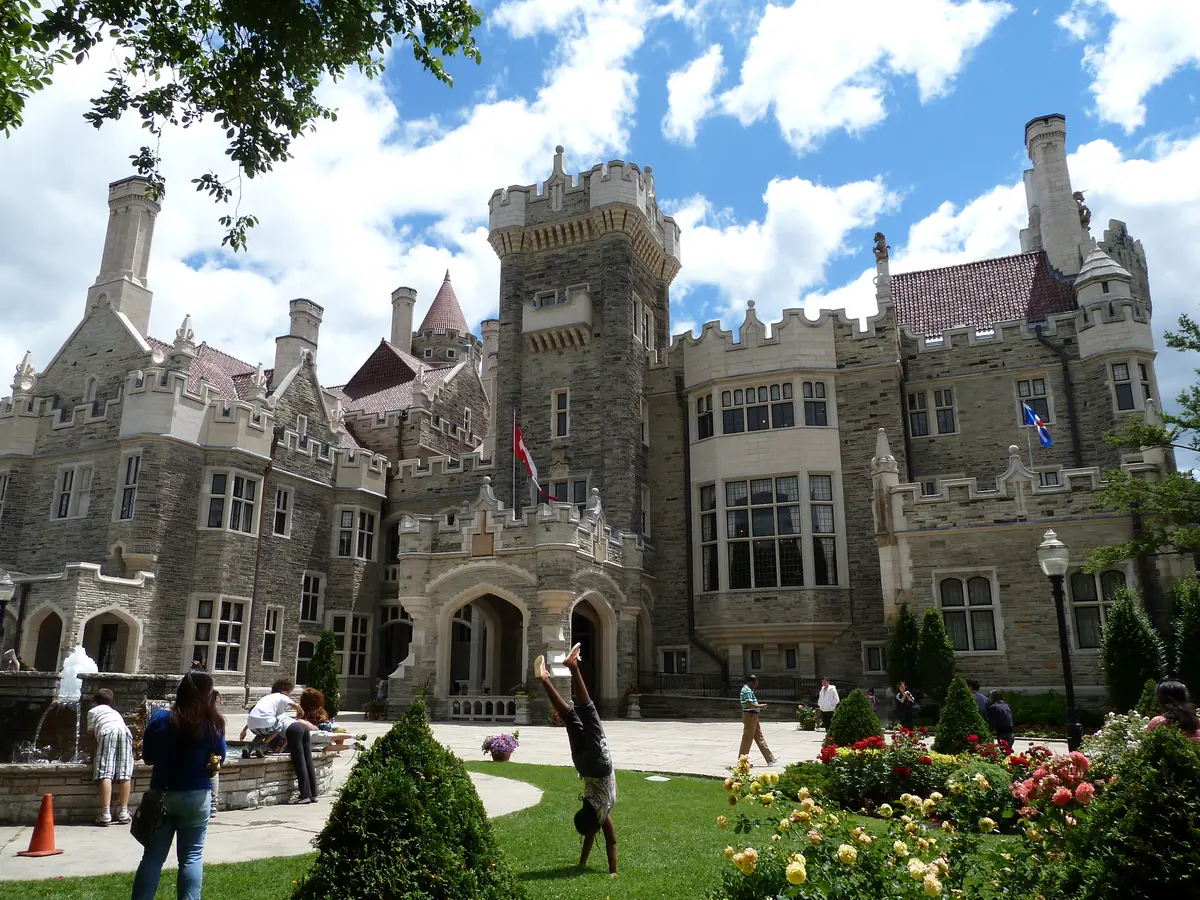
Casa Loma is a 98-room castle on the Toronto escarpment, built for the financier Sir Henry Pellatt on land he had bought in his wife Mary's name, and abandoned by the family about ten years after they moved in.
Where is Casa Loma?
- Location
- Ontario, Canada
- Type
- Castle
- Coordinates
- 43.678, -79.41
- Last updated
LOCATION
Why is Casa Loma said to be haunted?
The City of Toronto took it back in 1933 for $27,303.45 in unpaid taxes and still owns it. Pellatt died on 8 March 1939 in a room in his former chauffeur's house in Mimico, and was buried after a military funeral. The castle's ghost reputation is real, but it is neither old nor anonymous: the earliest episode that can be traced to a source is a radio stunt, the broadcaster Claire Wallace spending a night in the empty castle to gather material for a piece on ghosts, and a Wallace commentary is credited with saving the building from demolition. Today the operator sells fear outright, with a Halloween trail through the tunnels and escape rooms built on the castle's disputed wartime secrets. What the archive records is not what the gate sells.
What is the history of Casa Loma?
Casa Loma was not, strictly speaking, Sir Henry Pellatt's house. Between 1903 and 1905 he bought the lots on the Toronto escarpment — a spot already known as Casa Loma, "house on a hill" — in the name of his wife, Mary Dodgson Pellatt. Twenty years later that detail decided how the story ended: when the contents of the castle were auctioned in June 1924, they were sold as her estate, not his.
For the design he chose E. J. Lennox, his own neighbour on Sherbourne Street, rather than any of the more adventurous architects then working in Toronto and Montreal. His biographer David Roberts, writing for the Dictionary of Canadian Biography, records that Lennox was given "a bottomless budget" and indulged his client's taste for castles and grand hunting lodges. The dates usually quoted for the building, 1911 to 1914, come from the City of Toronto's own timeline; Roberts puts the first work in 1905, on a temporary cottage and a massive stable, with the main house begun only in late 1909. Both accounts can be true of a project built in phases — and Casa Loma was never finished. The recession of 1913 stopped the work, and the library was still without its shelves when the family moved in.
What did get built was extraordinary: 98 rooms over 64,700 square feet, the largest private residence ever raised in Canada, a library planned for 10,000 books, state-of-the-art electrical systems, and an 800-foot tunnel running 18 feet under Austin Terrace to the stables and carriage house. The cost is the first figure that should be treated with care. The castle's own material states flatly that it took three years and $3.5 million; the Dictionary of Canadian Biography is more careful, saying only that it cost "millions" and that "estimates range up to three and a half million dollars". Toronto was not uniformly impressed. On hearing Pellatt's plans in 1905 the Brantford Expositor concluded: "Manifestly social conditions are changing in Canada and the plutocrat is with us at last."
The woman whose name was on the deeds is usually written out of the castle's story. Lady Mary Pellatt was named the first chief commissioner of Canada's Girl Guides in July 1912, opened the movement's first headquarters with her own money that December, drove the federal incorporation of the Canadian Council of the Girl Guides Association in 1917, and stepped down in 1921 through illness. Casa Loma was the Guides' stage as much as her husband's.
The collapse was fiscal before it was personal. In 1913 the city abolished the fixed assessment on the property and Pellatt's taxes rose sixfold; the City of Toronto's 2012 report on the castle puts the increase as going from $600 a year to $1,000 a month. His obligations to the small, Toronto-based Home Bank of Canada, which had been funding him for years, stood at $2,191,732.81. The Home Bank failed in August 1923, and late that year the Pellatts left Casa Loma for an apartment. The public inquiry into the bank's collapse opened on 16 April 1924 — the day after Lady Pellatt died.
The castle then had a decade of improvisation. From 1925 to 1929 it ran as a luxury hotel and nightspot, and its house band, the Orange Blossoms, went on to national fame as Glen Gray and the Casa Loma Orchestra. From 1929 to 1933 it sat empty. In 1933 the City of Toronto took the property back for $27,303.45 in unpaid taxes and cast around for a use: a high school, a museum, an art gallery, a convalescent home for war veterans, even a permanent residence for the Dionne quintuplets. None was feasible. Demolition was considered.
Pellatt's own version of events, given at a luncheon in 1937, was that the mansion had never cost him a cent, that he had always intended it as a museum and so had it exempted from tax, and that when the city began assessing it he simply walked away, saying: "Gentlemen, you can have it." His biographer calls this account "defiant but erroneous". His last public appearance was in January 1939. He died two months later, on 8 March 1939, not in a rented house of his own but in a room in his former chauffeur's home in Mimico, having lost his sight to the point where, by August 1932, he could not read. He was buried after a military funeral at St James' Cathedral, in Forest Lawn beside his first wife. The estate was empty; his few remaining effects included his racing trophies.
The castle outlasted him by design. In 1937 the Kiwanis Club of West Toronto took over and ran it as a tourist attraction for 74 years; the City created the Casa Loma Corporation in 2011, and since 2014 the site has been operated by Liberty Entertainment Group under Nick Di Donato, with the City of Toronto still the sole owner. The scale of the business changed with it: paid admissions peaked at 375,000 in 1998 and had fallen to 243,000 by 2011, while the current operator says more than 650,000 people a year now tour the castle and gardens.
Timeline: the documented record of Casa Loma
- 1903-1905 Henry Pellatt buys the escarpment lots already known as Casa Loma, and buys them in the name of his wife, Mary Dodgson Pellatt. The purchase in her name will decide, twenty years later, whose estate the castle's contents belong to.
- 1905 Construction begins, not with the castle but with a temporary cottage and a massive stable block. The Brantford Expositor, hearing of the plans, writes: "Manifestly social conditions are changing in Canada and the plutocrat is with us at last."
- Late 1909 Work starts on the main building to E. J. Lennox's design, in grey-brown sandstone with white cast-stone trim. The City of Toronto's own timeline dates the castle to 1911-1914; the two accounts describe different phases of the same unfinished project.
- July 1912 Lady Mary Pellatt is named the first chief commissioner of Canada's Girl Guides and opens the movement's first headquarters that December with her own money. Casa Loma becomes as much her stage as her husband's.
- 1913 The city abolishes the fixed assessment on the property and Pellatt's taxes rise sixfold; the City's 2012 report describes the jump as going from $600 a year to $1,000 a month. The recession of the same year leaves the castle unfinished, and the Pellatts move into it in late 1913.
- August 1923 The Home Bank of Canada fails. Pellatt's obligation to it had reached $2,191,732.81. Late that year the family leaves Casa Loma for an apartment, after about ten years in the house.
- 15-16 April 1924 Lady Pellatt dies on 15 April; the public inquiry into the Home Bank's collapse opens the next day. In June the contents of Casa Loma, technically her estate, begin to be sold at auction.
- 1933 After four years standing empty, the castle is taken back by the City of Toronto for $27,303.45 in unpaid taxes. Uses floated at the time include a high school, a museum, an art gallery, a convalescent home for war veterans and a permanent residence for the Dionne quintuplets. Demolition is considered.
- 1937 The Kiwanis Club of West Toronto takes over and opens Casa Loma as a tourist attraction, a lease that will last 74 years. According to the Canadian Communications Foundation, the club acted after its vice-president heard CFRB broadcaster Claire Wallace say on air that demolishing the castle would be shameful.
- 1937 (luncheon) At a luncheon, Pellatt gives his own version of the loss: the mansion never cost him a cent, it was tax-exempt because he meant it as a museum, and when the city began assessing it he walked away saying "Gentlemen, you can have it." His biographer calls the account "defiant but erroneous".
- 8 March 1939 Pellatt dies in Mimico, in a room in his former chauffeur's home, blind enough since 1932 that he could not read. He is buried after a military funeral at St James' Cathedral, in Forest Lawn beside his first wife. The estate is empty; his remaining effects include his racing trophies.
- 1942 or later The earliest ghost episode at Casa Loma that can be dated to a source: the Canadian Communications Foundation lists, among the undercover assignments Claire Wallace did for her CBC programme They Tell Me, that "she once spent the night at Casa Loma to gather material for a piece on ghosts". She hosted the programme from 1942; the source gives no exact year.
- July 2011 Eric Leclerc publishes in Esprit de Corps the article that most later retellings of the castle's wartime role depend on, claiming the stables concealed the production of ASDIC submarine-detection sets behind a one-dollar padlock and a sign reading "Construction in Progress".
- 2014 Liberty Entertainment Group takes over the operation of the castle for the City of Toronto, which remains the sole owner. Paid admissions had peaked at 375,000 in 1998 and fallen to 243,000 by 2011; the operator now says more than 650,000 people a year visit.
- 7 November 2015 Lynn-Philip Hodgson, author of Inside Camp X and the man usually cited for placing the secret workshop Station M at Casa Loma, tells the Toronto Star that the identification is his own educated guess from unpublished manuscripts: "Nobody knows where Station M was. You won't read where it was in any book."
Is there a rational explanation for Casa Loma?
There is a haunted Casa Loma, and there is a documented Casa Loma, and they barely touch.
Start with what is not there. The City of Toronto's 115-page review of the castle's future, written in 2012 by consultants who interviewed staff, tenants, suppliers, councillors and the Kiwanis Club, does not contain the word "haunted" or the word "ghost" once. Neither does the Dictionary of Canadian Biography's long life of Pellatt. No named witness, no dated incident and no first-hand statement about an apparition at Casa Loma turned up in the archival sources consulted for this file. What circulates instead are anonymous accounts — "a guide", "a security guard", "night staff" — with no name and no year attached, which cannot be checked and are not repeated here.
The one ghost episode that can be sourced is a publicity stunt, and it is far more interesting than the anonymous version. The Canadian Communications Foundation's biography of the broadcaster Claire Wallace (1900-1968) — the highest-paid woman on Canadian radio in the 1940s, who went undercover as a store detective and as a maid to get her stories — lists, among the lengths she went to for her CBC programme They Tell Me, that "she once spent the night at Casa Loma to gather material for a piece on ghosts". The same biography credits a Wallace commentary on CFRB with saving the building: when Toronto council wanted to raze the castle, she said on air that it was shameful to demolish such a structure, a Kiwanis Club vice-president heard the broadcast, and the club obtained a licence and ran Casa Loma as an attraction from then on. In other words, the castle's ghost story and its visitor business come out of the same radio microphone.
Today the operator sells fear openly, which is the honest thing to notice before crediting any account collected on site. Each October the grounds become Legends of Horror, a two-kilometre theatrical trail that runs "through the castles tunnels and darkest spaces" with 3D projection on the façade, at CA$45 to CA$60 a head. Two of the escape rooms are built on the castle's disputed war record: Station M, named after a secret British Security Coordination workshop, and Escape From the Tower, in which the player joins "an undercover Anti-Submarine Detection Research Centre in the tower of Casa Loma" in 1941.
That war record deserves the same scrutiny as the ghosts. The claim that the stables housed the production of ASDIC submarine-detection sets rests, in almost every retelling, on a single magazine article: Eric Leclerc in Esprit de Corps, July 2011. Read directly, that article contains checkable errors elsewhere in its own text — it says Pellatt's 1923 bankruptcy "took out dozens of banks" (the Home Bank was one bank), and it repeats that ASDIC was "named for its inventors" and stood for the Anti-Submarine Detection Investigation Committee, a derivation the Admiralty invented in 1939 in answer to a query from the Oxford English Dictionary, and for which no such committee has ever been found. As for Station M, the man usually cited as the authority, Lynn-Philip Hodgson, author of Inside Camp X, told the Toronto Star in 2015 that the Casa Loma identification is his own educated guess from unpublished manuscripts: "Nobody knows where Station M was. You won't read where it was in any book." The castle's own escape room, meanwhile, quietly moves the story from the stables to the tower.
One mechanical point, offered as physics and not attributed to anyone: the tunnel where visitors report cold and noise is a straight passage 18 feet below a public street, with stairs at each end, open to outside air and to the traffic and footfall above it. A corridor like that is expected to be colder than the house and to carry sound whose source is not visible from inside.
Can you visit Casa Loma?
Casa Loma is open to the public every day at 1 Austin Terrace, Toronto. On 22 September 2026 the operator's own pages gave hours of 09:30 to 17:00 daily with last admission at 16:30, closing at 16:00 on Christmas Eve and all day on Christmas Day.
General admission on that date was CA$30 for adults aged 18 to 64; CA$25 for seniors over 65; CA$25 for youths aged 14 to 17; CA$20 for children aged 4 to 13; under-threes free. It covers the Sir Henry Pellatt documentary and a multimedia audio guide. On-site parking is a CA$10 flat rate per vehicle, with overflow at George Brown College. The nearest subway station is Dupont on the Spadina-University line, two stops north of St George. The castle is a short climb from there.
Access is uneven. The operator's page says "a limited number of wheelchairs are available free of charge" and that "there is one small heritage elevator in Casa Loma that is staff operated". The operator's page says it serves the basement plus the second and third floors — the first is not on it — and that pushchairs are not allowed inside. The towers are reached by spiral staircases and close at 16:30. The 800-foot tunnel to the Carriage Room, Potting Shed and Stables runs 18 feet below Austin Terrace and has stairs.
Inside are the regimental museum of the Queen's Own Rifles of Canada and the classic-car collection in the stables. Along the tunnel runs the Dark Side of Toronto photographic exhibit, which covers Prohibition, the Depression, epidemic disease, the Great Toronto Fire and the city's first plane crash.
The scary programming is separate and separately ticketed. Legends of Horror runs from 3 to 31 October 2026 and stays dark on 5, 6, 12 and 13 October. Entry is at Walmer Road and Davenport Road instead of the main gate: a two-kilometre trail through the gardens and tunnels lasting over an hour. Tickets were CA$45 online or CA$50 on site from 3 to 15 October; CA$55 or CA$60 from 16 to 31 October. The Family Hours slot from 17:00 to 18:30 costs the lower price and runs the mechanical effects and lighting without live actors. The VIP Premium Package — two tickets with priority access plus a drink each — was CA$150 or CA$200 by date. Children of 16 and under must be accompanied, and the operator advises parental discretion. The escape rooms, Station M and Escape From the Tower among them, run Thursday to Sunday at 17:30, 20:00 and 22:00 at CA$46.35 plus tax, rising to CA$56.65 at prime times, with holiday prices varying.
Every price and time above was read off the operator's own pages on 22 September 2026, and they change by season.
Sources consulted
- David Roberts, «PELLATT, Sir HENRY MILL» — Dictionary of Canadian Biography, vol. 16, University of Toronto/Université Laval, 2018 academic
- Casa Loma Corporation, Board of Directors, «Future Options for Casa Loma» — City of Toronto, staff background file, 2012 report
- Oliver Sachgau, «The name's Bond, maybe St. James Bond: Ian Fleming's Toronto inspirations» — Toronto Star (read in the Internet Archive snapshot of 7 March 2023), 2015 newspaper archive
- Eric Leclerc, «Casa Loma: the house that Henry built — how a castle in downtown Toronto helped us win the battle of the Atlantic in WWII» — Esprit de Corps 18.6, p. 32 (read in the Internet Archive snapshot of 7 March 2023), 2011 newspaper archive
- Canadian Communications Foundation, «Wallace, Claire (1900-1968)» — The History of Canadian Broadcasting, 2026 archive
- Casa Loma / Liberty Entertainment Group, «About Casa Loma» — Official site of the operator, 2026 web
- Casa Loma / Liberty Entertainment Group, «The History of Casa Loma» — Official site of the operator, 2026 web
- Casa Loma / Liberty Entertainment Group, «Plan Your Visit» — Official visitor information, 2026 web
- Casa Loma / Liberty Entertainment Group, «The Dark Side Tunnel Exhibit» — Official site of the operator, 2026 web
- Casa Loma / Liberty Entertainment Group, «Escape From the Tower and Station M (Casa Loma Escape Series)» — Official site of the operator, 2026 web
- Liberty Entertainment Group, «Legends of Horror at Casa Loma» — Official event site, 2026 web
- Wikipedia contributors, «Sonar (section on ASDIC and the Admiralty's 1939 answer to the Oxford English Dictionary)» — Wikipedia, 2026 web
Reviewed by V. Serrano on 2026-08-11 · How we verify our content
💬 Field testimonies (0)
No testimonies yet. Add the first.
Add your testimony
🔒 Log in to add a testimony