👻 HAUNTED PLACE · EXP. Nº9476
ACTIVE
French Fort Cove
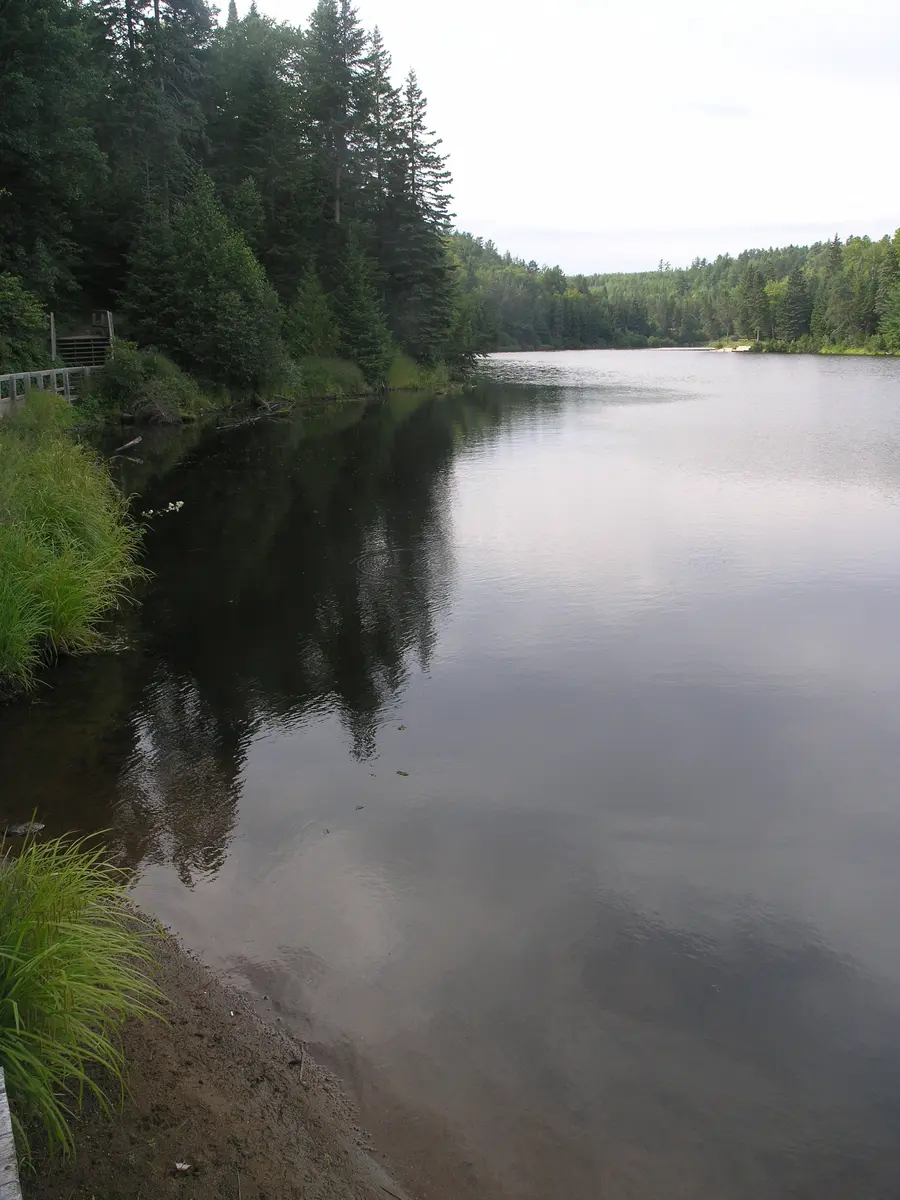
French Fort Cove is a municipal nature park in Miramichi, New Brunswick, and it is named after a gun battery — sixteen guns, according to Robert Cooney, who wrote the district's first history in 1832 and put the cove's name into print.
Where is French Fort Cove?
- Location
- New Brunswick, Canada
- Type
- Park
- Coordinates
- 47.021, -65.541
- Last updated
LOCATION
Why is French Fort Cove said to be haunted?
Its ghost is the Headless Nun, Sister Marie Inconnue, said to have been beheaded here in 1758, either by a mad trapper or by sailors who wanted the location of buried Acadian treasure. The year is not the invention: 1758 was a real and terrible year on this river, the year Acadian refugees were starving upstream at Camp d'Espérance and Colonel James Murray burned the Mi'kmaw mission at what has been called Burnt Church ever since. The nun is the difficulty. There was no community of women religious anywhere in Acadia that year, the earliest printed appearance of the ghost that can be dated is from 1973, and as late as 1988 the story was still being filed under a different place. Inconnue is French for unknown. This page tells the documented history of the cove, and the traceable history of the tale.
What is the history of French Fort Cove?
French Fort Cove is named after a gun battery, and the oldest description of that battery is also the oldest history of this stretch of river. In 1832 Robert Cooney, an Irish-born journalist who lived on the Miramichi, published A Compendious History of the Northern Part of the Province of New Brunswick in Halifax. He recorded that the French had "a tolerably strong battery" on Beaubear's Island "and also another, mounting sixteen guns, at French Fort Cove, near the present Mill seat of Mr. Patrick Henderson". That single sentence is why the cove has the name it has.
Long before any fort, and still today, this is Mi'kmaw country. Upriver at Metepenagiag, on the Little Southwest Miramichi, people have lived continuously for more than 3,000 years — the longest unbroken occupation known in New Brunswick. It is documented because in 1975 Joseph Augustine, a craftsman from the community, located a burial mound that archaeologists had not found; the Augustine Mound is now a National Historic Site of Canada, and the Metepenagiag Heritage Park interprets it. Natoaganeg (Eel Ground) sits a few kilometres upstream of the cove itself.
The battery belongs to the worst years the river has known. After the deportation of the Acadians began in 1755, the officer Charles Deschamps de Boishébert gathered refugee families on the Miramichi; the first large group arrived in the summer of 1756, and the camp on Beaubears Island became known as Camp d'Espérance. Cooney describes it as "a Town comprising upwards of two hundred houses including a Chapel and Provision Stores at Beaubair's Point". Ronnie-Gilles LeBlanc, working from the French colonial archives, estimates about 1,400 refugees there in the autumn of 1756 and roughly 400 dead by the spring — of hunger and of a contagion that swept the camp. Cooney, writing closer to the event but with less evidence, put the toll above eight hundred.
On 15 September 1758, two months after the fall of Louisbourg, Colonel James Murray reached Miramichi Bay with some 800 men on Wolfe's orders. He burned the settlement at Baie des Ouines and, learning of a second one across the bay, sent troops to burn the Mi'kmaw mission church and the houses of the Mi'kmaq and Acadian refugees there. The place has been called Burnt Church — Esgenoôpetitj — ever since. Murray considered going upriver to destroy Camp d'Espérance, was talked out of it by his naval captains, and sailed on 18 September. The camp survived; its people left for the Restigouche and Québec in 1759.
Cooney also tells a story set at the cove itself, and it is not a ghost story. After the fall of Québec, a ship carrying despatches and Wolfe's remains put into the Miramichi for water. Six sailors landed at Henderson's cove, wandered into the woods and were killed by a party of Mi'kmaq; Cooney adds that it was "confidently asserted" that two or three French soldiers from the battery took part. The captain then "silenced the battery at French Fort Cove", razed the settlement at Canadian Point and burned the chapel at Neguac. Cooney's account of how Burnt Church got its name is contradicted by the documentary record, which credits Murray in 1758 — but his tale of sailors, a killing in the woods and a reprisal is the first thing ever printed about this cove.
Afterwards came the mills: sawmills, gristmills, a woollen carding mill and shipbuilding. From 1884 to 1904, Charles E. Fish worked a sandstone quarry here, and the Miramichi olive sandstone cut from the cove was shipped to Ottawa to build the Langevin Block on Parliament Hill. On 21 June 2017 that building was renamed the Office of the Prime Minister and Privy Council, because Hector-Louis Langevin had been an architect of the residential school system. Stone from a Mi'kmaw river outlasted the name it had been cut for.
Timeline: the documented record of French Fort Cove
- Summer 1756 The first large group of Acadian refugees gathered by Charles Deschamps de Boishébert reaches the Miramichi. The camp on Beaubears Island, upriver from the cove, becomes known as Camp d'Espérance.
- Winter 1756-1757 Famine and contagion strike the camp. Ronnie-Gilles LeBlanc estimates about 400 deaths among roughly 1,400 refugees; Cooney, writing in 1832, put the toll above eight hundred.
- 26 July 1758 Louisbourg falls. The sisters of the Congrégation de Notre-Dame, the only community of women religious anywhere in the region since 1727, are deported to France. No convent or sister is documented in Acadia proper.
- 15-18 September 1758 Colonel James Murray, sent by Wolfe with some 800 men, burns the settlement at Baie des Ouines and the Mi'kmaw mission church and houses at what has been called Burnt Church ever since. He is talked out of going upriver, and Camp d'Espérance survives. Murray reports it to Wolfe on 24 September.
- 1832 Robert Cooney publishes the first history of the district. He records a sixteen-gun French battery at French Fort Cove, and a killing there: six sailors from a ship carrying Wolfe's remains are murdered in the woods and the captain silences the battery in reprisal. There is no nun and no ghost anywhere in the book.
- 1884-1904 Charles E. Fish works a sandstone quarry at the cove. The Miramichi olive sandstone cut here is shipped to Ottawa and used to build the Langevin Block on Parliament Hill.
- 1973 The earliest printed appearance of the ghost that I have been able to date: one line in Stuart Trueman's The Fascinating World of New Brunswick, where a visitor asked what she saw replies, matter-of-factly, "A headless nun."
- 28 November 1975 Upriver at Metepenagiag, Joseph Augustine locates the burial mound that now bears his name, and it is designated a National Historic Site the same year. With the neighbouring Oxbow site it documents more than 3,000 years of continuous Mi'kmaw occupation of the Miramichi.
- 1979 In Carole Spray's folklore collection Will o' the Wisp, the headless nun is said to haunt Morrison Cove Bridge — not French Fort Cove.
- 1988 John Robert Colombo's Mysterious Canada carries the story under the heading "Beaubear's Island / The Headless Nun". The legend has still not settled on the cove.
- 1999 Doug Underhill publishes Miramichi: Tales Tall & True, the retelling most later versions follow. Travel guides of the same year advertise a daily "Headless Nun Tour" of French Fort Cove with a toll-free booking number.
- 23 February 2006 French Fort Cove is entered on the Municipal Register of Local Historic Places. The citation covers the battery of 1756, the mills, the quarry and the cove's botany — and says nothing about a ghost.
- 21 June 2017 The Langevin Block, built with sandstone from this cove, is renamed the Office of the Prime Minister and Privy Council because Hector-Louis Langevin helped design the residential school system.
- 28 October 2023 CBC News publishes Philip Drost's report on the legend. Doug Underhill says of his research, "There's enough [evidence] of it to actually. I believe that happened." Thomas Daley of Character Matters Miramichi describes feeling what looked like "a phantom hand coming out of the mist" during a tour.
Is there a rational explanation for French Fort Cove?
The legend says that in 1758 a nun called Sister Marie Inconnue was beheaded here, either by a mad trapper or by sailors who wanted the location of buried Acadian treasure. The year is not the problem: 1758 was a real and terrible year on this river. The nun is the problem.
There was no community of women religious anywhere in Acadia in 1758. The Congrégation de Notre-Dame had been invited to Port-Royal, but the plan died with the Treaty of Utrecht and the sisters went instead to Louisbourg, on Île Royale, where the first arrived in 1727 and six were teaching by 1734. When the fortress fell in July 1758 they were deported to France. The clergy documented on the Miramichi in exactly those years are priests: the Jesuit Charles Germain, who worked alongside Boishébert, and Abbé Jean Manach, who led the formal Acadian submission at Fort Cumberland in January 1760. A nun attending a difficult birth at Camp d'Espérance in 1758 has nobody to have been sent by.
Ronnie-Gilles LeBlanc's reconstruction of the camp — built on the French colonial series C11A and V7, on British ships' logs and on Murray's own report to Wolfe of 24 September 1758 — runs to some 21,000 words, names French Fort Cove explicitly, and contains no nun, no woman religious and no murder at the cove.
The control is Cooney. His 1832 history is roughly 63,000 words; it is where the cove's name enters print. Searching the digitised text: "French Fort Cove" four hits, "Beaubair" eleven, "Acadian" twenty, "Indian" eighty-three — the book is plainly about this place and these people. "Nun" in the religious sense: zero (the three raw matches are "denunciations" and an OCR break in "two hundred"). "Headless": twice, both mundane — headless trunks after the Great Miramichi Fire of 1825, and headless decanters in a shabby inn. "Ghost", "spectre", "apparition" and "legend": zero. The man who printed the cove's name, collected local tradition and published a lurid killing there had nothing to say about a headless nun.
Dating the story rather than the event is more revealing still. The earliest printed appearance I have been able to fix is a single line in Stuart Trueman's The Fascinating World of New Brunswick (1973), where a visitor asked what she saw answers, matter-of-factly, "A headless nun." In Carole Spray's folklore collection Will o' the Wisp (1979) the ghost haunts Morrison Cove Bridge. In John Robert Colombo's Mysterious Canada (1988) the entry is filed not under French Fort Cove but under Beaubear's Island. Only from the late 1990s — Doug Underhill's Miramichi: Tales Tall & True in 1999, and travel guides of the same years advertising a daily "Headless Nun Tour" of French Fort Cove with a toll-free number — does the story sit firmly at this cove. The tale is certainly older in speech than in print, but the print record shows a legend whose location was still moving in the 1980s and settled here about the time the tour began. The name itself is the tell: inconnue is French for "unknown". The story is about a woman whose identity is, by construction, unrecorded.
Underhill has never hidden that he believes it. Asked by CBC in October 2023, he said of his research, "There's enough [evidence] of it to actually. I believe that happened," and defended the telling on other grounds: "It preserves a part of our heritage." No document has been produced. Thomas Daley, who co-founded the theatre company that runs the tour, told the same reporter that while he was telling the story something "really looked like a phantom hand coming out of the mist... coming at the back of my head" — and, in the same interview, described the ingredients of the place with disarming precision: water dripping off the trees, beavers hitting the water, ducks and owls calling, and quarry ledges that are "almost like a Tim Burton movie". That is the setting in which a paying audience walks the cove at nine at night, having bought a ticket in order to be frightened.
Can you visit French Fort Cove?
French Fort Cove is public parkland owned and managed by the City of Miramichi, and it is free to walk. It has been on the city's Municipal Register of Local Historic Places since 23 February 2006.
The main site is at 1111 King George Highway, Miramichi, NB E1V 5J7, on the north side of the river between the former towns of Newcastle and Nordin. There is a second entrance and car park on Cove Road, across from the curling club, and further parking off the Old King George Highway. The city's recreation office is at Miramichi Place, 141 Henry Street (Mon-Fri 7:30-15:30, +1 506-623-2200).
Four trails circle the ravine: the French Fort Cove Trail, the Fish Quarry Trail — named for Charles E. Fish's quarry — the Creaghan Gulch Trail and the Nordin Ridge Trail. Most of them run fairly flat along the top of the cove, but each one crosses it, which means a descent to the stream and a climb back up the other side. A covered footbridge and boardwalks carry the route over the water. Mountain-bike trails are maintained by the local club; in winter there is a sliding hill and pond hockey, and the cove is the traditional home of the Rotary pond hockey tournament, run since 2005 — although mild winters have more than once forced it to move to firmer ice. The cut faces of the old quarry are exposed, unfenced in places, and slippery when wet.
Two things at the cove are run by others and are not free. The Over the Cove Zipline operates from the same King George Highway address; the city's listing for the 2025 season gave daily opening from late June to the start of September, 12:00-19:00, then weekends and holidays to mid-October, 12:00-18:00, at $20 for adults and $15 for children and seniors, with a rider weight of 75-275 lb, and warned that wind can close it. Dare the Dark: The Headless Nun Experience is staged by the theatre company Character Matters Miramichi — a guided walk with a cast, roughly 60 to 90 minutes, around $20, on Monday, Wednesday and Friday evenings at 21:00 in July and August, booked through Eventbrite and listed on the city's community calendar. Both are seasonal and both change year to year: confirm before travelling. The night tour goes into unlit woodland on uneven ground; wear real footwear and take a light.
Sources consulted
- Robert Cooney, «A Compendious History of the Northern Part of the Province of New Brunswick, and of the District of Gaspé, in Lower Canada» — Printed by Joseph Howe, Halifax, N.S., 1832 book
- Ronnie-Gilles LeBlanc, «The Acadian Refugee Camp on the Miramichi, 1756-1761 (English translation of «Les réfugiés acadiens au camp d'Espérance de la Miramichi en 1756-1761»)» — Acadiensis XLI, no. 1, 2012 academic
- Philip Drost, «Legend or not? How the ghost of a headless nun haunts French Fort Cove» — CBC News, 2023 newspaper archive
- Stuart Trueman, «The Fascinating World of New Brunswick» — McClelland and Stewart, Toronto, 1973 book
- Carole Spray, «Will o' the Wisp: Folk Tales and Legends of New Brunswick» — Brunswick Press, Fredericton, 1979 book
- John Robert Colombo, «Mysterious Canada: Strange Sights, Extraordinary Events, and Peculiar Places» — Doubleday Canada, Toronto, 1988 book
- City of Miramichi, «French Fort Cove — Municipal Register of Local Historic Places» — Canadian Register of Historic Places, 2006 report
- Parks Canada, «Boishébert and Beaubears Island Shipbuilding National Historic Sites — Boishébert» — Parks Canada, 2023 report
- Bill O'Shea, «Heritage Note 7: The Congregation of Notre-Dame in 18th-Century Louisbourg» — Fortress of Louisbourg National Historic Site report
- City of Miramichi, «Over the Cove Zipline — season, hours and prices» — miramichi.org, 2025 web
- Character Matters Miramichi, «Dare the Dark: Headless Nun Experience» — Eventbrite, 2026 web
Reviewed by V. Serrano on 2026-08-12 · How we verify our content
💬 Field testimonies (0)
No testimonies yet. Add the first.
Add your testimony
🔒 Log in to add a testimony