🦶 CRYPTID SIGHTING · EXP. Nº6501
ACTIVE
Tikbalang
The tikbalang is one of the best known beings of Philippine folklore, and its written trail is unusually long: the word is already in Juan de Plasencia's account of Tagalog customs in 1589, spelled tigbalaang and glossed simply as a phantom.
Where and when was Tikbalang sighted?
- Location
- Filipinas, Philippines
- Date sighted
- Unknown
- Coordinates
- 14.5, 121.0
- Last updated
LOCATION
What is Tikbalang?
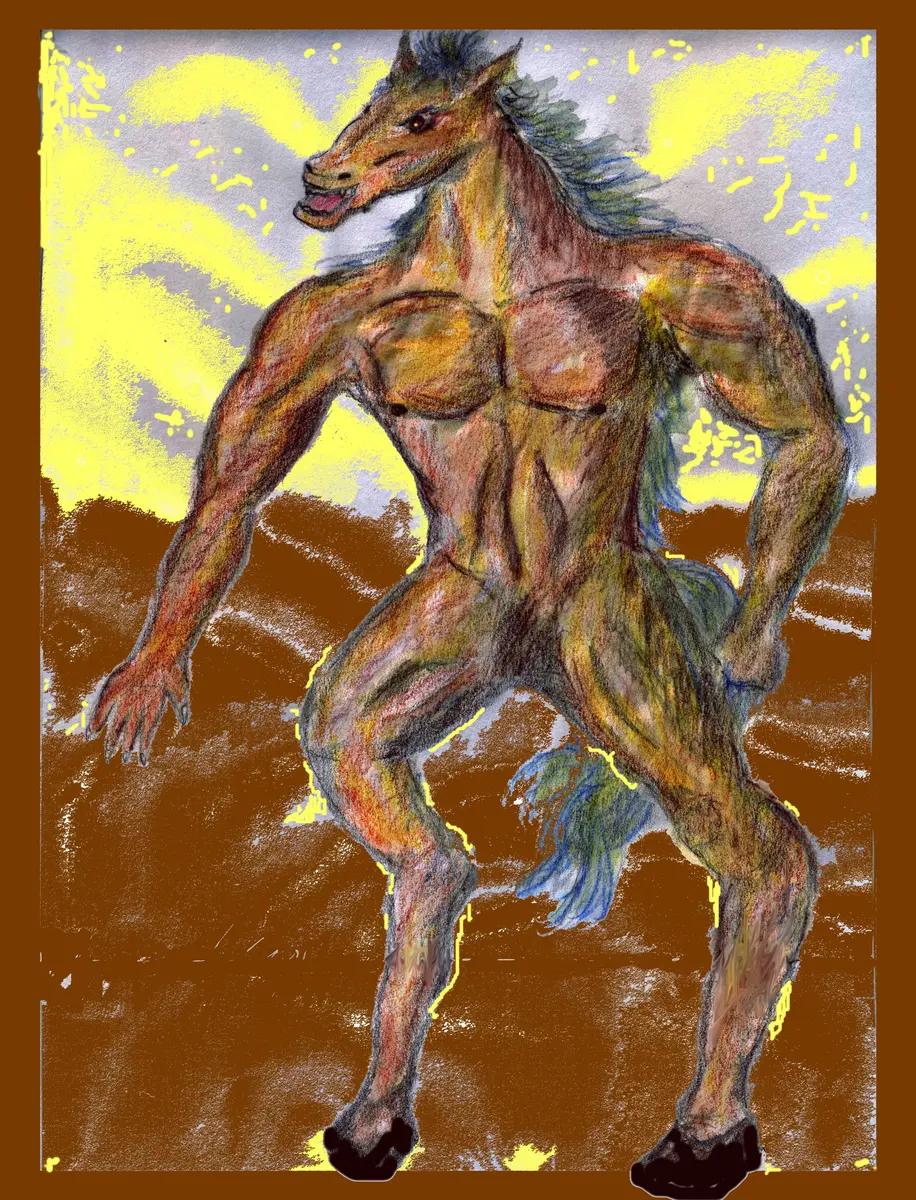
What it looked like changed a great deal after that. Around 1640 the Augustinian Casimiro Díaz collected eyewitness descriptions of a creature with a cat's face, a flattened head and legs so long that squatting its knees rose above its head. The horse appears only around 1731, in a friar's manual, as one of four shapes the devil might take. The tall, gaunt, horse-headed figure everyone now pictures was first described in detail in 1889 by the Filipino folklorist Isabelo de los Reyes, who also recorded the three thick quills in its mane, the middle one a powerful amulet for whoever can wrestle it free. Being led astray in the forest belongs to that story too, though not exclusively and not from the beginning. Walking in circles is real: without sight of the sun, people walk in circles without noticing.
What is the history of Tikbalang?
The tikbalang is a living piece of Philippine folklore, and its written record runs from the sixteenth century to a Netflix series. That long record is what allows it to be checked, and much of what circulates about it does not survive the check.
Start with the word. Tikbalang is the modern Tagalog spelling; the colonial record almost always writes tigbalang, and the very first appearance writes it tigbalaang. The date the internet repeats is 1613; the first appearance is in 1589, in the Franciscan Juan de Plasencia's relation on the worship of the Tagalogs — the companion piece to his Relación de las costumbres de los Tagalos, which he signed at Nagcarlán on 21 October of that year — and it is a single line: after listing the classes of native ritual specialists, Plasencia adds that "there were also ghosts, which they called vibit; and phantoms, which they called Tigbalaang". There is no horse and no description at all: the word is simply there, already in use, before any friar had had time to shape it.
What the friars did next is the interesting part, because they wrote it down and their bias is visible on the page. Around 1640 the Augustinian Casimiro Díaz, working in Panay, described monsters the Visayans called banuanhon and added: "They are called in the Tagal language Tigbalang; and many persons who have seen them have described to me, in the same terms, the aspect of the monster." The description follows: "They say that he has a face like a cat's, with a head that is flattened above, not round, with thick beard, and covered with long hair"; and "his legs are so long that, when he squats on his buttocks, his knees stand a vara above his head; and he is so swift in running that there is no quadruped that can be compared with him." The face Díaz's informants gave it was a cat's.
The horse arrives in the eighteenth century, first as one option among several. Around 1731 the Augustinian Tomás Ortiz, writing a manual for parish priests, listed the tigbalag "which some call a ghost and others a goblin" as the devil appearing "in the shape of a black man, or in the shape of an old man (or as they express it in the shape of a very small old man), or in the shape of a horse, or of a monster". In that sentence a Tagalog being is identified with the devil rather than described, and what worries the author is that people befriend it and "surrender their rosaries to him". Joaquín Martínez de Zúñiga repeated the complaint in 1803: the tigbalang "appears to them in the form of an animal or of some unknown monster". Two paragraphs earlier in the same chapter he recorded an older courtesy toward the places where the nono, the forbears, were believed to live, among them the large trees and the crags: people "never passed by them without asking permission of them — a thing which some of them do even yet". That is the ancestor of the phrase Filipinos still murmur on a dark path, tabi-tabi po, "excuse me, please step aside".
The dictionaries are drier and more useful. Noceda and Sanlucar's Vocabulario de la lengua tagala (Manila, 1754) glosses it flatly: "Tigbalang. pp. Fantasma de monte" — mountain phantom — and records how the word was actually used in speech: "Tigbalang ca mandin, eres una bestia montaraz", with the note "es afrenta": calling someone a tigbalang was an insult. Diego Bergaño's Kapampangan vocabulary of 1732, in its 1860 edition, has the same creature next door as a "duende de monte, agigantado, con patas de caballo", a giant goblin of the mountain with a horse's legs, and the lexicographer adds: "A este tono cuentan de él mil mentiras", in this vein they tell a thousand lies about it.
The horse-headed figure everyone now pictures is first described in detail not by a Spaniard but by a Filipino. In 1889 the Ilocano folklorist Isabelo de los Reyes published El folk-lore filipino, and in the Bulacan section devoted a chapter to El Tigbalang: a tall, gaunt, bony man, limbs so disproportionately long that squatting on his heels his knees rise above his head, human skin, and the head of a horse "with very hard quills like a porcupine's for a mane". Reyes also gives the detail that modern retellings have gilded: among the quills on its head there are three thicker than the rest, and each of them — above all the middle one — is a powerful anting-anting, an amulet. To get one, by Reyes's account, a man goes alone into the forest without telling anyone, finds the tikbalang squatting at the foot of the largest trees, throws it down, ties it with a blessed cord and holds on until it yields the middle quill; after that it serves him "like those genies of the Thousand and One Nights". Reyes's quills are three and thicker than the rest; the "3 golden hairs" in the English Wikipedia article carry no source there.
The belief kept being collected. Laura Watson Benedict placed the Tagalog tigbalag alongside the Bagobo tigbanua in 1916. Dean Fansler's Filipino Popular Tales (1921) prints a Tagalog story in which the angels who took neither God's side nor Lucifer's fall to earth, "those that fell in the forests became tigbalangs" — a folk theology that is Catholic in its raw material and entirely local in its result — and Fansler notes in passing that while duende is a Spanish import, "tigbalang, iki, mananangal — are good old native demons". The creature is still working: it appears in Trese, the komiks Budjette Tan and Kajo Baldisimo began publishing in October 2005, whose Netflix adaptation premiered on 11 June 2021, where a tikbalang named Maliksi races cars on a Manila expressway.
Timeline: the documented record of Tikbalang
- 1589 The Franciscan Juan de Plasencia signs his Relación de las costumbres de los Tagalos at Nagcarlán on 21 October, and in its companion relation on Tagalog worship records, in a single line, that the Tagalogs feared "phantoms, which they called Tigbalaang". This is the earliest attestation of the word verified here — with no description and no horse.
- 1613 Fray Pedro de San Buenaventura prints his Vocabulario de la lengua tagala at Pila, Laguna, on the press of Tomás Pinpin and Domingo Loag. The book is real and is quoted page by page by modern scholars, but no source consulted here attributes a tigbalang entry to it.
- c. 1640 The Augustinian Casimiro Díaz, describing missionary work in the mountains of Panay, identifies the Visayan banuanhon with what "they are called in the Tagal language, Tigbalang", and reports eyewitness descriptions: a cat's face, a flattened head, thick beard, long hair and legs so long that squatting the knees rise a vara above the head.
- c. 1731 In a manual for parish priests, the Augustinian Tomás Ortiz lists the tigbalag as the devil appearing "in the shape of a black man, or of an old man, or of a very small old man, or in the shape of a horse, or of a monster". It is the earliest mention of the horse among this file's sources, and it is one shape among four.
- 1732 Diego Bergaño's Kapampangan vocabulary records the same being in the neighbouring language: "Tigbalang, duende de monte, agigantado, con patas de caballo" — a giant goblin of the mountain with a horse's legs — and adds "A este tono cuentan de él mil mentiras", in this vein they tell a thousand lies about it. The word is not confined to Tagalog.
- 1754 Noceda and Sanlucar's Vocabulario de la lengua tagala is printed in Manila with the flat gloss "Tigbalang. pp. Fantasma de monte", plus the everyday usage "Tigbalang ca mandin, eres una bestia montaraz" and the warning "es afrenta" — it was an insult.
- 1803 Joaquín Martínez de Zúñiga complains that the tigbalang "appears to them in the form of an animal or of some unknown monster" and, two paragraphs earlier in the same chapter, records that people never passed the places where the nono, their forbears, were believed to live "without asking permission of them — a thing which some of them do even yet": the documented ancestor of tabi-tabi po.
- 1889 Isabelo de los Reyes publishes El folk-lore filipino. Chapter VII of the Bulacan section gives the first detailed horse-headed description — porcupine quills for a mane, three of them thicker than the rest, the middle one a powerful anting-anting. In the Tayabas section, however, it is the patianak that leads travellers astray, and the inside-out shirt is the remedy against it.
- 1892 W. E. Retana prints in Madrid the Spanish original of the eighteenth-century friar's note on the tigbalang, and adds his own dismissal in a footnote: "siendo así que el Tigbálang es imaginario" — since the tigbalang is imaginary — a century and a half after Bergaño's Kapampangan vocabulary had said of it "cuentan de él mil mentiras".
- 1916 Laura Watson Benedict, publishing her Bagobo fieldwork in the Annals of the New York Academy of Sciences, sets the Tagalog tigbalag alongside the Bagobo tigbanua and the Visayan banuanhon, and notes that such wood-demons were believed to bewilder people in the forest.
- 1917 Leonard Bloomfield publishes Tagalog Texts with Grammatical Analysis, dictated by the Tagalog speaker Alfredo Viola Santiago. Its account of the mangkukulam shows what nakukulam actually means — bewitched by a human sorcerer — and settles that it has nothing to do with losing one's way.
- 1921 Dean Fansler's Filipino Popular Tales prints a Tagalog story explaining that the angels who took neither side in Lucifer's revolt fell to earth, and "those that fell in the forests became tigbalangs". Fansler notes that duende is a Spanish import but tigbalang is native.
- 1994 William Henry Scott publishes Barangay, whose roster of sixteenth-century Tagalog beings lists the tigbalang as "a winged forest phantom that kidnaps men", tall and long-haired with very small feet and a fine G-string — and lists the mankukulam separately, as a witch.
- October 2005 Budjette Tan and Kajo Baldisimo begin publishing the komiks Trese, in which a tikbalang named Maliksi street-races cars in Manila. The Netflix animated adaptation premiered on 11 June 2021.
- 2009 Jan Souman, Ilja Frissen, Manish Sreenivasa and Marc Ernst publish "Walking Straight into Circles" in Current Biology: GPS tracking in the Sahara and the Bienwald forest shows that without sun or moon, walkers spiral into unnoticed circles, sometimes crossing their own path within twenty minutes.
Is there a rational explanation for Tikbalang?
Three details attached to the tikbalang do not survive the sources.
The first is the date: the English Wikipedia article states, without a footnote, that the word is already in fray Pedro de San Buenaventura's Vocabulario de la lengua tagala of 1613. The book is real: San Buenaventura, a Discalced Franciscan, printed it at Pila, Laguna, in 1613, on the press of Tomás Pinpin and Domingo Loag, and William Henry Scott quotes it by page throughout Barangay. Scott gives no page for a tigbalang entry in it, and the date is superseded anyway: the word is in Plasencia in 1589, twenty-four years earlier.
The second is a word: nakukulam means bewitched, and it belongs to a different agent altogether: the kulam is the sorcerer's power, and the mangkukulam or magkukulam is a human witch. Leonard Bloomfield's Tagalog Texts (1917), dictated by the Tagalog speaker Alfredo Viola Santiago, describes exactly that: the sorcerer carries his kulam even while bathing, and "ang taong nakukulam niya", the person he has bewitched, eats like two men. The mangkukulam is already on Plasencia's 1589 list of ritual specialists, and Scott's roster of sixteenth-century Tagalog beings keeps the two apart: the mankukulam is a witch who appears at night as if burning, the tigbalang a winged forest phantom. For losing the road Tagalog uses the ordinary verb from ligaw, to stray, and the phrase is that someone was led astray by the tikbalang.
The third is the shirt: the Wikipedia article gives wearing a shirt inside out as the countermeasure against the tikbalang. In the Tayabas section of El folk-lore filipino (1889), Isabelo de los Reyes attaches that remedy to a different being: he writes of "the patianak that leads the traveller astray with an infant's wails, the remedy for which is to put your shirt on inside out", while the tikbalang appears in the same sentence as a giant fish-eater with a horse's head and feet.
Being carried off and lost is attested early: Casimiro Díaz reported around 1640 that some who met these beings "go away with these demons, and are lost for a long time, and then will return in a terrified and fainting condition". The underlying experience has been measured: in 2009 Jan Souman, Ilja Frissen, Manish Sreenivasa and Marc Ernst tracked walkers by GPS for several hours in a large forest and in the Sahara, and reported in Current Biology that participants repeatedly walked in circles when they could not see the sun; blindfolded, they walked in circles often less than 20 m across. A dense tropical forest at dusk hides the sun as well.
Can you visit Tikbalang?
The written trail is the part of this that can be visited, and all of it is free. Isabelo de los Reyes's El folk-lore filipino (Manila, 1889) is on the Internet Archive, with the Tigbalang chapter beginning at page 66. Noceda and Sanlucar's Vocabulario de la lengua tagala (Manila, 1754) is there as well, scanned from the John Carter Brown Library copy, with Tigbalang glossed in the T section. Plasencia, Díaz, Ortiz and Martínez de Zúñiga all sit inside Blair and Robertson's The Philippine Islands, 1493-1898, whose volumes are whole on Project Gutenberg.
Reyes collected his Bulacan material around Baliwag and Angat, and set his tikbalang-tamer story in the hills of Angat. Measured from Rizal Park in Manila, Angat lies 39 km due north and Baliwag 42 km north-north-west; from the Cubao terminals, where the buses leave, the figures are 34 and 41 km. The Tayabas material came from what is now Quezon province.
Mount Makiling, above Los Baños in Laguna, is a forest reserve run by the Makiling Center for Mountain Ecosystems of the University of the Philippines Los Baños. Its published access protocol, read on 22 September 2026, has the Mariang Makiling Trail open "FROM 6:00 AM TO 2:00 PM", sets the cut-off for the climb to Peak 2 at nine in the morning and requires everyone to log out by four in the afternoon. Registration is online or in person at Monitoring Station 1, permits for the heavier activities take three to ten working days, and pets are barred. The rule at the gate is printed in capitals: "NO VALID ID, NO ENTRY."
The National Museum of Anthropology stands on P. Burgos Drive, Rizal Park, Manila, telephone (+632) 8298-1100, with bookings through its own reservation site. The museum's visitor guidelines, read the same day, say that admission is free, that group tours run Tuesday to Saturday while "Sundays, Mondays, and holidays are exclusive for walk-in visitors", and that parties of twenty or more must book at least three working days ahead because "Same-day bookings will not be entertained". Every visitor leaves a valid identification card at registration. Photographs are allowed inside; camera flash and live animals are prohibited.
Martínez de Zúñiga put the underlying courtesy in print in 1803. Writing of the crags and great trees where the nono were thought to live, he says that people "never passed by them without asking permission of them--a thing which some of them do even yet". On a country path at dusk that permission still gets asked, in three words: tabi-tabi po.
Sources consulted
- Juan de Plasencia, «Relation of the Worship of the Tagalogs (companion to the Relación de las costumbres de los Tagalos, signed Nagcarlán, 21 Oct. 1589), in The Philippine Islands, 1493-1898, vol. VII» — Blair & Robertson (eds.), Cleveland, 1589 archive
- Casimiro Díaz, «Conquistas de las Islas Filipinas (mission in the mountains of Panay), in The Philippine Islands, 1493-1898, vol. XXIX, pp. 269-270» — Blair & Robertson (eds.), Cleveland, 1640 book
- Tomás Ortiz, O.S.A., «Superstitions and beliefs of the Filipinos (from Práctica del ministerio), no. 34, in The Philippine Islands, 1493-1898, vol. XLIII» — Blair & Robertson (eds.), Cleveland, 1731 archive
- Joaquín Martínez de Zúñiga, O.S.A., «Historia de las Islas Philipinas (Sampaloc, 1803), extract in The Philippine Islands, 1493-1898, vol. XLIII» — Blair & Robertson (eds.), Cleveland, 1803 book
- Juan José de Noceda y Pedro de Sanlucar, «Vocabulario de la lengua tagala, s.v. Tigbalang ("Fantasma de monte")» — Imprenta de la Compañía de Jesús, Manila, 1754 book
- Diego Bergaño, «Vocabulario de la lengua Pampanga en romance, s.v. Tigbalang ("duende de monte, agigantado, con patas de caballo")» — Manila (ed. consulted: 1860), 1732 book
- Isabelo de los Reyes y Florentino, «El folk-lore filipino, tomo I: "Folk-lore bulaqueño VII. El Tigbalang" (pp. 66-69) and "Folk-lore tayabeño VI. Supersticiones" (pp. 133-134)» — Manila, 1889 book
- Wenceslao E. Retana, «Supersticiones de los indios filipinos: un libro de aniterías (note 24 on the Tigbálang)» — Madrid, 1892 book
- Leonard Bloomfield, «Tagalog Texts with Grammatical Analysis (texts dictated by Alfredo Viola Santiago), University of Illinois Studies in Language and Literature» — University of Illinois, Urbana, 1917 academic
- Laura Watson Benedict, «A Study of Bagobo Ceremonial, Magic and Myth, Annals of the New York Academy of Sciences» — New York Academy of Sciences, 1916 academic
- Dean S. Fansler, «Filipino Popular Tales ("Mabait and the Duende", and note 76 on native versus Spanish spirits)» — American Folk-Lore Society, Lancaster & New York, 1921 book
- William Henry Scott, «Barangay: Sixteenth-Century Philippine Culture and Society (roster of Tagalog supernatural beings; bibliography entry for San Buenaventura 1613)» — Ateneo de Manila University Press, 1994 book
- Jan L. Souman, Ilja Frissen, Manish N. Sreenivasa & Marc O. Ernst, «Walking Straight into Circles, Current Biology 19(18), pp. 1538-1542» — Current Biology, 2009 academic
- Wikipedia contributors, «Tikbalang (English Wikipedia article: uncited source of the "1613" claim and of the "three golden hairs")» — Wikipedia, 2026 web
Reviewed by V. Serrano on 2026-08-11 · How we verify our content
📎 Source: Enigma Atlas
💬 Field testimonies (0)
No testimonies yet. Add the first.
Add your testimony
🔒 Log in to add a testimony