🦶 CRYPTID SIGHTING · EXP. Nº6501
ACTIVE
Aswang
The aswang is not one creature. It is a family of beliefs spread across the Philippine lowlands and highlands, whose names and shapes change from language to language: manananggal and mandurugo in Tagalog and Bicol; wakwak, ongo and mangalok in the Visayas; saan nakatawtawan in Ilocano.
Where and when was Aswang sighted?
- Location
- Filipinas, Philippines
- Date sighted
- Unknown
- Coordinates
- 11.5, 122.75
- Last updated
LOCATION
What is Aswang?
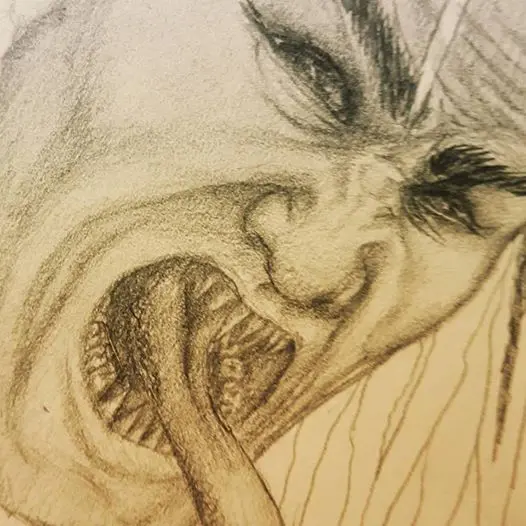
The written record begins with the Franciscan Juan de Plasencia, who listed the osuang among the "priests of the devil" in Nagcarlán on 21 October 1589, noting that Visayans claimed to have seen him fly and eat human flesh. Modern scholarship sorts the complex into five types: the vampire, the viscera-sucker that detaches its upper torso to fly, the weredog, the invisible ghoul drawn to wakes, and the witch who lives inside the community. Three explanations cover most cases without requiring anyone to lie: X-linked dystonia-parkinsonism (lubag) on Panay, social scapegoating of disabled villagers, and a 1950s psywar operation, described by Edward Lansdale in his own memoir, that seeded aswang rumors to terrorize a Huk guerrilla patrol. The label costs real people dearly.
What is the history of Aswang?
The aswang is not a creature. It is a family of beliefs, and treating it as a single monster is the first mistake an outsider makes.
The anthropologist Raul Pertierra, writing in Philippine Studies in 1983, called it the asuang-complex: a set of images present in most lowland and many highland Philippine communities, whose vocabulary changes from one language to the next. Tagalog and Bicol speakers say mananangal and mandurugo; Visayans say mansaluan, wakwak, ongo, mangalok; Ilocanos say saan nakatawtawan. Following the folklorist Maximo Ramos, Pertierra sorts the field into five kinds. The vampire, often a beautiful young woman who marries a man in order to drink from him. The viscera-sucker, who by day is an ordinary woman and by night discards the lower half of her body and flies off to feed through a long tongue on internal organs, foetuses, infants and the exuviae of the sick. The weredog, usually associated with men, who becomes an outsized black dog, pig or cat. The ghoul is generally invisible and is drawn to the smell of death and to houses where a wake is being held. And the witch: a man or a woman living inside the community who makes people ill.
The written record begins with the friars. On 21 October 1589, in Nagcarlán, the Franciscan Juan de Plasencia listed twelve classes of what he called priests of the devil. "The eighth they called osuang, which is equivalent to 'sorcerer;' they say that they have seen him fly, and that he murdered men and ate their flesh." Plasencia adds where: "This was among the Visayas Islands; among the Tagalos these did not exist." The seventh was the magtatangal, "whose purpose was to show himself at night to many persons, without his head or entrails". The sixth was the silagan, who tore out the liver of anyone seen clothed in white and ate it. First on the same list stands the catolonan, the community's own priest, who "was either a man or a woman"; the office, Plasencia concedes, "was an honorable one among the natives, and was held ordinarily by people of rank".
Pertierra's sharpest observation is where the belief clusters: pregnancy, illness and death. An unexpected miscarriage, a healthy-looking person who wastes away — the asuang explained them. Martín de Zúñiga described in 1803 a husband posted naked beneath the house during his wife's delivery, waving a sword to keep the asuang away from the birth. Lights were kept burning through childbirth, sickness and wakes. Midwives (parteras) were credited with unusual powers and could be suspected of causing miscarriages.
Timeline: the documented record of Aswang
- 21 October 1589 In Nagcarlán, the Franciscan Juan de Plasencia lists twelve classes of "priests of the devil". The eighth is the osuang, "which is equivalent to 'sorcerer;' they say that they have seen him fly, and that he murdered men and ate their flesh". The same list opens with the catolonan, the community's own priest, man or woman.
- 1803 Martín de Zúñiga's history describes a rite against the asuang at childbirth: the husband stationed naked beneath the house, waving a sword so that nothing interferes with his wife's delivery. Pertierra later uses it as evidence that the belief clusters around pregnancy, illness and death.
- 1972 Edward Lansdale publishes In the Midst of Wars, describing how, during the anti-Huk campaign of the early 1950s, a combat psywar squad seeded asuang rumours and left a drained, neck-punctured body on a guerrilla trail. Every later retelling traces back to this account by its own author.
- 1976 X-linked dystonia-parkinsonism enters the medical literature: twenty-eight adult male cases of torsion dystonia from twenty-five families. On Panay the disease is called lubag, and it produces exactly the slow bodily transformation that outsiders had no name for.
- 1983 Raul Pertierra publishes "Viscera-Suckers and Female Sociality" in Philippine Studies, arguing that the asuang is not one creature but a complex of beliefs, and that its most dangerous forms are women who attack men or women in labour.
- 2000-2002 Kentarō Azuma documents the case of "Hans" in a barangay of Roxas City: an old, disabled, alcohol-dependent widower whose neighbours cite his stoop, his stare and his wife's death as proof that he is an aswang. Azuma also records that some kin and friends refuse the label and feed him.
- 2004 Dugo Capiznon, a group of young professionals in Roxas City, launches the Aswang Festival, an attempt to turn a stigma into tourism.
- October 2006 The last Aswang Festival is held. Pastor Rey Calusay of First Assembly Missions objects that it "brings shame and embarrassment to our people"; the mayor who supported it leaves office, sponsorship collapses, and the festival is not revived.
- April 2025 An aswang float in the Capiztahan parade in Roxas City reopens the argument. In The Capiz Times, Erwin Bonifacio replies that "the aswang stigma will never define us as a people" and argues for education rather than denial.
Is there a rational explanation for Aswang?
Three explanations do most of the work, and none requires anyone to be lying.
The first is medical. X-linked dystonia-parkinsonism, known on Panay as lubag, is a genetic movement disorder found almost only in adult men of Panay ancestry. It strikes someone working and thinking normally, then twists posture, gait and face over years. Eva Maria Cutiongco-de la Paz, of the University of the Philippines National Institutes of Health, told BusinessMirror in 2023 that outsiders "could not explain these transforming persons". It entered the medical literature in 1976, from twenty-eight adult men in twenty-five families; Jordan Clark, citing "the most recent studies", places 93 per cent of current cases on Panay and 63 per cent of those in Capiz. The symptoms Pertierra lists for asuang attacks — wasting, anaemia, diarrhoea — are also those of tuberculosis, parasites and malnutrition.
The second is the scapegoat. Between 2000 and 2002 the anthropologist Kentarō Azuma followed one accused man in a barangay of Roxas City, whom he calls Hans: mid-seventies, widowed, childless, alcohol-dependent, unable to walk without two sticks after a truck hit him. Every one of those facts was offered as evidence — the stooped, floating walk, the stare. Azuma's finding is a cruel circle: the misfortunes that made Hans need help were read as proof of what he was, and being what he was excused the neighbours from helping. He records the other half too: his brother took him in, a friend lent him a hut and shared rice.
The third is deliberate. Edward Lansdale, who ran psychological operations against the Huk rebellion, wrote in his memoir that a psywar squad seeded asuang rumours, ambushed a guerrilla patrol, punctured the last man's neck "with two holes, vampire-fashion", drained him and left the body on the trail. Every retelling traces back to Lansdale telling it about himself.
Can you visit Aswang?
Capiz sits on the north coast of Panay, and its capital, Roxas City, would rather be known as the Seafood Capital of the Philippines. It had 185,236 residents at the 2024 census. Roxas Airport handles three to four daily flights to Manila; by road the city is 116 km from Iloilo City, about two hours, and 86 km from Kalibo. Ang Panublion Museum, in town, occupies a converted municipal water tank. The big fiestas are Capiztahan, in the second week of April, and Sinadya sa Halaran, in the first week of December.
The Aswang Festival is not one of them. Launched in 2004 by Dugo Capiznon, young professionals who wanted to turn the label around, it ran three years and stopped after October 2006: Pastor Rey Calusay of First Assembly Missions argued that it "brings shame and embarrassment to our people", the mayor who had backed it left office, and the sponsorships dried up. It has not returned. When an aswang float appeared in the Capiztahan parade in April 2025, the argument reopened in the local press.
One request, and it is not decorative. Do not go to Capiz looking for a monster, do not ask to be shown one, and do not point a camera at an elderly person with a movement disorder. Azuma met open hostility when he arrived, because people there are tired of the label. In Capiz the aswang is not an attraction; it is something said about a neighbour, and it costs that neighbour dearly.
Sources consulted
- Fray Juan de Plasencia, O.S.F., «Customs of the Tagalogs (two relations), Nagcarlán, 21 October 1589» — In E. H. Blair & J. A. Robertson (eds.), The Philippine Islands, 1493-1898, vol. 7, 1589 archive
- Raul Pertierra, «Viscera-Suckers and Female Sociality: The Philippine Asuang» — Philippine Studies: Historical and Ethnographic Viewpoints, vol. 31, no. 3, pp. 319-337, 1983 academic
- Kentarō Azuma (東賢太朗), «Witchcraft and Plural Reality: A Case of a Witch in L. Village, Capiz, Panay, the Philippines» — Studies in Cultural Anthropology / 文化人類学研究, vol. 3, pp. 144-165, 2002 academic
- Edward G. Lansdale, «In the Midst of Wars: An American's Mission to Southeast Asia» — Harper & Row, New York (reprinted by Fordham University Press, 1991), 1972 book
- Lyn Resurreccion, «Science explains the 'aswang' myth in Panay» — BusinessMirror, 2023 newspaper archive
- Jordan Clark, «ASWANG FESTIVAL in Roxas City, Capiz — What Happened?» — The Aswang Project, 2015 web
- Jordan Clark, «The truth about the ASWANG in Capiz» — The Aswang Project — source of the XDP (lubag) distribution figures: 93 per cent of current cases on Panay, 63 per cent of those in Capiz, given 'according to the most recent studies', 2022 web
Reviewed by V. Serrano on 2026-07-29 · How we verify our content
📎 Source: Enigma Atlas
💬 Field testimonies (0)
No testimonies yet. Add the first.
Add your testimony
🔒 Log in to add a testimony