📜 LEGEND · EXP. Nº3657
ACTIVE
Maria Makiling, Guardian of the Mountain
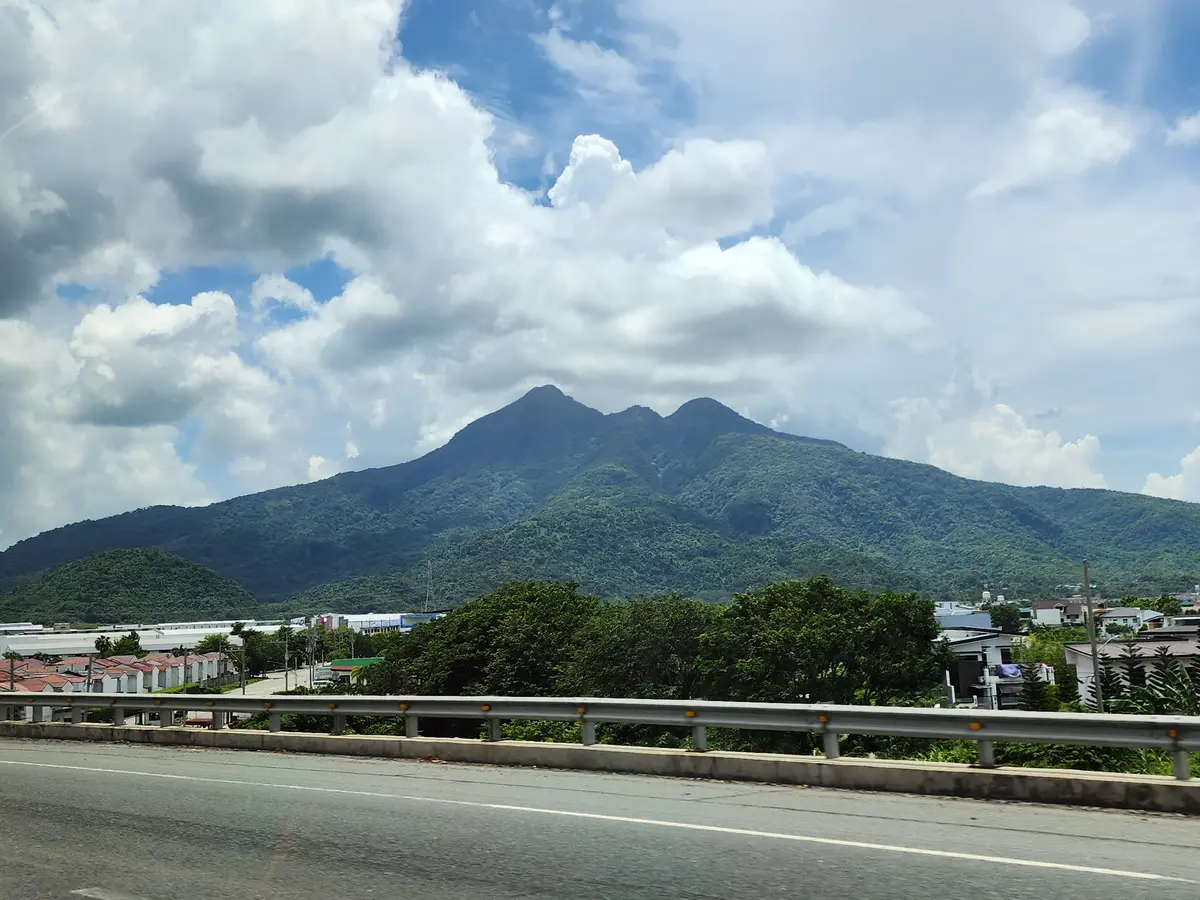
Mount Makiling, the 1,130-metre volcanic mountain that Los Banos, Bay and Calamba in Laguna share with Santo Tomas in Batangas, is named after a Tagalog word that simply means to lean or tilt.
Where does the legend of Maria Makiling, Guardian of the Mountain come from?
- Location
- Laguna, Philippines
- Kind of legend
- Folk tale
- Coordinates
- 14.135, 121.195
- Last updated
LOCATION
What is the legend of Maria Makiling, Guardian of the Mountain?
The woman who is said to live on it enters the written record twice within six weeks, both times through Jose Rizal: a long narrative he dated in Madrid on 23 November 1890 and left in manuscript, and the short essay La Solidaridad published on 31 December 1890 under his pen name Laong Laan. In them she lends clothes and jewels for weddings against their return plus a white pullet, keeps the wild boars, forbids hunting on Saturdays, and turns pieces of ginger into gold. Rizal gives three rival reasons why she stopped appearing, and one of them is that the Dominican friars were taking half the mountain from her - written while those same friars were evicting his family from the Hacienda de Calamba. The version with jealous suitors and a killing is not his: it comes from an online retelling archived in 2003. Rizal himself climbed Makiling looking for her and wrote: I saw nothing, I heard nothing.
What is the history of Maria Makiling, Guardian of the Mountain?
Mount Makiling is a 1,130-metre volcanic mountain shared by the Laguna towns of Bay, Los Banos and Calamba and by Santo Tomas in Batangas, with boiling mud springs and hot springs at its feet. Its name is an ordinary Tagalog word before it is a woman's name: the Vocabulario de la lengua tagala compiled by Juan de Noceda and Pedro de Sanlucar, in the Manila edition of 1860, glosses "quiling" as to lean, to incline, to tilt, and gives the phrase "ibinibitin nang di maquiling" for something hung so that it does not tilt. The same root carries the dictionary into ethics: it renders "desapasionadamente" as "ualang pag quiling", without leaning, and "imparcial" as "ualang quiniquilingan".
Everything else that can be dated begins with Jose Rizal, and it begins twice within six weeks. On 23 November 1890, in Madrid, he finished a long narrative he headed "Mariang Maquiling (Leyenda Tagala)"; the manuscript went to the Biblioteca Nacional and the text was only printed in 1961, in the appendix to the third volume of his prose. Then, on 31 December 1890, the Madrid fortnightly La Solidaridad published a much shorter essay, "Mariang Makiling", signed with his pen name Laong Laan. The Library of Congress catalogue record for the 1916 English translation by Charles Derbyshire, Mariang Makiling: a Philippine Folk-Tale, still carries the note fixing that date and that pseudonym.
The two texts do not tell quite the same story, and neither tells the one usually attributed to them. Rizal opens the published essay by saying the legend is preserved "in my town" — Calamba, at the foot of the mountain — and he names his informants by trade rather than by name: an old family servant who had once killed a bandit with a spear thrust and who had seen the woman as a child; the nephew of one of two hunters who met something with enormous tusks on a moonlit night; and a woodcutter who had lived seventy years and spent sixty-five of them felling the oldest trees of Makiling. Through those three the chain of transmission reaches back, by their own ages, to the first decades of the nineteenth century.
What Maria Makiling actually did in those texts is precise and worth restoring. She did not receive offerings. She ran a loan: peasants who needed clothes or jewels for a wedding or a christening borrowed them from her on condition that they returned them and added a "dumalaga", a white pullet that had not yet laid. She kept the wild boars and forbade a hunter to kill hers, fed him, and sent him home with pieces of ginger that his wife found the next morning turned to solid gold. In the longer version she also buys two white hens from an old woman, gives the same hunter garlic, onions and ginger, and lays down two rules: never hunt on Saturdays and never kill a doe. That same version opens on a remembered abundance, "when the birds of the field and the fish of the river were not yet fiercely hunted as they are today" — a line of Rizal's own, written in 1890.
Rizal gives three competing explanations for her disappearance, and presents them as competing. Some blamed the people of a certain town who had neither returned the borrowed goods nor handed over the customary white hen. Those villagers indignantly rejected the charge and said instead that she was offended "because the Dominican friars want to strip her of her domains, appropriating half the mountain". That is not a metaphor: the Dominicans had held the Hacienda de Calamba since 1833, and, as Filomeno V. Aguilar Jr. documents, the evictions of leaseholders from that estate ran from 1888 to 1891 and began with Rizal's own family. He wrote the sentence while it was happening to him. The third explanation, which he says is less known but more probable, came from the old woodcutter, and it is the plot of the long version: a young farmer whom she had silently protected agreed to marry a village girl to escape conscription; on the eve of the wedding she met him on the road, gave him the bridal clothes and jewels, told him he had lacked the courage to trust her, and left. In the long text the bridegroom is called Juan, the bride Sinang; a fire breaks out on the mountainside during the wedding feast, Juan vanishes, and three years later a herdsman finds a skeleton on a flat stone by a stream, with no jewels on it, only a few small earthenware buttons.
After Rizal the story travelled through print. Derbyshire's translation of 1916 carried it into English. In 1966 the publisher Alberto S. Florentino issued The Legend of Mariang Makiling, an adaptation by Eva Maria Florentino for a Young Readers series, and in 1983 the Children's Communication Center published Rene O. Villanueva's adaptation in its Adarna books series. Resil B. Mojares made it the title essay of Waiting for Mariang Makiling: Essays in Philippine Cultural History (Ateneo de Manila University Press, 2002), and, as Caroline S. Hau summarised in her review the following year, he traced how it has been retold with competing agendas — as a lesson in cleanliness and gratitude, as a tale of paradise lost and of relations with nature and among people broken by colonial rule, recast in prose by Macario Pineda after the war and in verse by Jose F. Lacaba in the years before martial law.
Timeline: the documented record of Maria Makiling, Guardian of the Mountain
- 1754, Manila edition of 1860 The Vocabulario de la lengua tagala of Juan de Noceda and Pedro de Sanlucar records "quiling" as to lean, incline or tilt, and "ualang pag quiling" as impartial, without leaning. The word that names the mountain is in the dictionary thirty years before any story about the woman is printed.
- 1889 Isabelo de los Reyes publishes El Folk-Lore Filipino in Manila, with sections on the folklore of Tayabas, Bulacan and Pampanga. Neither Makiling nor Mariang appears anywhere in the volume consulted.
- 23 November 1890 In Madrid, Jose Rizal dates and signs as Laong Laan a long narrative headed "Mariang Maquiling (Leyenda Tagala)", with the farmer Juan, his bride Sinang, the wedding fire and the skeleton found three years later. The manuscript is kept at the Biblioteca Nacional and stays unpublished until 1961.
- 31 December 1890 La Solidaridad, the fortnightly of the Filipino propagandists in Madrid, publishes the short essay "Mariang Makiling" over the pen name Laong Laan. It names three competing reasons for her disappearance, one of them that the Dominican friars "want to strip her of her domains, appropriating half the mountain".
- 1888-1891 The Dominican owners of the Hacienda de Calamba, held since 1833, evict their leaseholders one after another, beginning with Rizal's own family. He wrote the Makiling essay in the middle of this dispute.
- 1916 Charles Derbyshire's English translation, Mariang Makiling: a Philippine Folk-Tale, is published in Manila in 31 pages. Its Library of Congress record carries the note that the piece originally appeared in La Solidaridad on 31 December 1890 under the pen name Laong-Laan.
- 20 June 1963 Republic Act No. 3523 disestablishes Mt. Makiling as a national park and cedes it to the University of the Philippines, listing the municipalities of Bay, Los Banos and Calamba in Laguna and Santo Tomas in Batangas.
- 1966 The publisher Alberto S. Florentino issues The Legend of Mariang Makiling, Rizal's tale adapted by Eva Maria Florentino and illustrated by Carlos Valino Jr., in a Young Readers series.
- 1983 The Children's Communication Center in Quezon City publishes Mariang Makiling, adapted by Rene O. Villanueva and illustrated by Aelberto Escarriaga, in its Adarna books series.
- 15 October 1990 Republic Act No. 6967 vests exclusive jurisdiction over the Mount Makiling forest reserve in the University of the Philippines Los Banos, to be conserved primarily as a training laboratory, and orders its watersheds preserved for hydro-geothermal power.
- 2002 Resil B. Mojares makes the legend the title essay of Waiting for Mariang Makiling: Essays in Philippine Cultural History, arguing that it has been retold with competing agendas, including as a tale of relations with nature and among people broken under colonial rule.
- 4 December 2003 The earliest archived copy of Michelle Lanuza's online retelling "The Legend of Maria Makiling" is captured. It introduces the three suitors - Captain Lara, Joselito and Juan - and the framing of Juan for arson, and calls Maria a diwata.
- 11 April and 9 October 2007 The Lanuza version is pasted into the English Wikipedia article on 11 April 2007 and given its "The Three Suitors" heading and its source link on 9 October. Rizal's own version is added to the same article later that day.
- 3 October 2013 The Mount Makiling Forest Reserve is declared the 33rd ASEAN Heritage Park at a ceremony in the Makiling Botanic Gardens - the fifth in the Philippines, the first in Luzon and the first in the network managed by a university.
Is there a rational explanation for Maria Makiling, Guardian of the Mountain?
The first skeptic of this legend is the man who fixed it in print. Rizal ends the 1890 essay by saying that he had wandered the slopes of Makiling several times calling her up, had listened in the silence of the forest for her harp and had let night catch him there to see whether her figure would float past in a moonbeam: "Nada he visto, nada he oido" — I saw nothing, I heard nothing. He climbed to the summit and found delightful places worthy of gods and goddesses, and neither the enchanted palace nor the humble hut. Earlier in the same page he had already turned the contradiction between his witnesses into a joke: some described a palace bright as a gold reliquary, others a wretched hut with patched roof and sawali walls, which, he wrote, could mean that both parties were lying handsomely — or that she kept two houses, like many well-off people. The long version is blunter still: not everyone believed, some denied it outright, others tried to explain the marvels away, and those who went up looking for her in order to mock came back with fevers and headaches. Rizal signs off with "Si esto es cierto o no, yo no lo sé": whether this is true or not, I do not know.
The second skeptical point is about our own text rather than about the mountain. The version most often summarised in English — the one in which two rival suitors, one of them a Spanish soldier, fight over Maria until one kills the other — is in neither of Rizal's texts. The Spanish words for suitor and for Spaniard return zero hits across the 8,321 words of the two texts, and the word rival appears exactly once - and there it describes the bride's own discarded suitors pitying her, not anyone competing for Maria. The controls in the same pass returned Makiling and Maquiling 31, hunter 17 and gold 7. The only soldier anywhere in either text is a Guardia Civil private who went along, as a tourist, on Rizal's own climb to the summit. Its actual source can be dated: an online retelling by Michelle Lanuza, "The Legend of Maria Makiling", archived on 4 December 2003, in which three suitors court her — Captain Lara, a Spanish soldier; Joselito, a Spanish mestizo; and Juan, a farmer — and in which nobody kills anybody in a duel: the two rejected men have Juan framed for burning the Spanish barracks and shot in the plaza, and Maria curses them. That text was pasted into the English Wikipedia article on 11 April 2007 and given its section heading and its source link on 9 October 2007; Rizal's own version does not appear in that article until later the same day.
The name "Gat Ambaw", which our earlier text offered for one of those suitors, has no source at all. It returns zero in both Rizal texts, zero in a full-text search of the English Wikipedia, zero in a sweep of that article's 2007 revisions, and zero in a general web search — against controls returning fourteen and twenty-four hits for "Mariang Makiling" on the English and Tagalog Wikipedias in the same passes.
Finally, the age of the story. Rizal's informants push the oral tradition well back into the nineteenth century, and there is no reason to doubt them; a story is not an invention because its first surviving print is late. But no printed version earlier than November 1890 has been located here. Isabelo de los Reyes published El Folk-Lore Filipino in Manila in 1889, the year before, with sections on the folklore of Tayabas — the province Rizal himself names as the mountain's boundary, although the 1963 statute places Makiling in Laguna and Batangas — and of Bulacan and Pampanga: in the 68,642-word scan consulted, "Makiling" and "Maquiling" appear zero times and "Mariang" zero times, against controls in the same pass of Tayabas 23, monte 21, duende 8, hada 6, tigbalang 5 and Laguna 5. That is suggestive and no more: de los Reyes' coverage is regionally uneven and does not include a Laguna section.
Can you visit Maria Makiling, Guardian of the Mountain?
Mount Makiling stopped being a national park in 1963. Republic Act No. 3523, approved on 20 June 1963, disestablished it as a national park and ceded it to the University of the Philippines, describing it as the parcel of public domain situated in the municipalities of Bay, Los Banos and Calamba in Laguna and Santo Tomas in Batangas. Republic Act No. 6967, approved on 15 October 1990, vested "exclusive jurisdiction, administration and complete control" of the forest reserve in the University of the Philippines Los Banos, to be conserved "primarily as a training laboratory", and told the university to preserve its watershed areas "for the development of hydro-geothermal power". The reserve is run by the Makiling Center for Mountain Ecosystems (MCME), part of the university's College of Forestry and Natural Resources, whose website, read on 24 September 2026, gives its extent as 4,244 hectares. According to Pia Ranada's report in Rappler of 3 October 2013, it was named the 33rd ASEAN Heritage Park that day at a ceremony in the botanic gardens at Los Banos: the fifth in the Philippines, "the first in Luzon and the first to be managed by the academic sector".
The main route up bears the legend's name. MCME describes the Mariang Makiling Trail as an 8-kilometre trek from Station 1, near the centre's office, to Station 30 on Peak II, through the Molawin-Dampalit watershed on the eastern slopes. Along it are Flatrocks, where the Molawin Creek runs over slabs of rock a few hundred metres from Station 1, and the Mudspring, six kilometres from Station 1, where mud pots, a type of hot spring, have formed on ground left by the mountain's volcanic past. The centre's access protocol for the trail, first posted on 10 May 2018 and last modified on 22 September 2026, sets the rules. The trail is open from 6am to 2pm, with a cut-off at 9am for the climb to Peak II, and campers holding a permit may enter until 4pm. Peak III may not be reached from Station 1. Registration is done online or in person at Station 1, where a valid identity document is left and returned only when the whole group has logged out, which must happen by 4pm. The protocol puts the entrance fee at 10 pesos a person, requires a briefing for all visitors and bans pets. For its Make it Makiling week of 29 March to 5 April 2026, MCME promoted two entry points, the trail through the university at Los Banos and the EcoPark at Santo Tomas in Batangas, and discouraged the use of any other. That page gives the centre's contacts as [email protected] and +63 908 814 5993.
Rizal climbed to the summit himself, and his 1890 essay records the conditions of the trip: it was "aquella famosa ascensión que los frailes calificaron de filibustera, a pesar de venir con nosotros un oficial y un soldado de la Guardia civil en calidad de turistas". What he describes finding up there is forest, with lianas, parasitic plants, giant ferns and palms of every kind.
Sources consulted
- Jose Rizal, «Mariang Makiling (published in La Solidaridad, Madrid, 31 December 1890, signed Laong Laan)» — Prosa por Jose Rizal, vol. III, Jose Rizal National Centennial Commission, pp. 92-98, 1890 book
- Jose Rizal, «Mariang Maquiling (Leyenda Tagala), dated Madrid, 23 November 1890; manuscript in the Biblioteca Nacional» — Prosa por Jose Rizal, vol. III, Jose Rizal National Centennial Commission, appendix, pp. 318-332, 1890 archive
- Juan Jose de Noceda and Pedro de Sanlucar, «Vocabulario de la lengua tagala, s.v. Quiling (declinar, inclinarse, traves) and Ualang pag quiling (desapasionadamente)» — Ramirez y Giraudier, Manila, 1860 book
- Isabelo de los Reyes, «El Folk-Lore Filipino: Folk-Lore Tayabeno (Pio Mondragon), Folk-Lore Bulaqueno and Folk-Lore Pampango» — Manila, 1889 book
- Jose Rizal, «Mariang Makiling: a Philippine Folk-Tale, translated by Charles Derbyshire, 31 pp. (Library of Congress record, LCCN 16016169)» — Manila, 1916 archive
- Congress of the Philippines, «Republic Act No. 3523: an act to authorize the University of the Philippines to carry out a program of public education and information in forestry, section 4 (Mt. Makiling disestablished as a national park and ceded to UP)» — Official statutes, approved 20 June 1963, 1963 archive
- Congress of the Philippines, «Republic Act No. 6967: an act to vest control, jurisdiction and administration of the forest reserve in Mount Makiling in the University of the Philippines in Los Banos» — Official statutes, approved 15 October 1990, 1990 archive
- Filomeno V. Aguilar Jr., «Colonial sugar production in the Spanish Philippines: Calamba and Negros compared» — Journal of Southeast Asian Studies 48(2), pp. 237-261, 2017 academic
- Caroline S. Hau, «Review of Resil B. Mojares, Waiting for Mariang Makiling: Essays in Philippine Cultural History (Ateneo de Manila University Press, 2002)» — Southeast Asian Studies (Kyoto University) 41(1), pp. 125-127, 2003 academic
- Michelle Lanuza, «The Legend of Maria Makiling, as retold by Michelle Lanuza (faerytales.net/mm.html), earliest Internet Archive capture 4 December 2003» — faerytales.net, archived by the Internet Archive, 2003 archive
- English Wikipedia contributors, «Revision history of the article Maria Makiling (revisions 121920844 of 11 April 2007 and 163380056 of 9 October 2007)» — MediaWiki revision history, consulted as a dated document and not as a source of fact, 2007 archive
- Damasa B. Magcale-Macandog et al., «Updating of Makiling Biodiversity Information System (MakiBIS) and Analysis of Biodiversity Data» — Biodiversitas 22(1), pp. 211-226, 2021 academic
- Pia Ranada, «Mt. Makiling named ASEAN Heritage Park (first published in Rappler, 3 October 2013; republished in the UPLB Horizon special issue, 21 October 2013)» — University of the Philippines Los Banos, 2013 newspaper archive
- Makiling Center for Mountain Ecosystems, UPLB, «Welcome to Mount Makiling — the reserve's extent (4,244 hectares) and its management by the Makiling Center for Mountain Ecosystems under the College of Forestry and Natural Resources» — makiling.center, consulted 24 September 2026, 2026 web
- Makiling Center for Mountain Ecosystems, UPLB, «Please be guided! Access Protocol along the Mariang Makiling Trail (MMT) — opening hours, cut-off for Peak II, registration and ID at Station 1, entrance fee, briefing» — makiling.center (first posted 10 May 2018, last modified 22 September 2026; consulted 24 September 2026), 2026 web
- Makiling Center for Mountain Ecosystems, UPLB, «Points of Interest in Mount Makiling Forest Reserve — the Makiling Botanic Gardens, Flatrocks, the Mudspring and the 8-km Mariang Makiling Trail from Station 1 to Peak II» — makiling.center, consulted 24 September 2026, 2026 web
- Makiling Center for Mountain Ecosystems, UPLB, «Make it Makiling! 2026 (29 March - 5 April 2026) — entry points promoted by MCME and the centre's contacts» — mim.makiling.center, consulted 24 September 2026, 2026 web
- Open Library (MARC record from San Francisco Public Library), «The legend of Mariang Makiling, by José Rizal; adapted by Eva Maria Florentino; illustrated by Carlos Valino, Jr. (Young readers series) — library record» — [Quezon City]: Alberto S. Florentino, 1966, 1966 archive
- Open Library (MARC record from the Library of Congress), «Mariang Makiling, adapted by Rene O. Villanueva; illustrated by Aelberto Escarriaga, 32 pp. (Lahi, 3; Adarna books) — Library of Congress record, LCCN 87104664, OCLC 18226771» — Quezon City: Children's Communication Center, 1983, 1983 archive
Reviewed by V. Serrano on 2026-08-16 · How we verify our content
📎 Source: Enigma Atlas
💬 Field testimonies (0)
No testimonies yet. Add the first.
Add your testimony
🔒 Log in to add a testimony