👻 HAUNTED PLACE · EXP. Nº9475
ACTIVE
Khao Lak
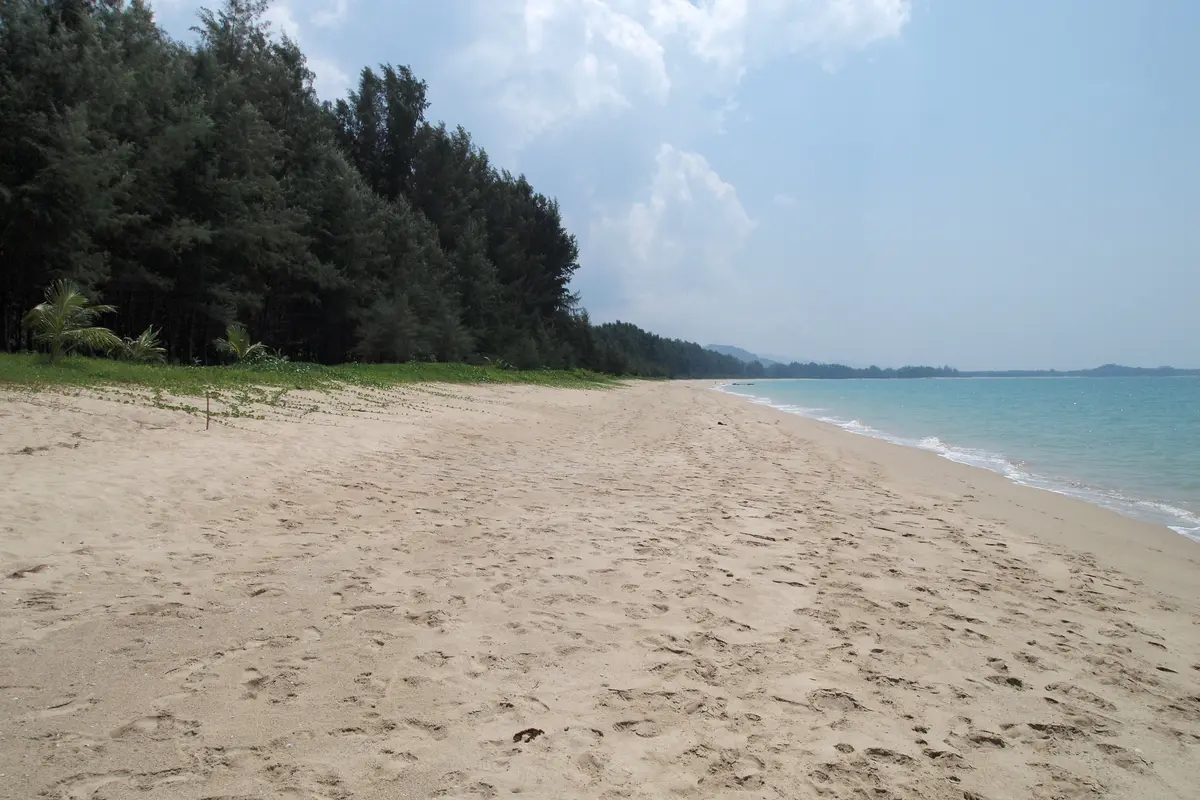
Khao Lak is a twenty-five kilometre strip of low-lying coast in Takua Pa district, Phang Nga province, on Thailand's Andaman shore.
Where is Khao Lak?
- Location
- Phang Nga, Thailand
- Type
- Memorial / disaster site
- Coordinates
- 8.689, 98.25
- Last updated
LOCATION
Why is Khao Lak said to be haunted?
On the morning of 26 December 2004 it took the worst of the Indian Ocean tsunami. The figures have never agreed and the disagreement is the point: the US Centers for Disease Control recorded 5,395 people confirmed dead in Thailand by that March, about half of them not Thai citizens, while Médecins Sans Frontières cited the Thai interior ministry for 10,385 dead and missing, four fifths of them in Phang Nga alone. MSF also stated what every one of those counts leaves out: Burmese migrant workers, of whom a local organisation estimated as many as a thousand died. What followed is documented too, though not as a haunting. Within about a month Thai tourism officials were asking the press to stop reporting ghost stories; a survey of 413 travellers the following September found Thai and Chinese visitors avoiding this coast for fear of the unrecovered dead; and village monks were being asked for ceremonies to tell the dead that they were dead. It is also the story of how a community carried a mass bereavement, and of who studied it.
What is the history of Khao Lak?
Before 26 December 2004, Khao Lak was a twenty-five kilometre string of villages and low-rise resorts in Takua Pa district, Phang Nga province, on Thailand's Andaman coast. It had been tin-mining country, then fishing country, and it became a beach destination late enough that it was still built the old way: bungalows of one or two storeys, on flat ground a few metres above the sea. That is a large part of why it was destroyed while Phuket, sixty kilometres to the south and built upward, was not.
The morning of the disaster was a Buddhist observance day in Thailand, so a great many people were at temples. The anthropologist Monica Lindberg Falk, who first travelled to the coast in January 2005 with a small group of Buddhist nuns and then followed the recovery for five years, opens her account with a monk at a small Phang Nga temple who had just finished leading the chanting when a car tore past shouting that the water was coming. He climbed a tamarind tree and the villagers climbed after him; others scaled the bell tower, the big Buddha statue and the stupa. He could have run and left them, he told Falk, but he did not: "I thought, if we die, we would die together."
The arithmetic of the dead has never settled, and the disagreements are not carelessness — they are a record of who was being counted. The US Centers for Disease Control and Prevention, reporting on the identification effort as it stood on 31 March 2005, gave 5,395 people confirmed dead in Thailand, of whom roughly half were not Thai citizens, with about 1,800 identified by that date. Writing in June 2005, David Wilson, then medical coordinator for Médecins Sans Frontières in Bangkok, cited the Thai Ministry of Interior's Department of Disaster Prevention and Mitigation for a figure of 10,385 dead and missing among Thais and foreign tourists — 80 per cent of them in Phang Nga province alone. Falk writes of more than 8,000 deaths and 8,500 injured. These are not three versions of one number; they are the dead, the dead plus the missing, and the dead as later revised.
And all of them share an exclusion. Wilson stated it plainly: the reported tsunami deaths did not include Burmese migrant workers. Before the wave, Phang Nga had 30,572 registered migrants, 98.6 per cent of them Burmese, working in fisheries, coastal construction, agriculture and tourism; non-governmental organisations estimated an equal number again working undocumented. One local organisation put the Burmese dead at as many as a thousand. None of them appear in the official count, because officially they were not there. In the weeks after the disaster the police began arresting and deporting undocumented migrants — and also registered ones who had lost their papers in the water. MSF met families split up in the deportation process. After international governmental and non-governmental organisations formally petitioned the Ministry of the Interior on 26 January 2005 the arrests stopped, but the fear did not: a month after the tsunami Wilson's team met two Burmese men with tuberculosis who had abandoned treatment rather than risk the journey to hospital.
The identification of the dead was the largest operation of its kind ever mounted, and it was largely run out of Buddhist temples. The CDC counted four temporary morgues. Falk describes temples that became forensic sites, with noticeboards of photographs of the missing and computers for matching records; one monk told her his temple had handled about 1,500 bodies and cremated them continuously from six in the morning until eleven at night. Helen James, reviewing the odontology effort in 2005, recorded 1,474 dead identified by then, with dental comparison the primary identifier in 79 per cent of cases and a contributor in another 8 per cent. A Singapore police forensic dentist who was deployed to the coast in December 2004 titled his account of the work "The killing field of Khao Lak".
Timeline: the documented record of Khao Lak
- 26 December 2004 A magnitude 9.1 earthquake off Sumatra sends the Indian Ocean tsunami into Thailand's Andaman coast. It is a Buddhist observance day and many villagers are at their temples; one monk in Phang Nga later tells the anthropologist Monica Lindberg Falk that he climbed a tamarind tree with the laypeople rather than run, saying he thought that if they died, they would die together.
- 6 January 2005 A local organisation issues the first situation report on Burmese migrant workers in the disaster zone. Médecins Sans Frontières later cites it for an estimate of as many as a thousand Burmese dead — none of whom appear in Thailand's official toll.
- 26 January 2005 International governmental and non-governmental organisations formally ask the Thai Ministry of the Interior to halt the arrest and deportation of migrant workers, including registered ones who had lost their papers in the water. The arrests stop; MSF reports that the climate of fear does not.
- 28 January 2005 A wire item headed "Thai tourism officials ask media not report on tsunami ghosts" is filed. It is the earliest dated appearance of the ghost narrative we have been able to fix, and we know it only from the bibliography of Rittichainuwat's later study; its date shows that within about a month the stories were circulating widely enough for the tourism industry to want them stopped.
- 31 March 2005 The US Centers for Disease Control and Prevention reports on the identification effort: 5,395 people confirmed dead in Thailand, about half of them not Thai citizens, roughly 1,800 identified, and four temporary morgues established.
- 2005 Helen James reviews the international forensic odontology effort and records 1,474 dead identified to date, with dental comparison the primary identifier in 79 per cent of cases and a contributor in another 8 per cent.
- June 2005 David Wilson, medical coordinator for MSF in Bangkok, publishes an account of the migrant workers' situation: 30,572 registered migrants in Phang Nga before the wave, 98.6 per cent of them Burmese, an estimated equal number undocumented, and an official death toll that excluded them all.
- September 2005 Bongkosh Rittichainuwat surveys 413 travellers at Bangkok's international airport. Fear of ghosts scores 3.44 out of 5 as a travel barrier among Thai respondents and 3.24 among Chinese ones, against roughly 2 among British, American and German visitors.
- 14 April 2006 A monk interviewed by Falk describes how his temple dealt with around 1,500 bodies, cremating continuously from six in the morning until eleven at night, and why the monks could not leave.
- 2006 Villagers across Phang Nga begin wearing the Jatukham-Rammathep amulet, believed to bring wealth in the hard economic aftermath. Falk records that monks and nuns who would not normally hand out amulets began distributing them in the temporary shelters because people asked.
- 2007 Siroj Sorajjakool publishes the first academic treatment devoted to the tsunami ghost stories themselves, reading them psychologically as a collective response to traumatic loss handled through Thai Buddhist ritual.
- December 2009 – January 2010 Rittichainuwat returns to the question with follow-up interviews and finds that most Thai tourists are no longer worried about ghosts at the tsunami sites. Her conclusion is that ghost panic is a short-term effect that dissolves once a destination is busy again.
Is there a rational explanation for Khao Lak?
This file used to state that taxi and tuk-tuk drivers in Khao Lak told reporters they had picked up foreign passengers late at night who asked to be driven to the airport, and that the back seat was empty when they turned round for the fare. That is the Vanishing Hitchhiker — a migratory legend so widespread that folklorists gave it a name and a bibliography, beginning with Richard K. Beardsley and Rosalie Hankey's article of exactly that title in California Folklore Quarterly in 1942. It attaches itself to roads all over the world and it attaches itself especially readily to disasters. We could not fix a single 2005 report of it at Khao Lak, and it does not appear in the full text of the one peer-reviewed study of Khao Lak's ghost reports we were able to read end to end. It has been removed rather than reworded.
A control on that negative: a full-text search of the Europe PMC corpus returns 58 records for "Khao Lak", so the corpus is searchable and the term is indexed; the conjunction of tsunami, Thailand and ghosts returns exactly seven, of which only two are on the subject — Bongkosh Rittichainuwat's 2011 study and Siroj Sorajjakool's 2007 paper. The scholarly literature on this is small, findable, and does not contain the taxi story.
What is documented is not an apparition but an effect. Rittichainuwat surveyed 413 travellers at Bangkok's international airport in September 2005 and interviewed survivors, a German reporter, a Thai travel writer and a Chinese tour operator. Her respondents rated fear of ghosts as a barrier to travel at 3.44 out of 5 among Thais and 3.24 among Chinese visitors, against 2.02 among British, 2.30 among American and 2.32 among German ones. The reasoning her Thai respondents gave was theological rather than gothic: "The souls of undiscovered corpses could cause another tsunami or earthquake because they had been deprived of rebirth and thus are malevolent ghosts." When she returned to the question over December 2009 and January 2010, the fear had gone; her conclusion was that ghost panic is short-lived and dissolves once a place is crowded again.
Falk's fieldwork supplies the frame that makes those answers coherent. Thai Buddhist practice distinguishes sharply between death from illness or old age and death that is sudden or violent, and treats the second as dangerous: until cremation the spirit, the winjan, is understood to adhere to the body and has the potential to become a malevolent ghost. After the tsunami thousands of bodies were unrecovered, so thousands of spirits were, in that framework, stranded. Falk records that the ceremonies villagers asked their monks for had three purposes: transferring merit to the dead, making merit for the living — and "communicating with the ghosts and informing them that they are dead and must leave and not create trouble for the living." Monks in her interviews compared themselves to post offices. Falk also describes what mental-health workers called ambiguous loss: families whose relatives were never found could not complete a grief they were never allowed to begin. Sorajjakool's 2007 paper, whose abstract is all we have read, reads the same phenomena psychologically, as a collective response to traumatic loss handled through Buddhist ritual.
One further point, and it runs the opposite way to almost every other file in this catalogue. The usual sceptical explanation for a haunted reputation is commercial interest: somebody sells the ghost. Here nobody did. The ghost stories were bad for business, bad for hotels and bad for the people who needed the work, and within about a month of the disaster Thailand's tourism authorities were asking the media to stop reporting them. That absence of incentive does not make the reports evidence of anything supernatural. It makes them evidence of grief.
Can you visit Khao Lak?
Khao Lak sits on Highway 4, the Phetkasem Road, in Takua Pa district of Phang Nga, about sixty kilometres north of Phuket. It works as a holiday coast again, and the places below are the ones that hold the record of 26 December 2004.
Patrol boat 813 lies roughly 1.25 kilometres inland from Bang Niang beach, where the water left it, and it has been kept there. The Thailand Tourism Directory, the register of the Ministry of Tourism and Sports, files it under record 21766 as "อนุสรณ์สถานสึนามิ เรือ ต.813", the Tsunami Memorial Rue Tor 813, and places it in Village 5, Ban Bang Niang, in Khuekkhak subdistrict of Takua Pa. The ground around the hull has been landscaped and a museum on the site is given over to that morning. Sources disagree over whether the vessel belonged to the police or the navy, and the frequently repeated account of what it was doing offshore could not be confirmed in any source we were able to read.
The principal memorial is further north at Ban Nam Khem, in Bang Muang subdistrict: a fishing village of about 4,200 people. Something like a quarter of them died, and four fifths of the houses went. The Ban Nam Khem Tsunami Memorial stands there; a museum and public learning centre was added later. Opening hours and admission could not be verified against an official source, and the opening years reported for the two of them come from secondary compilations rather than from the institutions. Commemoration ceremonies are held at the memorial each 26 December.
Thailand has run a warning network along this coast since 2005: sirens by the shore and blue-and-white evacuation-route signs pointing inland and uphill, bolted to the roadside and free to read.
Ban Nam Khem is an inhabited village with the memorial park inside it. The people who lost families in 2004 live in the same streets, and many of the dead were never identified and have no grave; the wall at the memorial carries their names. The ceremony each December is the village's own, and the park was built for it.
Sources consulted
- Monica Lindberg Falk, «Buddhism and Resilience in Post-tsunami Thailand» — Journal of Global Buddhism 22(1), pp. 157-171, 2021 academic
- Bongkosh Rittichainuwat, «Ghosts: A travel barrier to tourism recovery» — Annals of Tourism Research 38(2), pp. 437-459, 2011 academic
- David Wilson (Medical Coordinator, Medecins Sans Frontieres, Bangkok), «Meeting the Health Needs of Migrant Workers Affected by the Tsunami» — PLoS Medicine 2(6): e176, 2005 report
- Centers for Disease Control and Prevention, «Health Concerns Associated with Disaster Victim Identification After a Tsunami - Thailand, December 26, 2004-March 31, 2005» — MMWR Morbidity and Mortality Weekly Report 54(14), pp. 349-352, 2005 report
- Helen James, «Thai tsunami victim identification overview to date» — Journal of Forensic Odonto-Stomatology 23(1), pp. 1-18, 2005 academic
- Siroj Sorajjakool, «Tsunami and Ghost Stories in Thailand: Exploring the Psychology of Ghosts and Religious Rituals within the Context of Thai Buddhism» — Journal of Pastoral Care & Counseling 61(4), pp. 343-349, 2007 academic
- P. H. Tan, «The killing field of Khao Lak: forensic odontology in Thailand tsunami victim identification» — Singapore Dental Journal 27(1), pp. 41-50, 2005 academic
- Richard K. Beardsley and Rosalie Hankey, «The Vanishing Hitchhiker» — California Folklore Quarterly 1(4), pp. 303-335, 1942 academic
- Centers for Disease Control and Prevention, «Rapid Health Response, Assessment, and Surveillance After a Tsunami - Thailand, 2004-2005» — MMWR Morbidity and Mortality Weekly Report 54(3), pp. 61-64, 2005 report
Reviewed by V. Serrano on 2026-08-12 · How we verify our content
💬 Field testimonies (0)
No testimonies yet. Add the first.
Add your testimony
🔒 Log in to add a testimony