👻 HAUNTED PLACE · EXP. Nº9475
ACTIVE
Kingseat Hospital (New Zealand)
Kingseat opened at Karaka, south of Auckland, in 1932, and its grounds had been cleared five years earlier by psychiatric patients brought from Oakley Hospital, whom Auckland Council's heritage records still call the "Pioneer Patients".
Where is Kingseat Hospital (New Zealand)?
- Location
- Auckland, New Zealand
- Type
- Hospital / asylum
- Coordinates
- -37.13, 174.798
- Last updated
LOCATION
Why is Kingseat Hospital (New Zealand) said to be haunted?
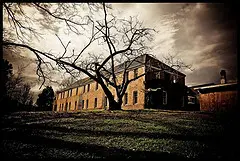
It was built as villas in parkland rather than a single block, on the theory that open ground would give patients a sense of freedom that older institutions denied them. It closed on 28 July 1999 after sixty-seven years. What went on inside is documented, not rumoured: New Zealand's Royal Commission of Inquiry into Abuse in Care named Kingseat in its 2024 final report, quoting the hospital's own 1962 annual report on aversion practices used against homosexual men, and the testimony of survivors admitted as children. Since 2005 the former nurses' home has housed Spookers, a commercial scare attraction whose founders chose that building precisely because it was not a ward, and which has never advertised the hospital's ghosts. The claim that Kingseat is New Zealand's most haunted building is younger than the attraction, and can be traced to a single unsourced newspaper line published in 2011.
What is the history of Kingseat Hospital (New Zealand)?
Kingseat was cleared and planted before it was built, and not by contractors. The heritage assessment inside Auckland Council's own district plan records that the grounds were laid out in 1927 and 1928 "with the help of patients from Oakley Hospital who were known as the 'Pioneer Patients'" — psychiatric patients from the other side of Auckland, preparing the site of the institution that would hold their successors. They are the first people any account of this place owes a mention.
The layout was deliberate. Instead of a single block, Kingseat was built as separate villas set in parkland, and the council's assessment is explicit about why: the grounds were "designed to provide patients with a sense of freedom that was absent from earlier institutions", which it calls "a new concept for psychiatric hospital environments at that time in New Zealand". Construction ran from 1929 and the hospital opened in 1932 at Karaka, south of Auckland. The Administration Building — three storeys, plaster-rendered, Art Deco and Modernist in its detailing — opened in 1938 and gained a second storey in 1957. Kingseat was one of only two psychiatric hospitals serving Auckland, alongside Oakley (later Carrington), and the only one south of the city. It took its name from Kingseat Mental Hospital at Newmachar, in Aberdeenshire. The familiar story that Theodore Gray, then head of the Mental Hospitals Division, chose it because he had worked at the Scottish asylum comes from the hospital's 1982 jubilee book, which this entry has not been able to consult.
What happened inside is not a matter of rumour. New Zealand's Royal Commission of Inquiry into Abuse in Care named Kingseat repeatedly in its 2024 final report, Whanaketia. An appendix to the hospital's own 1962 annual report describes a unit set up there for "behaviour therapy" in which three homosexual men were treated: a room "painted black with all light sources blocked", a tape "decrying the activities for which they sought treatment", prolonged wakefulness induced with methedrine and apomorphine every four hours, and in one case criticism delivered by staff while the patient was under the influence of LSD. The Inquiry also heard from Alison Pascoe, admitted at the age of eight in the 1950s, who described solitary confinement at nine as punishment for running away, untreated broken bones, Largactil injections she called "chemical straitjacket therapy", and a sexual assault by another patient at twelve that was never reported to police — "They should have called the Police. I don't know why they didn't. Patients had no rights." A survivor known as Ms ON described group therapy in Claybury House in 1990 as "like a psychiatric torture chamber". A Māori survivor born in 1978 told the Inquiry he was admitted in 1996 expecting to stay a few weeks and stayed four years.
There were deaths and disappearances too. Radio New Zealand's Morning Report covered the opening of the 1994 inquiry into Matthew Innes, a psychiatric patient who died after being restrained in a police car on the way to Kingseat. In June 2004, TVNZ's One News reported that police had reopened the case of Clement Matthews, an eleven-year-old who died at Kingseat and whose recorded cause of death was pneumonia.
South Auckland Health sold the hospital in 1996 under the national policy of deinstitutionalisation. It closed on 28 July 1999, when the last patients were moved to Tāmaki Oranga, a new secure unit on Bairds Road in Ōtara — a transfer local residents had fought through council hearings and the Environment Court. Sixty-seven years of operation ended that day.
Timeline: the documented record of Kingseat Hospital (New Zealand)
- 1927–1928 The grounds are laid out with the help of patients brought from Oakley Hospital, recorded in Auckland Council's heritage assessment as the "Pioneer Patients". The parkland is designed to give patients a sense of freedom absent from earlier New Zealand institutions.
- 1932 Kingseat Hospital opens at Karaka after three years of construction, built as separate villas in parkland rather than a single institutional block.
- 1938 The Administration Building opens, three storeys with Art Deco and Modernist detailing on the axis of the main drive. A second storey is added to its central block in 1957.
- 1950 Alison Pascoe is admitted at the age of eight. She later tells the Royal Commission of solitary confinement at nine, untreated broken bones and a sexual assault at twelve that staff never reported to police.
- 1962 An appendix to the hospital's own annual report describes a behaviour-therapy unit in which three homosexual men were treated with a blacked-out room, recorded messages, drug-induced wakefulness and, in one case, criticism administered under LSD.
- 1968 Clement Matthews, aged eleven, dies at Kingseat; his recorded cause of death is pneumonia. (Ngā Taonga's catalogue entry for the later news item dates the death to 1967.)
- 1990 A survivor identified by the Royal Commission as Ms ON describes group therapy in Claybury House at Kingseat as "like a psychiatric torture chamber".
- 18 July 1994 Radio New Zealand's Morning Report covers the opening of the inquiry into the death of patient Matthew Innes, who died after being restrained in a police car on the way to Kingseat.
- 28 July 1999 The last patients leave for Tāmaki Oranga in Ōtara and the hospital closes after 67 years, three years after South Auckland Health sold it under the deinstitutionalisation policy.
- 12 June 2004 TVNZ's One News reports that police have reopened the investigation into Clement Matthews's death. The item is held by Ngā Taonga Sound & Vision under reference TZP289836.
- 22 October 2005 Spookers opens in the former nurses' home. Manager Julia Watson tells the New Zealand Herald: "That's why we've got it in the nurses' home and not the actual hospital itself. We also will be doing absolutely nothing to do with a mental asylum."
- 6 November 2011 A Herald on Sunday sidebar prints the unsourced line that "more than 100 apparitions have been reported" at Kingseat. It is the earliest traceable origin of a figure repeated ever since, including in the previous version of this entry.
- 5 October 2017 Stuff publishes the criticism of former patients. Debra Lampshire, eighteen years at Kingseat from the age of seventeen, says that for former patients "it's a memorial being defaced".
- July 2024 New Zealand's Royal Commission of Inquiry into Abuse in Care publishes its final report, Whanaketia, which names Kingseat in its accounts of aversion practices, chemical restraint, solitary confinement and unreported assaults.
Is there a rational explanation for Kingseat Hospital (New Zealand)?
The ghost reputation of Kingseat can be dated, and it is younger than the attraction that shares the site.
Start with the operator's own words. When the New Zealand Herald reported the opening of Spookers in the former nurses' home on 22 October 2005, it noted the company was aware it could be accused of bad taste. Manager Julia Watson answered: "That's why we've got it in the nurses' home and not the actual hospital itself. We also will be doing absolutely nothing to do with a mental asylum." That is not a business claiming its building is haunted; it is a business promising the opposite.
The archived versions of the company's website back her up. Its first captured homepage, from 4 December 2005, tells a science-fiction backstory about a secret government laboratory called Compound K, a gas leak and mutated zombies. Across the archived homepages of 2005, 2006, 2008 and 2010, the words ghost, spirit, apparition (once, in 2008), patient, psychiatric and asylum are absent, while the marketing word haunted appears between two and eight times on each — the control that shows the pages were captured and read correctly. The live 2026 site does not mention the hospital at all.
So where does the number come from? Our own earlier version of this entry said staff and former patients had passed down "more than a hundred" sightings before the hospital closed. The figure traces to a single unsourced line in a sidebar of spooky places published by the Herald on Sunday on 6 November 2011: "Many deaths were recorded at the hospital and more than 100 apparitions have been reported there." No source, no period, no count. In the article itself, the description of Kingseat as "possibly the most haunted in New Zealand" belongs to Andrew Farrell, founder of an amateur group, Ghosts of Auckland, that he had set up three months earlier. The same piece carries the rebuttal: Vicki Hyde, of the New Zealand Skeptics, said of the group's photographs from another Auckland house that they were "more likely to be reflections of their camera flash off the timbers or a cobweb", and that "the existence of the afterlife is too important a question to leave to blurry images and mistaken attributions".
The strongest objection is not evidential but ethical, and it is on the record. In 2017 Stuff put the question to people who had lived in the buildings. Debra Lampshire, who spent eighteen years at Kingseat from the age of seventeen and now advocates for people with mental illness, said that "knowing the turmoil and anguish that went on there, to see it turned into a form of entertainment, I find it a little bit difficult to deal with", and that for former patients "it's a memorial being defaced". Alison Pascoe called it "demeaning". Spookers co-founder Beth Watson told the same reporter she had not known the site's history until she enquired about the lease, that the family deliberately took the nurses' hostel rather than a ward, and that of the 80,000 to 90,000 people who visit each year very few know what the building was.
No dated account of an apparition at Kingseat has been found here from before the site became a paying attraction. The earliest print treatments that can be dated are from 2005 onwards — Julie Miller and Grant Osborn's Ghost Hunt: True New Zealand Ghost Stories (Reed, 2005) and a television episode the same year — and neither has been read for this entry, so nothing is claimed about their contents.
Can you visit Kingseat Hospital (New Zealand)?
Kingseat Hospital closed on 28 July 1999, and its buildings stand on private land at Kingseat, in the Franklin area south of Auckland. The part open to the public is Spookers, a commercial horror attraction in the former nurses' home at 833 Kingseat Road. OpenStreetMap maps the attraction's grounds around the pin on this file, -37.13, 174.798, which lies about 12 km north-west of the centre of Pukekohe and 31 km south of Auckland's city centre in a straight line. The New Zealand Herald reported on 22 October 2005 that the company would use 45 of the building's 200 rooms, and quoted its manager, Julia Watson: "That's why we've got it in the nurses' home and not the actual hospital itself."
Spookers' website, read on 24 September 2026, gives opening on Friday and Saturday nights from 8pm with last entries at 9pm, with door sales available; its menu advertises tickets "from $59" on one line and "from $55" on another. The standard pass is strictly for ages 13 and over, with photo ID checked, and covers the Haunted House and Disturbia indoors and The Woods, an outdoor trail the site lists for April to December; the outdoor CornEvil maze is listed for January to April. R18 nights are held on selected Sundays. For children aged 8 and over the site offers Taste of Terror on Friday and Saturday afternoons and Creepers on selected Thursday evenings in the school holidays. Visitors bring their own torch, since phone torches are not allowed, or buy one on site for $12. The FAQ says the haunted house uses strobe lights, advises people with asthma to carry their inhalers, suggests that people with heart conditions and pregnant women reconsider, and warns that "the paths can be slippery". It describes some areas of the haunted house as "split into two levels" and asks visitors to tell the staff on duty of their needs. The telephone number on the site is 09 291 9002.
Asylum Paintball's website gives the same street address, 833 Kingseat Road, with a different telephone number, +64 9 277 0075. On 24 September 2026 its footer read "© Asylum Paintball 2018", and the most recent of the Facebook reviews embedded on its home page was dated 22 February 2020.
The rest of the former hospital lies within the Kingseat Precinct of the Auckland Unitary Plan, chapter I418 in the version dated July 2026, which covers some 298 hectares and plans a village "for a population of approximately 5000 people". Its heritage schedule protects the Administration Building (item A.52), Villas 11, 12 and 13 (A.57 to A.59), the former Nurses Home (A.61) and six ancillary buildings, from the laundry to the woodwork building (A.62 to A.67), together with the Phoenix palm-lined main access road from Kingseat Road (B.21) and the main entrance gates (B.22). Scheduling governs what may be done to the buildings and gives no right of entry to private land.
The people who were patients at Kingseat appear in Whanaketia, the final report of the Royal Commission of Inquiry into Abuse in Care, published in 2024 and available on the Commission's website. In 2017 Debra Lampshire, who lived at Kingseat for eighteen years from the age of seventeen, told Stuff that for former patients the attraction is "a memorial being defaced".
Sources consulted
- Royal Commission of Inquiry into Abuse in Care, «Whanaketia – Through pain and trauma, from darkness to light: final report» — Royal Commission of Inquiry into Abuse in Care, Aotearoa New Zealand, 2024 report
- Auckland Council, «I418 Kingseat Precinct — Auckland Unitary Plan (Operative in Part)» — Auckland Unitary Plan, 2026 report
- Jeremy Olds, «From hospital to haunted house: Former patients criticise Spookers» — Stuff, 2017 newspaper archive
- Martin Johnston, «House of horrors at former hospital» — The New Zealand Herald, 2005 newspaper archive
- Herald on Sunday, «Ghost hunters in for the chill» — The New Zealand Herald, 2011 newspaper archive
- Selwyn Manning, «Last Patients Moved from Kingseat Today» — Scoop, 1999 newspaper archive
- TVNZ; reporter Torben Akel, «ONE NEWS – Kingseat (reference TZP289836, broadcast 12 June 2004)» — Ngā Taonga Sound & Vision, 2004 archive
- Todd Niall, Radio New Zealand, «Morning Report, 18 July 1994 — Police: Matthew Innes inquiry (reference 17017)» — Ngā Taonga Sound & Vision, 1994 archive
- Spookers Limited, «Spookers website, homepage captured 4 December 2005» — Internet Archive Wayback Machine, 2005 archive
- Spookers, «Spookers Haunted Attraction Scream Park — official site (attractions, FAQ, contact)» — spookers.co.nz, 2026 web
- Jim Mitchell, «Inside the haunted history of Spookers' Kingseat Hospital» — SBS, 2018 web
- Asylum Paintball, «Asylum Paintball — official site (address, telephone, packages)» — asylumpaintball.co.nz, 2018 web
Reviewed by V. Serrano on 2026-08-12 · How we verify our content
💬 Field testimonies (0)
No testimonies yet. Add the first.
Add your testimony
🔒 Log in to add a testimony