👻 HAUNTED PLACE · EXP. Nº9475
ACTIVE
Seacliff Lunatic Asylum
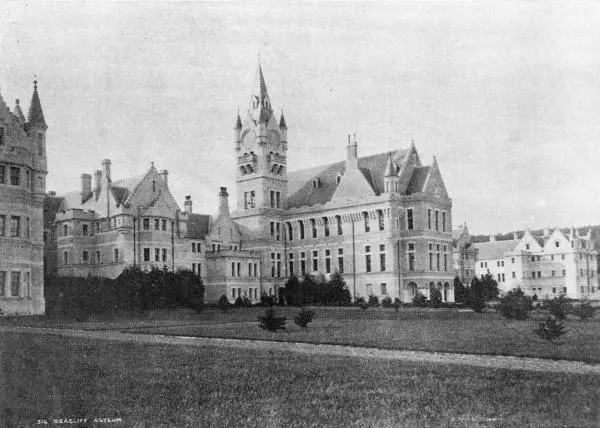
Seacliff Lunatic Asylum was the largest building in New Zealand when its main block was finished in 1884: a Scottish Baronial pile 228 metres long with 1,273 doors, designed by the Dunedin architect Robert Lawson and built on a hillside that would not hold it.
Where is Seacliff Lunatic Asylum?
- Location
- Otago, New Zealand
- Type
- Hospital / asylum
- Coordinates
- -45.675, 170.622
- Last updated
LOCATION
Why is Seacliff Lunatic Asylum said to be haunted?
A slip in 1887 left the north wing uninhabitable, and the Royal Commission that reported in March 1888 found Lawson negligent and incompetent, ending his career. On the night of 8 December 1942 fire took Ward 5, a two-storey wooden block where 39 women were locked into single rooms or a twenty-bed dormitory behind shutters that opened only with a key from inside. Two were saved from rooms whose shutters were unlocked; thirty-seven died. The hospital did not die with them. It went on admitting patients until 1964 and held its largest population ever in 1965; the main block was demolished in 1959 because the ground was still moving, and the last building inside what is now the Truby King Recreation Reserve came down in 1992. The reserve is free and open. The ghost story attached to it is far younger, and far thinner, than the documented history.
What is the history of Seacliff Lunatic Asylum?
The Crown granted nearly a thousand acres at Seacliff in July 1876 for a "Lunatic Asylum and Industrial School" - fertile land, because this was to be a farm asylum. Tenders to clear the site went out in August 1878 and tenders for temporary buildings, designed by the Dunedin architect Robert Arthur Lawson, in October. Seacliff opened in 1879, taking patients from the overcrowded Dunedin asylum into those temporary buildings, while the permanent contract, tendered in July 1879, went to the contractor James Gore.
What Gore built to Lawson's design was the largest building in the colony: Scottish Baronial, 750 feet (228 metres) long, the main block finished in 1884, with 1,273 doors and "such a diversity of keys that they were an embarrassment to the staff". Nobody involved mistook it for a hospital. Deputy Inspector Bradshaw wrote in 1884 that Seacliff resembled "a prison for the confinement of evil doers [rather] than a place for the care and treatment of the insane", and Dr McGregor, Inspector of Mental Hospitals, called it forbidding, dreary and depressing.
The hillside would not hold it. Unstable subsoil produced cracks before the building was finished - Parliament had already printed an alarmed entry from the inspector's book as AJHR 1886, H-06a - and in 1887 a slip left the north wing uninhabitable. The controversy was national and it produced a Royal Commission of Inquiry. In February 1888 Lawson, seeing where this was going, applied to be allowed counsel. The Commission reported in March 1888, printed as AJHR 1888, H-07, and held the architect and the contractor responsible; Lawson was found negligent and incompetent. He contested it, but in a country then in recession he was effectively unemployable. He left for Melbourne in 1890, returned to Dunedin in 1900 and died at Pleasant Point in 1902. Later historians have been kinder: the bentonite clays under the site were beyond the soil mechanics of the 1870s, although the risk of the hillside had been raised before building began.
Frederic Truby King was medical superintendent from 1889 to 1923, and he is the reason Seacliff is remembered for gardens as well as for keys: fresh air, exercise and diet, buildings he designed himself, a landscape with a ha-ha and winding paths, and later the Plunket Society. The other side of the same period is in the record too. In July 1890 Dr Ferdinand Batchelor, assisted by three other doctors including King, removed the fallopian tubes, ovaries and clitoris of a patient recorded as Annemarie Anon, an operation then called a success. The institution changed its name before it changed its regime: "mental hospital" replaced "lunatic asylum" in 1905, and from 1911 people could enter as voluntary boarders instead of by committal.
At about 9.45 pm on 8 December 1942 fire broke out in Ward 5, a two-storey wooden block added at the end of the nineteenth century. Thirty-nine women were inside, locked either in single rooms or in a twenty-bed dormitory. Most windows were shuttered and locked and could only be opened with a key from inside. Ward 5 had no automatic fire alarm, unlike the newer parts of the hospital, and no nursing staff in the ward at night; patients were checked once an hour. The alarm was raised from outside by an attendant named Henderson, who fetched reel and hose from the hospital's small fire station and ran them to a hydrant nearby, joined by Driscoll and the rest of the hospital's industrial brigade. The pressure was low, but they kept the fire off the adjoining wooden wards. Two women were taken out of rooms whose shutters were not locked. In about an hour the ward was ashes and thirty-seven women were dead. The inquiry reported the following year as AJHR 1943, H-07a, "Commission upon fire at Seacliff (Report of)", six pages; as summarised by Heritage New Zealand, the city council and the fire service's own library, it condemned the timber construction, criticised the shuttering and locking of the windows from inside at night and the shortage of night staff, praised the industrial brigade and recommended sprinklers in every mental hospital in the country. The cause was never established. Until the Ballantyne's fire in Christchurch five years later, it was the worst loss of life in a fire in New Zealand.
The hospital did not end with the fire, and this is where short accounts of Seacliff go wrong. Cherry Farm was chosen in 1945 as the site of a replacement, and contractors began taking down unsafe parts of the main block, including the tower, in the 1940s. In 1959 the central block itself was demolished, a programme of eighteen months that defeated the machinery - one traction engine pulled itself in half rather than pull the building down. The reason given was the ground, which was still moving. Seacliff stopped taking admissions in 1964 and recorded its all-time high of 1,365 patients in 1965, twenty-three years after Ward 5 burned. Heritage New Zealand and the city council date the end of hospital operations to 1970; other accounts give 1973, as functions moved to Cherry Farm. The reservation was revoked in March 1974 and major demolition followed. From 1974 the site was leased to the Dunedin Museum of Transport and Technology, closed by 1991; that year the Truby King Recreation Reserve was gazetted and passed to the Dunedin City Council. In 1992 Clifton House, built in 1917 for soldiers with shell shock, came down as the last building inside the reserve, and in 1996 the surviving service buildings outside it were sold privately.
Between 1945 and 1955 Janet Frame spent about four and a half years in New Zealand mental hospitals, Seacliff among them, on a diagnosis of schizophrenia that her estate describes as made "based on the word of an unqualified university tutor and without any proper medical investigation". She was given more than two hundred applications of electroconvulsive therapy without anaesthetic - "each the equivalent, in degree of fear, to an execution" - and insulin treatment. In December 1952, her mother's consent signed, she saw her own name on the ward list of those down for a leucotomy. Her first book, The Lagoon and Other Stories, accepted by the Caxton Press in 1947 and published - "incorrectly dated 1951, published 1952", says the estate - had just won the Hubert Church Award. The superintendent, Dr Blake Palmer, called the operation off; her account of his words is "I've decided that you should stay as you are. I don't want you changed." Specialists in London rejected the schizophrenia diagnosis later in the decade. Seacliff reaches most people through Faces in the Water (1961) and An Angel at My Table (1984), and a plaque to her stands today in the reserve's woodland.
Timeline: the documented record of Seacliff Lunatic Asylum
- July 1876 A Crown grant sets aside nearly a thousand acres at Seacliff for a 'Lunatic Asylum and Industrial School'. Tenders for the temporary buildings, designed by Robert Arthur Lawson, follow in October 1878.
- 1879 The asylum opens in temporary buildings with patients from the overcrowded Dunedin asylum. The contract for the permanent building is tendered in July and goes to James Gore.
- 1884 The main block is finished: Scottish Baronial, 228 metres long, the largest building in the colony, with 1,273 doors. Deputy Inspector Bradshaw writes that it resembles 'a prison for the confinement of evil doers [rather] than a place for the care and treatment of the insane'.
- 1887 A slip on the unstable hillside leaves the north wing uninhabitable, three years after the block was completed. The controversy becomes national.
- March 1888 The Royal Commission reports, printed as AJHR 1888, H-07. It blames Lawson and the contractor; Lawson, who had asked in February to be allowed counsel, is found negligent and incompetent. He leaves for Melbourne in 1890 and dies in 1902.
- 1889-1923 Frederic Truby King is medical superintendent, bringing fresh air, diet, gardens and villa wards, and later founding the Plunket Society. In July 1890 Dr Ferdinand Batchelor, assisted by three doctors including King, performs an 'unsexing' operation on a patient recorded as Annemarie Anon.
- 8 December 1942 At about 9.45 pm fire breaks out in Ward 5, holding 39 women locked in single rooms or a twenty-bed dormitory, with shutters openable only by a key from inside, no automatic alarm and no nursing staff in the ward at night. An attendant named Henderson raises the alarm from outside. Two women are saved from rooms whose shutters were unlocked; 37 die.
- 1943 The inquiry reports as AJHR 1943, H-07a, 'Commission upon fire at Seacliff', six pages: it condemns the timber construction, the locked shutters and the shortage of night staff, praises the hospital brigade and recommends sprinklers in all mental hospitals. The cause is never established.
- December 1952 Janet Frame, with her name on the ward list for a leucotomy and her mother's consent signed, wins the Hubert Church Award for The Lagoon and Other Stories. The superintendent, Dr Blake Palmer, cancels the operation: 'I've decided that you should stay as you are. I don't want you changed.'
- 1959 The central main block is demolished in an eighteen-month programme, because the ground is still moving and not because of the fire.
- 1964-1965 Seacliff stops taking admissions in 1964 and records its all-time high of 1,365 patients in 1965 - twenty-three years after Ward 5 burned.
- 1970-1974 Heritage New Zealand and the city council date the end of hospital operations to 1970, while other accounts give 1973. The asylum reservation is revoked in March 1974 and major demolition follows.
- 1991-1996 The Truby King Recreation Reserve is gazetted in 1991 and passes to the Dunedin City Council. In 1992 Clifton House, built in 1917 for soldiers with shell shock, is demolished as the last building inside it. In 1996 the surviving buildings outside are sold privately.
- December 2017 Memorials to the 37 women are unveiled at the former hospital and at Andersons Bay cemetery, where their remains lay in unmarked graves. Only 14 of the 37 families could be traced: 'All that the family members got was a telegram saying so and so died in a fire.'
- April 2022 A New Zealand paranormal group tours the site and closes its file: 'Our research has not uncovered much in the way of reported or first hand accounts of hauntings or ghosts at this location.'
- November 2023 A femur and an old patient tag found in what looks like a shallow grave inside the reserve become a national story. The police examine the bone; the follow-up headline reads 'Bone and tag found at former asylum is not from a human'.
- July 2025 The Dunedin City Council builds a new gravel car park by the Russell Road entrance, with pedestrian-only access during the works.
Is there a rational explanation for Seacliff Lunatic Asylum?
The fire did not end the asylum. Ward 5 burned in 1942; the main block was demolished in 1959, which the Wikipedia article attributes to "further earth movement"; the hospital kept admitting patients until 1964 and recorded its largest population, 1,365, in 1965. Short accounts that have the asylum "demolished in the 1950s after the fire" fold those four events into one.
The fire itself is often told with the wrong mechanism. There was no nurse inside Ward 5 that night to go for the keys. The ward had no night nursing staff and no automatic alarm, patients were checked once an hour, and the alarm was raised from outside by an attendant named Henderson. The 1943 inquiry, as summarised by Heritage New Zealand, the city council and the fire service library, criticised the shuttering and locking of the windows at night and the shortage of night staff.
The ghost reputation is recent and thin, and the people who promote it say so. In the Wikipedia article that most derivative pages copy, the statement that "Seacliff is claimed to be haunted by former patients" is sourced to a single book: Mark Wallbank, Haunted New Zealand Roadtrip (New Holland, 2017), pages 264-265. Wallbank's own page on the site, published on 10 April 2021, contains no first-hand account. The Quantum Foundation, a New Zealand paranormal group whose page on Seacliff marks its research status "Complete", wrote: "Our research has not uncovered much in the way of reported or 'first hand' accounts of hauntings or ghosts at this location." The page asks for experiences and, on 4 October 2026, displayed "No messages found!". The one named living witness in this material is Andrew Smith, who runs Hair Raiser Ghost Tours in Dunedin and told The Spinoff in 2021: "There's a strange vibe there, whether by day or night…. it's closed to the general public which only adds to the mystery."
The digitised record shows the same gap. A search of the New Zealand newspapers in Papers Past through the DigitalNZ interface on 4 October 2026 returned 3,260 articles for "Seacliff asylum", so the place is amply covered. "Seacliff" with "ghost" returned 39 articles, with "haunted" 34, with "apparition" 5 and with "spectre" 3, and in none of them is a ghost word attached to the asylum: the nearest are a letter about "this ghost of compensation" printed beside a committal to Seacliff (Mataura Ensign, 9 December 1899) and a released prisoner who went back to "his old haunts" (Otago Witness, 6 February 1890). The same day the Internet Archive's full-text search returned 106 texts for "Seacliff asylum" and none for "Seacliff ghost".
There is an older supernatural reading of the place. Heritage New Zealand's registration report quotes Michael King's life of Janet Frame, Wrestling with the Angel (2000): Otago Maori held that "the authorities had courted physical and psychic disaster by building the hospital over a tribal burial ground", and that the structural collapses, the fire and the "general air of terror said to prevail in wards holding the most disturbed patients" were "all consequences of a failure to respect the ethos and the tapu of the location". It is a Maori explanation of a Pakeha institution's misfortunes, recorded by a biographer, and it names no apparition.
The death toll is stable in the official record and unstable on ghost pages. The Dunedin City Council and Heritage New Zealand give 39 women in Ward 5, 37 dead and 2 saved, and the memorials unveiled in 2017 were to the 37 women. Wallbank writes that the fire killed "between 37 and 39" and that "a correct headcount was never given"; Wikipedia puts 39 patients in the ward, "41 according to some sources". In 2023 a femur and an old patient tag were found in what looked like a shallow grave inside the reserve, briefly a national story; the police examined the bone, and the follow-up headline reads "Bone and tag found at former asylum is not from a human".
The reserve keeps its own record of the building. Most of it is dense woodland that locals call the Enchanted Forest, laid over the footprint of a 228-metre building: cobbled drives that end in nothing, stone steps that lead nowhere, foundations in the grass. Heritage New Zealand's registration says the site "allows the visitor to create an imagined past recalling the disturbing history of the place while walking through the relict landscape". The building it replaced was designed to be frightening, and the officials who inspected it said so in 1884.
Can you visit Seacliff Lunatic Asylum?
The public part is the Truby King Recreation Reserve, a Dunedin City Council reserve of 16.4 hectares on part of the old asylum grounds, about 25 kilometres north of Dunedin. It is free, open and unfenced: no ticket, no opening hours, no guide. The main entrance, with the historic hospital grounds, is off Russell Road about a kilometre from the junction with Coast Road; there is a second main entrance at the southern tip of the reserve and two minor pedestrian entrances off Coast Road.
The way in is the old asphalt hospital drive. The council's 2021 management plan describes it as giving good universal access as far as the plateau around the old cricket ground, which once faced the main building; beyond that the routes are mown grass and cobbled or dirt woodland paths, and are not accessible. There are toilets, which the same plan lists for upgrading. Part of the reserve carries a Hazard 2 land-instability overlay in the district plan, on the hillside that broke the asylum.
Parking has moved. The western car park was closed to vehicles after repeated vandalism, and in 2025 the council built a gravel car park by the Russell Road entrance, due for completion by the end of July that year; while the work was on, the public notice directed people to park at the corner of Russell Road and Coast Road and walk in.
What is there is mostly absence: grass and remnant stone, the footprint of the main block, steps that lead nowhere, interpretation panels about the asylum, and long views south to Blueskin Bay, Aramoana and the mouth of Otago Harbour. In December 2017, seventy-five years after the Ward 5 fire of 8 December 1942, memorials to the 37 women who died in it were unveiled at the former hospital and at Andersons Bay cemetery in Dunedin, where their remains had been buried in unmarked graves. The organisers traced 14 of the 37 families; the rest had been told nothing beyond a telegram. A plaque to Janet Frame stands in the woodland, and there is a memorial to staff and residents.
The buildings are not public. The morgue, the kitchen and laundry block, the smithy, the administration block, the boiler house, the garage and the two surviving isolation cells all stand outside the reserve, on the land sold into private ownership in 1996, where a family lives and is restoring them under Heritage New Zealand conditions. The two paranormal groups the owners have let in pass on the same request in the same words: the property has cameras and dogs, and trespassers have become a nuisance. No operator sells access to it. The last organised visits of any scale appear to have been the guided tours of the summer of 2006-07, run with the Taieri Gorge Railway's Seasider service. Heritage New Zealand entered the reserve and the private buildings together as a Category 1 historic place, List No. 9050, on 19 April 2012, at "22, 36 Russell Road and Coast Road, SEACLIFF", over the land described as "Secs 1-3 SO 23214", and recorded the access as "Private/No Public Access".
Sources consulted
- Heritage New Zealand Pouhere Taonga, «Seacliff Lunatic Asylum Site - New Zealand Heritage List, Category 1 historic place, List No. 9050 (registration report, entered 19 April 2012)» — New Zealand Heritage List / Rarangi Korero, 2012 report
- Dunedin City Council, «Truby King Recreation Reserve Management Plan, June 2021» — Dunedin City Council, 2021 report
- New Zealand House of Representatives, «COMMISSION UPON FIRE AT SEACLIFF (REPORT OF), AJHR 1943 Session I, H-07a, 6 pp. - catalogue entry verified in AtoJs Online; the digitised text is not reachable by automated request, so the report's findings are cited here as summarised by Heritage New Zealand, the Dunedin City Council and the New Zealand Fire Service library» — Appendix to the Journals of the House of Representatives (AtoJs Online, National Library of New Zealand), 1943 archive
- New Zealand House of Representatives, «SEACLIFF LUNATIC ASYLUM, AJHR 1888 Session I, H-07 - report of the Royal Commission on the asylum's structural failure (catalogue entry verified in AtoJs Online; see also AJHR 1886, H-06a, the copy of Dr MacGregor's entry in the inspector's book)» — Appendix to the Journals of the House of Representatives (AtoJs Online, National Library of New Zealand), 1888 archive
- Library Services, New Zealand Fire Service, «Seacliff Mental Hospital 1942 - New Zealand firefighting history» — FireLibrary web
- Mike Houlahan, «Seacliff fire victims inspire lasting legacy» — Otago Daily Times, 26 January 2018, 2018 newspaper archive
- Clair Wills, «A Mind Cast Out (review essay on Janet Frame, quoting her account of the cancelled leucotomy)» — The New York Review of Books, 21 November 2024, 2024 newspaper archive
- Janet Frame Literary Trust, «Career Timeline and List of Books Published (dating The Lagoon and Other Stories: 'incorrectly dated 1951, published 1952')» — janetframe.co.nz, official site of Janet Frame's estate, 2026 web
- The Quantum Foundation, «Seacliff Mental Asylum - Haunted NZ (research status: complete)» — quantumparanormalnz.com, 2022 web
- Mark Wallbank, «Seacliff Mental Hospital - Dunedin (published 10 April 2021, updated 21 May 2022)» — Paranormal NZ / Haunted Auckland, 2021 web
- Wikipedia contributors, «Seacliff Lunatic Asylum (the article our old description compressed into an error, and the page that sources the haunting claim to Mark Wallbank, Haunted New Zealand Roadtrip, New Holland, 2017, pp. 264-265)» — Wikipedia, 2026 web
- Dunedin City Council, «Truby King Reserve carpark closure (public notice, last updated 25 July 2025)» — dunedin.govt.nz, 2025 web
- Louise Fisher, «The story of Seacliff, the most haunted place in New Zealand» — The Spinoff, 13 February 2021, 2021 web
- Stuff, «Bone and tag found at former asylum is not from a human - police» — stuff.co.nz, 2023 web
Reviewed by V. Serrano on 2026-08-13 · How we verify our content
💬 Field testimonies (0)
No testimonies yet. Add the first.
Add your testimony
🔒 Log in to add a testimony