🦶 CRYPTID SIGHTING · EXP. Nº6501
ACTIVE
Banshee
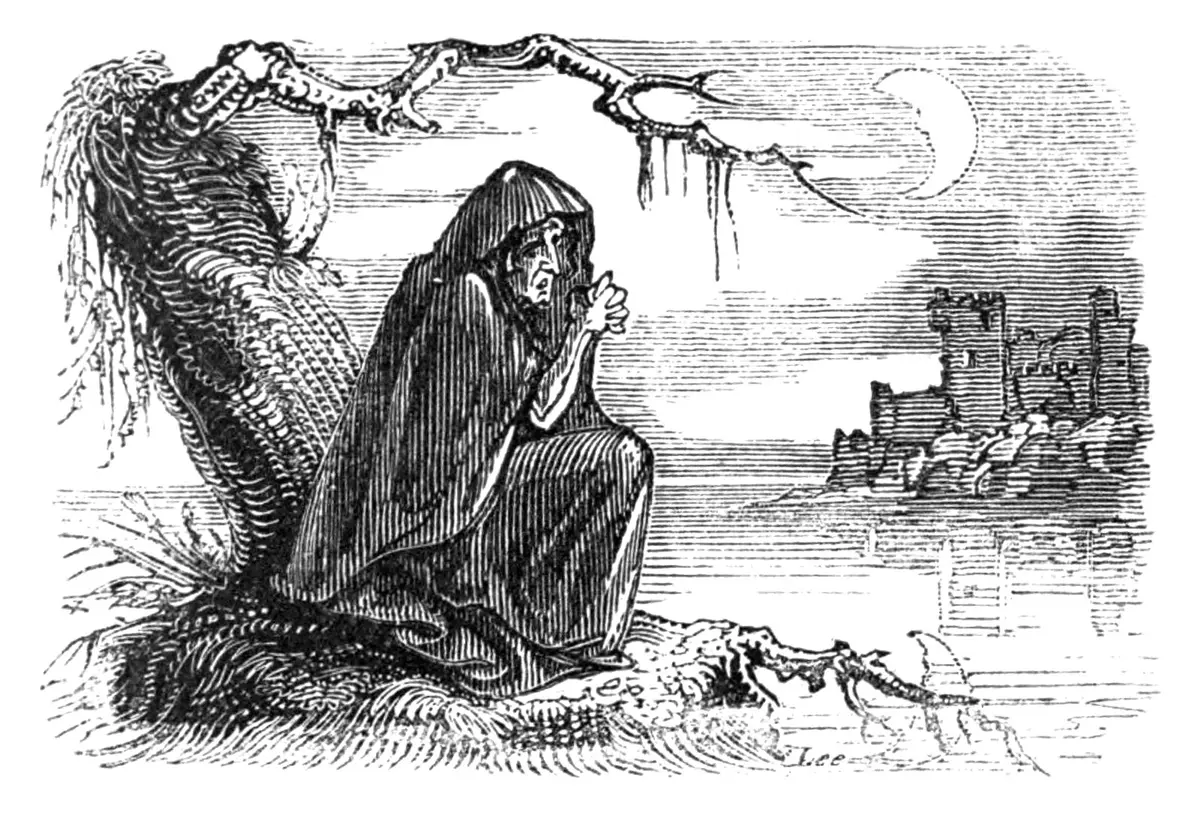
The banshee, from the Irish bean sí meaning 'woman of the fairy mound,' is a spirit woman whose mournful wail or keening cry is said to foretell an imminent death in a family.
Where and when was Banshee sighted?
- Location
- Irlanda, Ireland
- Date sighted
- Unknown
- Coordinates
- 53.4, -8.0
- Last updated
LOCATION
What is Banshee?
She is usually described as a pale, sorrowful woman with long hair, sometimes dressed in grey or white, who appears or is heard near a house shortly before a death occurs, particularly one attached to certain old Irish families. The tradition is deeply rooted in pre-Christian Irish belief in fairy mounds and ancestral spirits, and it absorbed the very real custom of keening, the loud ritual lamentation performed by women at Irish wakes and funerals, which likely shaped how the banshee's cry was imagined and described over generations. Written accounts of banshee encounters appear from the medieval period onward and remained a vivid part of rural Irish storytelling well into the 20th century, often serving to process grief and give warning-like meaning to sudden deaths. The earliest written reference is c. 1380 in Seán mac Craith's Cathréim Thoirdhealbhaigh (The Triumphs of Turlough), a scholarly work where the attribution is received rather than verified; the text describes fairy women keening for the dying. Sceptics attribute banshee reports to nocturnal animal calls such as owls or foxes, wind moving through stone structures, and the psychological tendency to retroactively interpret ordinary sounds as omens once a death has already occurred, a form of confirmation bias common to omen folklore worldwide. The banshee is specifically attached to old Gaelic families; the archive records that she cries for the Conways and McManamons (Srahmore, Co. Mayo) and the Colohans, Coadys and Shanleys (Laurencetown, Co. Galway), and that she 'follows the Mcs and the Os' — old Gaelic surnames rather than Norman or English ones. The caoineadh, or keening, was a recognized profession (bean chaointe) who was paid to lament the dead.
What is the history of Banshee?
Bean sí — in the older spelling bean sídhe — means the woman of the síd: the woman of the burial mound. The síde are the prehistoric tumuli still standing in Irish fields; the word places her among the country's older inhabitants, the people of the mounds. In the accounts quoted here she attacks, lures and kills no one; what she does is cry for a death.
What the sources say most consistently about her concerns whom she belongs to. She is attached to particular families, and the archive is blunt about which. At Srahmore, Co. Mayo, the teacher Brighid Bean Mhic Ultaigh wrote for the Schools' Collection that the banshee “is still believed in by certain families in Shramore”, that she cries for the Conways and the McManamons, and that in the adjoining districts she was believed to follow “the Mcs and the Os” — the prefixes of the old Gaelic surnames. At Laurencetown, Co. Galway, the informant T. Connolly named three families of his own district: the Colohans, the Coadys and the Shanleys. The standard scholarly study of the whole tradition, Patricia Lysaght's 433-page The Banshee (1986), was built on this same archive.
Connolly described her as “a fairy, a girl dressed in white with long hair which is often combing”, and said that to see her combing meant a death was near. Elsewhere she is not combing but washing. A pupil at Baile an Leasa, Co. Galway, took down from Seán Ó Miadhacháin, aged 56, that she was heard at a flagstone by the river beside Jim Fallon's house, “washing on the flag and crying at the same time”. After Pa Moran drowned in Lough Hacket in 1929, Brigid Hughes, then 68, told the schoolgirl Mary Gannon that the banshee was heard there every night and seen washing clothes near where he drowned. That washing figure is the Scottish cousin, the bean nighe, the small woman at the ford who scrubs the grave-clothes of those about to die.
But the sound is what matters, and the sound has an ordinary name. What she does is caoineadh — keening — and keening was a job. Teresa Burke, at Ballinrooaun in Co. Galway, wrote down what her father Thomas, aged fifty, told her: cycling home one summer evening with a neighbour, the two men heard “keening down in the hills as they thought in a neighbours house named Murphy where a man named Andy Murphy was very ill”. They could not tell the supernatural announcement from the human one, because it was the same sound. The bean chaointe wailed over the body. At Ballinrooaun the bean sí wailed the night before Andy Murphy died; at Laurencetown she came “before the person dies and after they are dead”, and at Lough Hacket she was heard after Pa Moran had drowned.
Timeline: the documented record of Banshee
- c. 1350 Caithréim Thoirdhealbhaigh (The Triumphs of Turlough), which Patricia Lysaght dates to about the middle of the fourteenth century, tells how a washing badb — a supernatural woman of battle — appears to the army of Donnchadh O'Brien on its way to the Battle of Corcomroe Abbey, in north Clare, on 15 August 1317; Donnchadh and most of his kindred are slain before evening. Lysaght discusses it among the early Irish sources for the washing sometimes attributed to the banshee.
- 4 May 1773 Art Ó Laoghaire is shot dead at Carraig an Ime, Co. Cork. His widow Eibhlín Dubh Ní Chonaill keens over the body extempore; the result, Caoineadh Airt Uí Laoghaire, survives orally and is one of the key texts of Irish oral literature. The two most complete versions were supplied by Nóra Ní Shíndile of Boolymore, near Millstreet, Co. Cork, a professional keening woman who died in 1873, and transcribed by the scribe Éamonn de Bhál.
- 1935 The Irish Government founds the Irish Folklore Commission, with Séamus Ó Duilearga as honorary director. For the first time the state sets out to collect rural oral tradition systematically, in Irish and in English, before the generation that holds it dies.
- 1937-1939 The Schools' Scheme puts the collecting in the hands of the children themselves: more than 50,000 pupils interview their parents and neighbours. By June 1939 it has produced 1,128 volumes and 375,660 pages. The banshee is one of the recurring subjects, and the entries name real families and real dead neighbours.
- Srahmore, Co. Mayo The teacher Brighid Bean Mhic Ultaigh records that the banshee cries for two named local families, the Conways and the McManamons, and that she "follows the Mcs and the Os" — the clearest statement in the archive of the rule that binds her to old Gaelic surnames.
- Laurencetown, Co. Galway T. Connolly describes her as "a girl dressed in white with long hair which is often combing", says that seeing her comb means a death is near, and names the Colohans, the Coadys and the Shanleys as the families she attends, citing the case of a sick man called Jim Shanley.
- Caherlustraun, Co. Galway Mary Gannon takes down from Brigid Hughes, aged 68, that after Pa Moran drowned in Lough Hacket in 1929 the banshee was heard there every night and seen washing clothes by the water — the washer-at-the-ford motif of the Scottish bean nighe, recorded in Irish Galway.
- 1986 Patricia Lysaght publishes The Banshee: The Irish Supernatural Death-Messenger (Glendale Press, Dublin), 433 pages built on the Commission's holdings. It remains the standard scholarly treatment of the figure.
- December 2013 Dúchas.ie goes live, a joint University College Dublin and Dublin City University project that puts the digitised manuscripts online free of charge. In December 2017 UNESCO inscribes the National Folklore Collection on the Memory of the World register. Anyone can now read what a neighbour of theirs said about the banshee in 1937.
Is there a rational explanation for Banshee?
The Schools' Collection is superb evidence of what people in Irish parishes said and believed in the late 1930s, and each entry is a record of a telling. The writers were primary-school pupils taking down what a parent or a neighbour told them, often about events long past: the cycle ride that Teresa Burke's father described had happened "about ten years ago", and the cries at Lough Hacket followed a drowning in 1929. The night itself stands at one remove from the page.
The ordinary candidates for the sound are already inside the tradition. Patricia Lysaght, whose study of the banshee is built on the Irish Folklore Commission's archive, records informants comparing the cry to that of "a bird or an animal, for example, an owl, a jack-snipe, a dog or a fox", and in four records from Leinster specifically to a vixen's. She also records them rejecting the comparison — "I have often heard the cry of the vixen. The way she cries is far different" — and notes that in the accounts such motifs "are employed to prove that the sounds were genuine and did not emanate from the beings or objects" they were compared with. The comparison was made by the people who heard the cry; in Lysaght's summary, "the possibility that the sound could actually have emanated from such a source is refuted".
The entries quoted in this file also share a shape: the cry is remembered because a death gave it a meaning. Thomas Burke heard keening near the Murphys' house, went down, was told that Andy Murphy was "resting nicely", and "the next morning Andy was dead so all the neighbours said that it was the bean shee keening the Murphy family". At Laurencetown the informant says she comes "before the person dies and after they are dead"; at Lough Hacket she was heard every night after Pa Moran had already drowned. A cry that no death follows leaves no story behind it, and the archive is made of stories.
The family rule carried status. Lysaght writes that the death-messenger "seems to bestow a certain amount of status on the family for which she cries", and that saying she follows "the O and the Mac" is "a concrete way of expressing the idea that she is attached" to particular families — the old Gaelic ones. The Srahmore entry does exactly that: it names two local families, the Conways and the McManamons, and reports that in the adjoining districts she was believed to follow "the Mcs and the Os such as McDonnells, and the O'Connells, O'Malleys". A banshee was a claim about pedigree, and the archive records which families made it.
Can you visit Banshee?
There is no banshee site to visit; the material is in an archive, and most of it is online.
The National Folklore Collection is held at University College Dublin, and its own documentation on Dúchas.ie counts over 3,500 manuscripts and some 90,000 archive photographs, inscribed on the UNESCO Memory of the World Register in December 2017. The same page states that "Members of the public are welcome to visit the NFC reading room by appointment, Monday to Friday, 10:00-16:30".
Dúchas.ie publishes the manuscripts free, page image beside transcript. A search for "banshee" there on 9 September 2026 returned 224 results in the Schools' Collection and 793 transcripts across the site. The material is filed by school and by county, so a single parish can be read on its own.
Kilcrea Franciscan Friary near Ovens in County Cork, at 51.8651 N, 8.7113 W, is where Art Ó Laoghaire was buried in 1773 — the man over whose body Eibhlín Dubh Ní Chonaill composed the fullest caoineadh that survives. The Office of Public Works holds it as a state-owned national monument and lists it among its unguided sites; the wording the OPW uses there is "a level of care and caution should be maintained". Most of the friary is burial ground; the earliest cross-slabs there are dated 1625 and 1626.
Writing in Religions in 2019, Mary Mc Laughlin argued from fieldwork carried out between 2010 and 2018 that the keen resurfaces in new forms instead of dying out.
Sources consulted
- Collected by Brighid Bean Mhic Ultaigh, Sraith Mór school (roll 15941), Co. Mayo, «The Banshee (Srahmore) — banshee beliefs and the families she follows» — The Schools' Collection (1937-1939), Volume 0087, p. 125 — National Folklore Collection, University College Dublin, 1938 archive
- Told by T. Connolly (informant; no collector named), Baile Mór Síl Anmchadha school, Co. Galway, «The Banshee (Laurencetown) — the combing woman and the Colohans, Coadys and Shanleys» — The Schools' Collection (1937-1939), Volume 0055, p. 0194 — National Folklore Collection, University College Dublin, 1938 archive
- Collected by Mary Gannon from Brigid Hughes (68), Cathair Loisgreáin school, Co. Galway, «The Banshee in Lough Hacket» — The Schools' Collection (1937-1939), Volume 0022, p. 0625 — National Folklore Collection, University College Dublin, 1938 archive
- National Folklore Collection / Dúchas.ie (UCD and Dublin City University), «The National Folklore Collection, the Irish Folklore Commission and the Schools' Collection» — Archive documentation and reading-room information, 2026 archive
- Patricia Lysaght, «The Banshee: The Irish Supernatural Death-Messenger» — Glendale Press, Dublin (433 pp., ISBN 0907606296), 1986 book
- Mary Mc Laughlin, «Keening the Dead: Ancient History or a Ritual for Today?» — Religions, vol. 10, no. 4, article 235 (MDPI), doi:10.3390/rel10040235, 2019 academic
- Patricia Lysaght, «The Banshee: The Irish Death-Messenger (US reissue of the 1986 study) — the chapters on the connection with families ('the O and the Mac', the status the death-messenger bestows) and on aural manifestations (the cry compared with a fox, a vixen, an owl or a jack-snipe, and the comparison rejected), and the discussion of Caithréim Thoirdhealbhaigh and its washing badb» — Roberts Rinehart Publishers, Boulder, Colorado (Internet Archive lending copy, read through the Archive's full-text search), 1997 book
- Collected by Teresa Burke from Thomas Burke (50), Naomh Seosamh school, Baile an Ruadháin, Co. Galway, «The Banshee (Ballinrooaun) — Thomas Burke and Martin Glynn hear keening near the Murphys' house the night before Andy Murphy dies» — The Schools' Collection (1937-1939), Volume 0077, p. 403 — National Folklore Collection, University College Dublin, 1938 archive
- Collected by Nora Meehan from Seán Ó Miadhacháin (56), Baile an Leasa school, Ballinlass, Co. Galway, «The Banshee (Baile an Leasa) — the banshee heard washing on the flag by the river beside Jim Fallon's house» — The Schools' Collection (1937-1939), Volume 0037, p. 0221 — National Folklore Collection, University College Dublin, 1938 archive
- Wikipedia contributors, «Caoineadh Airt Uí Laoghaire — encyclopaedia article: Art Ó Laoghaire's death on 4 May 1773, Eibhlín Dubh Ní Chonaill's extempore keen, and the two most complete versions supplied by Nóra Ní Shíndile of Boolymore (d. 1873) and transcribed by Éamonn de Bhál» — English Wikipedia (tertiary source; read on 25 September 2026), 2026 web
Reviewed by V. Serrano on 2026-07-29 · How we verify our content
📎 Source: Enigma Atlas
💬 Field testimonies (0)
No testimonies yet. Add the first.
Add your testimony
🔒 Log in to add a testimony