📜 LEGEND · EXP. Nº0270
ACTIVE
Stingy Jack and the Lantern
Stingy Jack is the story usually told to explain the Halloween jack-o'-lantern: a man who outwits the Devil, is refused by both Heaven and Hell, and is left to wander with a light.
Where does the legend of Stingy Jack and the Lantern come from?
- Location
- Ireland
- Kind of legend
- Folk tale
- Coordinates
- 53.142, -7.692
- Last updated
LOCATION
What is the legend of Stingy Jack and the Lantern?
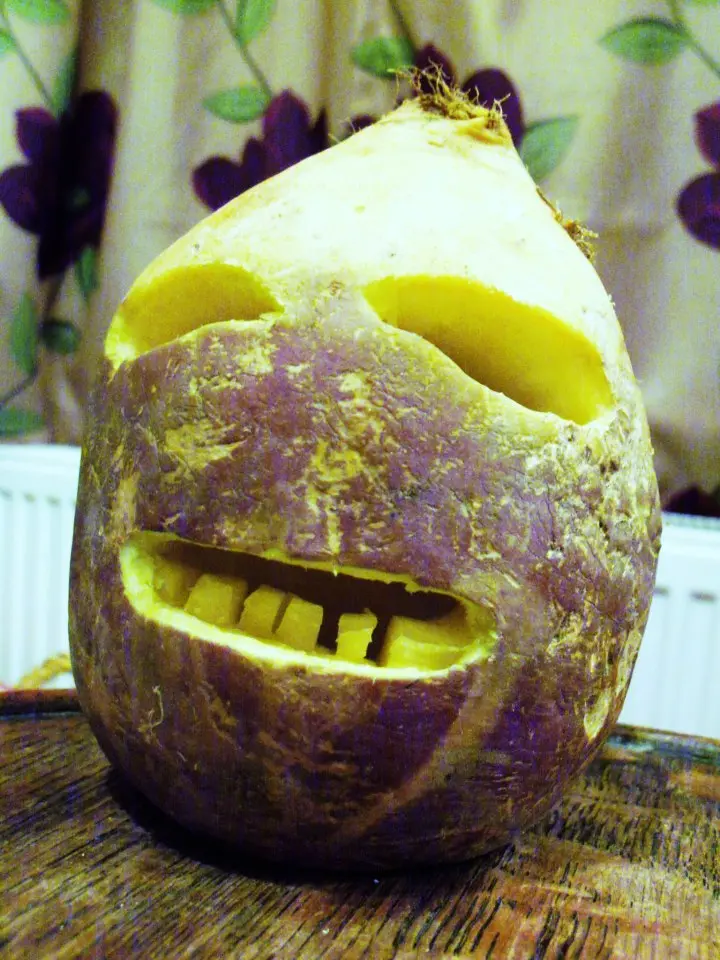
The Irish record is different in three ways. The tale is catalogued internationally as type AT 330A, 'The Smith and the Devil', of which the National Folklore Collection holds 124 items and 208 recorded versions, and in the Irish tellings the hero is characteristically a blacksmith: in one taken down from William Cox in May 1935 he is Jem Slattery, and his light along the sea shore is a warning to sailors that stormy weather is coming. The name jack-o'-lantern is older than any carved vegetable, and dictionaries and antiquarian collections record it as a synonym for the will-o'-the-wisp, the light seen over bogs. Carving turnips is documented separately, by Irish schoolchildren in 1937-39, who describe scooping out a turnip skull and standing a lighted candle in it at Hallowe'en, and also at Christmas and on St Stephen's Day. The phrase Stingy Jack appears nowhere in that archive; its closest verified printed ancestor is a 1919 American book's mention of a stingy man named Jack.
What is the history of Stingy Jack and the Lantern?
Every October the same paragraph goes round: a crafty Irish drunkard called Stingy Jack traps the Devil in a coin, traps him again up an apple tree, is refused by both Heaven and Hell, and is sent off with a coal from the fire, which he puts inside a hollowed turnip — the first jack-o'-lantern, later replaced by the American pumpkin.
It is a good story and a modern splice, whose pieces have separate, documented histories.
First: the name belonged to a light. In the antiquarian literature jack-o'-lantern is a synonym for the marsh light. Brand's Observations on the Popular Antiquities of Great Britain, in the section headed "Will with a Wisp", opens flatly: "This phenomenon is called Will or Kitty with a wisp, or Jack with a lantern", adding Reginald Scot's "Kit of the canstick" and Milton's "wandering fire… Which oft, they say, some evil spirit attends".
Joseph Wright's English Dialect Dictionary (1902) fixes it. Its entry reads: "JACK-A-LANTERN, sb. Sc. Irel. n.Cy. Nhb. Yks. Lan. Der. Not. Lin. Nhp. War. Shr. e.An. Hmp. I.W. Wil. Som. Dev. Cor." — and then sense 1: "Ignis fatuus or Will-o'-th'-Wisp." The supporting quotations run from John Mactaggart's Galloway encyclopaedia of 1824 ("Some fancy that Jack and the Lantern, alias Will o' the Wisp, has his habitation in the Quaking-quaw") to Croker's south of Ireland ("Maybe… you are only a Jacky lanthorn") and a Cornish charm: "Jack the lantern, Joan the Wad, / That tickled the maid and made her mad, / Light me home, the weather's bad."
The carved vegetable is in Wright too — but as sense 3, and only for two English counties: "A hollowed turnip cut into the semblance of the human face and lighted within by a candle. Not. (J.H.B.), Hmp." The lantern meaning is secondary and local; the fen-light meaning is the one recorded from Scotland to Cornwall.
Second: in Ireland the tale is about a wandering light, and it is a catalogued international type. The National Folklore Collection's own folktale index — built on the classification Seán Ó Súilleabháin published as A Handbook of Irish Folklore (1942) — lists the plot under AT 330A, "The Smith and the Devil (Death)": "The Savior and Peter; the three wishes. Sticking to the bench, to the apple tree, etc. The smith is admitted neither into heaven nor hell." Against that entry the Collection records 124 items and 208 stories.
Read the items filed under it and the shape of the Irish tradition appears. Their titles are Seán an Laindéir (Jack o' the Lanthorn), Jack O' the Lantern, "Seán an Laindéir" agus an Diabhal, Liam an tSoip, Willie the Wisp, Will-o'-the-wisp. The hero is repeatedly a smith. In a telling taken down from William Cox in May 1935 the story begins with the light and works backwards to the man: "There used be a light seen going along the sea shore very often. 'Twas Jack O' the Lantern. 'Twas a warning for sailors that bad stormy weather was at hand. Well Jack O' the Lantern was once an ordinary man. His name was Jem Slattery. Jem Slattery was a blacksmith." The Devil walks into his forge and offers all the money he wants for a soul in five years. Jem holds him twice, once to a sledge and once to a chair, and buys five more years each time; the third time the Devil offers to "make a half crown of myself", and Jem shuts him in his purse. Turned away at the gate of Hell, he takes a lantern and goes round the world with it.
A telling written down in February 1930 under the title "Willie the Wisp" gives the classic three wishes: Willie, a blacksmith's son who has drunk away everything but the forge, asks that whoever sits in his chair cannot rise, that whoever lifts his hammer cannot drop it, and that no money put in his purse can be taken out. "The angel reminded him that he had forgotten to ask for heaven and departed." The Devil, caught in the chair and then by the hammer, finally turns himself into a two-shilling piece and is beaten inside the purse. Refused by St Peter for his drunken life and by Hell, Willie is handed a lit wisp and sent out again, "from bog to bog, and from hill to hill", until the Judgment Day.
The same idea reaches the schoolchildren of 1937-39 in one line of Irish, collected in Co. Kerry: "Deirtear gur fear é Jack o' the Lantern a bhí ró mhaith chun é a chur go h-Ifreann agus ró olc chun é a leigint isteach i bhFlaitheas Dé" — it is said Jack o' the Lantern was a man too good to be sent to Hell and too bad to be let into the Kingdom of God. But several of the seventy-six school transcripts that name him do not tell his story at all; they describe a light. Tomás Ó Murchadha wrote down from James Murphy, aged 52, of Ballymalis, Co. Kerry: "Jack o' the Lantern is supposed to be a person who goes abroad at night to put people astray. He carries with him a lighted lantern. When a person is coming towards his house, he mistakes the light from the lantern for the light from his own house." John Feighery, 55, of Killeen, Co. Clare, gave the same thing with the standard remedy: "He would turned his coat inside out and he found his way safely home."
That the plot is a migratory type rather than an Irish invention is not folklore-buff opinion. Sara Graça da Silva and Jamshid Tehrani, analysing folktale distributions phylogenetically in Royal Society Open Science (2016), describe ATU 330 'The Smith and the Devil' as "stable throughout the Indo-European speaking world, from India to Scandinavia": a smith trades his soul for the power to weld anything, then uses it "to stick the villain to an immovable object (e.g. a tree)". Their contested conclusion is that the tale was already present in the last common ancestor of the Indo-European languages.
Third: the carved turnip is real, well documented — and not only a Halloween thing. The best evidence is the Schools' Collection, folklore written down by Irish schoolchildren in 1937-39 and now digitised on dúchas.ie. R. Siberry, of Ballinorley school near Bellanurly, Co. Sligo, wrote: "I often made a turnip skull by getting a turnip about the size of a person's head, peeling it and scooping out the inside. Then I cut two holes in it for the eyes and a slit for the mouth. If you stand a lighted candle in it it looks awful." Kevin Feely, of Ballynaraw North, Co. Sligo, described a family evening: "One evening I went out to the garden and pulled a turnip. My father said he would make a ghost out of it… He went out on the road, and put the turnip standing on the fence. He lit the candle with a match, and stuck it up on the turnip. James Byrne was frightened with it that night."
Some transcripts tie the practice explicitly to the feast. Sandie Allen, of Three Trees, Co. Donegal: "At Hallow E'en, young people take a turnip and hollow it out and they make two eyes and a nose and a mouth in the turnip they put a lighted candle in it then they hang it up on a tree. This is done to frighten the people on Hallow E'en night." But Pat Browne of Collon, Co. Louth, is the corrective: "The turnip-man is made at Christmas Hallow E'en and St., Stephen's day." Three of these accounts are filed by the archive not under festivals but under toys.
Fourth: in 1919 the three things were still three things. Ruth Edna Kelley's The Book of Hallowe'en (1919) contains all the ingredients — in different chapters. Ireland: "One version of the Jack-o'-lantern story comes from Ireland. A stingy man named Jack was for his inhospitality barred from all hope of heaven, and because of practical jokes on the Devil was locked out of hell. Until the Judgment Day he is condemned to walk the earth with a lantern to light his way." Scotland: children make "bogies", "carrying the largest turnips they can save from harvest, hollowed out and carved into the likeness of a fearsome face, with teeth and forehead blacked, and lighted by a candle fastened inside". America: "Jack-o'-lanterns, with which the room is lighted, are hollowed pumpkins with candles inside."
Kelley's Jack has no coal, no turnip and no pumpkin. He is barred from Heaven for inhospitality, where Willie in 1930 was refused for his drunken life. Kelley's book keeps the three things in three chapters, without presenting them as one origin story.
Timeline: the documented record of Stingy Jack and the Lantern
- 1824 — the word in print John Mactaggart's Scottish Gallovidian Encyclopedia, quoted by Wright: "Some fancy that Jack and the Lantern, alias Will o' the Wisp, has his habitation in the Quaking-quaw." The name belongs to the marsh light.
- Brand's Popular Antiquities In the section "Will with a Wisp", Brand and Ellis record the synonyms of the ignis fatuus: "This phenomenon is called Will or Kitty with a wisp, or Jack with a lantern." No vegetable is involved.
- 1879 — the light goes out Richard Jefferies writes of north Wiltshire, quoted by Wright: "The Ignis fatuus is almost extinct - so much so that Jack o' the Lantern has died out of village folk lore." Land drainage, not scepticism, ended the sightings.
- 1902 — the dictionary entry Joseph Wright's English Dialect Dictionary gives sense 1 of JACK-A-LANTERN as "Ignis fatuus or Will-o'-th'-Wisp" across some twenty counties, and only sense 3 as "a hollowed turnip cut into the semblance of the human face and lighted within by a candle", recorded in Nottinghamshire and Hampshire.
- 1919 — three chapters, three things Ruth Edna Kelley's The Book of Hallowe'en describes the Irish tale of "a stingy man named Jack", Scottish turnip bogies and American pumpkin jack-o'-lanterns in separate chapters, without presenting them as one origin story. Her Jack has no coal, no turnip and no pumpkin.
- February 1930 "Willie the Wisp" is written down for the National Folklore Collection and classified AT 330A: a blacksmith's son is granted three wishes - the chair, the hammer and the purse - and "the angel reminded him that he had forgotten to ask for heaven and departed".
- May 1935 — Jem Slattery, blacksmith William Cox's telling of "Jack 'o' the Lantern" opens with the light: "There used be a light seen going along the sea shore very often… 'Twas a warning for sailors that bad stormy weather was at hand. Well Jack O' the Lantern was once an ordinary man. His name was Jem Slattery. Jem Slattery was a blacksmith."
- 1937-39 — the Schools' Scheme Irish schoolchildren write down the turnip lantern in their own words. R. Siberry, Co. Sligo: "I often made a turnip skull… If you stand a lighted candle in it it looks awful." Sandie Allen, Co. Donegal, ties it to the feast: "At Hallow E'en, young people take a turnip and hollow it out… This is done to frighten the people on Hallow E'en night."
- 1937-39 — not only Halloween Pat Browne, of Collon, Co. Louth, gives the detail that complicates the tidy story: "The turnip-man is made at Christmas Hallow E'en and St., Stephen's day." Three of the turnip accounts are filed by the archive under toys, not festivals.
- 1942 — the classification Seán Ó Súilleabháin, the Irish Folklore Commission's first archivist, publishes A Handbook of Irish Folklore, the subject classification under which the Collection is still arranged and which underlies its folktale index.
- 2016 — a tale older than Ireland Sara Graça da Silva and Jamshid Tehrani describe ATU 330 'The Smith and the Devil' as "stable throughout the Indo-European speaking world, from India to Scandinavia" - the smith sticks the villain "to an immovable object (e.g. a tree)" - and argue, controversially, that it reaches back to Proto-Indo-European.
- 2026 — what the index says The National Folklore Collection's index lists AT 330A, "The Smith and the Devil (Death)", with 124 items and 208 stories: "the smith is admitted neither into heaven nor hell". A search of the same digitised archive for the phrase "Stingy Jack" returns nothing at all.
Is there a rational explanation for Stingy Jack and the Lantern?
The popular account reads like a modern synthesis of three separate histories, and the sources bear that out at most of its joints. At one joint they correct it: part of what looks like modern decoration is already in Irish manuscripts of the 1930s.
The name is older than the vegetable, and meant the marsh light. Wright's English Dialect Dictionary (1902) gives ignis fatuus as sense 1 of JACK-A-LANTERN, with quotations from Galloway to Cornwall, and the carved turnip only as sense 3, for two English counties. Brand's Popular Antiquities lists "Jack with a lantern" among the names of the will-o'-the-wisp. In the Irish archive the Schools' Collection holds seventy-six transcripts that name Jack o' the Lantern; the two from Kerry and Clare cited here describe a light that leads travellers astray.
The tale is an international type. It is filed under AT 330A in the National Folklore Collection's own index, with 124 items and 208 stories against it, and the protagonist in the Irish versions is characteristically a smith — Jem Slattery of the William Cox telling, Willie the blacksmith's son of the 1930 one. Da Silva and Tehrani's phylogenetic study treats ATU 330 as a pan-Indo-European tale.
The carved turnip is documented ethnographically — by children who had made them, in their own words, in 1937-39.
Two details usually taken for modern inventions are in the Irish manuscripts. The Devil turned into a coin is in both of the tellings cited here. In "Willie the Wisp", written down in February 1930, the Devil "offered to turn himself into a two-shilling piece", and Willie put the florin in his purse and hammered it on the floor of the forge until the Devil promised never to come back. In William Cox's telling of May 1935 the Devil says "I'll make a half crown of myself", and Jem Slattery "put him into his purse, and slapped the purse on him". The light from Hell is there too, in another form: refused at the gate, Willie is handed a lit wisp by the chief Devil — "He lit a wish and giving it to Willie he sent him out in the world again" — and Jem takes a lantern as he leaves. The truces are of seven years in the first telling and five in the second. Neither has a silver cross in the pocket, a cross carved into a tree or a coal carried in a turnip, and neither hero is called Jack; Kelley's summary of 1919 has none of those three objects either.
The name "Stingy Jack" is not in the Irish archive. A search of dúchas.ie on 4 October 2026 for that phrase returns no results in the Schools' Collection and none in the Main Manuscript Collection, while the control phrase "Jack o' the Lantern" returns 76 transcripts in the first and 27 items in the second. The closest verified printed ancestor is Kelley's 1919 sentence about "a stingy man named Jack", which describes the man without naming him. Whoever turned it into a proper noun did so later.
The emigrant hand-off is the least documented step. The claim that Irish and Scottish emigrants carried turnip lanterns to America and simply switched to pumpkins is the step the popular account takes for granted, and testing it would need the date at which the carved pumpkin first appears at Halloween in American print. What can be said with a source is narrower: by 1919 an American writer described pumpkin jack-o'-lanterns as the ordinary decoration of a Halloween party, while describing the turnip version as Scottish and the Jack story as Irish, in separate chapters and without joining them.
On the light itself. The ignis fatuus is a reported phenomenon over bogs and marshes, and the sources record it fading rather than being debunked. Wright quotes Richard Jefferies from north Wiltshire in 1879: "The Ignis fatuus is almost extinct — so much so that Jack o' the Lantern has died out of village folk lore." A generation of drainage did what argument never did. The Somerset entry in the same dictionary says the phenomenon "only occurs in certain parts of the boggy moorland of Brendon Hill and the Exmoor district", a distribution that follows wet ground.
On the earliest use of the word. The single best authority on when jack-o'-lantern was first written down is the Oxford English Dictionary, which is behind a paywall, and nothing here is a claim about the earliest recorded use. What the sources cited here show is that the word is already an established synonym for the will-o'-the-wisp in Mactaggart's Galloway of 1824, in Brand's antiquarian compilation, and across some twenty counties and countries in Wright's 1902 survey — long before anybody attached it to a lantern of any material at Halloween.
None of this makes the popular version worthless. It makes it what it is: a nineteenth- and twentieth-century assembly, put together out of a genuine tale type, a genuine craft and a genuine American crop.
Can you visit Stingy Jack and the Lantern?
Stingy Jack has no house to visit and no grave. He is a tale type whose classification is Aarne-Thompson 330A, and the filter for that type on the Main Manuscript Collection returned 124 results when it was run on 9 September 2026. The places that hold this file are archives and festivals.
The archive that holds the Irish material is at University College Dublin. The National Folklore Collection describes itself as "a UNESCO recognised folklore archive, and one of Europe's largest archives of oral tradition and cultural history", and it was inscribed on the UNESCO Memory of the World Register in December 2017 for its "world significance" and its "outstanding universal value to culture". Its reading room is open on the terms its own page sets out: "Members of the public are welcome to visit the NFC reading room by appointment, Monday to Friday, 10:00-16:30". That is where the material of type 330A that has not yet been transcribed can be consulted, which is most of the 124 items. The transcribed part is on dúchas.ie, a digitisation project run jointly by University College Dublin and Dublin City University since December 2013, where a search for Jack o' the Lantern returns the schoolchildren's own handwriting beside its transcription, and where the folktale index at duchas.ie/en/aath allows browsing by international tale type.
Púca Festival, the official Irish Halloween festival, runs from 29 October to 1 November 2026 across two sites in County Meath: Trim and Athboy. The festival site, read on 9 September 2026, marks the Púca Procession — "The Gathering of the Spirits" — as a free event, along with projections on Trim Castle; the headline concerts are ticketed.
The fourth place is Rathcroghan, which interprets Samhain rather than Halloween. The Rathcroghan Visitor Centre is at Tulsk, Castlerea, Co. Roscommon, F45 HH51, telephone +353 (0)71 963 9268. Its own page states that the centre "is open all year-round Monday to Saturday, 9.15am to 5pm daily", with last admission to the museum at 4.30pm. Guided tours last two and a half hours and, in the same page's words, "run year-round Monday to Friday at 11.30am, (Saturday by appointment only)"; Sunday tours are arranged for groups by appointment. One line on that page governs whether the cave is seen at all: "From May 1st until the end of August, we run an additional daily guided tour at 2pm, which includes a visit into Oweynagat Cave". The centre has off-street car and coach parking, wheelchair access, baby changing, free Wi-Fi, a café, a bookshop. The monuments themselves stand on working farmland with livestock and gates.
Sources consulted
- Joseph Wright, «The English Dialect Dictionary, vol. III, s.v. JACK-A-LANTERN — sense 1 'Ignis fatuus or Will-o'-th'-Wisp' with citations from Galloway (Mactaggart, 1824), the south of Ireland (Croker), Northamptonshire (Clare, 1827), Wiltshire (Jefferies, 1879) and Cornwall; sense 3 'a hollowed turnip cut into the semblance of the human face and lighted within by a candle'» — Henry Frowde, Oxford; Internet Archive, 1902 book
- John Brand, ed. Sir Henry Ellis, «Observations on the Popular Antiquities of Great Britain, vol. III — the section 'Will with a Wisp': 'This phenomenon is called Will or Kitty with a wisp, or Jack with a lantern'» — George Bell (Bohn's Antiquarian Library), London; Internet Archive, 1877 book
- Ruth Edna Kelley, «The Book of Hallowe'en — the Irish story of 'a stingy man named Jack', the Scottish turnip bogies and the American pumpkin jack-o'-lanterns, in three separate chapters» — Lothrop, Lee and Shepard, Boston; Project Gutenberg, 1919 book
- National Folklore Collection, University College Dublin, «Folktale index — AT0330A 'The Smith and the Devil (Death)': 'The Savior and Peter; the three wishes. Sticking to the bench, to the apple tree, etc. The smith is admitted neither into heaven nor hell.' Items 124, Stories 208» — dúchas.ie, 2026 archive
- National Folklore Collection, University College Dublin, «'Jack 'o' the Lantern', taken down from William Cox, May 1935 — Main Manuscript Collection, CBÉ vol. 0107, classified AT0330A: the light on the sea shore and Jem Slattery the blacksmith» — dúchas.ie, 1935 archive
- National Folklore Collection, University College Dublin, «'Willie the Wisp', February 1930 — Main Manuscript Collection, CBÉ vol. 0089, classified AT0330A: the blacksmith's son, the three wishes and the angel who 'reminded him that he had forgotten to ask for heaven'» — dúchas.ie, 1930 archive
- National Folklore Collection, University College Dublin, «Schools' Collection, vol. 0458, p. 197 — Jack o' the Lantern as a light that leads people astray; collector Tomás Ó Murchadha, informant James Murphy (52), Ballymalis, Co. Kerry; classified AT0330A» — dúchas.ie, 1938 archive
- National Folklore Collection, University College Dublin, «Schools' Collection, vol. 0614, p. 145 — 'Jack O' The Lantern was a light that used shine in one place and then another to put people astray'; informant John Feighery (55), Killeen, Co. Clare, with the coat-inside-out remedy» — dúchas.ie, 1938 archive
- National Folklore Collection, University College Dublin, «Schools' Collection, vol. 0476, p. 260 — in Irish: 'Deirtear gur fear é Jack o' the Lantern a bhí ró mhaith chun é a chur go h-Ifreann agus ró olc chun é a leigint isteach i bhFlaitheas Dé'» — dúchas.ie, 1938 archive
- National Folklore Collection, University College Dublin, «Schools' Collection, vol. 0160, p. 211 — 'A Turnip Skull', collector R. Siberry, Ballinorley school, Bellanurly, Co. Sligo» — dúchas.ie, 1938 archive
- National Folklore Collection, University College Dublin, «Schools' Collection, vol. 0185, p. 241 — 'Making a Ghost from a Turnip', collector Kevin Feely, Ballynaraw North, Co. Sligo, Bunninadden school» — dúchas.ie, 1938 archive
- National Folklore Collection, University College Dublin, «Schools' Collection, vol. 1113, p. 415 — 'Homemade Toys': the Hallow E'en turnip hung from a tree; collector Sandie Allen, Three Trees, Co. Donegal» — dúchas.ie, 1938 archive
- National Folklore Collection, University College Dublin, «Schools' Collection, vol. 0677, p. 68 — 'Homemade Toys': 'The turnip-man is made at Christmas Hallow E'en and St., Stephen's day'; informant Pat Browne, Collon, Co. Louth» — dúchas.ie, 1938 archive
- Sara Graça da Silva and Jamshid J. Tehrani, «Comparative phylogenetic analyses uncover the ancient roots of Indo-European folktales — on ATU 330 'The Smith and the Devil', DOI 10.1098/rsos.150645» — Royal Society Open Science 3:150645; Europe PMC, 2016 academic
- National Folklore Collection, University College Dublin, «The National Folklore Collection — holdings, reading-room access by appointment (Mon-Fri 10:00-16:30) and Seán Ó Súilleabháin's A Handbook of Irish Folklore (1942) as the classification still in use» — dúchas.ie, 2026 web
- National Folklore Collection, University College Dublin, «Main Manuscript Collection filtered by Aarne-Thompson type 0330A — 124 results, with titles including Seán an Laindéir (Jack o' the Lanthorn), Jack O' the Lantern, Liam an tSoip and Will-o'-the-wisp» — dúchas.ie, 2026 archive
- Púca Festival, «Púca Festival 2026 — dates (29 October to 1 November 2026), the Trim and Athboy sites, the free Púca Procession and the programme» — pucafestival.com, 2026 web
- Tulsk Action Group CLG, «Rathcroghan Visitor Centre — opening times, guided-tour schedule, the summer 14:00 tour into Oweynagat cave, and facilities» — rathcroghan.ie, 2026 web
Reviewed by V. Serrano on 2026-08-01 · How we verify our content
📎 Source: Enigma Atlas
💬 Field testimonies (0)
No testimonies yet. Add the first.
Add your testimony
🔒 Log in to add a testimony