🦶 CRYPTID SIGHTING · EXP. Nº6501
ACTIVE
Bunyip
The bunyip is the English name colonial Australia gave to many distinct water-beings of Aboriginal law, among them Toor-roo-dun at Western Port, Mulgewanke on Lake Alexandrina and Wan-gul in the north-west, each tied to rules about particular waters.
Where and when was Bunyip sighted?
- Location
- Interior de Australia (ríos, billabongs y humedales), Australia
- Date sighted
- Unknown
- Coordinates
- -34.0, 142.0
- Last updated
LOCATION
What is Bunyip?
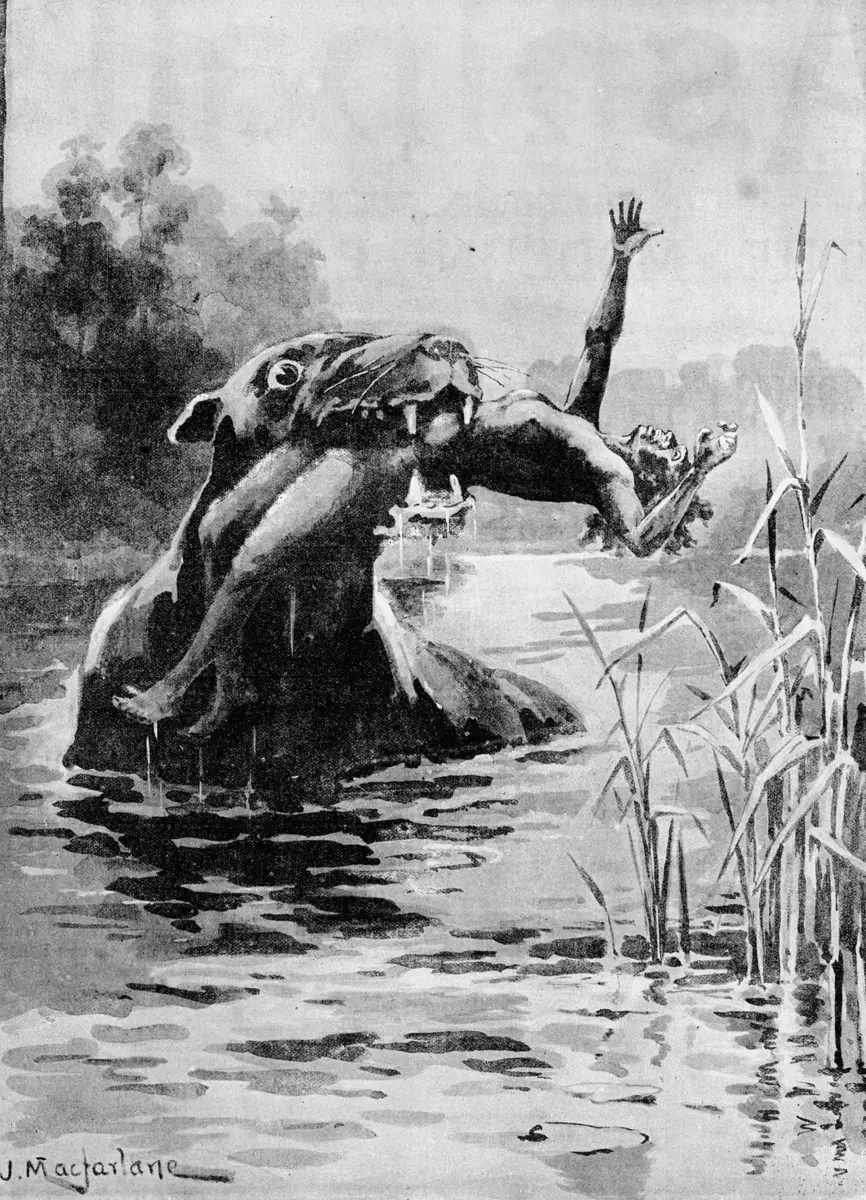
The word, first dated in print in July 1845, arrived attached to a fossil bone shown to an Aboriginal man. In July 1847 a skull from the Murrumbidgee was exhibited in Sydney for two days as a possible bunyip, until William Sharp Macleay identified it as a deformed foal. The candidates since are the Australasian bittern, whose booming call BirdLife Australia compares to a bunyip, stray seals, which Brough Smyth proposed in 1878 and himself doubted for inland waters, and folk memory of extinct megafauna, which its own proponents say cannot be proved. The Kamilaroi still hear the bunyip in the bittern's call.
What is the history of Bunyip?
There is no such thing as the bunyip, and that is the first thing colonial Australia got wrong about it.
What the nineteenth century filed under a single English word was a set of distinct beings belonging to distinct nations, with distinct names, distinct habits and distinct rules attached to them. Robert Brough Smyth, who assembled The Aborigines of Victoria for the colonial government and published it in Melbourne in 1878, recorded several of them side by side without quite noticing what that implied. The people of Western Port called the being of their waters Toor-roo-dun, and on the Western Port plains there is a basin, never dry even in the hottest summers, that carries the same name "because the Bun-yip lives in that water". Smyth adds that "the natives never bathe in the waters of this basin". On the Goulburn, he wrote, the doctors and wise men held that Toor-roo-dun "does not eat the blacks, but contents himself with holding them in his embraces until they die". Near the mouth of the Murray, the water-being recorded among the Narrinyeri by the Reverend George Taplin was Mulgewanke, "half man, half fish, and, instead of hair, a matted crop of reeds", to whom the booming heard across Lake Alexandrina was ascribed. In the north-west, George Grey recorded a Wan-gul, "an imaginary aquatic monster, residing in fresh water, and endowed with supernatural power". At Port Essington there was another being again.
Different names, different Countries and different beings, each embedded in law and in practice: which water people could enter, which they could not, who was allowed to say where the being lived. Smyth quotes the Reverend Friedrich Hagenauer to the effect that "the doctors alone" were "able to point out where the Bun-yip has his dwelling". That is jurisdiction.
The colonists collapsed all of it into one animal, and then went looking for the animal.
The word itself comes from one of those languages, and which one is disputed. The Australian National Dictionary Centre at the Australian National University, which maintains the historical record of Australian English, derives bunyip on its web page of word origins from Wathaurong, a language of what is now Victoria; Australian Words and Their Origins, researched at the same Centre and published by Oxford in 1989, derived it from the Wergaia dialect of Wemba-Wemba. The Centre's earliest dated citation is the Sydney Morning Herald of 12 July 1845: "On the bone being shown to an intelligent black, he at once recognised it as belonging to the 'Bunyip', which he declared he had seen." The same sentence had appeared ten days earlier in the Geelong Advertiser of 2 July 1845, under the heading "Wonderful discovery of a new animal". In its earliest dated appearances in print, then, the bunyip arrives attached to a bone, and attached to a colonist asking an Aboriginal man to authenticate it.
The fullest early description in English comes from a man who had lived among the people who used the word. William Buckley, the escaped convict who spent thirty-two years with the Wathaurong around Port Phillip, dictated his account to John Morgan, published in Hobart in 1852. "In this lake [Modewarre]," Buckley said, "as well as in most of the others inland, and in the deep-water rivers, is a very extraordinary amphibious animal, which the natives call Bun-yip, of which I could never see any part except the back, which appeared to be covered with feathers of a dusky-grey colour. It seemed to be about the size of a full-grown calf." He is careful about the limits of his own evidence: he never saw a head or a tail, and neither, he was told, had anyone else. He also records the thing that later cryptozoology throws away: the people around him "had a great dread of them, believing them to have some supernatural power over human beings", and when he tried to spear one, he understood that being seen doing it could have cost him his life.
Then came the 1840s, and with them a scientific gold rush. Colonists were pulling enormous fossil bones out of caves and riverbanks, and in 1838 Richard Owen in London had named Diprotodon optatum from Australian material, the first fossil mammal ever named from this continent, an animal the Australian Museum describes as up to 3.8 metres long and around 2,700 kilograms, the largest marsupial known. In 1845 Owen argued in print that herbivores on that scale implied "some destructive species" of predator still undiscovered. As the historian Pete Minard has shown, the effect on the colonies was immediate: fossil bones were carried to Aboriginal people to be identified, and the identifications were reported in the press as evidence. The Geelong Advertiser of 2 July 1845 described a creature with "a head resembling an emu", long claws, a habit of "hugging" its prey to death and a height, standing on its hind legs, of "twelve or thirteen feet"; Minard records the account of a Boonwurrung man named Mumbowran, said to bear scars from an encounter. In February 1847 the explorer William Hovell published in the Sydney Morning Herald a piece titled "The Apocryphal Animal of the Interior of New South Wales", arguing that Australia's fauna simply defied the orders established by Linnaeus, which, on the evidence then arriving in Sydney, was a reasonable thing to think.
Then somebody produced a skull. In 1846 a squatter named Athol T. Fletcher picked up a strange head by the Murrumbidgee River, and the following year it went on show at the Colonial Museum of Sydney, the institution that is now the Australian Museum, labelled as a possible bunyip. The historian Penny Edmonds, who reconstructed the episode for the Australian Humanities Review in 2018, notes that it was not the first such object: a second deformed head had been found at the Hawkesbury River in 1841 and sent to Hobart for examination by the Royal Society of Tasmania.
The National Library of Australia's exhibition Bunyips puts the Sydney showing at two days in July 1847, with visitors flocking to it. On 7 July 1847 the naturalist William Sharp Macleay published in the Sydney Morning Herald an article headed "On the Skull Now Exhibited at the Colonial Museum of Sydney", and closed the case: the thing was a foal's skull, deformed, and like the Hawkesbury head it was a freak of nature. Macleay's argument rested on a principle he thought settled, natura non facit saltus: nature does not make jumps. The specimen itself has since been lost.
That did not end the sightings, because the sightings had never depended on the skull. Smyth was still collecting them thirty years later, with a long-haired swimmer at Midgeon Lagoon in 1872, a head "like an old man blackfellow" on Lake Cowal in 1873 and an animal resembling a water-dog in the Malmsbury reservoir, and in Tasmania the geologist Charles Gould was taking careful notes on animals in the Great Lake.
And the traditions did not end either, which is the part the cryptid literature keeps forgetting. In 2024 a team of researchers led by Bradley J. Moggridge, a Kamilaroi water scientist, wrote that the Kamilaroi "believe the bittern's booming cry signals the presence of the bunyip, a creature from ancestral times", whose songs and stories keep people away from sacred waterholes. They wrote it in the present tense. The tradition describes a living relationship with water, and it does work: it protects the waterholes.
Timeline: the documented record of Bunyip
- Traditions predating the colony Across the south-east of the continent, many nations keep accounts of a being of the deep water — Toor-roo-dun at Western Port, Mulgewanke near the mouth of the Murray, Wan-gul in the north-west, and others. They are distinct beings with distinct rules; the English word "bunyip" will later collapse them into one.
- 1838 Richard Owen names Diprotodon optatum from Australian material — the first fossil mammal named from Australia, and, at up to 3.8 m long and around 2,700 kg, the largest marsupial known. Fossil megafauna becomes the frame through which colonists will read every strange bone.
- 1841 A deformed head is found at the Hawkesbury River and later sent to Hobart for examination by the Royal Society of Tasmania. Penny Edmonds identifies it as a deformed foal's skull, now in the Macleay collections of the University of Sydney (MAMU NHM.4).
- 2 July 1845 The Geelong Advertiser publishes Aboriginal testimony describing a creature with "a head resembling an emu", standing "twelve or thirteen feet in height" on its hind legs. Pete Minard records from the same period the account of Mumbowran, a Boonwurrung man said to bear scars from an encounter.
- 12 July 1845 The earliest dated citation of the word held by the Australian National Dictionary Centre appears in the Sydney Morning Herald: "On the bone being shown to an intelligent black, he at once recognised it as belonging to the 'Bunyip', which he declared he had seen." The Centre derives the word from Wathaurong, a language of Victoria. The same sentence had appeared ten days earlier in the Geelong Advertiser of 2 July 1845.
- 1846 The squatter Athol T. Fletcher finds a strange skull by the Murrumbidgee River.
- 9 February 1847 The explorer William Hovell publishes "The Apocryphal Animal of the Interior of New South Wales" in the Sydney Morning Herald, arguing that Australia's fauna defies the orders established by Linnaeus. He also records the name "katenpai".
- 1847 Fletcher's skull goes on show at the Colonial Museum of Sydney — today's Australian Museum — presented as a possible bunyip specimen. The National Library of Australia's exhibition Bunyips puts the showing at two days in July, with visitors flocking to see it.
- 7 July 1847 The naturalist William Sharp Macleay publishes "On the Skull Now Exhibited at the Colonial Museum of Sydney" in the Sydney Morning Herald and closes the case: it is a foal's skull, not a water-dwelling creature. The specimen is later lost.
- 1848 An Aboriginal man of the Murray River draws a bunyip in the presence of J. P. Main and John Clark and gives the drawing to A. F. A. Greeves. Brough Smyth reproduces it as a woodcut in 1878, noting that "little is known amongst the blacks respecting its form, or covering, or habits".
- 1852 John Morgan publishes in Tasmania The Life and Adventures of William Buckley, with Buckley's account of the being in Lake Modewarre: a back "covered with feathers of a dusky-grey colour", "about the size of a full-grown calf", never a head or a tail, and a people who believed it held supernatural power over human beings.
- 1872 The geologist Charles Gould reads to the Royal Society of Tasmania his notes of a 1870 interview with Francis McPartland about seal-like animals in the Great Lake; the chief constable of the district is asked to establish whether they are seals that came up the Derwent and Shannon rivers. In April the same year the Wagga Wagga Advertiser reports a jet-black, long-haired swimmer watched for half an hour at Midgeon Lagoon.
- 1878 Robert Brough Smyth publishes The Aborigines of Victoria and proposes the seal — "Koor-man" — as the animal behind the bunyip, wondering whether it is the eared seal or "the large spotted sea-leopard". He also states the objection himself: the creature is reported from drainage basins with no outlet to the sea.
- September 2024 A team led by the Kamilaroi water scientist Bradley J. Moggridge writes that the Kamilaroi "believe the bittern's booming cry signals the presence of the bunyip, a creature from ancestral times", whose songs and stories keep people away from sacred waterholes. The tradition is present tense, and it protects the water.
Is there a rational explanation for Bunyip?
Five things have to be pulled apart here, and the first is not a sceptical question at all.
The traditions came first, and they were law. Toor-roo-dun, Mulgewanke and Wan-gul were beings inside living systems of law, story and water management, and the accounts recorded in the 1840s and after carry practical rules with them: the Western Port people never bathed in the basin called Toor-roo-dun, and only the doctors, Smyth was told, could point out where the being lived. Turning that into "the Aboriginal version of the bunyip cryptid" inverts the relationship. The inversion was made by the colonial press and colonial naturalists of the 1840s, working to a very specific incentive: Richard Owen's 1845 prediction of an undiscovered Australian predator made Aboriginal testimony momentarily valuable as evidence. Pete Minard's reconstruction of the same period shows what that was worth in practice: Aboriginal knowledge was decisive in identifying the marsupial lion Thylacoleo carnifex, and Owen went on to downplay the colonial contributors and to ignore the Indigenous ones altogether. Testimony was solicited when it fed the hypothesis and dropped when it did not.
Second: the one piece of physical evidence, and what happened to it. The 1847 exhibit is the cleanest test the case has ever had, because for once there was an object. The National Library of Australia's exhibition Bunyips records that the skull was shown at the Australian Museum, then housed in the Supreme Court House in Sydney, for two days in July 1847, that visitors flocked to see it, and that the Sydney Morning Herald reported a spate of bunyip stories in its wake. William Sharp Macleay examined it and reported in the Herald of 7 July 1847 that it was the deformed skull of a foal. What makes the verdict decisive is that the skull was not unique: Penny Edmonds records a second deformed head found at the Hawkesbury in 1841 and sent to Hobart, which Macleay had in his own possession and compared with the first. Deformed foal skulls were in circulation, and they were being read as monsters. The Murrumbidgee specimen itself was later lost, so it cannot be re-examined, and what survives of it is Macleay's published judgement. The Hawkesbury head does survive, in the Macleay collections of the University of Sydney (MAMU NHM.4).
Third: the seal, the classic explanation, and its limits. The identification is old; it is Brough Smyth's own, in 1878. He proposed that what the Myndie was to the north-west, "Koor-man (the seal)" was to the bunyip, and wondered whether the animal was the eared seal or "the large spotted sea-leopard". He noted that seals "proceed inland often for a considerable distance", and in Tasmania officials in 1870 were explicitly investigating whether the Great Lake animals were seals that had come up the Derwent and Shannon rivers. Smyth also raised the objection himself, and it is the strongest one: the creature was reported from drainage basins with no outlet to the sea at all. "If it had been heard of only in lakes and swamps connected with the sea," he wrote, "it might have been safely assumed that it was a known species of seal." Modern range data sharpen the problem. The Australian Museum describes the leopard seal as a strictly Southern Hemisphere, circumpolar animal of the Antarctic pack ice, of which "occasionally individuals, usually young inexperienced animals will stray as far north as the Sydney beaches"; the Australian fur seal has a "relatively restricted distribution around the islands of Bass Strait, parts of Tasmania and southern Victoria". A lost young seal in a coastal river is entirely plausible and would terrify anyone who met it. A population of them in the inland billabongs is not.
Fourth: the sound, which is where most of the case actually lives. Almost every early account describes a bunyip that is heard and not seen, with groanings and bellowings at night over a lagoon. There is a bird that does exactly that. BirdLife Australia's profile of the Australasian Bittern, a heron of dense reed beds across the Murray-Darling Basin and south-eastern and south-western Australia, describes its call as "an eerie 'boom' that is said to resemble a 'Bunyip'"; the bird is classified as Endangered on the IUCN list. One of Smyth's correspondents in the 1870s reached for the same kind of answer with a different species, proposing the musk duck as the source of the noise that frightened people at night. Smyth had seen one dash out of the reeds on the Wannon and thought the noise would alarm anyone in the dusk, and then added that "it is scarcely credible that so many strange tales should arise from this source. The natives are good naturalists, and are probably better acquainted with the habits of this duck than we are." The Reverend George Taplin, on Lake Alexandrina, was equally careful about Mulgewanke's boom: he had heard it "dozens of times", said it "cannot be the peculiar sound made by the Murray bittern", had at first put it down to people blasting wood on the opposite shore and then ruled that out too, and could not identify it. His testimony describes a sound and stops there.
Fifth, the megafauna hypothesis, and how much weight it can carry. The idea that bunyip traditions preserve a memory of Diprotodon or of Palorchestes is attractive and is taken seriously by serious people, and the people who take it seriously state its limits clearly. Patrick Nunn and Luiza Corral Martins de Oliveira Ponciano, writing in 2019, point out that an 1846 account of bunyips "as tall as gum trees" that "tore trees out by their roots" does recall the marsupial tapir Palorchestes azael, and then conclude: "We shall never be able to prove conclusively that Indigenous stories about fabulous creatures like the bunyip and the mapinguari derive from observations of now-extinct megafauna, but it is reasonable to suppose this may be the case in some instances." The Australian Museum puts Diprotodon's extinction at around 25,000 years ago. That is a very long chain of transmission, and colonists were actively prompting the identifications with fossil bones in hand, which makes the 1840s accounts a poor place to test it.
Two details that circulate widely rest on more than they seem to. The two days of the 1847 exhibition and the crowds come from the National Library of Australia's own exhibition. A derivation of the word from Wemba-Wemba is printed in Australian Words and Their Origins (Oxford, 1989), researched at the Australian National Dictionary Centre, which gives bunyip as from the "Wergaia dial. of Wemba" banib; the Centre's web page of word origins derives it from Wathaurong. The two published etymologies come from the same institution and disagree.
And the pattern underneath all of it: the bunyip changed shape whenever the observers changed. It had an emu's head when emu-headed drawings were being collected, a seal's head when settlers were arguing about seals, a giant carnivore's claws in the year Owen predicted a giant carnivore. The water did not change. The audience did.
Can you visit Bunyip?
The bunyip has no address; what it has is a distribution of swamps, billabongs, deep waterholes and slow reed-choked rivers across the south-east of the continent, most of them on Country that belongs to somebody.
One place carries the name outright: Bunyip State Park, in the forested hills east of Melbourne around Gembrook and the Bunyip River. Parks Victoria's page for it states that the park "is part of an Aboriginal cultural landscape that includes the traditional Country of the Bunurong People and the Wurundjeri People". The same page, consulted on 9 September 2026, lists the Lawsons Falls Circuit Walk; the Gentle Annie and Blue Range routes for four-wheel drives and trail bikes; the Heritage Horse Trail, which follows part of the 2009 Tom Quilty Gold Cup ride course. Of the campgrounds it says: "No fees apply for these campgrounds." Assistance dogs are admitted. Ground shooting to control introduced deer closes sections of the park from 4pm to 7am on dated operations — 13 to 16 July; 3 to 6 August; 7 to 10 September 2026 — with every campground shut while they run, and on 9 September 2026 the page also carried an H5N1 avian influenza alert asking that sick or dead birds be left untouched and reported to 1800 675 888. The park information line is 13 1963, answered around the clock.
The closest thing to a bunyip encounter available to a visitor is a sound. The Australasian Bittern lives in exactly the habitat the nineteenth-century accounts describe — "reedbeds and other areas, particularly those dominated by sedges, rushes, reeds or cutting grass", in BirdLife Australia's words, across the Murray-Darling Basin among other places — and of its voice the same profile says: "Their call is an eerie 'boom' that is said to resemble a 'Bunyip' (a mythical creature said to live in swamps and waterholes)." Spring dusk and dawn are the hours for it. The bird is superbly camouflaged and rarely seen, and BirdLife lists it as Endangered on the IUCN scale, threatened above all by habitat loss to clearing under a drying climate.
No museum displays a bunyip skull, because the famous one no longer exists as an object. Penny Edmonds writes that the Murrumbidgee specimen "was famously displayed at the Colonial Museum of Sydney the following year as a possible bunyip specimen (it has since become lost)". The earlier Hawkesbury find of 1841 does survive, in the Macleay collections of the University of Sydney under the registration number MAMU NHM.4; Edmonds describes it as "a confected creature made from a deformed foal's skull and skin". It is a catalogued specimen rather than a guaranteed exhibit.
Waterholes in inland Australia are not scenery: many are the reason a group of people survived a given summer, and the Kamilaroi researchers writing in 2024 describe the stories that keep strangers away from them as doing exactly that job. Where the visitor centre or the cultural tour at a given place is run by its Traditional Owners, the version of the story told there belongs to the people who own it.
Sources consulted
- Penny Edmonds, «The Bunyip as Uncanny Rupture: Fabulous Animals, Innocuous Quadrupeds and the Australian Anthropocene» — Australian Humanities Review, issue 63, 2018 academic
- Robert Brough Smyth, «The Aborigines of Victoria, vol. I, "The Bun-yip" (pp. 435-441)» — Government Printer, Melbourne / John Ferres, 1878 book
- Australian National Dictionary Centre, «Meanings and origins of Australian words and idioms — B: bunyip» — Australian National University, 2025 academic
- Pete Minard (La Trobe University), «A history of the marsupial lion — with science, colonial politics and bunyips» — The Conversation, 2018 web
- Patrick D. Nunn and Luiza Corral Martins de Oliveira Ponciano, «Of bunyips and other beasts: living memories of long-extinct creatures in art and stories» — The Conversation, 2019 web
- Bradley J. Moggridge, Jessica K. Weir, Katie Moon and Rachel Morgain, «Bunyip birds and brolgas: how can we better protect species important to Indigenous people?» — The Conversation, 2024 web
- BirdLife Australia, «Australasian Bittern (bird profile)» — birdlife.org.au, 2026 web
- Australian Museum, «Leopard Seal» — australian.museum, 2025 web
- Australian Museum, «Australian Fur Seal» — australian.museum, 2025 web
- Australian Museum, «Diprotodon optatum» — australian.museum, 2025 web
- Parks Victoria, «Bunyip State Park» — parks.vic.gov.au, 2026 web
- National Library of Australia, «Bunyips — Evidence: were skulls physical proof that bunyips existed? (the 1847 exhibition, two days, and Macleay's verdict)» — Bunyips exhibition website (Internet Archive capture of 28 February 2006), 2006 archive
- Joan Hughes (ed.), Australian National Dictionary Centre, «Australian Words and Their Origins — bunyip: "a. Wergaia dial. of Wemba banib"» — Oxford University Press, Melbourne, 1989 book
- Geelong Advertiser and Squatters' Advocate, «Wonderful discovery of a new animal (the 'intelligent black' sentence, the emu head, 'twelve or thirteen feet')» — Geelong Advertiser, 2 July 1845, p. 2 (Trove), 1845 newspaper archive
Reviewed by V. Serrano on 2026-07-31 · How we verify our content
📎 Source: Enigma Atlas
💬 Field testimonies (0)
No testimonies yet. Add the first.
Add your testimony
🔒 Log in to add a testimony