👻 HAUNTED PLACE · EXP. Nº9475
ACTIVE
Himeji Castle
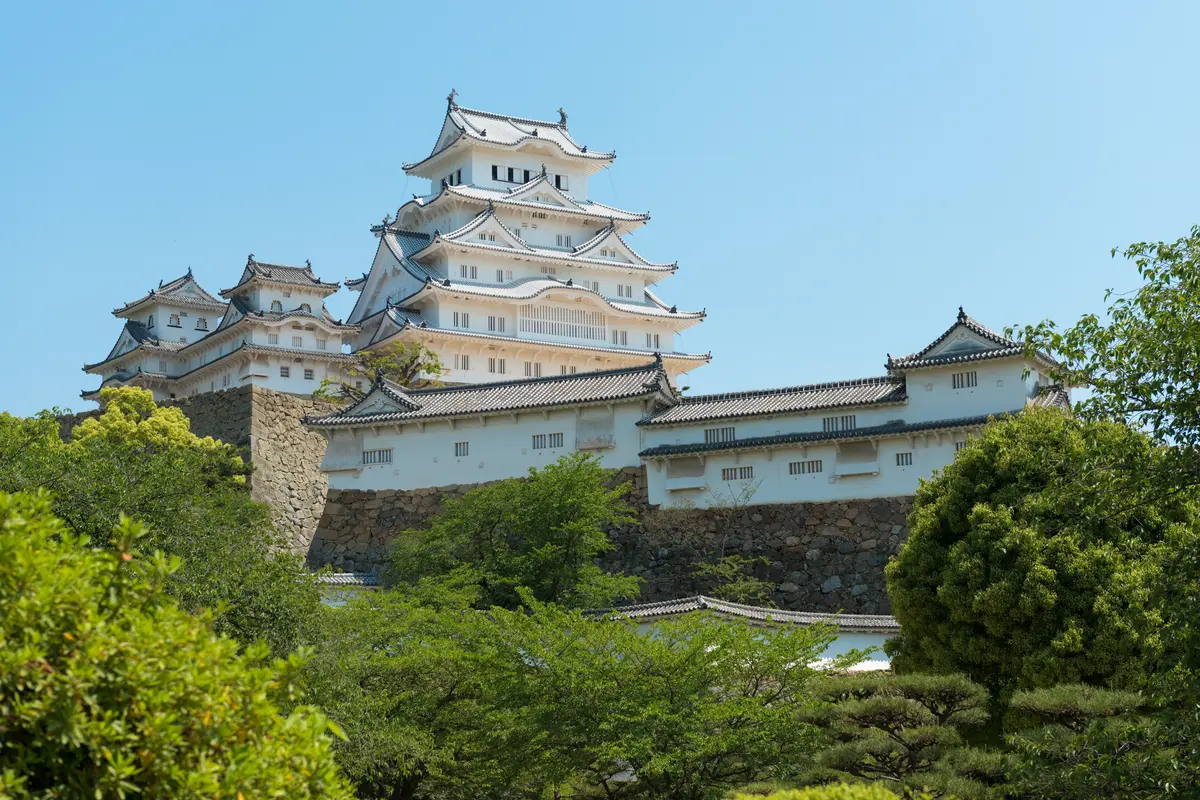
Himeji Castle's white ramparts hide one of Japan's most famous ghost stories, the legend of Okiku's well.
Where is Himeji Castle?
- Location
- Hyōgo, Japan
- Type
- Castle
- Coordinates
- 34.839, 134.694
- Last updated
LOCATION
Why is Himeji Castle said to be haunted?
In the tale a servant was entrusted with ten porcelain plates by a samurai; when one went missing — some versions say he hid it after she refused him — she was accused of theft and ended up in a well inside the grounds. Visitors and staff have claimed for generations that on quiet nights a voice counts plates — "ichimai, nimai… kyūmai" — before breaking into a scream when the tenth never comes. The oldest known dramatisation is neither from Edo nor kabuki: it is Banshū sarayashiki, a puppet-theatre play staged in Osaka in 1741 — the Himeji version. The castle, largely completed in 1609 under Ikeda Terumasa, survived the 1945 air raids, though it did not come through the century untouched: a palace burned down in 1882 and seismic reinforcement followed the 1995 earthquake.
What is the history of Himeji Castle?
Himeji Castle is the most completely preserved castle in Japan and also, officially, the address of a ghost. Both facts are administered by the same office, and that is what makes the place worth a long look: the well of Okiku is not a rumour attached to the monument from outside, it is a numbered stop on the guide map published by the Himeji Castle Management Office.
Start with the building. Himeyama, the low hill it stands on, has been fortified since at least 1333, when — following the chronology published by the City of Himeji — Akamatsu Norimura threw up a fort there while marching on Kyoto; his descendant Akamatsu Sadanori built a proper castle in 1346. In 1580 Kuroda Yoshitaka handed the site to Hashiba Hideyoshi as the base for his campaign against the Mōri, and Hideyoshi raised a three-tiered keep, finished the following year. But the castle that people photograph today belongs to one man and to nine years of work. Ikeda Terumasa was installed after Sekigahara in 1600, began the great rebuilding in 1601, and completed the five-storey, seven-level connected keep in 1609. Honda Tadamasa added the San-no-maru and the Nishi-no-maru in 1617, and the city dates the castle's present extent to that year. Thirteen families and forty-eight lords held it in succession, and — this is the city's own phrasing — it reached the modern era without ever being soiled by the dust of battle.
The paperwork on the survival is unusually complete. The keep was designated a National Treasure in 1931; under the postwar law, on 9 June 1951, eight buildings were designated afresh: the great keep, the west, inui and east small keeps, and the four connecting corridors with their kitchen. On 26 November 1956 the site was made a Special Historic Site covering 1,078,543.34 square metres. On 11 December 1993 Himeji-jō was inscribed on the World Heritage list alongside Hōryū-ji — Japan's first cultural inscriptions — on the grounds, as the city summarises them, that its aesthetic achievement is unmatched among Japanese timber buildings and that it preserves better than any other castle the defensive structure peculiar to Japan. The property covers 107 hectares of core zone and 143 of buffer.
The survival is not luck alone, and it is not quite the clean sweep the postcards imply. Himeji was bombed twice in 1945: on 22 June, and again from the late night of 3 July into the early morning of 4 July. The Himeji City Peace Museum, which exists because of those raids, organises its permanent exhibition around the castle itself — one section is called The covered Himeji Castle, and it records that black netting was draped over the keep as camouflage; the next is called Himeji Castle in the flames, and it states plainly that the castle escaped air-raid damage to the very end and became the emotional anchor of a burnt-out city. Peace was harder on it than war: an accidental fire started by garrisoned troops destroyed the Bizen-maru palace in 1882, torrential rain collapsed a stretch of Nishi-no-maru corridor together with its stone wall in June 1934, and the Great Hanshin earthquake of 1995 was what finally put seismic reinforcement on the agenda.
Now the well. It sits in an open enclosure called Kamiyamazato-maru, below the keep, in a part of the castle whose lower stonework the castle office attributes to Kuroda Kanbei's time under Hideyoshi. The official map calls it Okiku's well and — this is the sentence worth keeping — says it is believed to be the same well that appears in Banshū Sarayashiki, The Dish Mansion of Harima. The city uses the same careful verb.
The story, as the city tells it, is set in the Eishō era (1504-1521). Aoyama Tessan, regent to the lord Kodera Norimoto, plots to seize the castle. A loyal retainer, Kinugasa Motonobu, places his mistress Okiku in the Aoyama household as a maid to uncover the conspiracy. She does, and Norimoto escapes — but the coup succeeds anyway. Okiku stays on, passing information to Motonobu, who has fled to Tatsuno, until the retainer Machitsubo Danshirō works out what she is. He uses the knowledge to force marriage on her; she refuses. In revenge he hides one of ten heirloom plates in her keeping, pins the loss on her, tortures her to death and throws her body into the well. From then on, every night, a voice counts one plate, two plates and never reaches ten. Motonobu and the loyalists eventually destroy Tessan's faction, and Okiku is enshrined as Okiku Daimyōjin at the Okiku Shrine inside the precinct of Jūnisho Shrine, in the town below — where she is still there, and where the custom is to write a wish on a dish.
She is not the only ghost on the hill. The guardian deity of the castle, Osakabe, is enshrined on the top floor of the keep, moved there in recent times from a knoll between two gates; the swordsman Miyamoto Musashi is supposed to have kept watch there all night and been rewarded with a blade. And the master carpenter Sakurai Genbei, the story goes, threw himself from the finished keep after his wife remarked that it leaned slightly to the south-east.
Timeline: the documented record of Himeji Castle
- 1333 Akamatsu Norimura raises a fort on Himeyama hill while marching on Kyoto, according to the chronology published by the City of Himeji. His descendant Akamatsu Sadanori builds a proper castle there in 1346.
- Eishō era (1504-1521) The period in which the city places the Okiku story: Aoyama Tessan, regent to lord Kodera Norimoto, plots to seize the castle; Okiku is planted as a maid to expose the conspiracy and is killed over a missing plate. No contemporary record of these events exists; the earliest known telling is a stage work of 1741.
- 1580 Kuroda Yoshitaka hands the castle to Hashiba Hideyoshi as the base for his campaign against the Mōri. Hideyoshi raises a three-tiered keep, completed the following year. The lower stonework at Kamiyamazato-maru, where the well stands, dates from this period.
- 1609 Ikeda Terumasa completes the five-storey, seven-level connected keep begun in 1601 — the building visitors see today. Honda Tadamasa adds the San-no-maru and Nishi-no-maru in 1617, giving the castle its present extent.
- 1741 The earliest known dramatisation of the story is staged: the puppet play Banshū sarayashiki, The Dish Mansion at Banshū, at the Toyotakeza in Osaka. It is set at Himeji, with Aoyama Tessan as villain and the retainer Chōnotsubo Danshirō as Okiku's killer.
- 1758 The storyteller Baba Bunkō composes Sarayashiki bengiroku, an oral jitsuroku narration set on real land in Edo. His plot becomes the reference for the later variants titled Banchō Sarayashiki — that is, the Tokyo strand is seventeen years younger than the Himeji one.
- 1869 Sakai Tadakuni surrenders the domain registers and Himeji Castle passes into state ownership. In 1882 an accidental fire started by garrisoned troops destroys the Bizen-maru palace.
- June 1934 Torrential rain collapses a run of corridor turret in the Nishi-no-maru together with its stone wall. The emergency repair plan drawn up in response is the origin of the whole Shōwa restoration campaign.
- 22 June and 3-4 July 1945 Himeji is bombed twice. The city's Peace Museum, whose permanent exhibition includes sections titled The covered Himeji Castle and Himeji Castle in the flames, records that black netting had been draped over the keep as camouflage and that the castle escaped air-raid damage to the very end, becoming the emotional anchor of the burnt-out city.
- 9 June 1951 Eight buildings are designated National Treasures under the postwar law: the great keep, the west, inui and east small keeps, and the four connecting corridors with their kitchen. On 26 November 1956 the site becomes a Special Historic Site covering 1,078,543.34 square metres.
- March 1964 The Shōwa great restoration ends. Begun in 1956 with the full dismantling of the keep group, it consumed eight years and a quarter of a million days of labour; inscriptions found during the dismantling revealed how the keep had been built.
- 1989 Marking a century of municipal government, Himeji adopts the musk swallowtail (Byasa alcinous) as its official city insect. One of the three stated reasons is that its pupa is the okiku-mushi, the 'Okiku insect' taken for the servant's return; another is that Ikeda Terumasa's swallowtail crest appears on thousands of the castle's roof tiles.
- 11 December 1993 Himeji-jō is inscribed on the World Heritage list together with Hōryū-ji, the first cultural inscriptions in Japan. The property covers 107 hectares of core zone and 143 of buffer zone.
- 1995 The Great Hanshin earthquake. The keep stands, but the subsequent survey by the committee set up in 2005 finds tiles falling and plaster peeling and concludes that seismic reinforcement is needed — one of the three founding aims of the Heisei restoration.
- 2011 The Heisei restoration, begun with survey work in October 2009, opens the Tenkū no Shirasagi viewing gallery inside the temporary roof in March 2011. In May the tilers start stripping the 75,000 roof tiles and find them coming away too easily: rusted-through copper wire and fixing nails that never reached the timber.
- 2015 The castle reopens after the Heisei restoration — the city calls it the grand opening. In 2023 it marked thirty years on the World Heritage list.
- 1 March 2026 Admission rises from ¥1,000 to ¥2,500 for general visitors aged eighteen and over, while under-18s become free. The city states the rate was calculated to fund ten years of maintenance and conservation. Pets are barred from the paid area from the same date.
Is there a rational explanation for Himeji Castle?
The interesting question at Himeji is not whether a woman counts plates at night. It is why here, and the answer turns out to be the opposite of what most English-language write-ups assume.
The Himeji version is the older one on stage, not a borrowing from Tokyo. The received wisdom is that the Dish Mansion is an Edo story — Banchō Sarayashiki, set in the shogunal capital — and that Himeji grafted itself onto a famous plot. The theatrical record says otherwise. The Japanologist Matilde Mastrangelo, surveying the tradition for Ca' Foscari in 2022, dates the first performance of the story to a puppet play, Banshū sarayashiki — The Dish Mansion at Banshū, that is, Harima, that is, Himeji — staged at the Toyotakeza in Osaka in 1741, with the Akamatsu and Kotera families, Aoyama Tessan, the spy Okiku and the retainer Chōnotsubo Danshirō all present. The Edo strand comes later and from a different genre: in 1758 the storyteller Baba Bunkō produced Sarayashiki bengiroku, an oral jitsuroku narration set on real Edo land, and it is Bunkō's plot that became the reference for the many later variants titled Banchō Sarayashiki. Kansai versions, Mastrangelo notes, tend to be about conspiracies and succession struggles; Edo versions about corrupt officials abusing the defenceless. Two traditions, two grievances, one counting voice. Our own earlier summary of this place said the tale was 'first recorded in the 18th century as the kabuki drama Banchō Sarayashiki'; that was wrong on both counts, and this is the correction.
But the legend is genuinely migratory, and the well is the least fixed part of it. Mastrangelo cites the collection assembled by Itō Atsushi in 2002: thirty-five local Okiku legends across Japan. The counting voice is in all of them; the bullied servant is in all of them; a well appears in only ten, and mostly in Shimane, at the other end of the country. In many local versions the woman drowns in a river or a pond, and very often she is not murdered at all but takes her own life. So the well is a regional accessory to a national story — and the identification of this particular well, in Kamiyamazato-maru, is exactly what both the castle office and the city decline to assert. Their formula is 'is believed to be' and 'is said to be'. Two institutions that could easily sell certainty choose not to, and they deserve credit for it.
The three official accounts do not agree with each other. Compare them. The city's own castle page has Machitsubo Danshirō hide the plate and kill her — matching the 1741 puppet play. The English guide-map text published by the Himeji Castle Management Office has Aoyama Tessan himself throw her into the well. And the version quoted by the Himeji municipal butterfly council from Himeji Castle Stories, a book by the city's Board of Education, has her hung from a pine tree inside the castle, cut down and then thrown in. Same municipality, three deaths. That is not a scandal; it is what an oral tradition looks like when three departments write it down independently.
The chronology does not fit the building. The story is set in the Eishō era, 1504-1521. There was no Himeji Castle then in any sense a visitor would recognise: the great keep was finished in 1609, the enclosure took its present shape in 1617, and even the older masonry at Kamiyamazato dates from Hideyoshi's time, decades after Okiku is supposed to have died in it. A visitor standing at the wellhead is standing inside a seventeenth-century fortress being told a sixteenth-century story that was first written for the stage in the eighteenth.
The ghost has a species name. The most concrete piece of the Himeji tradition is the okiku-mushi, the 'Okiku insect' — a chrysalis that appeared in numbers around the castle roughly three centuries after her death and was taken for the servant returning, bound at the wrists. It is the pupa of Byasa alcinous, the Chinese windmill or musk swallowtail, which does hang trussed and pale and unmistakably humanoid. Himeji did not debunk it and move on. In 1989, marking a century of municipal government, the city adopted the butterfly as its official city insect — one of the three stated reasons being that it is Okiku's incarnation, another being that Ikeda Terumasa's family crest was a swallowtail and it appears on thousands of the castle's roof tiles. Explaining the apparition and then putting it on the coat of arms is a rather elegant way of keeping both truths.
And the 'untouched' castle is a slight exaggeration. It is repeated everywhere, and it was in our own earlier text, that Himeji came through earthquakes, fires and bombing without a scratch. The bombing part holds — the city's Peace Museum states it flatly. The rest does not. Fire took the Bizen-maru palace in 1882; rain took a corridor and its stone wall in 1934; the 1995 earthquake did not knock the keep down but it is the reason seismic reinforcement became one of the three founding aims of the Heisei restoration, alongside relaying all 75,000 roof tiles and repainting the blackened plaster. When the tilers began stripping the roof in May 2011 they found the tiles came away too easily: the copper wire had rusted through and, every few tiles, the fixing nails had never reached the timber at all. The white heron did not survive because it was invulnerable. It survived because, roughly every fifty years, somebody takes it apart and puts it back together.
There is one more piece of debunking the city does on itself, and it is the best of them. The carpenter Sakurai Genbei is said to have jumped because the keep leaned south-east. It did lean south-east — the dismantling repair confirmed it. The reason was not a miscalculation by Genbei: the stone walls at the east and south-east corners had settled.
Can you visit Himeji Castle?
Himeji Castle is at 68 Honmachi, Himeji, Hyōgo 670-0012. The management office stands on the north side of the San-no-maru plaza, on 079-285-1146. JR and Sanyō Himeji stations are about twenty minutes away on foot, straight up the avenue with the castle in front the whole way; a Shinki bus from the station's north exit reaches the Ōtemon-mae stop, five minutes from the ticket gate.
Admission changed on 1 March 2026, and the figures here were read on the city's own pages on 22 September 2026. General admission for anyone eighteen or over is ¥2,500, against ¥1,000 before the revision. Himeji residents of eighteen or over pay ¥1,000 at any age, a resident being defined simply as a person with an address in the city, proven with a My Number card, a driving licence or another official document carrying a photograph, name and address. Parties of thirty or more pay ¥2,000, or ¥800 if they are residents. The combined ticket with the Kōkoen garden is ¥2,600. An annual pass is ¥5,000 and admits the same person without limit for one year from the day it is paid for. Under-18s enter free, and a student card is accepted as proof of age. The city set the new rate by costing ten years of running and conserving the Special Historic Site, and explains the free entry for minors as a way of widening their contact with the castle. Payment is by cash, credit card, Japanese e-money, transit IC card or QR service, each brand listed on the page. School parties get one free accompanying teacher per fifteen pupils. A disability certificate admits its holder and one helper free, or up to three helpers where a wheelchair is used.
Hours are 09:00 to 17:00, last admission 16:00, and from 16:30 the windows of the great keep, the Nishi-no-maru and the Hyakken-rōka are shut in sequence so that the castle empties on time. The only closing days of the year are 29 and 30 December. Entry to the great keep is capped at 1,000 people an hour for the protection of the cultural property and for safety, and the office warns that on heavy days there is a wait at the keep entrance. The digital ticket, it adds, exists to smooth entry at the gate and does not guarantee priority viewing once the castle is crowded.
The climb is documented rather than described. The office's own page calls this an early-Edo hilltop castle built on a hill of some forty-six metres, with slopes and stairs throughout, no lift in the keep or the turrets, and stairs that are very steep and narrow despite their handrails. It states that a wheelchair user cannot tour the interior alone, that two or three experienced helpers can bring one from the ticket gate as far as the area of the keep group, and that a single helper is dangerous. Guide dogs and hearing dogs are admitted as before. Pets have been refused in the paid area since 1 March 2026 and there is no temporary kennelling for them, while the free San-no-maru plaza is unaffected.
Guiding is separate from the ticket. The Japanese Silver guides cost ¥3,000 per guide and are arranged at reception, on 079-288-4813. The volunteer foreign-language guides, a group set up in 1984, take no bookings: they wait inside the ticket gate holding a Free Guide sign. The premium audio guide is lent for ¥1,000 at the information point beside the management office, from opening until 15:00.
Conservation work runs from early July 2026 to about late July 2027, on the office page updated on 30 July 2026. It covers the Ni-no-yagura and its south earthen wall, the Mizu-no-ichimon with its north and west walls, and the Mizu-no-nimon: plaster renewed on roofs and walls, broken tiles swapped, rotted timber and corroded metalwork repaired. Scaffolding is up around all of them, part of the Bizen-maru is given over to storing materials, and the city records that the work narrows part of the route and affects the view of the great keep and the night illumination.
Okiku has two addresses. The well is spot 18 on the official guide map, at 34.838618 N, 134.693746 E, inside the paid area, and the map's English text says the well "is believed to be the same well that is currently in the Kamiyamazato quarter of the castle grounds". It is a plain stone wellhead in an open yard. The other address is the Okiku Shrine, a subsidiary shrine inside the precinct of Jūnisho Shrine at 120 Jūnishomae-chō, 670-0911, on 079-222-4586, about ten minutes on foot from Himeji station. The main shrine is dedicated to Sukunahikona; the small one was formerly styled Sankiku Daimyōjin. Nothing is charged there. The custom is to write a wish on a dish, and the place remains a working neighbourhood shrine rather than an attraction.
Sources consulted
- Himeji Castle Management Office, «Himeji Castle Guide Map — spot 18, Okiku's well (official interactive map data)» — himejicastle.jp, 2026 web
- City of Himeji, Himeji Castle Management Office, «姫路城の歴史 — chronology of the castle, its 48 lords and the legends of Himeji Castle (Okiku's well, Sakurai Genbei, Ubagaishi, Miyamoto Musashi)» — city.himeji.lg.jp, 2024 report
- City of Himeji, «世界文化遺産・国宝姫路城 — World Heritage inscription of 11 December 1993, criteria and property area» — city.himeji.lg.jp, 2021 report
- City of Himeji, Board of Education, Cultural Properties Division, «国宝・特別史跡の一覧 — register of National Treasure designations of 9 June 1951 and the Special Historic Site of 26 November 1956» — city.himeji.lg.jp, 2023 archive
- Matilde Mastrangelo (La Sapienza Università di Roma), «Ghosts in Intertextuality: Sarayashiki Between wagei and Local Tradition» — Images from the Past: Intertextuality in Japanese Premodern Literature, Ca' Foscari Japanese Studies 19, pp. 129-142, 2022 academic
- Himeji City Peace Museum, «平和資料館 常設展示コーナー — permanent exhibition: the 22 June and 3-4 July 1945 air raids, the castle under camouflage netting, and its escape from damage» — city.himeji.lg.jp, 2026 report
- City of Himeji, Himeji Castle Management Office, «姫路城ご利用案内 — admission, opening hours, closing days, hourly cap on the keep, access and accessibility» — city.himeji.lg.jp, 2026 web
- City of Himeji, Himeji Castle Management Office, «3月1日以降の姫路城縦覧料等について — the admission increase of 1 March 2026, free entry for under-18s and the ban on pets» — city.himeji.lg.jp, 2026 report
- City of Himeji, Himeji Castle Management Office, «姫路城保存修理工事について — conservation works of July 2026 to July 2027 on the Ni-no-yagura and the Mizu gates» — city.himeji.lg.jp, 2026 web
- ジャコウアゲハが飛び交う街姫路連絡協議会 (Himeji liaison council for the musk swallowtail), «ジャコウアゲハとは — why the musk swallowtail became Himeji's city insect in 1989, and the okiku-mushi (citing 『姫路お城物語』, Himeji City Board of Education)» — jakouageha-himeji.jp, 2026 report
- NHK出版 書籍編集部, «姫路城平成の大修理:伝統の技と心を、未来へとつなげ — excerpt from 『新プロジェクトX 挑戦者たち 6』 (NHK出版新書 746)» — 本がひらく, NHK Publishing, 2025 book
- 姫路観光ナビ ひめのみち (official Himeji tourism navigator), «十二所神社・お菊神社 — Okiku Shrine within the precinct of Jūnisho Shrine: address, access and dedication» — himeji-kanko.jp, 2026 web
- City of Himeji, Himeji Castle Management Office, «姫路城・昭和の大修理 — the 1934 collapse in the Nishi-no-maru, the 1935 works office and the 1956-1964 dismantling of the keep» — city.himeji.lg.jp, 2024 report
Reviewed by V. Serrano on 2026-07-31 · How we verify our content
💬 Field testimonies (0)
No testimonies yet. Add the first.
Add your testimony
🔒 Log in to add a testimony