🛸 UFO CASE · EXP. Nº5673
ACTIVE
The Westall school sighting (Melbourne, 1966)
On the morning of Wednesday 6 April 1966, at morning recess, pupils and staff at Westall High School in the south-eastern suburbs of Melbourne watched a silvery object in the sky south of the school, near a stand of pines at a property called The Grange.
The Westall school sighting (Melbourne, 1966): where and when did it happen?
- Location
- Victoria, Australia
- Date of the event
- What was reported
- Landing traces
- What the evidence says
- Not yet assessed
- Coordinates
- -37.941, 145.134
- Last updated
LOCATION
What is known about the Westall school sighting (Melbourne, 1966)?
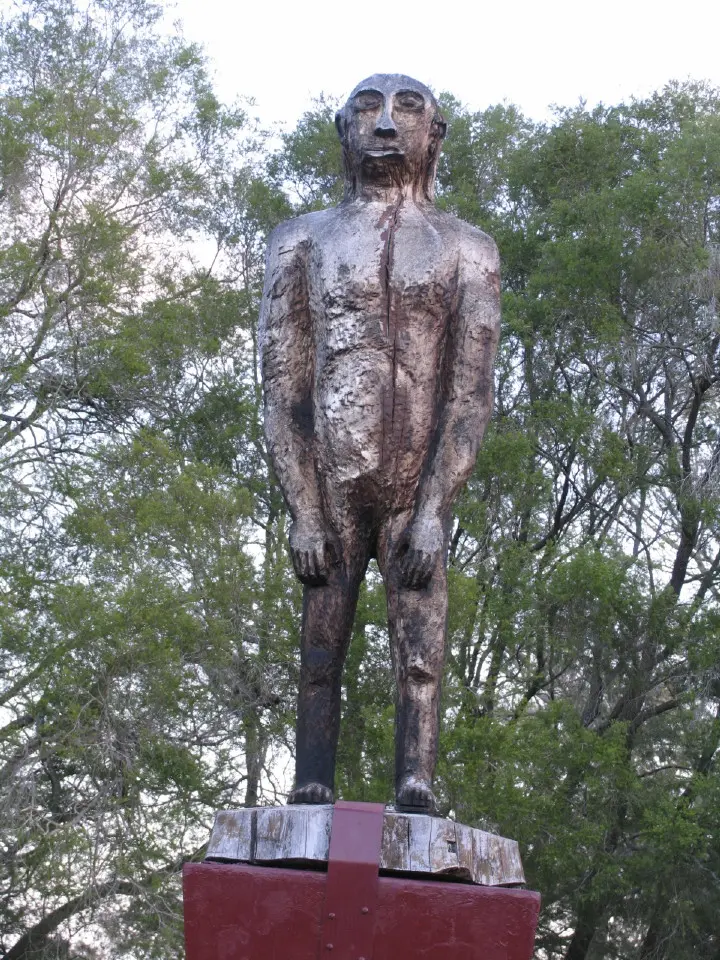
Light aircraft appeared to circle it. The next day The Age suggested a weather balloon released at Laverton. A week later the local Dandenong Journal ran the story on its front page under “Flying Saucer Mystery: School Silent”, because the school would not let reporters interview pupils or staff. In 1966 the science teacher, Andrew Greenwood, described “a thin beam of light”; decades later, former pupils describe a landed disc, burnt grass and soldiers. No Australian government file on the case has been found, and one archive series that might have answered the main explanation offered since 2014, a runaway balloon from the HIBAL radiation-sampling programme, was destroyed in 1996. A council playground with a silver UFO now stands at The Grange.
What is the history of the Westall school sighting (Melbourne, 1966)?
Westall High School stood on the south-eastern edge of Melbourne, in what is now Clayton South, three and a half miles from Moorabbin airport, a busy field for light aircraft, according to the Dandenong Journal. South of the school lay The Grange, open paddocks and a copse of pines. The date is not in doubt: a report form of the Victorian Flying Saucer Research Society, filled in the next day in the name of a 12-year-old pupil, Joy Tighe, gives “6 April 1966”, “Time: 10.20am”, “Circular 2 UFOs flying in varying directions”, “Colour: Silver” and, under outstanding features, “Flattened waist high grass for 10 yds diameter 600 yds from school”. 6 April 1966 was a Wednesday, the day before the end of term, two days before Good Friday.
The first printed account appeared in The Age on Thursday 7 April, page 6, under the headline “Object perhaps balloon”: “An unidentified flying object seen over the Clayton-Moorabbin area yesterday morning might have been a weather balloon. Hundreds of children and a number of teachers at Westall School, Clayton, watched the object during morning break.” The paper added that the children said small aeroplanes had circled it, but that “a check later showed that no commercial, private or RAAF pilots had reported anything unusual in the area”, and that the Weather Bureau had released a balloon at Laverton at 8.30am into a westerly wind.
The Dandenong Journal, a district paper published twice a week, led its front page of Thursday 14 April with “Flying Saucer Mystery: School Silent — What was it?”. Its reporters had been “hampered by the reluctance of school authorities to permit interviews with eye-witness students and staff members”, and could only print that witnesses described “a round humped object with a flat base being circled by what appeared to be light aircraft”, grey or silver-grey, and that “it is not known whether the object appeared high or low in the sky or for how long it was observed.” Mrs Judy Magee, vice-president of the Victorian Flying Saucer Research Society, said she and two other members had gone to the scene “last Friday” and found “a couple of circular patches where the grass had been flattened”, while warning that strong winds had been blowing all week. An Army spokesman said there was “no record of personnel in the area on Saturday”. The Bureau of Meteorology repeated that a balloon carrying a radar reflector and a radiosonde had been released from Laverton that Wednesday morning and could have drifted to Clayton.
On 21 April the Journal returned with “Flying Saucer Mystery Deepens: Who were 5 pilots?” and the first named adult witness, the science teacher Andrew Greenwood. He described the object as “Like a thin beam of light, about half the length of a light aircraft. It was silvery-grey and seemed to ‘thicken’ at times. The thickening was similar to when a disc is turned to show the underside.” Five light aircraft, he said, played a “cat and mouse” game with it; he first saw it rise from behind the pines and lost it after about twenty minutes. Moorabbin airport told the paper that a dozen aircraft had taken off that morning, most of them on circuit training to the south-east of the field, and that “The RAAF had no aircraft operating in the area at the time.” A pupil, Marilyn Eastwood, described the object as “round with (hump?) on top and () things underneath”, in the transcription of a creased copy. In a column the same day, “Damian” wrote that children all gave the same answer: “The head master said we are not to say anything.”
The fullest account from the 1960s is not in print. The American atmospheric physicist James E. McDonald interviewed Greenwood in Melbourne in 1967, and his notes, transcribed by the researcher Keith Basterfield, record that “The object was airborne at all times”, that it was “cigar shaped, elliptical, but at times it ‘bulged’ in the middle”, “2/3rds the size of a ‘Cessna sized aircraft’”, and that Greenwood heard no sound. Greenwood named the physical education teacher Jeanette Muir and the senior English teacher Claude Miller as other staff witnesses, and told McDonald that “The RAAF didn't come to the school for about 2-3 days” and that the headmaster, Frank Samblebe, would not let an Air Force officer interview him because he was teaching a class.
The case went quiet until the 1990s, when Bill Chalker's book The Oz Files (1996) gathered later testimony: two circles of burnt grass, three armed services visiting a pupil's family, a cow that had to be destroyed, a paddock burnt off by the Army. The researcher Shane Ryan began interviewing former pupils in the 2000s; his work underpins Rosie Jones's documentary Westall '66: A Suburban UFO Mystery (2010), and he told ABC TV in 2026 that he had been “in contact now with easily more than 200 people who were witnesses at Westall that day.”
Timeline: the documented record of the Westall school sighting (Melbourne, 1966)
- 6 April 1966, about 10.15–10.20am At morning recess pupils and staff at Westall High School watch a silvery object south of the school, near the pines of The Grange, with light aircraft around it. A pupil's report form gives 10.20am; Greenwood told McDonald 10.15. Later accounts (Chalker 1996, the Herald Sun in 2014) put it at about 11am.
- 7 April 1966 The Age prints “Object perhaps balloon” on page 6, pointing to a Weather Bureau balloon released at Laverton at 8.30am. The same day the Victorian Flying Saucer Research Society fills in a report form for 12-year-old Joy Tighe.
- 8 April 1966 (Good Friday) Judy Magee and two other members of the society visit the site and find “a couple of circular patches where the grass had been flattened”, which she says the week's strong winds could also explain.
- 14 April 1966 The Dandenong Journal leads its front page with “Flying Saucer Mystery: School Silent — What was it?”, reporting that the school will not allow interviews and that an Army spokesman has no record of personnel in the area.
- 21 and 28 April 1966 The Journal publishes Andrew Greenwood's description, “Like a thin beam of light”, and the question of the five pilots; a week later a former RAAF navigator writes that he is describing a target drogue in an air-to-air firing exercise.
- April 1966 HIBAL balloons sample the stratosphere over Mildura on flight days 5, 14, 19 and 27, according to the tables of a US Health and Safety Laboratory report published in January 1968. Where the 5 April flight came down is not recorded there.
- 1967 James E. McDonald interviews Greenwood in Melbourne. His notes record an object “airborne at all times”, cigar-shaped and silent, other staff witnesses by name, and an Air Force officer who came to the school two or three days later.
- 1996 Bill Chalker's The Oz Files prints later testimony of a landing, burnt circles, a military search and a paddock burnt off; the earliest such letters quoted by Basterfield date from 1987 and 1990.
- 1 June 2010 Brian Dunning's Skeptoid episode proposes the weather balloon for the first part of the sighting and a towed drogue for the second. The same year Rosie Jones's documentary Westall '66, built on Shane Ryan's interviews, is released.
- 11 March 2013 Keith Basterfield reports that the RAAF's UFO files for 1963-1966 hold three radar-only reports from Melbourne in April and May 1966 and nothing on Westall.
- 20 April 2014 Basterfield sets out the HIBAL hypothesis and reports that the Department of Supply series MP1472/25, which held the HIBAL files, was destroyed in 1996, leaving him no way to test it.
- 6–10 August 2014 The Herald Sun runs Basterfield's hypothesis as “Westall ‘UFO’ incident was actually government radiation testing”; Bill Chalker replies that no document places a HIBAL descent at Westall.
- 5 October 2017 Basterfield reports the 1968 laboratory table showing that the 5 April 1966 HIBAL flight did go up, and states that no document places it near Westall.
- 22 June 2022 Paul Dean, Shane Ryan and Keith Basterfield read eight Department of Supply files of series MP1899/1 at the National Archives in Melbourne and find nothing on Westall.
- 6 April 2026 On the sixtieth anniversary ABC TV's Australian Story broadcasts “The Westall UFO Mystery”, with former pupils, the former English teacher Claude Miller, Shane Ryan and the skeptic Richard Saunders.
- 23 April 2026 In a summary quoted by Bill Chalker, the programme's producer Rebecca Latham concludes from NOAA data that the Laverton weather balloon was too high and too far away to explain Westall.
Is there a rational explanation for the Westall school sighting (Melbourne, 1966)?
Two mundane explanations were on the table before the end of April 1966. The Age and the Bureau of Meteorology offered the Laverton weather balloon; and on 28 April a reader who signed as “Ex RAAF navigator 436150, Dandenong” wrote to the Dandenong Journal that Greenwood's description was “a reasonably accurate description of a target drogue towed by one aircraft on a few hundred yards of tow line so that other aircraft can practice what is termed air-to-air firing”. The skeptic Brian Dunning, in a 2010 Skeptoid episode, judged the balloon “a likely explanation for the first half of the event” and the drogue “at least one very reasonable possibility for the second half”, while conceding that “there's no evidence that anyone was conducting any drogue exercises there at the time.” The Moorabbin figures quoted in 1966 are compatible with ordinary traffic: a dozen departures that morning, and the RAAF saying it had none of its own aircraft up.
The balloon has since been tested and comes out badly. The producer of ABC TV's 2026 Australian Story episode, Rebecca Latham, retrieved the Laverton sounding of that morning from the NOAA archive; in a summary dated 23 April 2026 and quoted by Bill Chalker, she concluded that the balloon “was too high and too far away to have anything to do with Westall” and that when it burst it “was around 170 kilometres away from Melbourne.” Her launch time (9am) differs from the 8.30am printed by The Age. Shane Ryan told the same programme that the winds that day “actually blew in the opposite direction.”
The second candidate came from Keith Basterfield in 2014: a payload and parachute from HIBAL, a joint programme of the US Atomic Energy Commission and the Australian Department of Supply that flew large balloons from Mildura to sample radioactivity in the stratosphere. A schedule he found listed a flight for 5 April 1966, and in 2017 he located a US Health and Safety Laboratory report of January 1968 whose page 318 tables the April 1966 Mildura samples, including one collected at 27 km on flight day 5. What no document shows is where that flight came down. The chase pilot's logbook has entries for flights 291 and 293 and none for 292, and the Department of Supply series MP1472/25, which held the HIBAL files, “was destroyed by the controlling agency CA46 Department of Defence in 1996”, according to the National Archives. Basterfield himself wrote in 2014 that he had “no way of testing my hypothesis”. Chalker answered that a Secret Defence file of May 1966 discusses the “real risk of injury from descending instrument packages” without any mention of an incident in suburban Melbourne, and a reader of Basterfield's blog calculated that a balloon covering 570 km from Mildura would have needed more than two days. The HIBAL idea is a hypothesis without a document, and the case has no verdict here.
The weakest part of the case is the testimony itself, and its weakness can be dated. In April 1966 the Dandenong Journal could not say how high the object was or how long it was seen; the only named adult described a thin silvery beam; and in 1967 the same man said the object “was airborne at all times”. The landing, the burnt circles, the soldiers with Geiger counters and the burnt paddock enter the record in letters of 1987 and 1990 and in books of 1996 and 2000. Even Greenwood's own account moves: in McDonald's notes the headmaster kept an Air Force officer away from him; in James Fox's film The Phenomenon (2020) Greenwood says that “Two older men, one in uniform” told him he would lose his job. Dunning's warning is that “descriptions of what was actually seen have now become diluted with made-up descriptions by an unknown number of students who didn't see anything”, and Richard Saunders of Australian Skeptics told the ABC in 2026 that “there's a group reinforcement of the common story”. The flattened grass is the one physical claim with a 1966 source, and the person who reported it noted the strong winds of that week.
Nor has the official side produced anything. Basterfield checked the RAAF's UFO files for 1963 to 1966 (National Archives series A703, 580/1/1) and found three radar-only reports from Melbourne in April and May 1966 but nothing on Westall; in June 2022 he, Paul Dean and Shane Ryan read eight Department of Supply files of series MP1899/1 in Melbourne and found “No material, relevant to the Westall incident”. That silence cuts both ways, as Basterfield wrote in 2013: a suppressed event would leave no paper, and neither would a non-event.
Can you visit the Westall school sighting (Melbourne, 1966)?
The Grange is now The Grange Reserve, a park run by the City of Kingston. The council's page, as captured on 14 October 2026, gives the location as “Osbourne Avenue, Clayton South 3169” (a 2022 version spelled it Osborne Avenue) and the map point -37.94541, 145.13195, about half a kilometre south of the school site. It describes a “UFO themed park was designed in honour of an event that took place on the morning of April 6, 1966”: a playground UFO with “rope ladders, and steering wheel and controls, and two slides to escape the cockpit in a hurry”, an alien-themed springboard and “various information panels about that mysterious day”, plus swings, a flying fox, shelters, barbecues, toilets, a drinking fountain and on-site parking. Shane Ryan told the ABC in 2026 that he had suggested to the council that something be put there. The council page gives no opening hours, and none were found.
The council's own text is a source for what the council says, and it speaks of “at least 90 students and teachers” and three “flying saucers”, figures that match neither the “Hundreds of children” of The Age in 1966 nor the single object of Greenwood's account. Former pupils hold a gathering at The Grange every year on the anniversary, according to the witness Marilyn Smith on ABC TV. The school still operates as Westall Secondary College; it is a working school.
Sources consulted
- The Dandenong Journal, «Flying Saucer Mystery: School Silent — What was it? (front page, scan of the issue of 14 April 1966)» — The Dandenong Journal, no. 28, p. 1 (scan archived by the Wayback Machine), 1966 newspaper archive
- Keith Basterfield, «Westall High School, Clayton, Melbourne, Victoria, 6 April 1966 — text of source material: transcriptions of The Age (7 April 1966), the VFSRS report form, the Dandenong Journal (14, 21 and 28 April, 5 May 1966), James E. McDonald's 1967 interview notes with Andrew Greenwood, witness letters of 1987-1990 and extracts from Chalker (1996) and Pinkney (2000)» — Project 1947 (version dated 28 July 2012), 2012 report
- US Atomic Energy Commission, Health and Safety Laboratory, «Health and Safety Laboratory fallout program quarterly summary report, HASL-184 — Table 5b, stratospheric radionuclide concentrations, balloon samples collected during April 1966, Mildura, Australia (p. 318)» — USAEC, New York (OSTI 4546301), 1968 report
- Keith Basterfield, «Project HIBAL — an answer to the Westall files?» — Unidentified Anomalous Phenomena — scientific research (blog), 2014 web
- Keith Basterfield, «Westall — document located which shows there was a HIBAL launch on 5 April 1966» — Unidentified Anomalous Phenomena — scientific research (blog), 2017 web
- Bill Chalker, «Westall '66 — UFO or HIBAL? The answer is perhaps not “blowing in the wind” — quotes the Herald Sun story of 6 August 2014 and the Prime Minister's secretary's memo of 6 May 1966 (NAA A6456, R190/017)» — The OZ Files (blog), 2014 web
- Keith Basterfield, «Was there radar observation of the Westall object? — review of RAAF UAP files, NAA A703, 580/1/1 parts 4-6» — Unidentified Anomalous Phenomena — scientific research (blog), 2013 web
- Paul Dean, Shane Ryan and Keith Basterfield, «The continuing search for Australian government documents concerning the 6 April 1966, Westall event — examination of NAA series MP1899/1 on 22 June 2022» — Unidentified Anomalous Phenomena — scientific research (blog), 2022 web
- Shane L. J. Ryan, «An Ongoing Mystery: The Westall Flying Saucer Incident» — Kingston Local History (City of Kingston), article 528, 2012 web
- Brian Dunning, «The Westall '66 UFO (Skeptoid episode 208, transcript)» — Skeptoid, 2010 web
- Rebecca Latham (producer), «The Westall UFO Mystery — Australian Story, transcript with interviews of former pupils, Claude Miller, Shane Ryan, Richard Saunders and an excerpt of Andrew Greenwood from The Phenomenon (2020)» — ABC (Australian Broadcasting Corporation), 2026 interview
- Bill Chalker, «“Westall '66” — the prehistory of its investigation leading up to the 2006 reunion — quotes Rebecca Latham's summary of 23 April 2026 on the Laverton balloon» — The OZ Files (blog), 2026 web
- City of Kingston, «The Grange Reserve — council page (capture of 14 October 2026)» — kingston.vic.gov.au, 2026 web
- City of Kingston, «The Grange Reserve (UFO Park) — council page (capture of 19 March 2022)» — kingston.vic.gov.au, 2022 web
Reviewed by V. Serrano on 2026-11-20 · How we verify our content
💬 Field testimonies (0)
No testimonies yet. Add the first.
Add your testimony
🔒 Log in to add a testimony