👻 HAUNTED PLACE · EXP. Nº1190
ACTIVE
Gibraltar Point Lighthouse
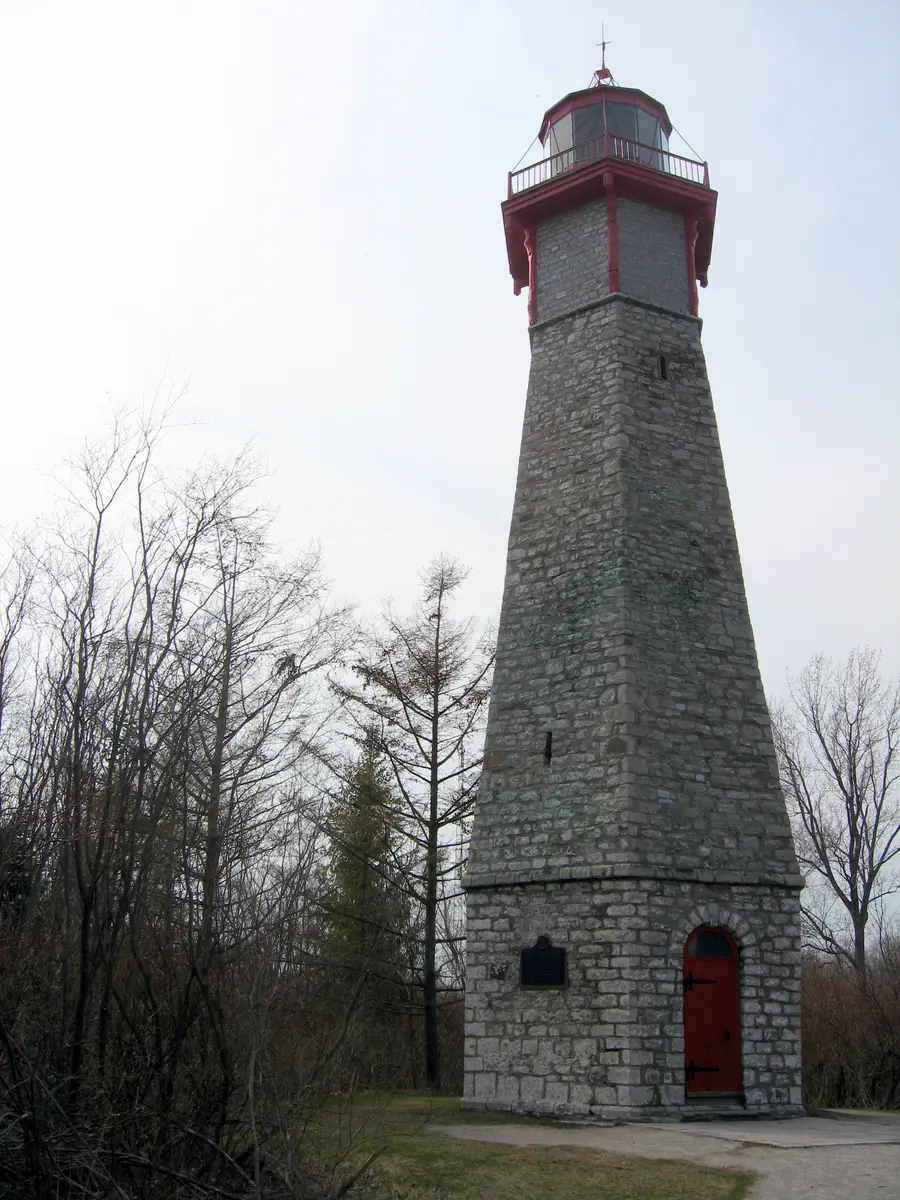
Gibraltar Point Lighthouse has stood near the western end of the Toronto Islands since 1809, and a Heritage Toronto plaque at the site calls it the oldest surviving lighthouse on the Great Lakes and the second oldest in Canada.
Where is Gibraltar Point Lighthouse?
- Location
- Toronto Islands, Ontario, Canada
- Type
- Lighthouse
- Coordinates
- 43.614, -79.385
- Last updated
LOCATION
Why is Gibraltar Point Lighthouse said to be haunted?
Its fame, though, rests on the death of its first keeper. John Paul Radelmüller, a German who had spent years in the households of two royal dukes before taking the post in 1809, was killed at Gibraltar Point on the evening of 2 January 1815. That much is documented: a death notice in the York Gazette, and two privates of the Glengarry Light Infantry, John Blueman and John Henry, tried for the murder on 31 March 1815 and acquitted for reasons the surviving record does not give. What is not documented is the part everyone repeats — that the soldiers hacked the body up and scattered it around the tower, and that the keeper was never seen again. The provincial plaque fixed to the lighthouse still calls his disappearance mysterious, but the papers of January 1815 show a man found, examined by a coroner and buried; and the first printed telling of the tale, in 1908, has no dismemberment in it at all. Its author suspected the whole story was invented.
What is the history of Gibraltar Point Lighthouse?
Toronto exists because of a sandbar. In 1793 John Graves Simcoe, first lieutenant-governor of Upper Canada, moved his capital to a bay sheltered by a long peninsula and named the tip of that peninsula Gibraltar Point, after the rock that guards the Mediterranean, because he believed it could be fortified just as tightly. A blockhouse went up there first. The lighthouse followed fifteen years later.
An Act of the Legislative Assembly of Upper Canada authorised three lights in 1803: one at Gibraltar Point, one at Mississauga Point at the mouth of the Niagara River, and one near Kingston. Work at Gibraltar Point did not begin until 1808. The tower was finished in August 1809 as a hexagon 52 feet high, built of stone quarried at Queenston, with walls close to two metres thick at the base, and paid for by a fee levied on every vessel entering the harbour. It stood about eight metres from the water. Sand has been building up in front of it ever since; today it sits roughly 100 metres inland among trees, which is exactly how the photograph on this page shows it — a lighthouse with no lake in the frame. Beside it stood the keeper's house, an 18-by-26-foot box of three-inch planks clad in clapboard. When a vessel appeared, the keeper ran a flag up to signal the harbour master.
The first man to do that job was John Paul Radelmüller, and thanks to the archival work of the historian Eamonn O'Keeffe we know an unusual amount about him. Born at Anspach, in what is now Bavaria, around 1757–1763, he had brown hair, blue eyes and stood 5 feet 10 inches. He emigrated to England and spent sixteen years as what O'Keeffe calls a "Chamber Hussar" — a personal attendant — to George III's brother the Duke of Gloucester, then joined the household of Prince Edward, Duke of Kent, and sailed with him to Halifax in 1799. After a spell as steward to the lieutenant-governor of Nova Scotia he asked for land in Upper Canada and arrived at York on New Year's Day 1804.
He never got the grant he wanted. Instead he interpreted for the German-speaking settlers around Markham, ran a school to teach their children English, and produced the German translation of a government tract of 1806 urging farmers to grow hemp for the Royal Navy's ropewalks — eight days in York assisting the printer and correcting the work, for which he was paid £4 6s. On 24 July 1809 he was appointed the first keeper of the Gibraltar Point light. In March 1810 he married Magdalene Burkholder at St James' Church in York; they had a daughter, Arabella. He kept the lamp burning through the War of 1812, including the American raids on York in 1813.
On the evening of 2 January 1815 he was killed. William Allan, the collector of customs, wrote to the lieutenant-governor's office three days later to report "the Death of John R Miller the person, who has been in charge of the Light House" and to ask for a replacement. On 14 January the York Gazette printed a death notice stating that "from circumstances there is every moral proof of his having been murdered" and that "the parties last with him are the supposed perpetrators, and are imprisoned". A grand jury indicted two men on 29 March; on 31 March they were tried before Chief Justice Thomas Scott. The minute book of the Court of King's Bench names them as John Blowman and John Henry, records their plea of not guilty, lists seven Crown witnesses — among them the coroner Thomas Cooper and the mason David Thomson, who was helping rebuild Fort York — and gives the verdict in two words: Not Guilty. On 15 April the Gazette reported the outcome in one line. O'Keeffe matched the two men to regimental paylists: John Blueman and John Henry, both Irish-born privates of the Glengarry Light Infantry, a unit that saw heavy action in the war and, O'Keeffe notes, wore green uniforms modelled on those of the 95th Rifles. Blueman was discharged on 28 April 1815; Henry deserted on 30 June. Radelmüller's widow and her brother Michael Burkholder secured 200 acres in Reach Township in 1816 in trust for Arabella, who married, had seven children and died in 1844 at thirty-four.
The tower outlived all of them. In 1832 it was raised to 82 feet with Kingston stone. James Durnan took charge that year and his son George followed him, so that one family kept the light from 1832 until the early 1900s. A bell tower was added in 1872; a new lantern in 1878; a revolving apparatus in 1883; a fourth-order Fresnel lens in 1915; electricity over the winter of 1916–17. In 1945 the light was changed from white to green so it would not be lost among the lights of the modern city. According to the Heritage Toronto plaque at the site, it was extinguished for the last time at the end of the 1957 shipping season by Dedie Dodds, the last keeper, and ownership passed to Metropolitan Toronto's parks department in 1958. The keeper's cottage — the building in which the killing almost certainly happened — was demolished around 1950.
Timeline: the documented record of Gibraltar Point Lighthouse
- 1803 An Act of the Legislative Assembly of Upper Canada authorises three lighthouses, one of them at Gibraltar Point. The first of the three to be finished, at Mississauga Point on the Niagara River, was completed in 1804 and pulled down during the War of 1812, which is how Gibraltar Point came to hold the title of oldest surviving light on the Great Lakes.
- August 1809 The tower is completed: a hexagon of Queenston stone 52 feet high, standing about eight metres from the shore. Radelmüller had been appointed its first keeper on 24 July.
- 2 January 1815 John Paul Radelmüller is killed at Gibraltar Point. Three days later the collector of customs, William Allan, writes to the lieutenant-governor's office reporting his death and asking for a replacement to be appointed.
- 14 January 1815 The York Gazette prints a death notice: "From circumstances there is every moral proof of his having been murdered... The parties last with him are the supposed perpetrators, and are imprisoned." It also describes the dead man's "inoffensive and benevolent character".
- 17 January 1815 Letters of administration for Radelmüller's estate are granted to his brother-in-law. Together with the death notice and the coroner's later testimony, this is the documentary basis for saying the body was never missing.
- 31 March 1815 Privates John Blueman and John Henry of the Glengarry Light Infantry are tried for murder before Chief Justice Thomas Scott. Seven Crown witnesses are called, including the coroner Thomas Cooper. The minute book records the verdict: Not Guilty. No reason is given, and the proceedings do not survive.
- 1832 The tower is raised to 82 feet with Kingston stone, and James Durnan becomes keeper; his son George succeeds him, so that one family holds the post into the twentieth century.
- 1893 George Durnan and his uncle Joe dig about 500 feet west of the keeper's house, where family tradition said Radelmüller was buried, and find coffin fragments and part of a jawbone four feet down. According to a tour guide quoted by CBC News in 2018, they were reburied, never DNA-tested, and the grave's whereabouts are unknown.
- 1908 John Ross Robertson prints the story for the first time, as told to him by George Durnan, in the fifth series of Landmarks of Toronto. His version has three soldiers, a beating with belts and a stick, and a burial west of the tower; it has no dismemberment, and Robertson himself writes that he is inclined to think the tale "is made out of whole cloth".
- 1958 Interviewed by CBC as the lighthouse is handed over to the city's parks department, the last keeper, Dedie Dodds, says she has never met the ghost and explains the lights she has seen as the full moon reflecting off the lantern.
- 20 June 1973 The lighthouse is entered on the City of Toronto's heritage register. More than fifty years later it is still only listed, not designated, and under provincial legislation such properties must be upgraded by 1 January 2027 or removed.
- 9 October 2000 The earliest dated version of the modern ghost story among this file's sources: a page archived by the Internet Archive on this day already has the two drunken soldiers, the refusal, the dismemberment and a ghost climbing the tower to light his beacon or searching for his lost limbs.
- December 2015 Eamonn O'Keeffe publishes his archival study in The Fife and Drum, naming the accused soldiers for the first time and showing from contemporary documents that Radelmüller's body was never missing and was not mutilated.
- 2 January 2018 CBC News marks the 203rd anniversary with the headline "203 years ago, a Toronto lighthouse-keeper disappeared" and a subheading reading "Body never recovered", sourced to a commercial walking-tour guide - three years after the archival correction was published.
Is there a rational explanation for Gibraltar Point Lighthouse?
Almost everything solid about this case comes from 1815, and almost everything famous about it does not.
The first printed version of the ghost story is John Ross Robertson's, in the fifth series of his Landmarks of Toronto (1908) — ninety-three years after the event, and told to him by George Durnan, who had it from his father. In Robertson's telling a group of three soldiers came over from York after drinking, called for the keeper's beer keg, and when Radelmüller "saw that his military friends were having more than was good for them, he refused a further supply. The refusal ended in a fight and the fight ended in the death of Muller, for the soldiers finally beat him to death with their belts and with a stick that was convenient." In that passage the keeper serves them first and then cuts them off, and Robertson himself did not believe it: in the next paragraph he writes that the story "may be a fairy tale — and the writer is inclined to think it is made out of whole cloth". Under the following heading, "A Doubtful Story", he gives his reasons, and they are absences: "There is no record of a trial of soldiers for murder between 1808-17, nor is there any mention of such an happening in the Upper Canada Gazette published weekly in York". Both records exist: Eamonn O'Keeffe found the York Gazette's death notice of 14 January 1815 on the Toronto Reference Library's microfilm and the trial in the assize minute books at the Archives of Ontario, and he traces the later doubts about the Gazette reports to Robertson, "who mistakenly wrote in Landmarks of Toronto that the York Gazette did not mention the murder".
The most repeated detail of all — that the soldiers chopped the body up and scattered it around the lighthouse — is not in Robertson. In the Internet Archive's text of the 1908 volume, counted on 25 September 2026 at 335,121 words, the string "dismember" does not occur, while "murder" occurs 16 times and "Toronto" 1,490. Robertson says the body was buried: "it was always claimed that Muller was buried west of the lighthouse", which is why Durnan dug there in 1893 and found "bits of a coffin and part of the jaw bone of a man, four feet beneath the sand", and coffin fragments point to a burial. According to the tour guide CBC News quoted in 2018, the bones were reburied, no DNA test was ever done, and the grave's whereabouts are unknown.
O'Keeffe's 2015 study made the same point from the other end, with contemporary paper. Nobody in January 1815 behaved as though a body were missing: William Allan, the collector of customs, reported "the Death of John R Miller" to the government on the 5th, a former sailor named Charles John petitioned for the job on the 6th, the Gazette printed a death notice on the 14th, letters of administration for the estate were granted on the 17th, and the coroner Thomas Cooper testified at the trial on 31 March. "All evidence suggests," O'Keeffe concludes, "that Radelmüller's body did not vanish in the first place, but was found, examined by the coroner and laid to rest near the lighthouse." The trial itself survives only as a minute-book entry that gives the verdict and no reason — "history has not graced us with the proceedings of the trial, only the outcome", in O'Keeffe's words — so the claim that the soldiers were acquitted for want of a corpse has no document behind it.
Where the "disappearance" acquired its authority is easier to answer than usual, because it is bolted to the building. The Ontario provincial plaque at the tower, "The Lake Light", ends: "The mysterious disappearance of its first keeper, J.P. Rademuller, in 1815 and the subsequent discovery nearby of part of a human skeleton enhanced its reputation as a haunted building." A ghost-hunting site noted in 2000 that this was one of the very few historical plaques in Ontario to mention a haunting at all — and its own page, archived on 9 October 2000, already carried the full modern version: two drunken soldiers, a refusal, a dismemberment, and a ghost seen "trekking up to light his beacon" or looking for "his lost limbs". The staircase is not on that page; its blood-stained thirteenth step appears in O'Keeffe's 2015 article, which sets it against the likeliest setting of the killing: "Radelmüller would surely have hosted the soldiers in his keeper's cottage, not in the lighthouse's cramped staircase." The cottage stood beside the tower until about 1950.
The loop has kept running since the research was published. On 2 January 2018 CBC News ran the story under the headline "203 years ago, a Toronto lighthouse-keeper disappeared", with a subheading "Body never recovered", sourced to Richard Fiennes-Clinton, a guide with the walking-tour company Muddy York Tours, who described the soldiers chasing the keeper to the top of the tower, throwing his body out and dismembering him, three years after the archival correction. A ghost-tour operator's own article of 5 January 2024 quotes O'Keeffe's conclusion that the body "did not vanish in the first place", while dating the soldiers' visit to 14 January 1815, the date of the newspaper notice; the Gazette itself dates the killing to "the evening of the 2nd of January".
There is a mundane explanation on the record too, from the person best placed to give one. Interviewed by CBC in 1958, the last keeper, Dedie Dodds, said she had never met the ghost: "When the moon is full, it's reflected back from the top of the lighthouse. This spring, when I was riding by on my bike, I was startled to see a light when the navigation system was closed. It wasn't for a few seconds that I realized the moon was full." She added that "the cooing of the pigeons is very eerie on a dark night and the wind howling through the lighthouse gives you the shivers".
Can you visit Gibraltar Point Lighthouse?
The lighthouse stands on the Toronto Islands, about 2 km west of the Centre Island ferry dock according to the transcription of its Heritage Toronto plaques. Ferries leave from the Jack Layton Ferry Terminal at 9 Queens Quay West, set back 100 metres south of the Bay Street intersection behind the Westin Harbour Castle. The City of Toronto's fare page, read on 24 September 2026, lists a round trip at CAD 9.57 for adults aged 20 to 64 and CAD 6.15 for those aged 65 and over and for youths of 15 to 19; children of two to 14 pay CAD 4.51 and under-twos travel free. The same page says that tickets are valid to any island dock and puts the peak towards the islands between 10 a.m. and 3 p.m., when waits "may exceed 30 to 60 minutes".
Lighthousefriends names the Centre Island and Hanlan's Point ferries as the two with the shortest walk to the tower, roughly 2 km from either. The sources file it under different parts of the islands. CBC News in January 2026 placed it "on Hanlan's Point", the Ontario Heritage Trust's plaque record and Lighthousefriends at Gibraltar Point, and the Architectural Conservancy of Ontario at 1 Centre Island Park. The plaque transcription gives the coordinates 43.613258, -79.384786, about 60 metres from the pin on this file.
Lighthousefriends sums up the site as "Grounds open, tower closed", with the lighthouse owned by the City of Toronto. The tower has been opened for special events: CBC News reported on 23 May 2014 that during that year's Doors Open weekend visitors could explore it "from top to bottom — 90 stairs in total". The two Heritage Toronto plaques of 2008 stand at the start of the entrance path, and the Ontario Heritage Trust gives the location of its provincial plaque "The Lake Light" as "At the lighthouse". None of the keepers' buildings is left. Eamonn O'Keeffe writes that the keeper's cottage built beside the tower in 1809, the likelier setting of Radelmüller's death, stood until about 1950, and the Heritage Toronto plaque says that the remaining keepers' homes were demolished after the lighthouse passed to the Metropolitan Toronto Parks Department in 1958. John Ross Robertson printed in 1908 that George Durnan had found bits of a coffin and part of a jawbone in 1893 "about five hundred feet west of the present keeper's house", some 150 metres away.
The shoreline at the point has been rebuilt since the erosion warnings. In November 2016 The Globe and Mail quoted a Toronto and Region Conservation Authority project manager saying that without action Gibraltar Point "could sever into two within 20 years". The TRCA then built a nearshore reef, finished in July 2020, and a groyne finished in December 2020; its update of October 2020 said that with the reef in place "shoreline erosion has halted". A dune of more than 50,000 tonnes of imported sand followed, and the TRCA declared its construction phase complete in spring 2023, asking visitors to keep out of the fenced dune areas.
The lighthouse has been on the City of Toronto's heritage register since 20 June 1973, according to the Architectural Conservancy of Ontario. CBC News reported on 26 January 2026 that it was listed but not yet fully designated under the Ontario Heritage Act, that the province's More Homes Built Faster Act gave municipalities until 1 January 2027 to designate listed properties or lose them from the register, and that city staff counted the lighthouse among about 140 high-priority cases.
Sources consulted
- Eamonn O'Keeffe, «New Light on Toronto's Oldest Cold Case: The 1815 Murder of John Paul Radelmüller» — The Fife and Drum (Friends of Fort York), 2015 academic
- The York Gazette, «Death notice of J.P. Rademuller (14 January 1815) and trial outcome (15 April 1815)» — The York Gazette, Toronto Reference Library microfilm; transcribed by Eamonn O'Keeffe, 1815 newspaper archive
- Archives of Ontario, «Court of King's Bench assize minute books, Criminal Assize 1810-1819, RG 22-134-0-4, MS 530 reel 2, pp. 190, 192» — Archives of Ontario; transcribed by Eamonn O'Keeffe, 1815 archive
- John Ross Robertson, «Robertson's Landmarks of Toronto, Fifth Series, pp. 378-385» — John Ross Robertson, Toronto, 1908 book
- Ontario Heritage Trust, «Provincial plaque: The Lake Light» — Ontario Heritage Trust, Online Plaque Guide, 2023 report
- Alan L. Brown, «Gibraltar Point Lighthouse: transcription of the 2008 Heritage Toronto plaques» — Toronto's Historical Plaques, 2008 report
- CBC News, «203 years ago, a Toronto lighthouse-keeper disappeared. Today, the mystery endures (includes CBC's 1958 interview with keeper Dedie Dodds)» — CBC News, 2018 newspaper archive
- Michael Smee, «Some of Toronto's most historic buildings may be at risk of demolition as clock ticks: advocates» — CBC News, 2026 newspaper archive
- Daniel Rotsztain, «Erosion threatens Toronto Islands, Gibraltar Point feared at the brink» — The Globe and Mail, 2016 newspaper archive
- Kraig Anderson, «Gibraltar Point Lighthouse, Ontario» — Lighthousefriends.com, 2024 web
- City of Toronto, «Ferry Ticket & Passenger Information (consulted 21 August 2026)» — toronto.ca, 2026 web
- Toronto and Ontario Ghosts and Hauntings Research Society, «Gibraltar Point Lighthouse (page archived 9 October 2000)» — torontoghosts.org, via the Internet Archive, 2000 web
- Ghost Guide Daniel, «Gibraltar Lighthouse Toronto: Ghost of Accident or Murder» — Ghost Walks, 2024 web
- Architectural Conservancy of Ontario, «Gibraltar Point Lighthouse, TOBuilt record (City of Toronto Heritage Register listing, 20 June 1973)» — ACO Toronto / TOBuilt, 2022 web
- Toronto and Region Conservation Authority, «Gibraltar Point Erosion Control Project — nearshore reef (July 2020), groyne (December 2020) and sand dune (construction complete spring 2023)» — trca.ca (read 24 September 2026), 2023 report
- CBC News, «Doors Open explores Toronto's haunted buildings — the lighthouse open for Doors Open 2014, "90 stairs in total"» — CBC News, 23 May 2014, 2014 newspaper archive
Reviewed by V. Serrano on 2026-08-21 · How we verify our content
💬 Field testimonies (0)
No testimonies yet. Add the first.
Add your testimony
🔒 Log in to add a testimony