👻 HAUNTED PLACE · EXP. Nº9046
ACTIVE
Le Manoir de Paris
Le Manoir de Paris was never a haunted house. It was a horror attraction — a business that staged Parisian legends with paid actors and imported animatronics — and it is closed.
Where is Le Manoir de Paris?
- Location
- Paris, France
- Type
- House / mansion
- Coordinates
- 48.875, 2.354
- Last updated
LOCATION
Why is Le Manoir de Paris said to be haunted?
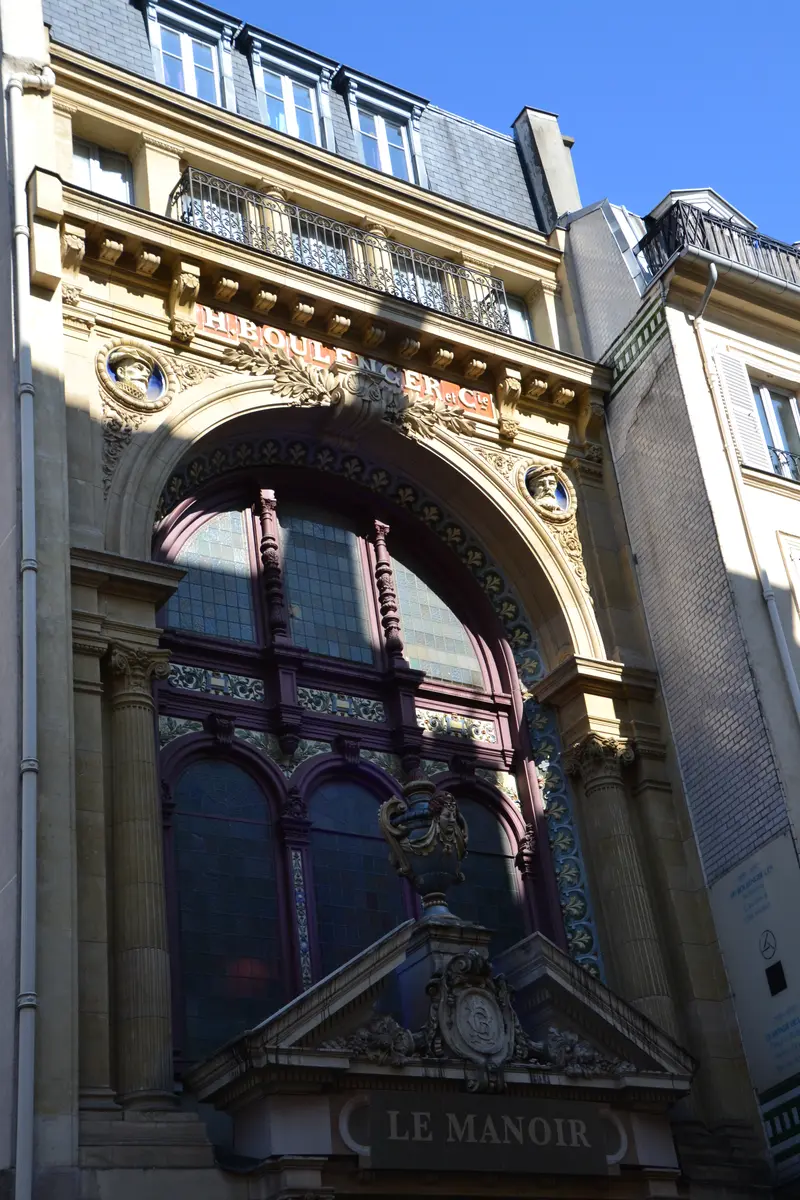
It opened on Friday 6 May 2011 at 18 rue de Paradis, in the tenth arrondissement, inside a listed 1889 building: the Paris sales premises of the Choisy-le-Roi faience works. Le Parisien counted thirteen Parisian legends across twenty-three rooms on the opening weekend; the attraction's own website later advertised seventeen. Some were documented cases, such as Philibert Aspairt lost in the quarries in 1793 or the 1937 killing of Lætitia Toureaux on line 8 of the métro. Others were novels, from Victor Hugo's Quasimodo to Anne Rice's vampires, listed without apology alongside them. The venue shut during the pandemic in 2020, its monsters appeared one last time at Halloween 2021, and in October 2022 the building reopened as a business school. Nothing paranormal was ever reported there; the haunting was written, rehearsed and paid by the hour.
What is the history of Le Manoir de Paris?
The building at 18 rue de Paradis in the tenth arrondissement went up in 1889 as the sales premises of the Choisy-le-Roi faience works, to designs by the architects Jacotin and Brunnarius. The Ministry of Culture's monuments-historiques record lists what was protected by the order of 6 October 1981: the street façade, the vestibule with its ceramic decoration, the balustered staircase and the exhibition room with its decoration. When the attraction opened, Le Parisien described the premises as the former head office of the Choisy-le-Roi faience works, in a listed building.
The company behind the attraction, Le Manoir H, trading as Le Manoir de Paris, was entered in the French business register with a creation date of 1 August 2010 and live performing arts as its main activity. Its founder, Adil Houti, was 27 when the doors opened and, according to Le Parisien, had already helped to create two haunted houses in Texas.
Le Manoir de Paris opened on Friday 6 May 2011. Two days earlier Le Parisien announced thirteen Parisian legends in twenty-three rooms over two floors and 1,000 m²; the Phantom of the Opera and Quasimodo were among them. The paper went back on the first day and described rooms recreating places such as the catacombs or the Père-Lachaise cemetery. Three automatons imported from the United States were placed along the route, one of them a gargoyle, but in the paper's words it was above all the thirteen actors made up as monsters who made the experience "divertissante et éprouvante". The route had five levels of intensity and was open to children over ten. It opened from Friday to Sunday between 3 p.m. and 8 p.m. and cost €20 for adults and €15 for children. "Paris est plein de mystères. L'idée est de les redécouvrir tout en s'amusant... et en se faisant peur", Houti told the paper.
Le Parisien reported in January 2023 that the haunted house had "baissé le rideau en 2020 pendant la crise sanitaire". A group of visitors holding tickets for the evening of 30 October 2020 lost their visit to the second lockdown, and "le Manoir de Paris n'a jamais rouvert ses portes". Its monsters appeared one last time at Halloween 2021. The company's registered office is now at 65 rue Baron Le Roy, in the twelfth arrondissement, an establishment created on 1 February 2021.
The building found another use. On Thursday 20 October 2022 the Albert School, one of whose big investors is Xavier Niel, was inaugurated in the renovated premises of the former Manoir. Le Figaro Étudiant counted thirty-three students in its first intake and described classrooms laid out around the mosaics that cover the floors and walls.
Timeline: the documented record of Le Manoir de Paris
- 1889 The Choisy-le-Roi faience works, the house of Hippolyte Boulenger, build their Paris showroom and head office at 18 rue de Paradis, to designs by the architects Jacotin and Brunnarius. The street front and vestibule are clad in the company's own ceramics.
- 20 May 1896 At three minutes to nine, during a performance of Hellé at the Opéra, one of the 700-kilo counterweights holding the auditorium chandelier breaks loose and falls, killing a concierge named Mme Chomette and starting a small fire in the roof. Le Figaro reports it in detail the next morning. It is the real event behind the Manoir's Phantom of the Opera room.
- 6 October 1981 The French Ministry of Culture lists the street façade, the ceramic vestibule and the balustered staircase of the former Boulenger premises as a monument historique (Mérimée record PA00086504).
- 1 August 2010 Adil Houti's company, Le Manoir H, is entered in the French business register under SIREN 524583077, with performing arts as its declared activity.
- 6 May 2011 Le Manoir de Paris opens to its first visitors. Le Parisien describes thirteen Parisian legends across twenty-three rooms, three American animatronics and thirteen actors, at €20 for adults, open Friday to Sunday.
- 2014 The attraction's own history page now advertises seventeen Parisian legends over nearly 1,000 m² — four more than the press counted in 2011 — and dates the Opéra chandelier accident to 1886, during Gounod's Faust.
- March 2020 The last dates on the website's public calendar are the weekend of 28–29 March 2020. France is already in its first lockdown; the sessions never take place and the calendar is never extended.
- 22–31 October 2021 The brand's last public outing: the Manoir Halloween Festival, staged on more than 4,000 m² at La Villette. Le Parisien later confirms the rue de Paradis venue had already closed in 2020 during the health crisis.
- 20 October 2022 The Albert School is inaugurated in the renovated premises at 18 rue de Paradis, with thirty-three students in its first intake and the Boulenger mosaics kept in place.
- December 2023 The official website, still frozen on the 2021 festival, is replaced by a maintenance notice. The domain later lapses and is taken over by an online-casino affiliate site.
Is there a rational explanation for Le Manoir de Paris?
The press presented the place from the first day as an attraction. Le Parisien's report on the opening called it "un nouveau concept à mi-chemin entre la maison hantée et le musée (des horreurs)", staffed by thirteen actors made up as monsters, and the Manoir's own history page placed it "à mi-chemin entre un musée et un parc d'attractions". The Ministry of Culture's record of the building describes it as the former sales premises of a faience works, built in 1889.
The interesting question is what the attraction did with the legends it staged, and its own pages answer it. Its flagship was the Phantom of the Opera. The history page told visitors that "le 20 mai 1886, le grand lustre de la salle se décroche faisant une victime au cours d'une représentation du Faust de Gounod", adding that the victim had been sitting in seat number 13. The accident that the historians of the Palais Garnier record happened on 20 May 1896, during a performance of Hellé by Alphonse Duvernoy. In Charles Dupèchez's account, quoted by the Guichet du Savoir of the Lyon municipal library, a counterweight of seven hundred kilos that held the great chandelier fell when a cable broke, smashed through the ceiling of the fifth-tier boxes and killed Mme Chomette, concierge at 7 rue Rochechouart, the only victim: "Le lustre, lui, n'a pas bougé." Gérard Fontaine, in the same reply, writes that the accident inspired one of the best-known episodes of Gaston Leroux's Phantom of the Opera; neither he nor Dupèchez gives a seat number.
The catalogue on the same page put documented Parisian cases beside works of fiction. On one side were Philibert Aspairt, who went into the quarries under the Val-de-Grâce on 3 November 1793 and whose skeleton was found eleven years later; Lætitia Toureaux, found stabbed in a first-class carriage of line 8 on 16 May 1937; and the Nile crocodile that sewer workers found under the Pont Neuf in March 1984. On the other were Quasimodo, "le personnage principal du célèbre roman de Victor Hugo", and the "Chroniques de Vampires" of the American writer Anne Rice.
The count moved as well. Le Parisien reported thirteen Parisian legends when the Manoir opened in May 2011, and the attraction's own history page advertised seventeen.
Can you visit Le Manoir de Paris?
Le Manoir de Paris has been closed since 2020 and has not reopened. Listings and ticket links that still offer it are out of date; the company behind it, LE MANOIR H, survives in the Sirene register under SIREN 524583077.
The building stands at 18 rue de Paradis, 75010 Paris. The map point for this entry, 48.8748, 2.35372, falls on that address. Since October 2022 it has housed the Albert School, a private higher-education campus of some 2,500 square metres, with no public access. What is protected can be seen from the pavement: the tiled street front of the old Choisy-le-Roi showroom, put up between 1889 and 1892 for the Boulenger works by the architects Georges Jacotin and Ernest Brunnarius. The arrêté of 6 October 1981, Mérimée reference PA00086504, inscribed the street façade, the vestibule with its ceramic decoration, the staircase with its balusters and the exhibition room with its decoration. The nearest métro stations are Poissonnière on line 7 and Château d'Eau on line 4; Gare de l'Est and Strasbourg-Saint-Denis are a little further out. Gare Saint-Lazare, sometimes given as the location, is more than two kilometres away.
The former official domain, lemanoirdeparis.fr, has expired, and on 11 September 2026 it resolved to a French online-casino affiliate site that ranks gambling operators and states on its own pages that it is paid by some of them. The genuine pages survive only in the Internet Archive.
The places the rooms borrowed from are all in Paris and open in their own right. The Palais Garnier, where the counterweight fell in 1896, admits visitors around its performance schedule. The catacombs at Denfert-Rochereau are a City of Paris museum with their own online ticketing, and Père-Lachaise cemetery is open free of charge.
Sources consulted
- Le Parisien, «Une maison hantée en plein Paris» — Le Parisien, 2011 newspaper archive
- Le Parisien, «Un manoir hanté fera revivre treize légendes parisiennes dès vendredi à Paris» — Le Parisien, 2011 newspaper archive
- Le Figaro, «L'accident de l'Opéra» — Le Figaro (numéro du 21 mai 1896), Gallica — BnF, 1896 newspaper archive
- Ministère de la Culture, Monuments historiques, «Anciens magasins de vente des faïenceries de Choisy-le-Roi — notice Mérimée PA00086504» — Plateforme ouverte du patrimoine (POP), 1981 report
- Le Manoir de Paris, «Le Manoir de Paris — sitio oficial archivado (L'Histoire, Histoire des Légendes de Paris, Visitez, calendario)» — Internet Archive Wayback Machine, 2014 archive
- Paul Abran, «Manoir de Paris : qu'est devenue la célèbre maison hantée de la capitale ?» — Le Parisien, 2023 newspaper archive
- Jeanne Paturaud, «Albert School, la nouvelle école de la data, a été inaugurée» — Le Figaro Étudiant, 2022 newspaper archive
- INSEE / Annuaire des Entreprises, «LE MANOIR H (LE MANOIR DE PARIS), SIREN 524583077 — fiche du répertoire Sirene» — Répertoire national des entreprises et des établissements (Sirene), 2026 report
- Équipe du Guichet du Savoir, «Le grand lustre à l'Opéra Garnier est tombé en quelle année ? — réponse citant Gérard Fontaine, Bénédicte Tézenas du Montcel et Charles Dupèchez (Histoire de l'Opéra de Paris : un siècle au Palais Garnier, 1875-1980)» — Guichet du Savoir, Bibliothèque municipale de Lyon, 2015 web
Reviewed by V. Serrano on 2026-08-11 · How we verify our content
💬 Field testimonies (0)
No testimonies yet. Add the first.
Add your testimony
🔒 Log in to add a testimony