👻 HAUNTED PLACE · EXP. Nº9475
ACTIVE
Manila Central Post Office
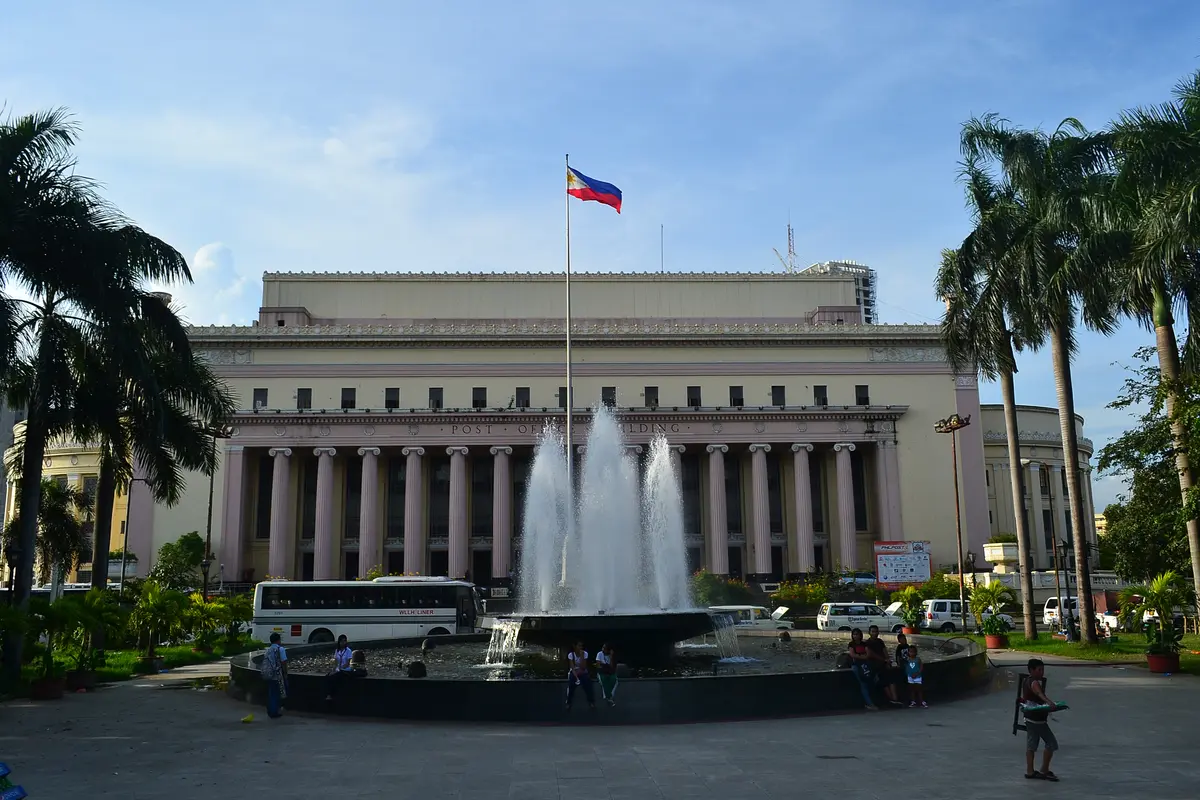
The Manila Central Post Office has stood closed since 21 May 2023, when a fire that began among car batteries in a basement store room burned for more than thirty hours and gutted the building; the Postmaster General said it had burned from the basement to the fifth floor.
Where is Manila Central Post Office?
- Location
- Metro Manila, Philippines
- Type
- Public building
- Coordinates
- 14.596, 120.979
- Last updated
LOCATION
Why is Manila Central Post Office said to be haunted?
Until that night it was a working post office, and the ghost stories attached to it came from the people who worked in it. On 31 October 2021 the GMA programme Kapuso Mo, Jessica Soho filmed six employees — among them Wilfred Hingalia, a guard of thirty-five years, and Don Escalona, twenty-one years in the parcel section — describing soldiers marching down a corridor, chains dragging on the stairs and whispering they could not understand because it was in Japanese. The wartime premise behind those accounts is, unusually for a haunted building, documented: the US Army's official history records that the Japanese garrison of the post office was under orders to hold out to the death and was finished off in the large, dark basement on 23 February 1945. What the staff walked through, though, was the building rebuilt in 1946, and since the fire it has been closed for restoration.
What is the history of Manila Central Post Office?
The ghost stories are set in the post office as it was rebuilt in 1946. The building designed in the 1920s and the one fought over in February 1945 are both documented, and both bear on how the accounts are read.
The post office owes its site to the Burnham Plan of Manila, which put it on the south bank of the Pasig so that mail could move by river. The design is credited to Juan M. Arellano, Tomás Mapúa and the American consulting architect Ralph Doane — three names; the historian GMA interviewed in 2021 named Arellano alone, and in 1931 Arellano was the consulting architect of the Bureau of Public Works, which built it.
The Governor General's annual reports, published yearly in Washington, follow the job from start to finish. The 1929 report is explicit: "The construction of the foundation was begun on August 2, 1920, and finished on January 9, 1922. Further construction work was suspended for lack of funds. On February, 1928, however, it was resumed, and at the end of the year the construction was approximately 56 per cent completed." The 1927 report explains the gap: "The completion of the Manila post-office building was advertised for bids in November 28, 1927, but contract could not be awarded until 1928", against an appropriation of ₱2,500,000. By the end of 1930 the Bureau of Public Works listed it at 98 per cent. The 1931 report finally records it as one of the buildings completed that year, at a cost of ₱2,314,200.78, and the Governor General wrote: "The new post office at Manila was opened during the year. It is an imposing building well located and well equipped." The Bureau of Posts hired extra staff that year for its upkeep.
So the post office opened in 1931. The historical marker, the Philippine Postal Corporation's own timeline and the news reports give 1926, a year in which, by those reports, work had been suspended since the foundation was finished in January 1922. The English Wikipedia infobox gives February 1928 as the completion date; the 1929 report gives February 1928 as the month work resumed.
On the fighting there is an unusually good source. Robert Ross Smith's "Triumph in the Philippines", the US Army's official history of the campaign, devotes a passage to it. The Japanese turned the five-storey reinforced-concrete structure into a strongpoint blocking the northeastern approach to Intramuros, to which it was linked by trench and tunnel. They barricaded the rooms and corridors, protected their machine gunners behind works "seven feet high and ten sandbags thick", strung barbed wire through the interior and hauled a 105-mm gun up to the second floor. The building was "practically impervious to direct artillery, tank, and tank destroyer fire". The garrison received few reinforcements and was, in Smith's words, "manifestly under orders to hold out to the death". After three days of bombardment by XIV Corps and 37th Division artillery, men of the 1st Battalion, 145th Infantry got in through a second-storey window on the morning of 22 February 1945; the surviving Japanese fell back into "the large, dark basement", where organised resistance ended on the 23rd. Smith gives no body count for the post office, though he gives one for the City Hall next door: 206.
The state's own record dates the rebuilding to 1946. A historical marker went up in 1994; the National Historical Commission of the Philippines lists the building and Liwasang Bonifacio as a Level I National Historical Landmark under Resolution No. 01, s. 2012; the National Museum declared it an Important Cultural Property in November 2018.
Late on 21 May 2023 a fire started in the southern part of the basement, in the Mega Manila storage room where paint, thinners and car batteries were kept beside office supplies. It burned for more than thirty hours and gutted the building.
Timeline: the documented record of Manila Central Post Office
- 2 August 1920 – 9 January 1922 The foundation of the new Manila post office is laid, then work stops for lack of funds; the Governor General's 1929 report gives both dates to the day.
- 28 November 1927 The completion of the building is advertised for bids against an appropriation of ₱2,500,000, but the contract cannot be awarded until the following year.
- February 1928 Construction resumes after six years of suspension. This is the month that later reference works, including the English Wikipedia infobox, mistakenly turned into the completion date.
- End of 1930 The Bureau of Public Works lists the Manila post office as 98 per cent completed and “practically completed at the close of the year”.
- 1931 “The new post office at Manila was opened during the year”, the Governor General reports, listing it among the buildings completed at a final cost of ₱2,314,200.78 — five years after the 1926 date carried by the historical marker.
- 22–23 February 1945 After three days of American artillery bombardment, the 1st Battalion, 145th Infantry enters through a second-storey window; the surviving Japanese defenders fall back into the basement, where organised resistance ends on the 23rd.
- 1946 The gutted building is rebuilt, keeping most of the original design. This, and not Arellano's building, is the interior in which the later ghost accounts are set.
- November 2018 The National Museum of the Philippines declares the building an Important Cultural Property; it is already a National Historical Landmark, with a marker installed in 1994.
- 31 October 2021 The GMA newsmagazine “Kapuso Mo, Jessica Soho” broadcasts a Halloween segment on the building. Six employees speak on camera: guard Wilfred Hingalia (35 years), who describes soldiers marching after a woman in white and vanishing when he crosses himself; Don Escalona (21 years, parcel section); Junaisah F. Sharief; Marie Macaraeg; supervisor Marivel Magpantay (38 years); and a guard identified only as Larry. This broadcast is the origin of virtually every later account.
- 26 October 2022 The words “haunt”, “ghost” and “paranormal” appear for the first time in the English Wikipedia article, fourteen years after it was created and a year after the broadcast.
- 21–23 May 2023 Fire breaks out shortly before midnight in the basement storage room and is not fully extinguished until 6.33 a.m. on the 23rd. Fifteen people are injured, damage is put at around ₱300 million and the postal service's stamp collection is lost.
- 6 June 2023 The Bureau of Fire Protection rules the fire accidental — the sudden self-discharge of a car battery stored beside paint and thinners — and closes the case. Postmaster General Luis Carlos says PHLPost will “move on and concentrate primarily on the recovery and rehabilitation of the iconic building”.
- 15 October 2025 The Philippine Postal Corporation and the Department of Public Works and Highways sign the agreement under which the restoration is to start in January 2026, in three phases beginning with the façade and the main lobby.
Is there a rational explanation for Manila Central Post Office?
The ghost accounts of the Manila Central Post Office that circulate in English go back to a Halloween broadcast. On 31 October 2021 the GMA newsmagazine "Kapuso Mo, Jessica Soho" ran a segment on the building, and GMA's website published the accompanying article the same night. The six employees are named, they appear on camera, and several had decades of service; they were also interviewed by one crew, for one programme, on one evening.
Dating the story rather than the events is instructive. The English Wikipedia article on the building was created on 26 November 2008. Reading all 276 of its revisions through the Wikipedia API on 8 October 2026, the words "haunt", "ghost" and "paranormal" first appear on 26 October 2022 — a year after the broadcast, and again in Halloween week. None of the 87 revisions written before that date mentions them; as a control, 275 of the 276 revisions contain the word "Manila". Whatever the staff had been telling each other, the Wikipedia article took the stories up only after the broadcast.
GMA's article quotes the parcel-section clerk Don Escalona in Tagalog and glosses him in English. While the KMJS team was interviewing him he said "umiinit" — it is getting hot — of his right shoulder, his ear and the back of his neck, and said he was struggling to breathe; the English gloss keeps the watching soldier and drops the heat. The feeling of being watched by soldiers in formation he placed "lalo na 'pag nila-lock ko na yung pintuan dun", especially when he was locking the door. For what happened during the filming, suggestion is the obvious candidate: a man is asked on camera, in a building he already believes is occupied, to describe what he feels.
Where the accounts are stronger than usual is in their historical premise. The historian Gerard Lico, interviewed in the same segment, only ventured that it was "possible" many Japanese soldiers died in the building. The US Army's official history goes further than he did: the garrison was ordered to hold out and was destroyed in the basement on 23 February 1945. On that point the folklore is right and the hedging was too cautious.
Against that stands the physical fact. Three days of XIV Corps artillery, then room-by-room fighting, then a rebuilding in 1946 mean the barricaded corridors and sandbag emplacements the soldiers died behind no longer exist. Employees working night shifts from the 1980s onwards were walking through a post-war interior. The fire of 21 May 2023 then gutted that interior. Nahum Tarroza, regional director of the Bureau of Fire Protection, said it had reached the third floor because the floors were all wood; Postmaster General Luis Carlos told the radio station DZBB that the building had burned "from the basement all the way to the fifth floor". The post office has been closed since. In October 2025 the Philippine Postal Corporation and the Department of Public Works and Highways signed the agreement for its restoration, and a Daily Tribune photograph dated 15 May 2026 shows the work under way.
Can you visit Manila Central Post Office?
The Manila Central Post Office is a building site. The fire of 21 May 2023 gutted it, and on 11 July 2026 the Daily Tribune photographed a crane lifting a mini pail loader onto the roof, describing the landmark as "undergoing extensive repairs and renovation after a major fire severely damaged the building two years ago". There is no public access to the interior of the building itself.
The building stands at Liwasang Bonifacio, Magallanes Drive, Ermita, Manila, at the south end of Jones Bridge. The plaza in front is a public square and the blackened neoclassical facade is visible from the street at any hour, as it is from the bridge. The National Historical Commission of the Philippines registers the building together with Liwasang Bonifacio as a Level I National Historical Landmark under Resolution No. 01, s. 2012.
Postal services have not left the compound of the building. PHLPost inaugurated a New Annex Building inside the Manila Central Post Office compound at Liwasang Bonifacio on 5 November 2024. In June 2026 the Daily Tribune reported the Manila Central Post Office releasing postal IDs the same day and taking mail and parcel transactions there through the Manila Day holiday. The corporation's contact page gives (02) 8288-7678 and [email protected], with attention from Monday to Friday, 08:00 to 17:00; that page was read on 9 September 2026.
The restoration work is running behind the dates announced for it. PHLPost and the Department of Public Works and Highways signed a memorandum of agreement on 15 October 2025 putting the DPWH in charge, with work starting in January 2026 in three phases and the first covering the facade and the main lobby; GMA reported the Postmaster General, Maximo Sta. Maria III, targeting completion of that phase "by the 1st quarter of 2026", to coincide with the Philippine hosting of the ASEAN Summit. The Daily Tribune photograph of July 2026 shows the same phase still under way. The Postmaster General has said the restored building will hold the country's first postal museum in the lobby and an innovation hub on one of the floors.
Sources consulted
- Robert Ross Smith, «Triumph in the Philippines (United States Army in World War II: The War in the Pacific), ch. 15: The Battles of the Strongpoints» — Office of the Chief of Military History, US Department of the Army, 1963 book
- Government of the Philippine Islands, «Annual Report of the Governor General of the Philippine Islands, 1927 (Bureau of Public Works: buildings)» — Government Printing Office, Washington, 1927 report
- Government of the Philippine Islands, «Annual Report of the Governor General of the Philippine Islands, 1929 (“New post office”, buildings under construction)» — Government Printing Office, Washington, 1929 report
- Government of the Philippine Islands, «Annual Report of the Governor General of the Philippine Islands, 1930 (Manila post office, 98 per cent completed)» — Government Printing Office, Washington, 1930 report
- Government of the Philippine Islands, «Annual Report of the Governor General of the Philippine Islands, 1931 (public buildings completed during the year)» — Government Printing Office, Washington, 1931 report
- GMA News Online, «Hauntings at the Manila Post Office: 6 staff members recall their hair-raising experiences» — GMA Network, 2021 newspaper archive
- Philippine Postal Corporation, «Fire in Manila Central Post Office Building, accidental in nature – BFP» — PHLPost press release, 2023 report
- Philippine Postal Corporation, «Philippine Postal Corporation — History (timeline: 1926 built, 1946 rebuilt), archived 8 December 2008» — Internet Archive Wayback Machine, 2008 archive
- National Historical Commission of the Philippines, «Manila Central Post Office Building and Liwasang Bonifacio — registry entry (Level I National Historical Landmark, Resolution No. 01, s. 2012)» — Philippine Registry of Historic Sites and Structures, 2012 web
- GMA Integrated News, «Manila Central Post Office repairs, restoration to begin January 2026» — GMA News Online, 2025 newspaper archive
- Gabrielle de la Cruz, «To Whom It May Concern: The Manila Central Post Office Building Moving Forward (interviews with Gio Abcede, Stephen Pamorada and Arts Serrano)» — Kanto, 2023 interview
- Wikipedia contributors, «Manila Central Post Office — complete revision history of the English Wikipedia article (276 revisions, 2008-2026)» — Wikimedia Foundation, 2026 archive
- Nick Garcia, «Manila Central Post Office catches fire; already 'under control' after over 8 hours (updated with statements by Nahum Tarroza, BFP-NCR, and Postmaster General Luis Carlos)» — PhilSTAR Life, 22 May 2023 (updated 23 May 2023), 2023 newspaper archive
- DW, «Manila: Huge fire guts historic post office building» — Times of Oman, 22 May 2023, 2023 newspaper archive
- Toto Lozano, «MCPO restoration — photograph of the Manila Central Post Office undergoing restoration, 15 May 2026» — Daily Tribune, 15 May 2026, 2026 newspaper archive
Reviewed by V. Serrano on 2026-08-13 · How we verify our content
💬 Field testimonies (0)
No testimonies yet. Add the first.
Add your testimony
🔒 Log in to add a testimony