👻 HAUNTED PLACE · EXP. Nº9476
ACTIVE
St. John's Orphanage
St. John's Orphanage in Goulburn, New South Wales, is not a haunted building: it is an empty corner lot.
Where is St. John's Orphanage?
- Location
- New South Wales, Australia
- Type
- Public building
- Coordinates
- -34.762, 149.71
- Last updated
LOCATION
Why is St. John's Orphanage said to be haunted?
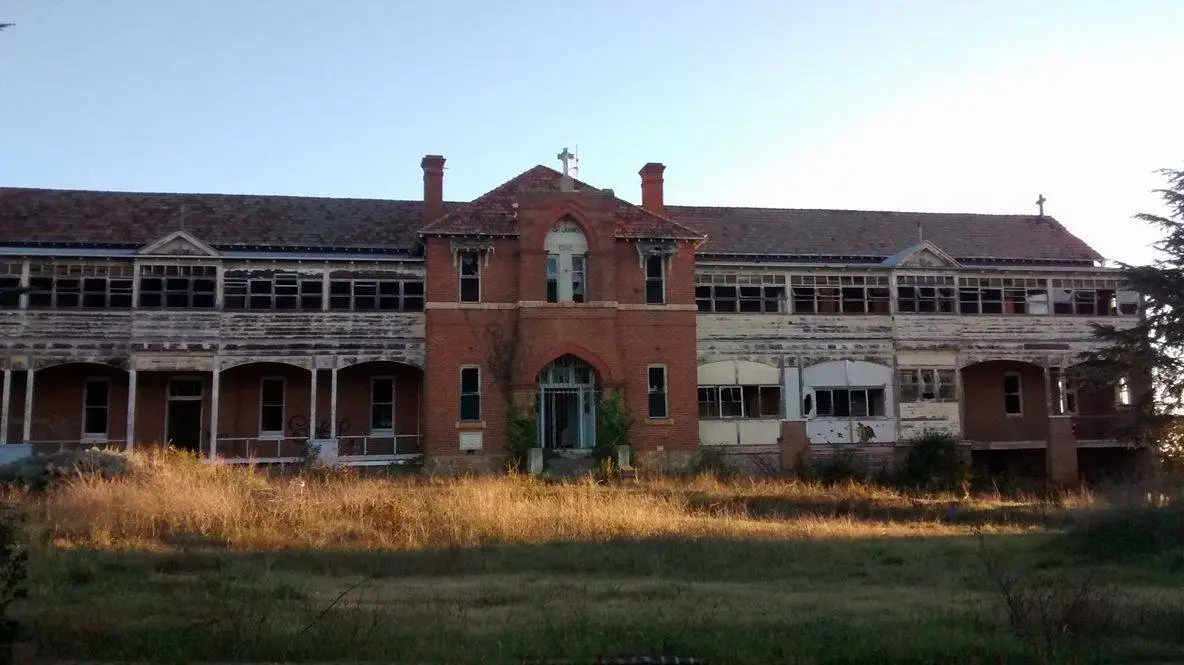
The orphanage that opened there on Sunday 7 December 1913, designed by E. C. Manfred and blessed by Bishop John Gallagher, was demolished in 2023 after three fires and a council order. For most of its life it was run by the Sisters of Mercy, not by any order of brothers, and it took in boys aged five to sixteen. Of the two thousand or more children who passed through it, roughly four per cent had actually lost both parents; the rest had families who were poor, ill, absent or violent, and some were British child migrants. Ghost tours started working the derelict building around 2011, and every datable account of children's voices, shadow figures and apparitions of nuns comes from after it was abandoned in 1994 — none from the sixty-six years it was open. So does the most quoted allegation of abuse at St. John's, which reaches Wikipedia footnoted to a ghost-hunting company's write-up. The documented record is harsher, better attested and far more interesting.
What is the history of St. John's Orphanage?
The first thing to say about St. John's is that it no longer exists. The building on the corner of Mundy and Bourke streets in Goulburn was levelled in 2023, and the second thing to say is that almost none of the children who lived in it were orphans.
It began as an overflow. Around 1880 Bishop William Lanigan had an old mill in Clinton Street converted into a girls' orphanage; Bishop John Gallagher, speaking on the front verandah of the new building in December 1913, said it had cared for and educated an average of fifty girls a year for twenty-five years. When half an acre proved too small, sixty acres were bought at Kenmore and St. Joseph's was built there for the girls at a cost of some £6,000. The boys were then put into the emptied Clinton Street mill "pending the erection of a permanent home". Gallagher told the crowd that an effort had been made to get the people of Young, Wagga Wagga, Albury, Cootamundra and elsewhere to take charge of the boys, and that it had failed. Goulburn kept them by default.
The foundation stone of the permanent home was blessed and laid at four o'clock on Sunday 17 March 1912 by Bishop Gallagher, after a procession that left SS Peter and Paul's Cathedral at half past three; the address was given by Father Sydes SJ. The architect was E. C. Manfred, who had already designed St. Joseph's, the Goulburn town hall and much else in the district. The building opened twenty-one months later, on the afternoon of Sunday 7 December 1913, with a procession three-quarters of a mile long: the Australian Light Horse Band under Bandmaster Wilson, Alderman J. O'Brien acting as marshal, the boys of St. Patrick's College, the boys of the Brothers' School, the girls of St. Bridget's, the boarders of South Goulburn Convent. The doors were closed while Gallagher blessed the building in full pontifical robes, and a crucifix was carried in and set up in the main dormitory.
What the place was for was stated plainly that afternoon. Boys over fourteen would take their schooling at the Christian Brothers' Cathedral School in town and the youngest at the convent infants' school; three and a half acres bought from a Mr Bowes would be gardens and another fourteen an outlet for dairy cattle, so that the boys would leave "furnished with a good general education and a knowledge of those things that would tend to make them splendid farmers in after life". The orphanage itself was never a school. It was a dormitory, a refectory thirty feet by twenty, a study room, a chapel and a farm.
It was run by the Sisters of Mercy, Goulburn Congregation, from 1905 until the mid-1970s — not by any order of brothers. The memorial site kept by the old boys records that the roll of Sisters posted to St. John's rarely reached more than five at a time. Sister Mary Alphonsus Liguori, born Mary Vale, took charge in 1930 with four Sisters who taught in the attached school, saw the population climb from about eighty boys to about a hundred and forty during the Second World War, had already founded St. John's Hostel in 1927 for working orphan boys who could not afford board, and organised the reunions that outlived her death in 1968 and the institution itself.
The additions came steadily: a west wing and chapel in 1919, a milking shed and hall in 1932, an extension blessed by Bishop John Barry on a Sunday afternoon in July 1924, a south-wing extension in 1938. In July 1943 the Goulburn Fire Brigade was called just after midnight to a fire that destroyed a quantity of firewood and two panels of fencing — the first fire attended by Sub-Station Officer G. Fisher, who had taken up duty the week before. It is the only fire in the building's working life that anyone bothered to record.
Between 1905 and 1978 the institution took in somewhere between two thousand boys, the figure given in Mary Vale's Dictionary of Biography entry, and two thousand five hundred, the figure the old boys use. Roughly four per cent of them had lost both parents. The rest had families that were poor, ill, absent or violent, and some were British child migrants. Alan Gilroy arrived in the 1940s at four and a half and stayed nearly seven years; he remembers Mother Dorothea, Sister Eugenie, Sister Columbus and Sister Elizabeth, who sang, and says he was treated well. Phil Merrigan, there from 1960 to 1969, told the Goulburn Post that his life at home near Wagga had been horrific, that the nuns "never turned anyone away", and that in nine years he was beaten twice and deserved both. Other accounts collected from the same institution describe beltings for soiled clothes, one set of clothing washed once a week, and worse. Both kinds of testimony come from the same corridors, and neither cancels the other.
Girls began arriving from St. Joseph's in 1975 as the number of boys fell away. In 1976 the two amalgamated as St. John's Home in Auburn Street; the Mundy Street building closed in 1978 and the last residents went into group homes, which the Sisters staffed until 1981. St. John's Home itself closed in 1987. From 1979 to 1994 the empty orphanage was leased to Youth With A Mission as a discipleship training base. After that it was simply left: bought by the Goulburn businessman John Ferrara for $450,000 in 1999, proposed as retirement units in 2004 and again in 2012 and 2013, never restored, stripped by vandals, and burnt three times from November 2015 onwards, the first fire taking out eighty per cent of the roof. Goulburn Mulwaree Council ordered the whole thing demolished in July 2021, threatened Land and Environment Court action when the December 2022 deadline passed, and the machines finally came in April 2023. The last of the Mundy Street façade went down in September. The council required the foundation stone to be kept. The cross on the roof was not.
Timeline: the documented record of St. John's Orphanage
- 17 March 1912 Bishop John Gallagher blesses and lays the foundation stone at four o'clock on a Sunday afternoon, at the corner of Bourke and Mundy streets, after a procession from SS Peter and Paul's Cathedral. Father Sydes SJ gives the address. The Goulburn Evening Penny Post had announced it the previous day.
- Sunday 7 December 1913 The building is opened and blessed by Bishop Gallagher before a crowd that includes many non-Catholics, after a procession three-quarters of a mile long. A crucifix is placed in the main dormitory. Gallagher explains that the boys will be trained for farm work and schooled at the Christian Brothers' Cathedral School and the convent infants' school. Later accounts, including the Goulburn Post in 2023, give the date as 6 December, which was a Saturday; the Penny Post of Tuesday 9 December is headed "Opened on Sunday".
- July 1924 The Goulburn Evening Penny Post announces that the additions to the orphanage will be blessed and opened on the Sunday afternoon by the Right Rev. Dr John Barry, Catholic Bishop of Goulburn. Extensions continue through the 1930s: a milking shed and hall in 1932, a south-wing extension in 1938.
- 1930 Sister Mary Alphonsus Liguori — Mary Vale, 1887-1968 — takes charge of St John's with four Sisters teaching in the attached school. Under her the population rises from about eighty boys to about a hundred and forty during the Second World War. She had founded St John's Hostel in 1927 for working orphan boys who could not afford board, and she organised the reunions that continued after her death.
- 20 July 1943 The Goulburn Fire Brigade is called just after midnight on the Monday to a fire at the orphanage that destroys a quantity of firewood and two panels of fencing. It is Sub-Station Officer G. Fisher's first fire; he had taken up duties the week before. This is the only recorded fire of the building's working life.
- 1976 After girls begin arriving from St Joseph's in 1975 because the number of boys is falling, the two institutions amalgamate as St John's Home in Auburn Street. The Mundy Street building closes in 1978 and the last residents go into group homes, staffed by the Sisters until 1981; St John's Home itself closes in 1987.
- 1994 Youth With A Mission, which had leased the empty orphanage as a discipleship training base since 1979, leaves. The building is abandoned. John Ferrara buys it and its grounds for $450,000 in 1999 and proposes residential developments in 2004, 2012 and 2013; none is built and no restoration is carried out.
- Winter 2011 or earlier An early ghost account, undated but saved as a PDF on 2 February 2012: Nic Hume of the Australian Paranormal Phenomenon Investigators publishes a report of a night inside the derelict orphanage, hosted by Goulburn Ghost Tours. He records voices and a chime in the nursery and notes in the same paragraph that they came in as a train passed, "acting as white noise". The document also carries, without a source, the rape allegation that the English Wikipedia article would later footnote to it.
- 1 January 2012 The English Wikipedia article is created by an account made for it, containing the unsourced line that "many people have seen unexplained shadows" and the category of reportedly haunted locations. Another editor deletes the sentence as unsourced on 1 May 2016; the category stays. The article as it stands today, a Good Article of some 4,700 words, tells no ghost story at all.
- 4 November 2015 A fire believed to have been started by squatters destroys about eighty per cent of the roof. Two more fires follow, one in 2016 that condemns the 1932 hall and another in June 2021. The Goulburn Heritage Group calls itself "upset and sickened"; the owner says the building was not insured.
- July 2021 Goulburn Mulwaree Council orders the demolition of the main building and three outbuildings, which by then contain asbestos and are starting to collapse. Alan Gilroy, who arrived at four and a half in the 1940s and stayed nearly seven years, tells the Goulburn Post: "I think the best thing is to put a bulldozer right through it." Phil Merrigan says about ninety per cent of the old boys want it gone.
- April-September 2023 The building is demolished; the last of the Mundy Street façade and a rear section come down in September, with the owner watching. The council required the 1912 foundation stone to be kept; the roof cross was not. Former residents ask that the redevelopment include a community park, and that photographs go to the library's local studies collection.
Is there a rational explanation for St. John's Orphanage?
There is no ghost story from the sixty-six years the orphanage was open, none from the fifteen years Youth With A Mission worked in the building, and none in the Goulburn and Sydney press that covered its opening, its extensions, its fete, its football team and its 1943 fire. The haunting appears only after the building was empty, and it appears alongside a business.
The earliest account I have been able to read is a write-up by Nic Hume of the Australian Paranormal Phenomenon Investigators — a company that trades as Paranormal Entertainment — describing a winter night at St. John's (the document is undated; its PDF file was created on 2 February 2012), hosted by Goulburn Ghost Tours, whose guide, Louise, walked the investigators through the history first. The oldest claim in general circulation is one unsourced sentence added to the English Wikipedia article on 1 January 2012 by an account created for that article, saying that "many people have seen unexplained shadows"; another editor removed it as unsourced on 1 May 2016. The lists that ghost blogs now repeat — child-sized shadow figures, full-body apparitions of nuns, infants crying in the nursery, bites, scratches, a shove down the main staircase, a child at a second-storey window — first appear, so far as I can date them, in an anonymous comment posted to a blog in September 2013.
Hume's own report supplies the best available explanation for the part of the night that impressed his team most. Recording voices, shuffling and a chime in the nursery, he notes that "these noises were noted as coming in as a train would pass in the distance. The train was acting as white noise." Goulburn is a railway town and the line runs below the site. The investigator wrote down the mechanism and reported the voices anyway. The rest of that night runs on a Ghost Radar phone app, a psychic board that produced nothing at all, and two mediums.
The building itself did the remaining work. From 1994 it stood open, unlit, unheated and unglazed, with neighbours calling the police about breaking glass; after November 2015 it had no roof over most of its length, and by 2021 it held asbestos and was beginning to collapse. Anyone who got inside was walking a fire-damaged ruin in the dark. A heavy feeling is what that building was for.
Two things ought to be said about the ghosts themselves. The nuns who appear in the stories are not anonymous: they are Mother Dorothea, Sister Eugenie, Sister Columbus, Sister Elizabeth, Sister Madeleine and Sister Genevieve Cummins, whom the boys called Mother Gen, and the old boys who name them are alive and on the record defending them. In Hume's report a medium states that Mother Gen "knew what was happening in the orphanage but kept a professional blind eye" — an accusation of covering up the abuse of children, made against a named dead woman, on the authority of a mediumship session. That is not evidence of anything and it is not a harmless entertainment.
And the most serious historical claim attached to this place needs its provenance stated. The sentence that circulates everywhere, that boys endured repetitive rape at St. John's not only from staff but from older boys and the caretaker, reaches the English Wikipedia article — and from there the rest of the internet — footnoted to that same 2011 ghost-hunting document, which gives no source for it and attributes it only to "many accounts". The documented harshness of the place does not depend on that sentence: it is in the testimony of former residents about beltings, single sets of clothing and forced labour, and in the plain fact that ninety-six per cent of the children there had living parents. But a claim of that gravity should be traced to an inquiry or an archive, and this one traces to a tour operator's blog post.
One confusion is worth clearing up, because it is repeated in good faith. St. John's Goulburn was not the subject of a Royal Commission case study. The Goulburn institution examined at a public hearing of the Royal Commission into Institutional Responses to Child Sexual Abuse was the Salvation Army's Gill Memorial Home, in Case Study 5, whose hearings opened on 28 January 2014; and there is a second, different St. John's Orphanage run by the Sisters of Mercy at Thurgoona, near Albury, which also closed in 1978 and whose survivors did speak publicly about the Commission. The Commission's private sessions were confidential, so nothing here rules out that former residents of Goulburn gave evidence — only that no public case study bears this building's name.
Can you visit St. John's Orphanage?
The orphanage no longer stands. About Regional reported that the scorched structure was levelled in April 2023, and the Goulburn Post that the last of the Mundy Street façade and a rear section were bulldozed in September 2023, with the owner, John Ferrara, on site. The old boys' memorial website gives the address as 52–56 Mundy Street, on the corner of Bourke Street, and About Regional reported in 2023 that the Catholic Church had sold the site to Mr Ferrara in 1999. It is private land. Goulburn Mulwaree Council's application tracker, consulted on 24 September 2026, lists development application DA/0031/2526 for 52 Mundy Street, lodged on 25 July 2025 for 121 units with surface and basement parking at an estimated cost of $25,372,000; its stage is recorded as "Returned". Before the demolition the building had been gutted by fires, two large ones in late 2016 and another in June 2021, and by 2021 parts of it contained asbestos and had begun to collapse.
Of the building itself, the 1912 foundation stone was kept. The council's 2021 demolition order required Mr Ferrara to salvage both the foundation plaque and the crucifix on the façade; the Goulburn Post reported in 2023 that the stone had been saved and the crucifix had not, the owner saying that it was attached to brick. Under the same order the main building was to be professionally recorded in drawings and photographs. In 2023 the Goulburn Heritage Group asked that copies of all photographs of the building be placed in the local studies section of Goulburn Library, and reported that former residents would like a community park included in whatever is built on the site.
For people with a family connection, Find & Connect, the Australian Government's guide to records of children in institutional care, keeps an entry for St John's Home, Goulburn, last updated on 16 July 2025. It lists admission registers from 1907 to 1986, notifications of reception from 1915 to 1959, notifications of discharge from November 1945 to February 1958, and a file in the Child Endowment correspondence series (item B136). Its free support line is 1800 16 11 09, Monday to Friday from 9 am to 5 pm. That entry still describes the Mundy Street building as "Still standing". The old boys' memorial website holds a photographic gallery and a register of about 450 former residents, which it does not publish but offers to consult on request.
St Joseph's, the girls' orphanage on Taralga Road at Kenmore that amalgamated with St John's in 1976, still stands. E. C. Manfred designed it, and it opened in 1905. Its owners, Maggie and Darryl Patterson, have restored it and opened it for the combined reunions of the two orphanages; the Goulburn Post of 8 October 2024 announced the last of them for 19 October 2024 and gave the building's current name as Liminis House.
Sources consulted
- «The New Orphanage. Opened on Sunday» — Goulburn Evening Penny Post (NSW), p. 4, 1913 newspaper archive
- «St. John's Orphanage (foundation stone announcement)» — Goulburn Evening Penny Post (NSW), p. 4, 1912 newspaper archive
- «St. John's Orphanage (blessing of the additions)» — Goulburn Evening Penny Post (NSW), p. 4, 1924 newspaper archive
- «Fire at Orphanage» — Goulburn Evening Post (NSW), p. 2, 1943 newspaper archive
- Sophie McGrath, «Vale, Mary (1887-1968)» — Australian Dictionary of Biography, vol. 16, National Centre of Biography, ANU, 2002 academic
- M. Downing and N. Parry, «St John's Home, Goulburn (1905-1978)» — Find & Connect, Australian Government, 2011 archive
- Nic Hume, «St Johns Foundling Orphanage (undated; the PDF file was created on 2 February 2012)» — Australian Paranormal Phenomenon Investigators, 2012 report
- Louise Thrower, «There was kindness amongst the horror: St John's Orphanage» — Goulburn Post, 2014 newspaper archive
- Louise Thrower, «Years roll on but the memories remain for former orphanage resident» — Goulburn Post, 2021 newspaper archive
- Louise Thrower, «'Old boys' and residents reflect on demise of Goulburn's St John's orphanage» — Goulburn Post, 2023 newspaper archive
- Hannah Sparks, «St John's Orphanage in Goulburn to be demolished» — About Regional, 2021 newspaper archive
- John Thistleton, «How can Goulburn retrieve something meaningful from St John's site?» — About Regional, 2023 newspaper archive
- «History» — St John's Orphanage for Boys Memorial (old boys' association), 2024 web
- «Salvation Army abuse: Boys 'punched and locked in cages' at homes, royal commission told» — ABC News, 2014 newspaper archive
- Nigel McNay, «'We were afraid to claim abuse' (St John's Orphanage, Thurgoona)» — Goulburn Post, 2014 newspaper archive
- «St. John's Orphanage: revision history, 2012-2026» — English Wikipedia, 2026 archive
- «St. John's Orphanage, Goulburn: photographs of the exterior and interior» — Wikimedia Commons, 2015 web
Reviewed by V. Serrano on 2026-08-20 · How we verify our content
💬 Field testimonies (0)
No testimonies yet. Add the first.
Add your testimony
🔒 Log in to add a testimony