🦶 CRYPTID SIGHTING · EXP. Nº8141
ACTIVE
Loch Ness Monster (Nessie)
The Loch Ness Monster, affectionately nicknamed "Nessie," is the best-known lake monster in the world, said to inhabit the cold, peat-darkened waters of Loch Ness in the Scottish Highlands.
Where and when was Loch Ness Monster (Nessie) sighted?
- Location
- Scottish Highlands, United Kingdom
- Date sighted
- 1933-05-02
- Coordinates
- 57.323, -4.424
- Last updated
LOCATION
What is Loch Ness Monster (Nessie)?
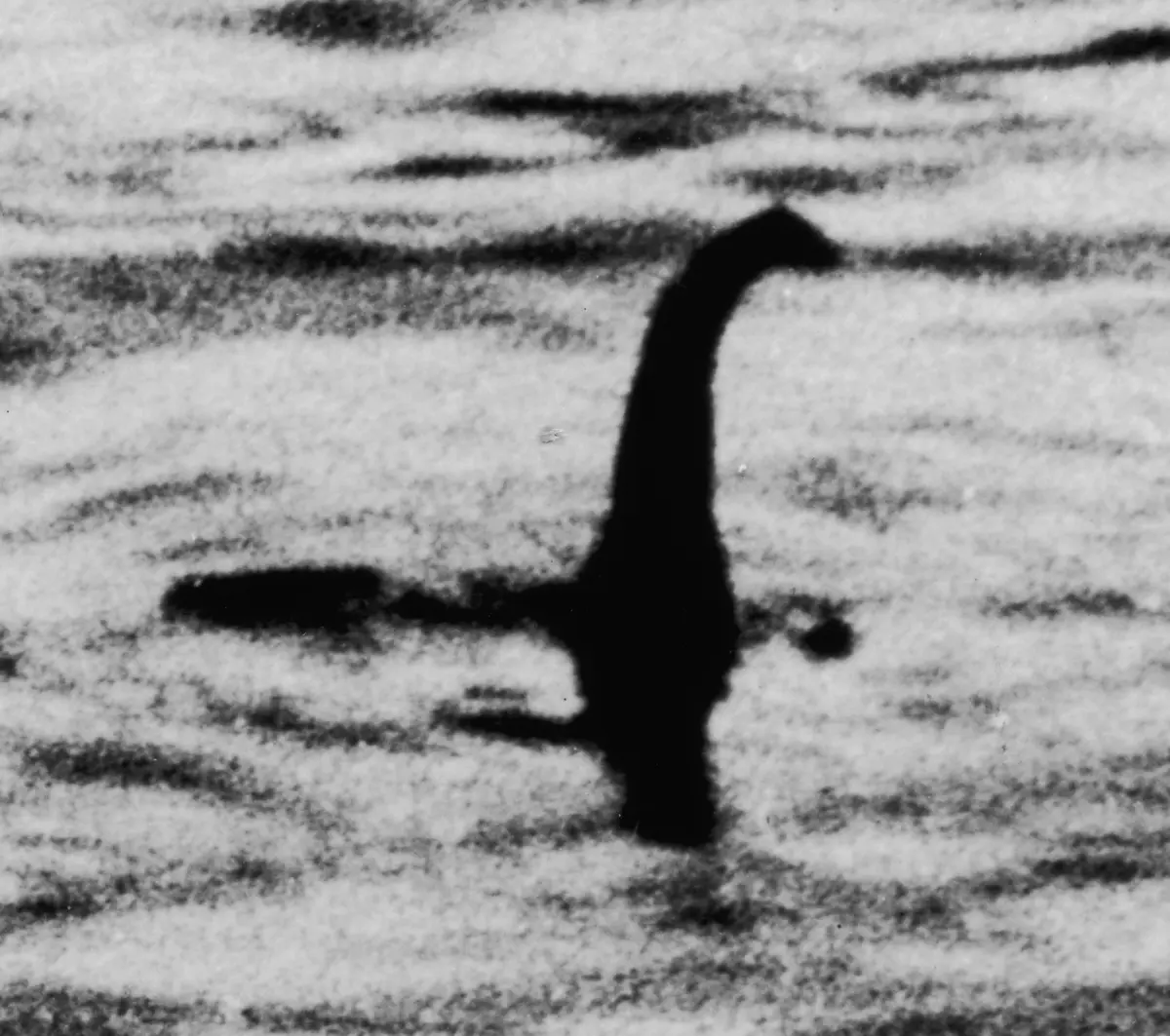
Descriptions vary wildly, from a plesiosaur-like creature with humps and a long neck to a giant eel or oversized fish, reflecting a legend built more from imagination and grainy photographs than from any consistent sighting. Tales of a beast in the loch stretch back centuries in local Highland folklore, but the modern craze ignited in 1933, when a new road along the lakeshore gave travelers unobstructed views of the water and a rush of sighting reports followed, including the famous but later exposed "Surgeon's Photograph." Scientific expeditions using sonar and DNA sampling have found no evidence of a large unknown animal, and skeptics point to misidentified logs, otters, wave patterns and deliberate hoaxes as the likely sources. Nessie nonetheless endures as a beloved cultural icon and a pillar of Scottish tourism.
What is the history of Loch Ness Monster (Nessie)?
British Online Archives dates the first alleged sighting of a monster near Loch Ness to 565 AD, when a creature was reported in the river Ness, and notes that sightings became more regular during the nineteenth century. The University of Otago's 2019 announcement of Gemmell's results speaks of "over a thousand reported sightings dating back to the 6th century".
The modern legend dates from 1933. Alex Boese's Museum of Hoaxes places its start after a new road was completed along the northern shore that year, "providing easy access to unobstructed views of the water". On 2 May 1933 the Inverness Courier published Aldie Mackay's account of a huge creature she said she had seen swimming in the loch on 15 April while driving along the A82 with her husband. On 22 July George Spicer and his wife said that a large creature with a long neck had crossed the road in front of their car, and the Courier published their account on 4 August. The first photograph of the monster was taken near Foyers by Hugh Gray on 12 November 1933.
The Daily Mail then hired the big-game hunter Marmaduke Wetherell to find the animal, and in December 1933 he found what appeared to be its tracks on the shore. Researchers from the Natural History Museum determined that the tracks had been made with a dried hippo's foot, "of the kind that were popularly used as umbrella stands", and Wetherell "retreated from public view".
On 21 April 1934 the Daily Mail published the photograph credited to Robert Kenneth Wilson, a London gynaecologist, showing a head and neck rising from the water. Wilson said he had taken it on 19 April and refused to have his name associated with it, so it became known as the Surgeon's Photo. British Online Archives notes that for almost 60 years it was taken as evidence of the creature, because Wilson's standing as a doctor generated wide acceptance. In 1984 Stewart Campbell concluded in the British Journal of Photography that the object in the water could have been only two or three feet long.
The hoax came out in two stages. An article in the Sunday Telegraph of 7 December 1975 included details of a confession by Ian Wetherell, and that testimony was published by numerous newspapers in 1994. That year Christian Spurling, Wetherell's stepson, confessed before his death at the age of 90 that he had made the model, a toy submarine fitted with a sea-serpent head, at his stepfather's request. Boese gives the motive as revenge for the humiliation over the hippo-foot tracks, and quotes Wetherell's son recalling him saying "We'll give them their monster".
Timeline: the documented record of Loch Ness Monster (Nessie)
- 2 May 1933 The Inverness Courier publishes Aldie Mackay's account of a large creature in the loch, seen from the newly improved A82. It is the starting gun of the modern legend.
- December 1933 – January 1934 The Daily Mail hires big-game hunter Marmaduke Wetherell, who produces casts of giant footprints. The Natural History Museum identifies them as made with a dried hippopotamus foot — an umbrella stand.
- April 1934 The Daily Mail publishes the "Surgeon's Photograph", credited to London gynaecologist Robert Kenneth Wilson. For decades it is considered the best evidence of a monster in the loch.
- 1994 Christian Spurling, aged 90 and near death, confesses that he built the creature: a toy submarine with a modelled sea-serpent head. He was Wetherell's stepson, and the photograph was his stepfather's revenge on the Daily Mail.
- 2018 A team led by Neil Gemmell of the University of Otago collects 250 water samples across the loch to sequence its environmental DNA — the genetic traces organisms shed into water.
- September 2019 The eDNA results are published: no evidence of any creature remotely related to a plesiosaur, and no shark, catfish or sturgeon DNA in the samples. A very significant amount of eel DNA appears at nearly every sampling point.
Is there a rational explanation for Loch Ness Monster (Nessie)?
In 2018 a team led by Professor Neil Gemmell of the University of Otago took 250 water samples "around, through the centre, and into the very depths" of Loch Ness, extracted the environmental DNA in each and compared it against global DNA databases. The university announced the results on 5 September 2019.
On the plesiosaur Gemmell said: "We can't find any evidence of a creature that's remotely related to that in our environmental-DNA sequence data. So, sorry, I don't think the plesiosaur idea holds up based on the data that we have obtained." The giant fish fared the same way: "So there's no shark DNA in Loch Ness based on our sampling. There is also no catfish DNA in Loch Ness based on our sampling. We can't find any evidence of sturgeon either."
One hypothesis survived the sampling. "There is a very significant amount of eel DNA," Gemmell said, with eel DNA found "at pretty much every location sampled". Because the data do not reveal the size of the animals, he concluded that "giant eels remain a plausible idea" and that further investigation was needed to confirm or refute it. He also recalled that in 1933 researchers had already proposed a giant eel as the explanation for some sightings, an idea that waned as extinct reptiles became more prominent.
The loch itself accounts for much of the rest. The Loch Ness Project describes a trench-like basin with a maximum depth of 230 m in Sir John Murray's survey of 1903, fed by dark peaty water from seven main rivers and about 100 streams, where no summer warms more than the upper ten metres to above about 15 °C. Its key to sightings records that a decade of camera surveillance by the Loch Ness Investigation, which closed in 1972, "had demonstrated the variety of illusion that the loch was capable of". The key sets out the situations in which observers report the monster, from a dark hump seen while driving along the loch and then lost from view to a narrow V-shaped wash moving fast with spray, and states that it does not explain all sightings, particularly some of the early close encounters.
Can you visit Loch Ness Monster (Nessie)?
The loch itself is open ground and free to walk. What carries a ticket is the interpretation centre at Drumnadrochit and the boats that go out on the water.
The Loch Ness Experience occupies the former Drumnadrochit Hotel at Drumnadrochit, Loch Ness, Inverness-shire IV63 6AN, on the western shore about 22 km (13.7 miles) south-west of Inverness. Its own site on 9 September 2026 gave the hours as 10am to 5pm and listed the Signature Tour (an hour indoors) at £15.75 for adults against a struck-through "Was £20", with children at £13.50 against "Was £17". The Audio Guided Tour carried the same £15.75 and £13.50. The Deepscan Cruise, described there as "an intimate, one-hour cruise" aboard the survey vessel Deepscan, was £25 for adults and £21 for children. A same-day bundle of cruise and tour cost £40.75 and £34.15; the pre-reduction figures shown beside them were £43 and £36. Each of the private options — a tour, a foreign-language tour, a cruise for up to twelve people — was £350. One dated event was on sale that day: Legends on the Lawn on 24 September at £9.95 for adults and £4.95 for children (sessions at 11am and 11.45am). No end date was published for any of the reduced prices.
The Deepscan cruise passes Urquhart Castle, which stands on its own promontory 2.5 km (1.6 miles) east-south-east of Drumnadrochit on the same shore.
The water is why the searching is done with instruments. Loch Ness runs about 37 km along the Great Glen and covers 56 km²; its deepest point is 229.8 m and it holds roughly 7.5 km³, more fresh water than every lake in England and Wales together. Peat washed in from the surrounding ground keeps it black, so visibility collapses within a few metres of the surface and nothing below that is visible from a boat.
Sources consulted
- Alice Broome, «90 years: The first photo of the Loch Ness Monster — Aldie Mackay's sighting in the Inverness Courier of 2 May 1933, Hugh Gray's photograph of 12 November 1933 and the Surgeon's Photo hoax» — British Online Archives, Notable Days, 2023 web
- Alex Boese, «The Surgeon's Photo — hoax record and 1994 confession» — The Museum of Hoaxes, 2015 archive
- Neil Gemmell, «First eDNA study of Loch Ness points to something fishy» — University of Otago, 2019 academic
- Sci-News, «Scientists find significant amount of eel DNA in Loch Ness» — Sci.News, 2019 newspaper archive
- The Loch Ness Experience, «Tickets and prices» — Official visitor information, 2026 archive
- Adrian Shine, «A Key to Loch Ness Monster Sightings — the Loch Ness Investigation's decade of camera surveillance (closed 1972) and the categories of sighting it learned to explain» — Loch Ness Project (lochnessproject.org), Loch Ness Reflections, 2026 web
- Adrian Shine, «Underwater Loch Ness — basin depth (230 m in Murray's 1903 survey, 227 m in 1991), peaty inflow from seven main rivers and about 100 streams, summer warming limited to the upper ten metres» — Loch Ness Project (lochnessproject.org), Explore Loch Ness, 2026 web
Reviewed by V. Serrano on 2026-07-28 · How we verify our content
📎 Source: Enigma Atlas
💬 Field testimonies (0)
No testimonies yet. Add the first.
Add your testimony
🔒 Log in to add a testimony