🦶 CRYPTID SIGHTING · EXP. Nº6501
ACTIVE
Kelpie
The kelpie is the water horse of Scottish folklore, and the sources split it in two.
Where and when was Kelpie sighted?
- Location
- Escocia, United Kingdom
- Date sighted
- Unknown
- Coordinates
- 57.323, -4.424
- Last updated
LOCATION
What is Kelpie?
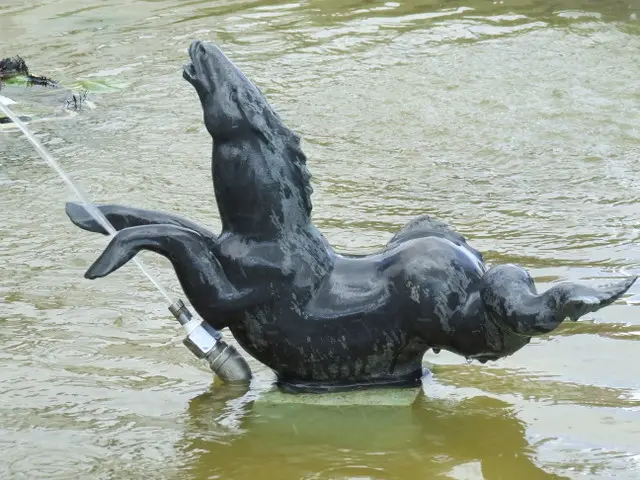
In Gaelic the each-uisge haunts lochs; in Lowland Scots the kelpie haunts rivers and fords, "a water demon … gen. in the form of a black (or white) horse, which lured unwary human beings to death by drowning", in the words of the Scottish National Dictionary. The oldest written trace is a place-name, Kelpie hoall, in the Kirkcudbright burgh records of 1674. Robert Burns put the creature at the ford in the thaw in 1786: "Then, Water-kelpies haunt the foord." The men who collected the tales doubted them: in 1813 James Headrick noted that the kelpie had "fallen into oblivion, since bridges were constructed in all convenient places", and in 1900 John Gregorson Campbell called the Sunart story of nine drowned children "obviously a pious fraud to keep children from wandering on Sundays". The thirty-metre Kelpies at Falkirk, lit for the first time in 2014, take the name; Art UK's catalogue entry says the work is inspired by the Clydesdale horses that worked the canals.
What is the history of Kelpie?
Scotland keeps two water horses, and the difference between them is the whole point of the story.
In Gaelic the beast is the each-uisge (plural eich-uisge), literally "water horse"; Dwelly's dictionary glosses it flatly as "Water-horse, kelpie (fabulous)". In Lowland Scots it is the kelpie, which the Dictionary of the Scots Language defines as "a water demon haunting rivers and fords, gen. in the form of a black (or white) horse, which lured unwary human beings to death by drowning". The dictionaries treat the two words as equivalents, and the folklorists did not. John Gregorson Campbell, minister of Tiree, was blunt about it in 1900: "The Water-horse haunts lochs, the Kelpie streams and torrents." He went further and denied that Gaelic Scotland had a kelpie at all — "The Kelpie that swells torrents and devours women and children has no representative in Gaelic superstition."
That line between still water and running water is not decorative. It is the difference between the two ways a person drowns. The each-uisge belongs to the deep, still loch: Campbell wrote that "in olden times almost every lonely freshwater lake was tenanted by one, sometimes by several, of these animals". The kelpie belongs to the crossing. Walter Gregor, collecting in the north-east of Scotland in 1881, fixed the geography exactly: "Waterkelpie was a creature that lived in the deep pools of rivers and streams. He had commonly the form of a black horse. He appeared at night, and often and often have travellers, in passing through fords or over old bridges, heard him go splash, splash, through the water."
The written trail begins with a piece of ground rather than a tale. A Dictionary of the Older Scottish Tongue can cite nothing earlier than a place-name in the Kirkcudbright burgh records of 17 October 1674, which mention a half share of land "at the East of Kelpie hoall", elsewhere written Kelpiehooll. The kelpie was on the map before it was in a book.
It reaches print as living belief on Friday 10 September 1773, when James Boswell left Samuel Johnson behind at the laird's house and walked the length of Raasay with old Malcolm MacLeod. Passing two lochs below Dùn Caan, MacLeod told him "a strange fabulous tradition": "there was a wild beast in it, a sea-horse, which came and devoured a man's daughter", and the father destroyed it by roasting a sow to draw the creature up an avenue of flat stones towards a hidden fire and a red-hot spit. Boswell's most valuable sentence is the last one: "He did not laugh when he told this story." A hundred and twenty-seven years later Campbell recorded the same tale on the same hill — a wether-sheep instead of a sow, a blacksmith instead of the father — and named the water: Loch na Mna, "the Woman's Loch", near Dùn Can.
Thirteen years after Boswell's walk, Robert Burns put the kelpie into the Kilmarnock volume of 1786. In the Address to the Deil he places it precisely where the folklorists would later find it — at the crossing, in the thaw, when the river runs highest: "When thowes dissolve the snawy hoord, / An' float the jinglan icy boord, / Then, Water-kelpies haunt the foord, / By your direction, / An' nighted Trav'llers are allur'd / To their destruction."
Campbell printed the Highland drowning tale under the title The Nine Children at Sunart. Children went out on a Sunday near the Loch of Disaster (Loch na Dunach). "They fell in with a horse, caught it, and in their thoughtless sport mounted it. Its back got longer till they were all mounted, except one, who had a Bible in his pocket. He touched the horse with his finger, and had to cut it off to save himself." Popular retellings usually have a boy sawing off several fingers to peel himself from the beast's back; in Campbell's text the survivor never mounts at all, and loses one finger for a single touch. Nine children went into the loch, and "The liver of one of them came ashore next day."
Campbell followed the tale with his verdict on it. "This tale is widely spread, and is obviously a pious fraud to keep children from wandering on Sundays to play in lonely places, and from meddling with any horse they may find." The man who spent his life gathering these stories from oral sources knew exactly what they were for.
The last twist is modern: the two thirty-metre horse heads that rise over the Forth and Clyde Canal at Falkirk are called The Kelpies, and almost every visitor reads them as the monster made monumental. Art UK's catalogue entry for the sculpture says the work "is inspired by the cultural heritage of the Clydesdale horses, draught horses, which worked hard to help people along the canals and on the land". Scottish Canals, which commissioned it, calls the Clydesdale "the breed that inspired him to create the colossal Kelpies", and its chief executive, John Paterson, said at the tenth anniversary in 2024 that the Kelpies "pay homage to the working horses and people of Scotland who used to pull cargo and passenger barges along Scotland's canals". The name is folklore; the subject is labour. The sculpture that made the kelpie famous across the world is, strictly speaking, a monument to the horses that never drowned anybody.
Timeline: the documented record of Kelpie
- 17 October 1674 The earliest written trace of the word is a place-name, not a story: the Kirkcudbright burgh records refer to land "at the East of Kelpie hoall", elsewhere written Kelpiehooll. It is the only pre-1700 citation the Dictionary of the Older Scottish Tongue can offer.
- 1747 The poet William Collins gives the creature its first literary appearance in English verse with the line "While I lie welt'ring on the osier'd shore, Drowned by the Kelpie's wrath" — drowning, from the very first quotation.
- 10 September 1773 On Raasay, Malcolm MacLeod tells James Boswell of "a wild beast in it, a sea-horse, which came and devoured a man's daughter", and shows him the hiding place and the rows of stones where it was supposedly killed. Boswell notes: "He did not laugh when he told this story."
- 1786 Robert Burns publishes "Address to the Deil" in the Kilmarnock edition, placing the kelpie at the ford during the thaw: "Then, Water-kelpies haunt the foord, / By your direction, / An' nighted Trav'llers are allur'd / To their destruction."
- 1813 James Headrick, in his agricultural survey of Angus, records that the water kelpie "has fallen into oblivion, since bridges were constructed in all convenient places" — the single strongest piece of evidence that the belief was attached to river crossings rather than to any animal.
- 8 April 1837 Chambers's Journal reports that in the parish of Carmylie, hollows in the pavement strata resembling animal footprints are known as "the Kelpie's foot", the kelpie being "a supposed fiend in the shape of a horse, who takes a pleasure in misleading and drowning unwary travellers".
- 1862 John Francis Campbell publishes his island interviews in Popular Tales of the West Highlands, and prints his own scepticism alongside the testimony: "C. thinks of the rules of evidence and the blowing of an angry otter, and smokes gravely."
- 1881 Walter Gregor's north-east collection fixes the kelpie's habitat in the deep pools of rivers and streams, heard by travellers "in passing through fords or over old bridges". His own material also has a kelpie plunging into Loch Ness, which shows the river/loch division was never absolute.
- 1900 John Gregorson Campbell publishes Superstitions of the Highlands and Islands of Scotland, drawing the clearest line on record — "The Water-horse haunts lochs, the Kelpie streams and torrents" — and dismissing the Sunart drowning tale as "obviously a pious fraud to keep children from wandering on Sundays to play in lonely places".
- 1913 Herbert James Draper paints The Kelpie, now in the Lady Lever Art Gallery, showing the creature as an alluring young woman — a Victorian art-world inversion of a tradition in which the kelpie's human form is male.
- 1956 A letter from Aberdeenshire quoted in the Scottish National Dictionary records the warning still in use: an old man in Drumblade "used to tell the boys going to school, if they went near his dam, the water kelpies would take them".
- 29 June 2013 Construction of Andy Scott's £5m sculptures begins beside the Forth and Clyde Canal: 30 metres tall, 600 tonnes of structural steel and 10,000 special fixings, as part of the £43m Helix regeneration project run by Falkirk Council and Scottish Canals.
- April 2014 The Kelpies are lit for the first time on 8 April, launched with a pyrotechnic event on 17–18 April, and opened to public tours the following Monday. Each head stands 30 metres and weighs 300 tonnes.
- 2024 On the sculptures' tenth anniversary, Scottish Canals reports that Helix Park has received more than seven million visitors since the launch, and restates what the artwork is for: it "pays homage to the working horses and people of Scotland who used to pull cargo and passenger barges along Scotland's canals".
Is there a rational explanation for Kelpie?
There is no shortage of sceptics in this story, and the oldest of them are the collectors themselves.
The functional reading — that the water horse is a drowning warning wearing a mane — is not a modern gloss imposed on the material. Campbell states it outright about the Sunart tale, calling it "obviously a pious fraud", and the Scottish National Dictionary preserves the practice still working within living memory: a 1956 letter from Aberdeenshire recalls "Auld J— M— in Drumblade speaking about kelpies. He used to tell the boys going to school, if they went near his dam, the water kelpies would take them."
The sharpest evidence is negative. In 1813 James Headrick, surveying the agriculture of Angus, wrote the creature's death certificate: "The water kelpie, a mischievous being, who was supposed to frequent the rivers, and who first seduced the unwary into the stream, and then carried them off to sea, has fallen into oblivion, since bridges were constructed in all convenient places." Headrick ties the end of the belief to the building of bridges, which attaches it to the ford rather than to any horse.
Misidentification does the rest, and here too the nineteenth century got there first. John Francis Campbell, collecting testimony across the islands for Popular Tales of the West Highlands (1862), listened to a boy describe a woman who heard the beast "blowing and snorting" while crossing a loch by boat and turned back; Campbell's note on his own reaction is one dry line — "C. thinks of the rules of evidence and the blowing of an angry otter, and smokes gravely." He also allowed that "there is a real sea-creature whose head may have suggested that there were real horses in the sea." The naturalistic explanation is as old as the collection itself.
J. G. Campbell was no more credulous about his own material. Of Mac-fir Arois, the heir of Aros carried into Loch Frisa in Mull, he wrote: "There seems to be this much truth in the story, that the young man was dragged into Loch Frisa by a mare which he was attempting to subdue and drowned." A real horse, a real loch, a real death, and a monster grown over the top of it. In the Raasay story the anticlimax is even plainer: when the smith finally kills the thing, the carcass "proved to be merely grey turves, or, as others say, a soft mass like jelly-fish".
What the tales are not wrong about is the danger. Water Safety Scotland, drawing on the UK Water Incident Database, reported 94 water-related deaths in Scotland during 2023, the lowest figure since 2018; 47 of them were accidental and 39 suspected suicides. The national drowning prevention strategy aims to halve accidental drowning deaths against a three-year baseline average of 96, taken from 2013–2015. A country that invented a horse to keep children away from lochs still loses close to one person a week to accidents in its water.
Can you visit Kelpie?
There are two places to go: the one everybody photographs, and the one the story actually came from.
The Kelpies stand in The Helix, Falkirk FK2 7ZT (tel. 01324 590600), a park run by Falkirk Council between Falkirk and Grangemouth. The sculptures themselves are outdoors, free and visible at any hour; what you pay for is going inside them. The Kelpies Tour lasts about 25 minutes and costs £9 adult, £8 concession and £3.50 child, with two children admitted free for every paying adult. Departures run daily at 10:30, 11:30, 13:30, 14:30 and 15:30 from April to October, and at 10:30, 12:30 and 14:30 from November to March. Pre-booking is advised, bookings are not refundable but can be moved to another time, and dogs are not allowed on the tour.
There are two car parks: the Helix car park (78 spaces, open 24/7) and the Kelpies car park (175 spaces, beside the visitor centre), the latter locked at 22:00 with last entry at 21:30 from April to October, and at 20:00 with last entry at 19:30 from November to March, reopening at 08:00. Charges apply from April to October — roughly £3–£3.75 per car, rising to £3–£4.50 in July and August — and parking is free from November to March. Blue Badge holders park free. Self-contained overnight parking costs £15 per vehicle per night. Both car parks fill early in good weather, and the site's own advice is to use the free parking at Falkirk Stadium (FK2 9EE, a three-minute walk into the park, about twenty to the sculptures) and walk in — but check the football fixture list first, because the stadium car park closes on match days. The stadium also has 10 rapid (50kW) and 16 fast (22kW) EV chargers. By train, Falkirk Grahamston is two miles away and Falkirk High three; by road the site is signposted off the M9 at junction 5 from Edinburgh and junction 6 from Glasgow via the M876. At the time of writing, ongoing works were limiting parking at The Helix and the Splash Play area was closed.
For the folklore rather than the steel, the most precisely documented water is Loch na Mna on Raasay, the loch Campbell named in 1900 and the one Boswell walked past in 1773 on his way up Dùn Caan. Raasay is reached by CalMac ferry from Sconser on Skye, a crossing of about 25 minutes; the loch sits on the standard walking route to the summit of Dùn Caan and is boggy underfoot. Take the same warning the story was invented to deliver: these are cold, deep, unpatrolled Highland lochs.
Sources consulted
- James Boswell, «The Journal of a Tour to the Hebrides with Samuel Johnson, LL.D. (entry for Friday 10 September 1773)» — Charles Dilly, London, 1785 book
- John Gregorson Campbell, «Superstitions of the Highlands & Islands of Scotland (chapter V, The Water-Horse / Each Uisge)» — James MacLehose and Sons, Glasgow, 1900 book
- Walter Gregor, «Notes on the Folk-Lore of the North-East of Scotland (chapter XII, Waterkelpie)» — Folk-Lore Society, London, 1881 book
- John Francis Campbell, «Popular Tales of the West Highlands, vol. IV (Mythology: the water-horse and the water-bull)» — Edmonston and Douglas, Edinburgh, 1862 book
- Robert Burns, «Address to the Deil, lines 67-72, in Poems, Chiefly in the Scottish Dialect (Kilmarnock edition)» — John Wilson, Kilmarnock — text via the Eighteenth-Century Poetry Archive, 1786 book
- Dictionaries of the Scots Language, «Kelpie, n. — Scottish National Dictionary (1960) and Dictionary of the Older Scottish Tongue (1963)» — Scottish Language Dictionaries Ltd / University of Glasgow, 1960 archive
- Maggie Scott, «Scots Word of the Season: 'Kelpie'» — The Bottle Imp, issue 8 (Association for Scottish Literary Studies), 2010 academic
- BBC News Scotland, «The Kelpies horse head sculptures lit up for sneak peek» — BBC News, 2014 newspaper archive
- BBC News Scotland, «Kelpies sculpture assembled between Falkirk and Grangemouth» — BBC News, 2013 newspaper archive
- Anthony McIntosh, Public Sculpture Manager, «Andy Scott's 'The Kelpies'» — Art UK, 2021 web
- The Helix (Falkirk Council), «Kelpies Tours and Getting Here & Parking» — Official visitor information, 2026 web
- Scottish Canals, «Heavy horses gather to celebrate powerful Kelpies' effect a decade on» — Scottish Canals, 2024 web
- Water Safety Scotland, «Water-based deaths at lowest since 2018 (annual trend report on Water Incident Database data)» — Water Safety Scotland / RoSPA, 2024 report
- Edward Dwelly, «each-uisge — The Illustrated Gaelic-English Dictionary» — Dwelly, via Am Faclair Beag, 1911 book
- Caledonian MacBrayne, «Raasay — getting here (Sconser ferry, 25 minutes)» — CalMac destinations, 2026 web
- Art UK, «The Kelpies (2013), Andy Scott — Art UK catalogue entry: "The work is inspired by the cultural heritage of the Clydesdale horses, draught horses, which worked hard to help people along the canals and on the land" (owner and commissioner: Scottish Canals; read in the Internet Archive capture of 14 August 2025)» — Art UK, artwork record (accession FK2_GB_S002), 2025 web
Reviewed by V. Serrano on 2026-07-29 · How we verify our content
📎 Source: Enigma Atlas
💬 Field testimonies (0)
No testimonies yet. Add the first.
Add your testimony
🔒 Log in to add a testimony