🦶 CRYPTID SIGHTING · EXP. Nº6501
ACTIVE
Beast of Bodmin Moor
The Beast of Bodmin Moor is a large black cat-like animal reported on the granite uplands of Bodmin Moor, in Cornwall in south-west England, since the mid-1970s, and blamed by farmers for livestock deaths.
Where and when was Beast of Bodmin Moor sighted?
- Location
- Cornwall, United Kingdom
- Date sighted
- Unknown
- Coordinates
- 50.55, -4.617
- Last updated
LOCATION
What is Beast of Bodmin Moor?
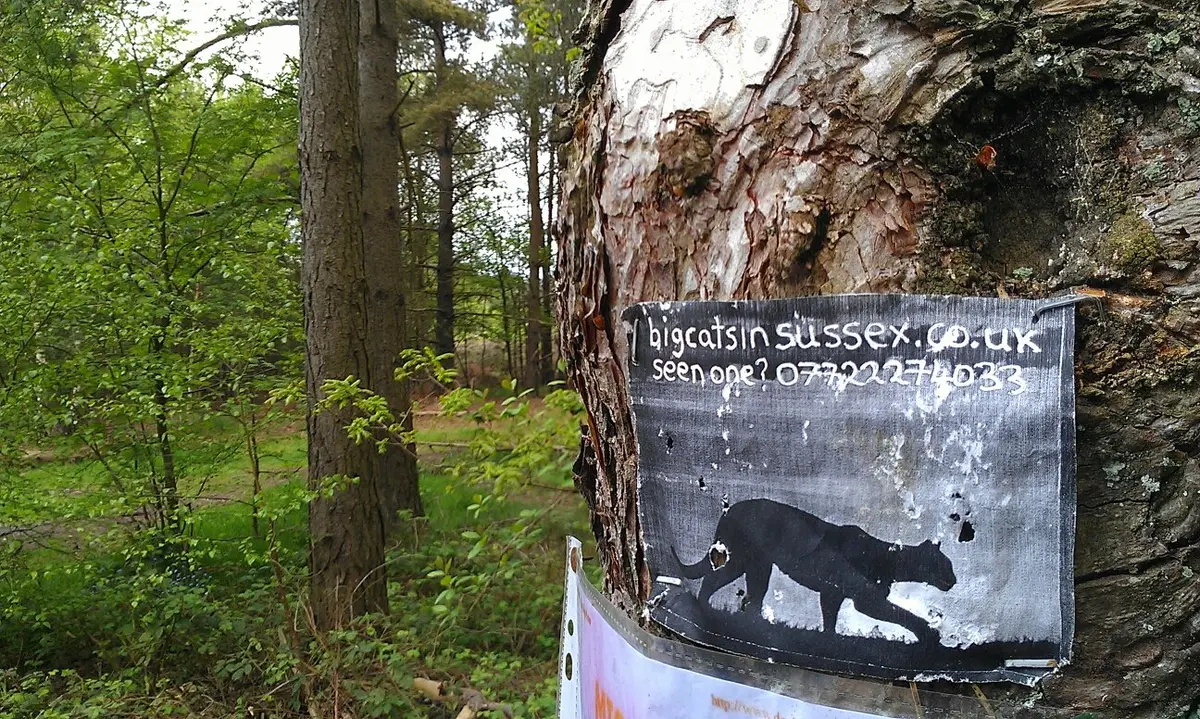
It is the best known of Britain's so-called alien big cats, and it is unusual among cryptids in having produced a government file. In 1995 officials of the Ministry of Agriculture, Fisheries and Food spent six months examining eyewitness reports, video, photographs and plaster casts of footprints, and published a report finding no verifiable evidence of a big cat, while conceding that it would never be possible to prove that one was not present. Summarising the findings in the House of Commons in 1998, the minister Elliot Morley said the photographs and footage were of domestic cats, the footprints were those of cats and dogs, and no field or post-mortem evidence linked a big cat to any livestock death investigated. He also told MPs that a leopard skull planted in a stream near the moor had come from a leopard-skin rug. The popular idea that Britain's big cats descend from pets released around the Dangerous Wild Animals Act 1976, which required a licence rather than banning ownership, rests on very few named admissions and is rejected by some specialists; Defra says no credible evidence of wild big cats has been presented to Natural England since the 1990s.
What is the history of Beast of Bodmin Moor?
Most cryptids leave behind folklore. The Beast of Bodmin Moor left behind a government file, and most of what can be documented about it is in that file.
Bodmin Moor is the most south-westerly upland in the United Kingdom, an unglaciated granite plateau whose commons have been grazed by the cattle and sheep of moorland farms for centuries. It is not a national park and never has been. When the Commons debated the Bodmin Moor Commons Bill on 21 May 1996, its sponsor Robert Hicks explained that the whole purpose of the Bill was to create a statutory commoners council, because when he had led a Cornish delegation to the Minister of Agriculture in January 1992 asking for the moor to be made an environmentally sensitive area, the answer had been: "Bob — much as I would like to designate Bodmin moor an ESA, I am afraid that I cannot do this because there is no organisation or body in place with which I can treat." A moor with no authority, no rangers and, at that date, no statutory right of public access is the stage on which the beast appears.
Reports of a large black cat on that moor had been accumulating for close to twenty years by the mid-1990s. They were not unique to Cornwall. Speaking in the Commons on 2 February 1998, Keith Simpson, MP for Mid-Norfolk, told the House that "a survey carried out in 1996 claimed sightings of big cats in 34 English counties, so Norfolk's big cat has to compete with, among others, the Fen tiger, the beast of Bodmin, the Durham puma, the Nottingham lion and the cougar of Cupar." Replying for the Ministry of Agriculture, Fisheries and Food, Elliot Morley put the national volume at "several hundred reports of sightings of big cats" every year.
Cornwall's own MP objected to the name. Paul Tyler, who represented North Cornwall, interrupted the same debate to say: "It is the beast of Bodmin moor. The worthy people of Bodmin take some exception to the incorrect description because the beast has never been seen in Bodmin." The name belongs to the upland; the town of Bodmin lies on its western edge.
What made Bodmin different was that a department of state went and looked. Two investigations run out of MAFF are on the parliamentary record. The first was ordered by Mrs Browning, then a MAFF minister and MP for Tiverton and Honiton, who asked the Agricultural Development Advisory Service to examine the carcasses of dead farm animals along with photographs and videos said to show big cats. Simpson summarised its result to the House: "The conclusion of the study proved that the farm animals had been victims of large dogs and the photographic evidence proved the cats to be domestic."
The second is the one everyone means by "the 1995 report". Officials spent six months on it, working through eyewitness statements, video recordings and plaster casts of footprints, and the published conclusion was that there was "no verifiable evidence" of the presence of a big cat. Morley described to the Commons in 1998 exactly what had been handed in and what became of it: "Evidence such as plaster casts, sheep carcases, video footage and still photographs were submitted and evaluated by MAFF as part of the Ministry's investigation in 1995 of the evidence for the presence of a large exotic cat or cats in the Bodmin moor area… The subsequent report, which was published, concluded that the photographs and video footage were of domestic cats and that the footprints were those of cats and dogs. There was no field or post mortem evidence to indicate the involvement of big cats in any of the livestock deaths that were followed up during the investigation."
The authors also wrote the sentence that has kept the case alive ever since: it "would never be possible to prove that an exotic 'big cat' was not present."
Then came the skull. It is the single most-repeated episode in the whole story, and the version told in Parliament is blunter than the version told on the moor. Morley, explaining why his department could not chase every report, said: "It is not unknown for practical jokers to be involved — such as the one who planted the skull of a leopard in a stream near Bodmin moor… It turned out that the skull was from a leopard skin rug and had been planted." A leopard's head, but a rug's leopard.
Behind all of it sits a piece of legislation. The Dangerous Wild Animals Act 1976 received Royal Assent on 22 July 1976, and section 10(2) brought it into operation three months later. Answering a written question on 9 November 1976, the Home Office minister Dr Summerskill confirmed the dates: "This Act came into operation on 22nd October. Anyone who was keeping on that date a dangerous wild animal to which the Act applies has until 20th January next to apply to the local authority for a licence." The Act did not ban keeping a leopard: section 1 required a licence from the local council, with a fee set to cover the authority's costs and conditions on secure accommodation. What gave it teeth was section 4, headed "Power to seize and to dispose of animals without compensation": a council could seize an unlicensed animal and "either retain it in the authority's possession or destroy or otherwise dispose of it", then bill the keeper for the cost.
That is the mechanism the popular origin story rests on: private owners facing a licence fee, an inspection and the risk of confiscation, quietly opening the cage door instead. Named admissions are rare. The clearest one on record came in 2000, when a lion tamer called Leslie Maiden, known as One-Eyed Nick, told the Birmingham Post that he had released a panther and a puma in Derbyshire some twenty-five years earlier: "At first I was a bit worried about how they would get on. But I went up to the moors a few weeks later and saw bones of sheep and pheasants, so I think they adapted pretty well."
Against that, MAFF kept a ledger. Morley told the House that "a total of 16 big cats have escaped into the wild since 1977. They include lions, tigers, leopards, jaguars and pumas, but all but two animals were at large for only one day." The two exceptions were a leopard, free for seven days before it was cage-trapped, and a tame puma caught near Inverness in 1980 that ended its life in a wildlife park. Britain has certainly held loose exotic cats now and then — a Canadian lynx shot in Devon after attacking two dogs was donated to Bristol Museum in 1903 — and each cat in that ledger was later caught or shot.
Timeline: the documented record of Beast of Bodmin Moor
- 1903 The body of a Canadian lynx is donated to Bristol Museum; the museum's records say the animal was shot after attacking two dogs in Devon — the clearest early proof that loose exotic cats do occasionally turn up in Britain.
- 22 July – 22 October 1976 The Dangerous Wild Animals Act receives Royal Assent and comes into operation three months later. It does not ban keeping big cats: section 1 requires a local-authority licence and section 4 allows councils to seize an unlicensed animal and destroy or dispose of it without compensation.
- 20 January 1977 Deadline announced in a Commons written answer by Home Office minister Dr Summerskill: anyone keeping a dangerous wild animal on 22 October 1976 had until this date to apply for a licence. This three-month window is the whole factual basis of the "released pets" origin story.
- 1980 A tame puma is captured near Inverness. MAFF later tells the Commons that its origin is unclear and that it was subsequently kept in a wildlife park — one of only two of sixteen escaped big cats that stayed at large more than a single day.
- 1983 After reports that a mystery predator had killed more than 100 sheep on Exmoor, a team of Royal Marines is deployed to the area. They fail to catch a cat.
- 1995 — the government report Ministry of Agriculture officials spend six months examining eyewitness reports, video recordings and plaster casts of footprints, and publish a report finding "no verifiable evidence" of a big cat on Bodmin Moor — while conceding it "would never be possible to prove that an exotic 'big cat' was not present".
- 21 May 1996 The Commons debates the Bodmin Moor Commons Bill. Robert Hicks explains it exists to create a statutory commoners council; Anthony Steen tells the House that Bodmin is "even more inhospitable to walk over than Dartmoor — it is the most difficult and treacherous moor".
- 2 February 1998 In a Commons adjournment debate, MAFF minister Elliot Morley summarises the 1995 findings — domestic cats in the photographs, cats and dogs in the footprints, no post-mortem evidence — and reveals that a leopard skull "planted" in a stream near the moor "was from a leopard skin rug". He also gives the department's tally: 16 big cats escaped since 1977, all but two at large for a single day.
- 2000 The lion tamer Leslie Maiden, known as One-Eyed Nick, tells the Birmingham Post that he released a panther and a puma in Derbyshire some twenty-five years earlier. It remains one of the very few named admissions behind the "released pets" theory.
- 2009 The Forestry Commission reveals that its staff observed big cats on two occasions while conducting deer surveys in the Forest of Dean.
- 2019 A Defra spokeswoman states that neither Natural England nor Defra has received credible reports of wild living or breeding big cats in recent years, and that the department is doing no work on the subject and has no plans to.
- 2024 Defra repeats its position naming the Cornish case — "no credible evidence… dating back to the 1990s" — while Oxford's Egil Dröge dismisses the 1976 release theory and Andrew Hemmings of the Royal Agricultural University reports about 250 tooth-pit samples analysed, not yet peer reviewed or published.
Is there a rational explanation for Beast of Bodmin Moor?
The strongest sceptical case against the Beast of Bodmin Moor is not an argument. It is the government's own paperwork.
Everything physical failed. The 1995 investigation was not a desk exercise: plaster casts, sheep carcasses, video and stills were all handed in and all examined. The photographs and footage turned out to show domestic cats; the footprints were cats and dogs; and no field examination or post-mortem tied a big cat to a single one of the livestock deaths followed up. The earlier ADAS study reached the same place from the other direction — the dead farm animals had been killed by large dogs. Two separate official examinations, and not one item of evidence survived contact with a specialist.
Misidentification runs right to the top of the scale. Morley offered the Commons a case from his own department's world: "not many years ago London zoo was called out to deal with an escaped lioness in north London. It turned out to be a large ginger tom cat sunbathing on a wall." An escaped lioness and a tomcat on a wall are, at a glance and at distance, the same silhouette. On open moorland with no reference object — no fence post, no gate, no person — there is nothing in the visual field to fix an animal's size, which is precisely the condition under which most moorland sightings are made.
The ecology does not add up. Dr Egil Dröge, of Oxford University, dismissed the standard release theory to the Guardian in 2024: "Maybe a few were set free with the 1976 legislation, but there sure aren't any roaming around right now and breeding." His practical test is the carcasses. Shown a photograph of a mauled sheep offered as evidence in Cumbria, he replied: "The carcass shown in the pictures isn't touched by a big cat, let alone one with a large cub. All ribs are intact, and the carcass is picked clean, even by insects. You'd never see that with the kills of big cats." And a real predator would not be subtle: "If a big cat would roam in England, you'd expect to see clusters of sheep kills… That wouldn't go unnoticed."
The arithmetic of a population is unforgiving. MAFF's own tally of sixteen big cats escaping since 1977, all but two recaptured within a day, describes a country where a loose leopard is a short-lived news story rather than the founder of a lineage. Even Rick Minter, Britain's leading big cat consultant and a believer, accepts that a minimum of about 250 animals would be needed for a healthy gene pool — a population of that size, undetected for fifty years, is a very large thing to hide in a small island.
The report's own escape clause is the reason the story never dies. Its authors conceded it "would never be possible to prove that an exotic 'big cat' was not present." That is an honest statement about the limits of evidence, and it is also unfalsifiable, which is why it is quoted far more often than the finding it accompanies.
And at least once the evidence was manufactured. The leopard skull "planted… in a stream near Bodmin moor" was, in the minister's words, "from a leopard skin rug".
The folklorists point at the shape of the thing rather than its content. David Clarke, of Sheffield Hallam University, has noted that in resting almost entirely on witness reports the big cat phenomenon behaves like UFO reporting, and puts the appeal plainly: "People believe it because they want something magic back in their environment." George Monbiot, writing in Feral in 2013, dismissed British big cats as a projection of an "unexpressed wish for lives wilder and fiercer than those we now lead".
What honestly remains open. Professor Andrew Hemmings, of the Royal Agricultural University, has spent years measuring tooth pits on bones from deer and other prey found where cats have been reported; in 2016 he said "the tooth pit data points to the presence of carnivores bigger than those indigenous to the UK", and by 2024 he had analysed around 250 samples with about eighty left. He added: "This analysis alone will never tell us for certain, but it is an extra piece in the jigsaw." The Guardian reported that the work had not yet been peer reviewed or published. In May 2023 the film-maker Matthew Everett announced that black hairs taken from a barbed-wire fence on a Gloucestershire farm after a sheep attack in 2022 had given a 99.9 per cent mitochondrial DNA match to leopard. The result came out ahead of his documentary Panthera Britannia Declassified, and Discover Wildlife's report of it names the laboratory only as “a forensic laboratory”.
The government's position has not moved. In 2019 a Defra spokeswoman said: "Neither Natural England nor Defra have received any credible reports of wild living or breeding big cats in Britain in recent years. Defra is not currently engaged in any work related to the management of wild big cats in Britain and has no plans to do so." In 2024 the department repeated it with the Cornish case named: "There has been no credible evidence of wild living big cats presented to Natural England, dating back to the 1990s. For example, the Beast of Bodmin case in the 1990s involved a detailed investigation of sightings and found no evidence."
Then the skull itself. The version a minister gave the House of Commons is a stream near the moor, a plant, a rug. A fuller account was printed in October 1995 in Animals & Men, the journal of the Centre for Fortean Zoology, by its editor Jonathan Downes, who had been closely involved in the events of that July and August and suspected that a few real cats, probably pumas, lay at the bottom of the affair. The skull turned up about a fortnight after the MAFF report and was found by a schoolboy, Barney Lanyon-Jones. Doug Richardson of London Zoo first announced that it came from a recently dead animal, with particles of flesh still adhering; a few days later he announced that he had found the egg cases of a tropical insect inside the cranium, and that the apparent flesh was dried tissue, left in a skull prepared for a skin rug, reconstituted by the soaking in river water. “For hoax it undoubtedly was,” Downes wrote. Most later retellings, Wikipedia's included, credit the examination to the Natural History Museum in London; the account written that autumn names London Zoo.
Can you visit Beast of Bodmin Moor?
Access. Bodmin Moor is not a national park, as the Commons was reminded in the 1996 debate on the Bodmin Moor Commons Bill. Much of it is registered common land, which counts as open access land under the right to roam. Defra's guidance lists what access land may be used for, "walking, running, watching wildlife and climbing", and what it may not: "horse-riding, cycling, camping, taking animals other than dogs on to the land, driving a vehicle (except mobility scooters and powered wheelchairs), water sports". Dogs must be kept on a lead no more than 2 metres long between 1 March and 31 July, to protect ground-nesting birds, and "at all times around livestock". The commons are grazed by the cattle and sheep of moorland farms, and the purpose of the 1996 Bill was to create a statutory commoners council to manage them. Excepted land, which includes houses with the ground they stand on and land used for crops, stays closed even where it lies inside the access map.
Golitha Falls National Nature Reserve, on the River Fowey at the southern edge of the moor near St Cleer, is the managed way in. Natural England's guide to its Cornish reserves, last updated on 27 May 2026, describes 18 hectares of upland oak and mixed ash woodland, much of it ancient, with Draynes Wood recorded in the Domesday Book of 1086. The reserve is a Site of Special Scientific Interest for its woodland flora, with more than 120 species of bryophyte and 48 of lichen. According to the guide, dormice live in the old hazel coppice and the river "supports healthy populations of both salmon and sea trout", while otters are often seen at the falls. It is "open all hours and is free to visit", reached by minor roads from the A38, A30 and B3254, with a car park opposite the entrance kept by Inkies Smokehouse BBQ and a voluntary charge paid through the RingGo app. A flat out-and-back path of about 0.6 km leads to the viewing area, with benches 0.2 km from the car park; the other paths are steeper and rougher. Mobile signal is "patchy throughout the site". The nearest station is Liskeard, with buses from Liskeard to St Cleer, and the nearest accessible changing facilities are at Liskeard Public Hall. The guide warns that winter storms swell the Fowey and make the falls "even more torrential", and that extra care is needed after heavy rainfall. Enquiries go to [email protected].
The high moor. The sightings are placed on the open ground of the upland, around Rough Tor and Brown Willy in the north and out towards Dozmary Pool, the moorland lake attached to the Arthurian story of Excalibur. In the 1996 debate the MP Anthony Steen, who knew both moors, told the House that Bodmin is "even more inhospitable to walk over than Dartmoor — it is the most difficult and treacherous moor". Not every part of the moor is access land, and the open access map shows which parts are.
Bodmin Jail is on Berrycoombe Road, Bodmin, Cornwall PL31 2NR, with PL31 2PY as the sat-nav postcode and 01208 76292 as its telephone. On 23 September 2026 its visitor-information page showed the former county gaol open that day from 9.30am to 6pm, and listed self-guided entry with an audio tour as well as guided tours; its after-dark programme includes a ghost walk and overnight stays. The town gives the beast its name only at second hand. In the 1998 Commons debate on big cats, Paul Tyler, the MP for North Cornwall, said that "the worthy people of Bodmin take some exception to the incorrect description because the beast has never been seen in Bodmin."
Sources consulted
- House of Commons, «Big Cats (Norfolk), HC Deb 2 February 1998, vol 305, cc818-24 — adjournment debate in which MAFF minister Elliot Morley summarises the 1995 Bodmin Moor investigation, states that the planted leopard skull came from a leopard skin rug, and gives the ministry's tally of 16 escaped big cats since 1977» — Hansard 1803-2005, UK Parliament, 1998 archive
- House of Commons, «Dangerous Wild Animals Act 1976, written answer by Dr Summerskill, HC Deb 9 November 1976, vol 919, cc147-8W — the Act came into operation on 22 October 1976 and existing keepers had until 20 January 1977 to apply for a licence» — Hansard 1803-2005, UK Parliament, 1976 archive
- UK Parliament, «Dangerous Wild Animals Act 1976 (as enacted) — section 1 (licence requirement), section 4 (power to seize and dispose of animals without compensation) and section 10(2) (commencement three months after Royal Assent of 22 July 1976)» — legislation.gov.uk, The National Archives, 1976 archive
- Mark Wilding, «On the trail of Britain's wild big cats — includes the 1995 MAFF investigation, the phrases 'no verifiable evidence' and 'it would never be possible to prove that an exotic big cat was not present', the 2019 Defra statement, Leslie Maiden's Birmingham Post admission, the 1903 Bristol Museum lynx and the 1983 Exmoor Royal Marines deployment» — The Guardian, 2019 newspaper archive
- Aneesa Ahmed, «'Beast of Cumbria': claimed leopard sighting fails to convince experts — the 2024 Defra statement on the Beast of Bodmin, Egil Droge's rejection of the 1976 release theory, and Andrew Hemmings's unpublished tooth-pit research» — The Guardian, 2024 newspaper archive
- House of Commons, «Bodmin Moor Commons Bill [Lords] (By Order), HC Deb 21 May 1996, vol 278, cc150-90 — the moor is not a national park, the statutory commoners council, and Anthony Steen on Bodmin as 'the most difficult and treacherous moor'» — Hansard 1803-2005, UK Parliament, 1996 archive
- Natural England, «Cornwall's Nature Reserves — Golitha Falls National Nature Reserve: size, habitats, directions, car park, path lengths, mobile signal, nearest station and the warning about the River Fowey after heavy rain» — GOV.UK corporate report, 2026 report
- Department for Environment, Food and Rural Affairs, «Rights of way and accessing land: use your right to roam — what open access land is, what you may and may not do on it, dog lead rules between 1 March and 31 July and around livestock, and excepted land» — GOV.UK guidance, 2026 web
- Bodmin Jail Museum Ltd, «Plan your visit — Bodmin Jail: address, sat-nav postcode, telephone, opening times and the range of self-guided, guided and after-dark experiences» — bodminjail.org, 2026 web
- Jonathan Downes, «A Caseful of Cougars — the finding of the 'Bodmin skull' about a fortnight after the 1995 MAFF report by the schoolboy Barney Lanyon-Jones, Doug Richardson of London Zoo's first reading (recently dead animal, flesh adhering) and his later finding of tropical insect egg cases inside the cranium» — Animals & Men, no. 7 (Centre for Fortean Zoology), October 1995, from p. 12, 1995 archive
- Tanya Jackson, «New DNA evidence 'confirms' presence of big cats in the UK — hair from a Gloucestershire barbed-wire fence (2022), 99.9% mitochondrial DNA match to leopard from 'a forensic laboratory', announced by film-maker Matthew Everett ahead of Panthera Britannia Declassified» — BBC Wildlife / Discover Wildlife, 2023 newspaper archive
Reviewed by V. Serrano on 2026-08-01 · How we verify our content
📎 Source: Enigma Atlas
💬 Field testimonies (0)
No testimonies yet. Add the first.
Add your testimony
🔒 Log in to add a testimony