👻 HAUNTED PLACE · EXP. Nº0482
ACTIVE
50 Berkeley Square
50 Berkeley Square is a location reputed to be haunted in London, GB. Its reputation comes from reported apparitions, unexplained phenomena and eyewitness accounts gathered over time.
Where is 50 Berkeley Square?
- Location
- London, GB
- Type
- House / mansion
- Coordinates
- 51.509, -0.146
- Testimonies
- 0
- Last updated
LOCATION
Why is 50 Berkeley Square said to be haunted?
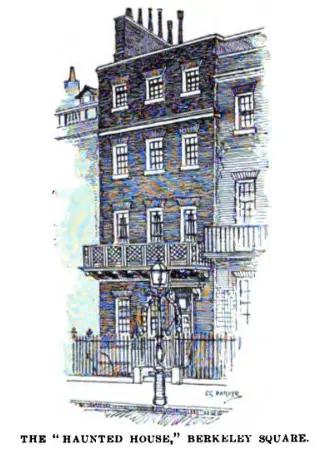
Number 50 Berkeley Square is a four-storey Grade II listed townhouse in Mayfair, London, historically occupied between 1859 and the early 1870s by Thomas Myers, a recluse who avoided social contact and spent most of his time in the attic. The legend of the house as London's most haunted originated in the 1870s, precisely as Myers's tenancy ended. The core story concerns the attic: a young woman who threw herself from the top-floor window to escape an abusive uncle, and whose spirit allegedly remains. She is variously described as a brown mist, a white figure, or capable of frightening people to death. Two associated stories grew around this core: a maidservant left to sleep in the attic who is found dead or insane by morning, and a sceptical young man who volunteers to spend a night in the room and is discovered dead or mad the next morning. Both are told with the certainty of reportage and no verifiable names. Since the late 1930s the house has been owned by Maggs Bros., antiquarian booksellers, and in all that time no phenomena have been reported. The legend's origin can be traced to a short story by Victorian novelist Rhoda Broughton, but researchers have also suggested that the documented behaviour of Myers — sleeping by day, making unexplained nocturnal noises, remaining almost always in the attic — on its own could generate a neighbourhood reputation as a haunted house without any supernatural element.
What is the history of 50 Berkeley Square?
Number 50 Berkeley Square is a four-storey Grade II listed townhouse in Mayfair, and for a period in the late nineteenth century it was the most haunted house in London — a title it held in the popular press with far more conviction than any evidence ever supported.
The core legend concerns the attic. A young woman, the story goes, threw herself from the top-floor window to escape an abusive uncle, and her spirit remains in that room. She is usually described as a brown mist, sometimes as a white figure, and — this is the crucial escalation — as capable of frightening people to death.
Around that grew the two stories that made the house famous. In one, a maidservant is left to sleep in the attic and is found in the morning insane or dead. In the other, a sceptical young man volunteers to spend a night in the room, arranges a signal to be given if he needs help, and is discovered dead or mad when it comes. Both are told with the certainty of reportage and no names anyone can check.
The house does have a documented eccentric, however. Between 1859 and the early 1870s, number 50 was occupied by Thomas Myers, a man who had recently been rejected by his fiancée and who, by all accounts, withdrew completely. He stopped going out, barely slept, and roamed the house night and day muttering to himself, spending most of his time in the attic.
The stories began appearing in books on the ghosts of London in the 1870s — precisely as Myers's tenancy ended.
Since the late 1930s the house has belonged to Maggs Bros., the antiquarian booksellers, and in all that time no phenomena have been reported.
Timeline: the documented record of 50 Berkeley Square
- 1859 Thomas Myers, recently rejected by his fiancée, takes number 50. He stops going out, barely sleeps and spends most of his time in the attic, roaming the house at night.
- Early 1870s Myers's tenancy ends. It is precisely when stories about the house begin appearing in books on the ghosts of London.
- Late 19th century Number 50 is established in the popular press as the most haunted house in London, with the stories of the maidservant driven mad and the young man who dies when he gives the signal.
- Late 1930s Maggs Bros., antiquarian booksellers, buy the house. No phenomena have been reported since: nearly ninety years of people working there daily with nothing to report.
- Modern research The maidservant and bold young man stories are traced to a short story by the Victorian novelist Rhoda Broughton. Researchers also point to Myers's documented behaviour as the source of the reputation.
Is there a rational explanation for 50 Berkeley Square?
This is one of the very few cases where the specific literary source of a ghost legend can be identified, which makes it a valuable specimen.
The two stories that sustain number 50's fame — the maidservant who goes mad in the attic and the bold young man who dies when he gives the signal — have been traced to a short story by the Victorian novelist Rhoda Broughton. They are not testimonies that somebody later fictionalised: they are fiction that somebody later told as testimony. The accounts appear in books on the ghosts of London from the 1870s onward, and when subjected to serious historical scrutiny they do not stand up.
It also fits what is documented. Thomas Myers occupied the house between 1859 and the early 1870s, slept by day, made unusual sounds at night and spent most of his time in the attic. A Mayfair townhouse with the shutters closed, lights at strange hours and unexplained nocturnal noises, occupied by a man nobody ever saw go out, generates a neighbourhood reputation entirely on its own. Researchers have suggested exactly that: that the stories derive from Myers's behaviour. The legend was built on a real man who was suffering, and then a fictional young woman and a Broughton short story were added on top.
And there is a final fact usually omitted because it spoils the story: since Maggs Bros. bought the house in the late 1930s, not a single phenomenon has been reported. Nearly ninety years of people working there daily, upper floors included, with nothing to tell.
A house stops being haunted exactly when it stops having anyone with an interest in its being so.
Can you visit 50 Berkeley Square?
Number 50 stands on the west side of Berkeley Square in Mayfair, London W1J 5BA. It is listed at Grade II on the National Heritage List for England under entry 1066467, first listed on 24 February 1958. The house is private and it is empty: the consultation website run for its present owners describes the building as "currently in a neglected state, having stood vacant since February 2020". Maggs Bros., the antiquarian booksellers who bought it in 1938, sold what was left of their lease in 2015. The firm reopened at 48 Bedford Square in May 2017. In June 2024 Westminster City Council approved a scheme to turn numbers 49 and 50, together with 49-50 Hays Mews behind them, into a members' health and wellness club called Life, with a swimming pool in a new basement. The attic of the legend is the top floor of that empty house.
The garden in the middle of the square is public and free. Westminster City Council owns and manages it, and Historic England registers it at Grade II on the Register of Parks and Gardens under entry 1000516. Its plane trees were planted in 1789 by Edward Bouverie, who lived at number 13. The facade is photographed from the garden or from the pavement, which is as close as the building allows.
Sources consulted
- Philipp Röttgers, «50 Berkeley Square — historia del edificio, la ocupación de Thomas Myers y el origen de las leyendas» — London – Beyond Time and Place, 2020 web
- Astonishing Legends, «Is 50 Berkeley Square the most haunted house in London? — rastreo de las fuentes» — Astonishing Legends, 2018 report
- Jack the Ripper Tour, «The most haunted house in London — contexto histórico de Mayfair» — Divulgación histórica de Londres, 2022 web
- CityDays, «50 Berkeley Square — ficha del edificio catalogado y sus usos» — CityDays London, 2024 archive
Reviewed by V. Serrano on 2026-07-28 · How we verify our content
📎 Source: Wikipedia (CC BY-SA)
💬 Field testimonies (0)
No testimonies yet. Add the first.
Add your testimony
🔒 Log in to add a testimony