👻 HAUNTED PLACE · EXP. Nº9475
ACTIVE
Borley Rectory
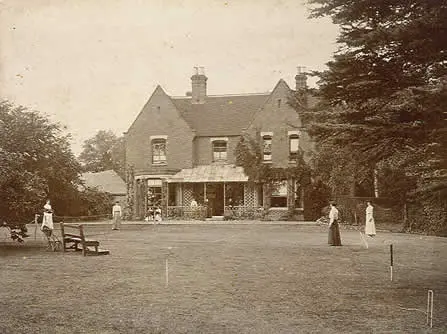
Built in 1862 for the rector of Borley, Essex, Borley Rectory became known as "the most haunted house in England" after psychic researcher Harry Price investigated it starting in 1929, following Daily Mirror reports of ghostly nun sightings and a phantom coach on the grounds.
Where is Borley Rectory?
- Location
- Essex, England, United Kingdom
- Type
- House / mansion
- Coordinates
- 52.055, 0.694
- Last updated
LOCATION
Why is Borley Rectory said to be haunted?
Price documented a poltergeist campaign in the 1930s under rector Lionel Foyster and his wife Marianne, including thrown stones and messages scrawled on walls pleading "Marianne, please help me." Locals had long claimed a nun was bricked up alive in the cellar centuries earlier as punishment for an illicit love affair with a monk. A fire gutted the rectory in 1939 and it was demolished in 1944, yet visitors still report unease where the walls once stood.
What is the history of Borley Rectory?
Borley Rectory was called "the most haunted house in England", and the man who called it that was the man selling the story.
The house stood in Borley, Essex, opposite the parish church, on the Essex side of the Suffolk border. Its fame belongs almost entirely to Harry Price, a psychic researcher with a genuine talent for publicity, and to the decade in which he made it a national obsession.
The most productive phase came under the Reverend Lionel Foyster and his much younger wife Marianne, who lived there in the 1930s. During their tenancy the phenomena multiplied spectacularly: bells ringing, objects thrown, and above all the celebrated wall writings — pencilled messages that appeared on the plaster, several of them addressed to Marianne by name, asking for light, mass and prayers. Lionel kept a "Diary of Occurrences" recording it all.
In 1937 Price did something genuinely novel. He rented the empty rectory for a year and ran what was the first extended on-site investigation of a haunted building anywhere: he advertised in The Times for volunteer observers and recruited forty-eight of them, mostly students, who took shifts in the house with instructions on what to record. Whatever one thinks of Price, the method — continuous occupation by rotating independent witnesses — was ahead of its time.
The house did not survive its own fame. On 27 February 1939 the new owner, Captain W. H. Gregson, knocked over an oil lamp and the rectory burned. The insurers later suggested the fire may have been started deliberately. The gutted shell was demolished in 1944, and the site is now simply a green.
Timeline: the documented record of Borley Rectory
- 1930s Under the Reverend Lionel Foyster and his wife Marianne, phenomena multiply: bells, thrown objects and the wall writings addressed to Marianne by name. Lionel keeps a "Diary of Occurrences".
- 19 May 1937 Harry Price rents the empty rectory for a year and begins the first extended on-site investigation of a haunted building, advertising in The Times and recruiting forty-eight volunteer observers, mostly students.
- 27 February 1939 The new owner, Captain W. H. Gregson, knocks over an oil lamp and the rectory burns. The insurance company later suggests the fire may have been started deliberately.
- 1944 The gutted shell is demolished. Nothing is left on the site but a green.
- 1956 Dingwall, Goldney and Hall publish The Haunting of Borley Rectory for the SPR: Marianne Foyster "was actively engaged in fraudulently creating phenomena", and Price himself had "salted the mine".
- 1977 Marianne Foyster tells investigator Iris Owen that Price knew the Diary of Occurrences was fictitious, and that Lionel Foyster meant to turn it into a best-seller.
Is there a rational explanation for Borley Rectory?
Borley is not a case where sceptics on the outside attacked a paranormal claim. It is a case where the Society for Psychical Research demolished its own most famous investigation, and that makes it one of the most important episodes in the history of the subject.
After Price died in 1948, three SPR members — Eric Dingwall, Kathleen Goldney and Trevor H. Hall — went through his Borley material in detail. Their findings were published in 1956 as The Haunting of Borley Rectory. The conclusion was blunt on two fronts.
First, Marianne Foyster. The report concluded that she "was actively engaged in fraudulently creating phenomena". This was not a guess from a distance: Marianne later admitted she had been having a sexual relationship with the lodger, Frank Pearless, and that she had used paranormal explanations to cover for her absences and her movements around the house. The wall writings addressed to her by name look very different once that is on the table.
Second, and far more damaging, Price himself. The report found that he had fraudulently produced some of the phenomena — in Hall's phrase, that Price had "salted the mine". In 1977 Marianne told the investigator Iris Owen that Price knew the Diary of Occurrences was fictitious, and that Lionel Foyster intended to work it up into a best-seller.
So the structure of the case collapses from both ends at once: the resident generating phenomena for private reasons, and the investigator manufacturing more of them for professional ones. Price's claims about Borley are now generally discredited among historians of the subject.
What survives is worth keeping. Price's 1937 method — renting the building, recruiting rotating independent observers, standardising what they recorded — was a real methodological advance, and it is the part of Borley that later investigators actually inherited.
Can you visit Borley Rectory?
Nothing of the rectory has stood on the ground since 1944. It burned on 27 February 1939 and the shell was pulled down five years later. The Psi Encyclopedia records that the owner "sold off much of the grounds in the 1960s to allow four bungalows to be built", and those four bungalows are lived-in houses on Hall Road with gardens around them.
Borley church stands on the same road, at Hall Road, Borley, Sudbury CO10 7AE. It is listed at grade I as National Heritage List entry 1169675, filed under the name "Parish Church (Dedication Unknown), Borley". The civil parish recorded 111 residents at the 2021 census. The nearest town is Sudbury, about 3 km (1.9 miles) to the south-east over the Suffolk border. The Church of England directory achurchnearyou.com gave one service a month when the parish entry was consulted on 9 September 2026: the first Sunday of the month at 11.15 in the morning, lasting an hour.
The security around the churchyard is there because of this story. The Psi Encyclopedia states that the notoriety "has attracted growing numbers of rowdy visitors to the church building and graveyard, necessitating the installation of closed-circuit television and other security measures". What that protects is the church itself, with the canopied Waldegrave monument inside it, and the working burial ground of a parish of a hundred people.
Sources consulted
- Psi Encyclopedia, «Borley Rectory — artículo del caso» — Society for Psychical Research, 2020 academic
- Eric Dingwall, Kathleen Goldney y Trevor H. Hall, «The Haunting of Borley Rectory: A Critical Survey of the Evidence» — Society for Psychical Research, 1956 book
- University of Maryland Baltimore County, «The Haunting of Borley Rectory — fondo documental Eileen Garrett» — Special Collections, Garrett Collection, 2018 archive
- Gazette News, «Quiet village with a dark secret: England's 'most haunted house' is in Essex» — Essex County Standard, 2025 newspaper archive
Reviewed by V. Serrano on 2026-07-28 · How we verify our content
💬 Field testimonies (0)
No testimonies yet. Add the first.
Add your testimony
🔒 Log in to add a testimony