👻 HAUNTED PLACE · EXP. Nº9476
ACTIVE
Furness Abbey
Furness Abbey was founded in 1123 by Stephen, Count of Boulogne, and grew into the second-wealthiest Cistercian monastery in England before its forced dissolution in 1537.
Where is Furness Abbey?
- Location
- Cumbria, United Kingdom
- Type
- Church / religious site
- Coordinates
- 54.135, -3.198
- Last updated
LOCATION
Why is Furness Abbey said to be haunted?
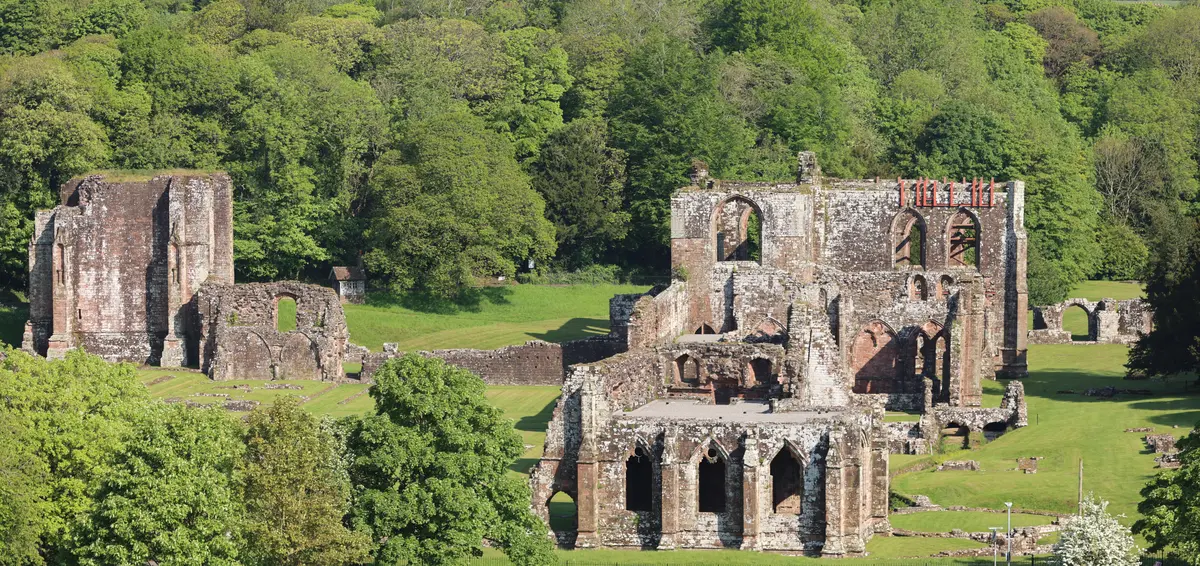
The abbey's red sandstone ruins stand in the Vale of Deadly Nightshade, a valley named for the poisonous plants that once thrived in its damp soil. The site's history is marked by both religious devotion and political intrigue, including the Scottish raids of the early fourteenth century: in 1316 the Scots sacked the abbey, and when they returned in 1322 the abbot paid a ransom so that they spared the monastery and its estates. After the dissolution, the abbey's stones were repurposed for local buildings, and the site fell into ruin. The abbey is notable for its architectural innovations, including an early use of pointed arches that predated Gothic architecture in England.
What is the history of Furness Abbey?
Furness Abbey was founded in 1123 by Stephen, Count of Boulogne, and grew into the second-wealthiest Cistercian monastery in England before its forced dissolution in 1537. The abbey's red sandstone ruins stand in the Vale of Deadly Nightshade, a valley named for the poisonous plants that once thrived in its damp soil. The site's history is marked by both religious devotion and political intrigue, including the Scottish raids of the early fourteenth century: in 1316 the Scots sacked the abbey, and when they returned in 1322 the abbot paid a ransom so that they spared the monastery and its estates. After the dissolution, the abbey's stones were repurposed for local buildings, and the site fell into ruin. The abbey is notable for its architectural innovations, including an early use of pointed arches that predated Gothic architecture in England.
Timeline: the documented record of Furness Abbey
- 1123 Furness Abbey is founded by Stephen, Count of Boulogne, as a daughter house of the Cistercian order.
- 1127 The abbey is formally dedicated, and construction begins on the monastic buildings.
- 1322 The Scots return to Furness, but this time the abbot pays a ransom so that they spare the monastery and its estates; in 1316 they had sacked the abbey.
- 1537 The abbey is dissolved by Henry VIII during the Dissolution of the Monasteries. The monks are pensioned off, and the abbey's assets are seized by the Crown.
- 1745 The abbey's ruins are used as a defensive position during the Jacobite Rebellion, though no major battles occur on the site.
- Early 19th century Antiquarians begin visiting the site, recording their experiences and contributing to the abbey's haunted reputation.
- 1920 The abbey is placed under the guardianship of the Office of Works, marking the beginning of formal preservation efforts.
- 1983 Furness Abbey is designated as a Grade I listed building, recognizing its historical and architectural significance.
Is there a rational explanation for Furness Abbey?
The abbey's haunted reputation stems largely from 19th-century antiquarians who camped on the site and reported feelings of being watched. Modern investigations suggest these experiences may be attributed to the site's acoustics, which carry sound unpredictably through the ruins, and the psychological effect of the abbey's isolated, atmospheric setting. The chanting reported by visitors is likely an auditory illusion caused by wind patterns through the ruins, and the hooded figure is often explained as a trick of light and shadow in the abbey's east end. English Heritage, which manages the site, does not promote ghost stories but acknowledges the abbey's role in local folklore.
Can you visit Furness Abbey?
Furness Abbey is managed by English Heritage and is open to the public year-round. The site is located near Barrow-in-Furness in Cumbria, England, and offers self-guided tours of the ruins. Visitors can explore the abbey's chapter house, cloisters, and the remains of its church. The site includes interpretive panels that detail the abbey's history and architecture. Admission fees apply, with discounts for English Heritage members. The abbey is accessible by car and public transport, with nearby parking and bus routes from Barrow-in-Furness.
Sources consulted
- English Heritage, «Furness Abbey: History and Guide» — English Heritage Guidebook, 2018 book
- Janet Burton, «The Cistercians in Yorkshire» — Borthwick Institute, 1998 book
- Geoffrey Moorhouse, «The Dissolution of the Monasteries» — Weidenfeld & Nicolson, 1992 book
- Richard Oram, «Furness Abbey and the Scottish Raids» — Journal of Medieval History, 2005 academic
- Richard Jones, «The Haunted Abbeys of England» — Tempus Publishing, 2003 book
- John H. Smith, «Furness Abbey: A Historical Guide» — Cumbria County History Trust, 2010 book
- English Heritage, «Furness Abbey: Conservation and Management» — English Heritage Report, 2015 report
- English Heritage, «Furness Abbey: A Visitor's Guide» — English Heritage Guide, 2020 book
Reviewed by V. Serrano on 2026-08-21 · How we verify our content
💬 Field testimonies (0)
No testimonies yet. Add the first.
Add your testimony
🔒 Log in to add a testimony