👻 HAUNTED PLACE · EXP. Nº9476
ACTIVE
Llancaiach Fawr
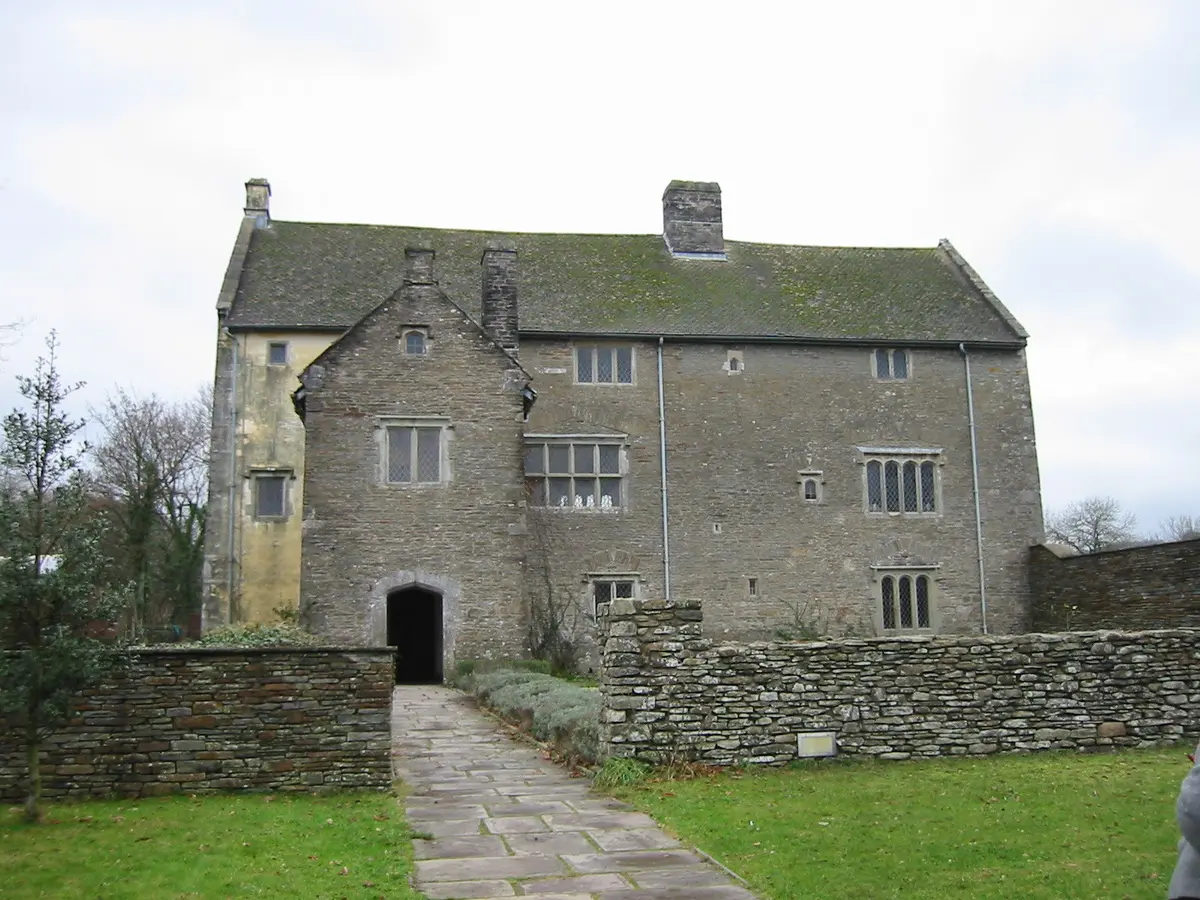
Llancaiach Fawr Manor was built to be barred from the inside. Raised in the mid-1500s for Dafydd ap Richard — tree-ring dating puts the roof timbers at 1548-1565 — the semi-fortified house in the Rhymney Valley kept four-foot walls, a single entrance and staircases hidden inside the masonry, so that the east wing could seal itself off as a refuge.
Where is Llancaiach Fawr?
- Location
- Wales, United Kingdom
- Type
- House / mansion
- Coordinates
- 51.661, -3.283
- Last updated
LOCATION
Why is Llancaiach Fawr said to be haunted?
Its documented brush with history is precise: the Iter Carolinum, the printed journal of Charles I's marches, records the King dining here on Tuesday 5 August 1645 at 'Mr. Pritchers' — weeks before his host, Colonel Edward Prichard, changed sides to Parliament. From 1991 to 2024 the manor lived a second life as a living-history museum set eternally in 1645, whose costumed servants shared the house with a marketed cast of ghosts: 'Mattie' the nineteenth-century housekeeper of the lore, a little boy, a man in black, and the Colonel himself. The operator's own ghost-tour page answered its own question — haunted? 'YES!' — at £18.50 a ticket. Caerphilly council closed the museum in December 2024 to save £485,000 a year; the house still waits, ghost calendar and all, for a new tenant.
What is the history of Llancaiach Fawr?
The name comes from the stream at the foot of the hill: Llancaiach Fawr stands on the bank of the Nant Caiach, in the parish of Gelligaer, just north of the village of Nelson in the Rhymney Valley. When John Leland toured Glamorgan in the wake of the Acts of Union of 1536, he noted 'David Richarde' dwelling in what he transliterated as 'Huhkaihac', one of only three 'gentlemen of fame' in Senghenydd; a marriage settlement of 1578 calls the property 'a capital mansion house called Glankayach', and that spelling — Glancayach — followed the house through the seventeenth century before softening into Llancaeach and, much later, the modern form. The manor was long thought to predate the Acts of Union, which would have made it the very house Leland saw. Tree-ring dating commissioned when Channel 4's Time Team excavated the grounds (the programme was screened in April 2011) undid that assumption: the roof timbers were felled between 1548 and 1565, so the present building — raised for Dafydd ap Richard, whose patronymic ap Rhisiart the family later smoothed into 'Prichard' — replaced or absorbed an earlier dwelling.
What survives is one of the most complete semi-fortified gentry houses in Wales, and its defensive logic is still legible: walls four feet thick, a single entrance, steep stone staircases running inside the walls, and stout doors with draw-bars. With the doors barred the house split in two, and the east wing became a self-contained refuge — the only part with access to the latrine tower. The family's court record explains the caution: eleven Star Chamber cases involving Edward Prichard the elder and his son David, from 'brawling in Gelligaer Church' to 'assault and riot at Gelligaer', trace a running feud with the Lewis branch of their own kindred. By 1628 the Prichards felt secure enough to advertise prosperity instead: a Grand Staircase went in, two rooms were panelled in oak, and several of the mural stairs were sealed — which is why more windows are visible from outside the house than can be found within.
Colonel Edward Prichard, born around 1610, was Sheriff of Glamorgan in 1638 and a justice of the peace from 1640. When war came he raised men and money for the King as Commissioner of Array — an awkward posture, since his wife Mary was the sister of the zealous Parliamentarian Bussy Mansell. On 5 August 1645, weeks after the disaster at Naseby, Charles I dined here while touring South Wales in search of support. The stop is not just local tradition: the Iter Carolinum, the journal of the King's marches kept by 'a daily attendant upon His Sacred Majesty' and printed in 1660, records 'Tuesday the 5 to Glancayah Mr. Pritchers dinner, at Brecknock the Governour, supper' — and 5 August 1645 did fall on a Tuesday. The visit bought the King nothing: within weeks Prichard, like most of the Glamorgan gentry, went over to Parliament. He was made Governor of Cardiff Castle, held it against Edward Carne's siege in February 1646, and was commended by Colonel Horton 'for his constancy in that affray' after the battle of St Fagans in 1648. A Baptist with Puritan sympathies, he lost his wife in 1649 and died in 1655.
The house then sank into three centuries as a farmhouse — the 1842 tithe map shows an orchard at the rear — until Rhymney Valley District Council bought it in 1979. The Welsh School of Architecture picked its fabric apart, restoration ran through the 1980s, and in 1991 it opened as a living-history museum permanently set on 5 August 1645, staffed by costumed 'servants' who speak seventeenth-century English and profess ignorance of anything later. A £943,200 Heritage Lottery grant announced in 2013 paid for a slate roof and the restoration of the attic servants' quarters, unveiled in 2015, and 61,000 people visited in 2023/24. None of that saved it: facing a £45m budget gap, Caerphilly County Borough Council closed the manor on 22 December 2024 to end a £485,000 annual subsidy, over protests in the council chamber that called the decision 'tantamount to cultural vandalism'. The leasehold went to market in January 2025, a preferred operator was announced that July — and at the end of June 2026 the council conceded that no lease had yet been completed. The manor remains closed.
Timeline: the documented record of Llancaiach Fawr
- c. 1537 John Leland, touring Glamorgan after the Acts of Union, records 'David Richarde' dwelling at 'Huhkaihac' — one of three 'gentlemen of fame' in Senghenydd. The manor's own historians note the house he saw was probably an earlier building on or near the site.
- 1548–1565 Felling date range of the roof timbers according to the tree-ring dating carried out for the Time Team excavation (screened in April 2011): the present house is younger than the pre-1536 date long assumed for it.
- 1578 Edward Prichard's marriage settlement describes 'a capital mansion house called Glankayach' — the spelling the house kept through the following century.
- 1628 The prospering Prichards add the Grand Staircase, panel two rooms in oak and seal several of the defensive mural staircases — leaving more windows visible from outside the house than can be found within.
- Tuesday 5 August 1645 The Iter Carolinum, the journal of Charles I's marches printed in 1660, records: 'Tuesday the 5 to Glancayah Mr. Pritchers dinner, at Brecknock the Governour, supper.' The King dined at the manor between Cardiff and Brecon; within weeks his host, Colonel Edward Prichard, went over to Parliament.
- 1655 Death of Colonel Edward Prichard — Governor of Cardiff Castle for Parliament in 1645-46, commended after St Fagans in 1648, widowed since 1649.
- 1991 After purchase by Rhymney Valley District Council in 1979 and restoration through the 1980s, the manor opens to the public as a living-history museum permanently set on 5 August 1645.
- 20 May 2003 Living TV's Most Haunted airs its Llancaiach Fawr episode — 'soldiers, children, and a maid'. The same year, the South Wales Paranormal Research group begins its regular ghost watches at the manor.
- 30 September 2018 Wales Online reporter Liam Garrahan spends a night alone in the manor and lists its four reputed ghosts — Colonel Prichard, the maid Mattie, a little boy and a 'man in black' — while reporting that he himself observed nothing. On 31 October the list enters Wikipedia.
- 22 December 2024 Caerphilly County Borough Council closes the manor to end a £485,000 annual subsidy amid a £45m budget gap; 20 staff and 18 volunteers are affected, and opponents in the council chamber call the decision 'tantamount to cultural vandalism'.
- 31 January 2025 The council appoints Avison Young to market the leasehold of the Grade I house and its 12-acre site, noting 61,000 visitors in 2023/24. A preferred operator is announced in July 2025.
- 30 June 2026 Council leader Jamie Pritchard tells a council meeting that no lease or agreement has been completed and offers 'contrition' for the delays; the manor remains closed with no reopening date.
Is there a rational explanation for Llancaiach Fawr?
The deepest institutional record of Llancaiach Fawr never mentions a ghost. The Royal Commission's Coflein entry (compiled in 2009, extended in 2014) runs through masonry breaks, truss finishes and tree-ring dates without a single paranormal word, and the manor's own long history page — Leland, the Star Chamber feuds, the Civil War — is equally silent. The ghosts lived on a different page of the same website, and that page sold tickets: 'Is Llancaiach Fawr Manor haunted? … And the answer is… YES! It is.' Ghost tours ran on Friday and Saturday evenings from October to December at £18.50 a head; 'Paranormal Llancaiach' evenings toured the house with EMF meters and proximity sensors; and visiting investigation groups could hire the manor on summer Friday evenings at £75 per person, hot buffet and glass of wine included, with two staff members present as the insurance policy required. The same page was candid about the product: 'we don't fix anything so we can't guarantee that the House will be active.' The 'top ten most haunted' ranking the museum cited was its own claim, with no traceable list behind it.
Nothing in the reputation is datable before the museum. The house opened to visitors in 1991; the earliest printed treatment of its hauntings this review could date is a chapter in Lionel and Patricia Fanthorpe's The World's Most Mysterious Places (1999), which Wikipedia has cited since 2014 but which could not be consulted for this review; Living TV's Most Haunted filmed there in May 2003 ('soldiers, children, and a maid'); and the South Wales Paranormal Research group began its regular ghost watches at the manor in 2003. The four named ghosts now in circulation — Colonel Prichard drawing up battle plans, 'Mattie' the housekeeper, a little boy who fell from an upper room, and a 'man in black' patrolling the garden — entered Wikipedia on Halloween 2018, sourced to a Wales Online reporter who had spent a night alone in the manor that September and, by his own account, saw nothing. Wikipedia's edit history also shows who tended the flame earlier: in 2014 the article invited readers to join a ghost watch ('see the LCF Website for details') until one editor stripped the invitation and another tagged the page for promotional tone, and in 2022 a further editor trimmed the section with the summary 'trim ghost garbage'.
Even the lore's own tellers do not agree on Mattie. The versions in circulation make her a nineteenth-century housekeeper who died in her room — some say of burns from a kitchen accident — and place her haunt in her bedroom and the kitchen; the staircase phenomena, where they appear at all, are attributed to children playing. One check remains open: Welsh Newspapers Online, the digitised Welsh press to about 1919 and the right corpus for testing whether any haunting was reported at Llancaiach before the museum era, was unreachable throughout this review — every request met a bot-protection wall — so no claim is made here in either direction about the Victorian record. What can be said is simple: no teller of the story cites any document older than the ticket office, and when the ticket office shut on 22 December 2024, the ghost calendar shut with it. The last third-party ghost hunt on offer ran on 7 December 2024, sold out at £49, and no date has been offered since.
Can you visit Llancaiach Fawr?
Llancaiach Fawr Manor stands on Gelligaer Road (B4254) at Nelson, Treharris CF46 6ER, the address the manor's own website gave while it was open, in the county borough of Caerphilly. The Royal Commission's Coflein record files the house under the community of Gelligaer at grid reference ST 11350 96610; on OpenStreetMap that point lies about 115 m south of the B4254 (measured on 24 September 2026).
The house has been shut since 22 December 2024, when Caerphilly County Borough Council mothballed the Grade I listed building to save £485,000 a year; the Caerphilly Observer reported the next day that around £53,000 had been set aside for its upkeep. On 31 January 2025 the council appointed Avison Young to market the leasehold of the manor and its 12-acre site, noting more than 61,000 visitors in 2023/24, and in July 2025 it announced a preferred operator. At the council meeting of 30 June 2026 its leader, Jamie Pritchard, said that no lease or agreement had yet been completed and that the council would "provide a further update when there is a confirmed position", according to Herald.Wales, whose report gives no date for reopening.
Sources consulted
- 'A daily attendant upon His Sacred Majesty' (attrib. Sir Edward Walker), «Iter Carolinum, being a succinct relation of the necessitated marches, retreats, and sufferings of His Majesty Charls the I» — London (EEBO-TCP A66926), 1660 book
- T. Driver; R.F. Suggett, «Llancaiach Fawr Manor (NPRN 19150)» — Coflein, Royal Commission on the Ancient and Historical Monuments of Wales, 2014 report
- Llancaiach Fawr Manor / Caerphilly County Borough Council, «History at Llancaiach Fawr» — llancaiachfawr.co.uk (archived, Wayback Machine), 2024 web
- Llancaiach Fawr Manor / Caerphilly County Borough Council, «Ghost Tours at Llancaiach Fawr» — llancaiachfawr.co.uk (archived, Wayback Machine), 2024 web
- Liam Garrahan, «I spent the night in one of Wales' most haunted houses - here's what happened» — Wales Online, 2018 newspaper archive
- Richard Gurner, «Llancaiach Fawr closes its doors as it is 'mothballed'» — Caerphilly Observer, 2024 newspaper archive
- Nicholas Thomas, «Llancaiach Fawr still closed a year after new operator chosen» — Herald.Wales, 2026 newspaper archive
- Avison Young, «Avison Young appointed as agent for historic Llancaiach Fawr Manor» — avisonyoung.co.uk, 2025 web
- TheTVDB, «Most Haunted — Llancaiach Fawr Manor House (series 2, aired 20 May 2003)» — thetvdb.com, 2003 web
Reviewed by V. Serrano on 2026-08-17 · How we verify our content
💬 Field testimonies (0)
No testimonies yet. Add the first.
Add your testimony
🔒 Log in to add a testimony