🦶 CRYPTID SIGHTING · EXP. Nº0555
ACTIVE
Black Shuck
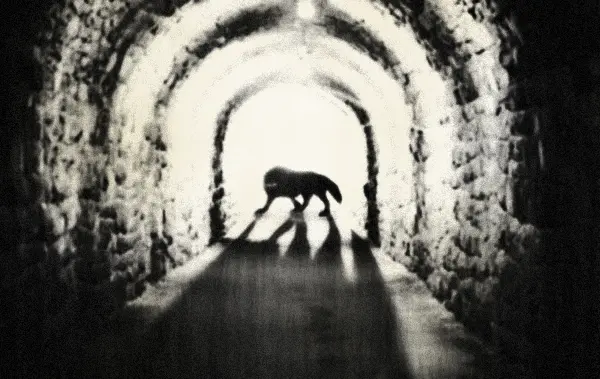
Black Shuck is the spectral black dog of East Anglian folklore, said to roam the coastline, churchyards and lonely lanes of Norfolk and Suffolk as an omen of death, with saucer-sized eyes.
Where and when was Black Shuck sighted?
- Location
- Suffolk / Norfolk, United Kingdom
- Date sighted
- Unknown
- Coordinates
- 52.456, 1.437
- Last updated
LOCATION
What is Black Shuck?
The episode everyone cites is that of 4 August 1577, when a violent storm struck the churches of Bungay and Blythburgh in Suffolk — and it is worth telling as it was written down. The Bungay parish register names the two dead, John Fuller and Adam Walker, and says they died in the belfry; it mentions no dog. The dog is in a moralising pamphlet by Abraham Fleming, who was not a witness and wrote from a copy that reached him: "this black dog, or the divel in such a likenesse, running all along down the body of the church with great swiftnesse". Fleming also places the claw marks at Bungay, and describes them as rent and torn, not scorched: the "devil's fingerprints" shown today on the Blythburgh door are a later attribution. The name itself is late too: "Shuck" does not appear in print until 1850, and no nineteenth-century source about Shuck mentions 1577.
What is the history of Black Shuck?
Black Shuck is usually introduced with a date: Sunday 4 August 1577, the black dog that burst into the churches of Bungay and Blythburgh in Suffolk, killed worshippers and left burnt claw marks on a door. Almost every element of that sentence can be checked against printed sources — and the result is much less tidy than the tourist boards suggest.
Start with the pamphlet: A Straunge and Terrible Wunder wrought very late in the parish Church of Bongay… namely the fourth of this August, in ye yeere of our Lord 1577, "Imprinted at London by Frauncis Godly". Two lines matter more than the rest. The byline reads Drawen into a plain method according to the written copye, by Abraham Fleming; and in his preface Fleming adds, "The order of the thing as I receiued the same I haue committed to paper." He was in London. He never claims to have been in Suffolk, never names a witness, and is openly working up somebody else's manuscript.
The shape he gives it is a sermon. Four pages pass before any event is described, all about a God who warns a wicked nation "by wonders wrought on earthe, straunge & vnusuall… But wee will not be warned." He then places the occasion "in Norfolke", as do the running heads on every page. Bungay and Blythburgh are both in Suffolk.
The Bungay narrative is precise about the weather and vague about everything else. Between nine and ten in the morning the storm came "with such vnwonted force" that "the Church did as it were quake and staggar": "there appered… to the congregation then and there present, a dog as they might discerne it, of a black colour." Fleming's hedge — as they might discerne it — is worth keeping. "This black dog, or the diuel in such a likenesse", he goes on, ran "all along down the body of the Church with great swiftnesse", passed between two kneeling worshippers and wrung "the necks of them bothe at one instant clene backward". A third man was "drawen togither and shrunk vp, as it were a peece of lether scorched in a hot fire", but "dyed not".
Then comes the detail the modern legend has quietly relocated. Fleming lists the physical evidence, and he puts it at Bungay: "there are remaining in the stones of the Church, and likewise in the Church dore which are meruelously renten & torne, ye marks as it were of his clawes or talans." Rent and torn — not scorched. Scorched appears in the pamphlet exactly once, describing the injured man's body.
Blythburgh is in Fleming, but as a single closing paragraph: at "another town called Blibery… the like thing entred", perched "vppon a maine balke or beam, wheron sometime ye Rood did stand", then "gaue a swinge downe through ye Church" and "slew two men and a lad, and burned the hand of another person". There is no door, and no mark on any door, at Blythburgh in Fleming's text.
A second, sober account of the same day survives, and the antiquary Alfred Inigo Suckling printed both side by side in 1846. Headed "Tempeste in Suffolke" and, Suckling notes, appearing also in Stow's additions to Holinshed's Chronicles, it is pure weather: lightning "strake through the wall of the same churche into the ground, almost a yard deepe, drave downe all the people on that side aboue twentie persons, then renting the wall up to the Vestrie, clefte the doore, and returning to the Steeple, rent the timber, brake the Chimes, and fled towards BONGIE". A man over forty and a boy of fifteen were "found starke dead". At Bungay the same flash "wroong insunder the wiers and wheels of the Clocke, singd two men which sat in the Belfreie". Same casualties, same clock, same cleft door — and no dog.
Suckling then printed the register of St Mary's, Bungay, the most deflating document in the case: "1577. John Fuller and Adam Walker slayne in the tempest, in the belfry, in the tyme of prayer, upon the Lord's day, ye iiijth of August." The dead have names, and they died in the bell tower — not kneeling in the nave with their necks wrung backwards. The register, Suckling judged, gives "a far less marvellous relation of this tempest, which was, no doubt, even when divested of fiction, a very awful storm". Of Blythburgh he adds that the registers record "that the spire-part of the steeple was thrown down".
One thing is missing from all of it: the name. Fleming never writes Shuck, and neither do Stow, the registers or Suckling. Robert Forby's Vocabulary of East Anglia (1830) records shucky but no dog-fiend. The earliest printed use we could verify is a folklore note in Notes and Queries of 18 May 1850, signed E. S. T., describing "a black shaggy dog, with fiery eyes, and of immense size, and who visits churchyards at midnight". Joseph Wright's English Dialect Dictionary (1904) gave it scholarly form — "SHUCK, sb. e.An. A spectre hound" — quoted Lady Camilla Gurdon's Memories (1897) for "great saucer eyes that glow like fire", and derived the word from Old English scucca, demon. Not one of those sources mentions Bungay, Blythburgh or 1577: the devil dog of the East Anglian lanes and the black dog of the 1577 storm ran as separate traditions for three centuries.
Timeline: the documented record of Black Shuck
- c. 1225 — the word Wright's dictionary traces the East Anglian word shuck to Old English scucca, "demon, devil", citing the form schucke in the Ancrene Riwle, and rejects the Victorian folk etymology from shaggy.
- Sunday 4 August 1577, 9-10 a.m. A violent thunderstorm strikes Blythburgh and Bungay during morning service. The register of St Mary's, Bungay: "John Fuller and Adam Walker slayne in the tempest, in the belfry, in the tyme of prayer."
- 4 August 1577 — Blythburgh The sober account "Tempeste in Suffolke" has lightning pierce the wall, fell over twenty people, cleave the vestry door and wreck the steeple. A man over forty and a boy of fifteen were "starke dead". No dog appears.
- 1577 — the pamphlet Abraham Fleming publishes A Straunge and Terrible Wunder in London, written "according to the written copye" — he was not present. He puts the claw marks in the stones and door of the Bungay church.
- 1 March 1688 A fire destroys most of Bungay in about four hours. St Mary's is gutted and substantially rebuilt. Whatever door Fleming's informant pointed at does not survive.
- 1830 — a silence Robert Forby's Vocabulary of East Anglia, a systematic record of the region's dialect, lists shucky and shuck-trot but has no entry for a spectral dog called Shuck.
- 1846 Alfred Inigo Suckling prints Fleming's pamphlet, the sober account and the Bungay register together. His detailed description of Blythburgh church says nothing about marks on a door.
- 18 May 1850 The earliest printed use of the name we could verify: a Folk Lore note in Notes and Queries signed E. S. T., describing "a black shaggy dog, with fiery eyes" that "visits churchyards at midnight". It says nothing about Bungay or 1577.
- 1897 — the saucer eyes Lady Camilla Gurdon's Memories, quoted by Wright, gives the description that stuck: "Shuck, who haunts many parishes in East Anglia, with his rough coat and great saucer eyes that glow like fire."
- 1901 W. A. Dutt describes Black Shuck on the Cromer coast: a huge black dog whose "footfalls make no sound", with "but one" fiery eye "in the middle of his head". He does not mention Bungay.
- 1904 Joseph Wright's English Dialect Dictionary fixes the entry — "SHUCK, sb. e.An. A spectre hound" — with citations from Norfolk, Suffolk and Cambridgeshire. The 1577 storm is not among its sources.
- 2024 Christian Owen publishes a microhistory of Bungay built on the two parishes' churchwardens' accounts, arguing 1577 was "perhaps only a dark capstone on a decade or more of severe disputes at the grassroots".
Is there a rational explanation for Black Shuck?
There is no serious doubt that something violent happened on 4 August 1577. Two independent contemporary accounts, two sets of parish registers and a wrecked church tower agree on it. What they do not agree on is that it was a dog.
The storm is the best-evidenced part of the case. Every physical trace named in the sources is what a lightning strike leaves: a wall pierced "almost a yard deepe"; a spire thrown down through the roof; a clock's "wiers and wheels" wrung apart; twenty people knocked flat and found "grovelling more than halfe an houre after"; several scorched, or in Fleming's word "blasted"; a man burned on the hand. Even the Bungay survivor shrunk up "as it were a peece of lether scorched in a hot fire" reads like a plain description of a severe burn. And the two named dead were in the belfry — the highest point of the building, where a churchgoer is most likely to be killed by lightning and least likely to be reached by a dog running down the nave.
Fleming is not a witness, and his pamphlet is not a report. He worked "according to the written copye" from a manuscript sent to him in London, producing a wonder pamphlet: a genre in which a real calamity is retold as a sign of God's anger, the moral supplied before the facts.
The claw marks are in the wrong town. This is the sharpest finding. Fleming's marks "as it were of his clawes or talans" are at Bungay, in the church's stones and a door "meruelously renten & torne". The marks shown to visitors today are on the Great North Door at Blythburgh, where Holy Trinity's own history page calls them "the fingerprints of the Devil in scorch marks". In Fleming there is no door at Blythburgh; in the sober account the Blythburgh door is not clawed but cleft by the lightning on its way from wall to vestry to steeple. Two buildings, two kinds of damage, fused into one relic. Simon Knott, who has written up both churches, calls the Blythburgh marks the Devil's "hoof marks" — a third version of what the same marks are supposed to be.
The fabric makes it worse. St Mary's, Bungay — the church Fleming wrote about — was gutted in the town fire of 1 March 1688, and Knott's verdict is that its interior is "entirely post-Reformation in content and character": whatever door Fleming's informant pointed at almost certainly no longer exists. As for Blythburgh's, Suckling's 1846 account quotes the whole storm narrative and catalogues the church's monuments and lost inscriptions down to individual brasses — and says nothing about marks on a door. That is not proof they were invented later; it is a conspicuous silence where you would most expect to find them.
The most-quoted verse is not from 1577. The rhyme reproduced around Bungay today — "All down the church in midst of the fire, / The hellish monster flew" — appears nowhere in Fleming's pamphlet, which is prose from first page to last, yet it is routinely presented as the contemporary account.
And the name is Victorian, at least in print — first verifiable in 1850, and none of the nineteenth-century Shuck material (1850, Gurdon 1897, Dutt 1901, Wright 1904) mentions Bungay or 1577. "Black Shuck attacked Bungay church" is a modern splice of two traditions that were separate for three hundred years.
What the storm meant to the people in the pews has been taken seriously. Christian Owen, in the Journal of Religious History (2024), works through the churchwardens' accounts of Bungay's two parishes across the early Elizabethan Reformation and argues that 1577 was "perhaps only a dark capstone on a decade or more of severe disputes at the grassroots". David Waldron and the local historian Christopher Reeve made a related case: a documented storm landing on a community already frightened and divided by religious upheaval is enough to produce a devil.
What cannot be settled is what the congregation believed it saw. Fleming insists the story was "reported to be true, yea, by the mouthes of them that were eye witnesses", and it is not unreasonable that people in a dark church under a direct strike reported a black shape. Ball lightning, offered as a tidy solution in almost every retelling, is a guess with no evidence behind it here. The honest summary: the storm, the deaths and the names are documented; the dog is one London pamphleteer's framing of a second-hand report; the marks, the verse and the name were attached afterwards.
Can you visit Black Shuck?
The two churches of the 1577 storm both open every day, and they stand 18 km (11 miles) apart in a straight line, Holy Trinity at Blythburgh to the south-east and St Mary's at Bungay to the north-west.
Holy Trinity, Blythburgh, the "Cathedral of the Marshes", stands above the Blyth estuary beside the A12. On 23 September 2026 the parish website gave its hours as "every day from 9.00am until dusk" and listed free church tours on Thursdays from 11:00 to 12:00, the next two on 24 September and 1 October. The same page says that "Visitors are encouraged to take photographs" and adds: "we also welcome dogs! The Hopton Chapel in the far northeast corner of the church is home of The Legend of Black Shuck." The parish's history page tells the 1577 storm in the chronicler's words and places on the Great North Door, "clearly to be seen today, the fingerprints of the Devil in scorch marks". Simon Knott's account of the church adds the seven-sacrament font, damaged when the steeple fell in 1577, and the angel roof, damaged after William Dowsing's visit of 8 April 1644. Two toilets in the tower space, one of them fully accessible, are open during services and events and at all times to holders of a RADAR key.
St Mary's, Bungay, the church Fleming wrote about, is on St Mary's Street, Bungay, Suffolk NR35 1AX, in the town centre with public car parks nearby. The Churches Conservation Trust, which cares for the redundant building with the Friends of Bungay Church (01986 893563), lists it as "Open daily", with "a small step into nave from the porch". The Trust gives Beccles as the nearest railway station, at 4 miles; in a straight line Beccles station is 8.9 km (5.5 miles) east of the church. Its tower, built in 1475, is 33.5 metres high. The fire of 1688 that devastated the town badly damaged the church, and Simon Knott describes it as gutted, so the interior postdates the congregation of 1577. His account points to the exterior instead, with carved heads under the north-aisle parapet and grotesques along the north side, and the church was built beside a Benedictine priory whose ruins stand in the churchyard.
The town has adopted the dog. Visit Bungay records that "An image of the Black Dog has been incorporated in Bungay's Coat of Arms", and in 2026 the Black Shuck Festival ran from 31 July to 2 August, with a parade from the town centre to Falcon Meadow and "two days of free fun and frolics" there. Blythburgh, at the other end of the story, is a small village on the A12 trunk road. Fleming's pamphlet and both volumes of Suckling's county history can be read free on the Internet Archive.
Sources consulted
- Abraham Fleming, «A Straunge and Terrible Wunder wrought very late in the parish Church of Bongay… the fourth of this August, in ye yeere of our Lord 1577 (full digitised copy of the pamphlet)» — Imprinted at London by Frauncis Godly; Early English Books 1475-1640, Internet Archive, 1577 archive
- Alfred Inigo Suckling, «The History and Antiquities of the County of Suffolk, vol. I, pp. 124-126 — Bungay: Fleming's pamphlet transcribed, the 'Tempeste in Suffolke' account, and the St Mary's parish register entry naming John Fuller and Adam Walker» — John Weale, London; Internet Archive, 1846 book
- Alfred Inigo Suckling, «The History and Antiquities of the County of Suffolk, vol. II, p. 158 — Blythburgh: the storm as given in Stow's Annals, and the parish registers on the fallen spire» — John Weale, London; Internet Archive, 1846 book
- E. S. T., «Folk Lore: Shuck the Dog-fiend (signed E. S. T.), Notes and Queries, 1st series, vol. I, no. 29, 18 May 1850, p. 468» — Notes and Queries, London; Internet Archive, 1850 newspaper archive
- Joseph Wright, «The English Dialect Dictionary, vol. V, s.v. SHUCK, sb. — 'e.An. A spectre hound', with the derivation from Old English scucca and citations of Notes and Queries (1850) and Gurdon's Memories (1897)» — Henry Frowde, Oxford; Internet Archive, 1904 book
- Robert Forby, «The Vocabulary of East Anglia, vol. II — the S entries (shucky, shuck-trot), with no record of a spectral dog called Shuck» — J. B. Nichols and Son, London; Internet Archive, 1830 book
- William A. Dutt, «Highways and Byways in East Anglia, p. 216 — Black Shuck on the Cromer coast» — Macmillan, London; Internet Archive, 1901 book
- Christian Owen, «The Black Dog of Bungay: Religious Conflict and Supernatural Terror in a Suffolk Parish, Journal of Religious History, vol. 48, no. 4, pp. 393-408» — Journal of Religious History (Wiley), DOI 10.1111/1467-9809.13099, 2024 academic
- Holy Trinity Blythburgh PCC, «History — the parish's own account of the August 1577 storm and of 'the fingerprints of the Devil in scorch marks' on the Great North Door» — holytrinityblythburgh.org.uk, 2026 web
- Holy Trinity Blythburgh PCC, «Holy Trinity Blythburgh — opening hours, accessibility and the free Thursday church tours» — holytrinityblythburgh.org.uk, 2026 web
- The Churches Conservation Trust, «St Mary's Church, Bungay, Suffolk — visitor information, address, access, and the 1688 fire» — visitchurches.org.uk, 2026 web
- Simon Knott, «Blythburgh, Holy Trinity — the 1577 storm, the fallen steeple, the damaged seven-sacrament font and the 'hoof marks' on the door» — The Suffolk Churches Site, suffolkchurches.co.uk, 2019 web
- Simon Knott, «St Mary, Bungay — the 1475 tower, the gutting of the church in the great Bungay fire of 1688, and the post-Reformation interior» — The Suffolk Churches Site, suffolkchurches.co.uk, 2016 web
- Visit Bungay, «St Mary's Church, Bungay — the black dog in the town's coat of arms, and the rhyme 'All down the church in midst of the fire'» — visitbungay.co.uk, 2026 web
- Visit Bungay, «Black Shuck Festival — 2026 dates, parade route and programme» — bungay-suffolk.co.uk, 2026 web
Reviewed by V. Serrano on 2026-07-31 · How we verify our content
📎 Source: Enigma Atlas
💬 Field testimonies (0)
No testimonies yet. Add the first.
Add your testimony
🔒 Log in to add a testimony