🦶 CRYPTID SIGHTING · EXP. Nº9045
ACTIVE
Champ (Lake Champlain Monster)
Champ is the name given to a supposed lake monster inhabiting Lake Champlain, on the border of New York, Vermont, and Quebec, generally described as a large, dark, serpentine or long-necked creature with humps breaking the surface, a profile so often compared to Scotland's famous resident that the press nicknamed it "America's Loch Ness Monster."
Where and when was Champ (Lake Champlain Monster) sighted?
- Location
- Lake Champlain, Vermont/New York, United States
- Date sighted
- 1977-07-05
- Coordinates
- 44.5, -73.3
- Last updated
LOCATION
What is Champ (Lake Champlain Monster)?
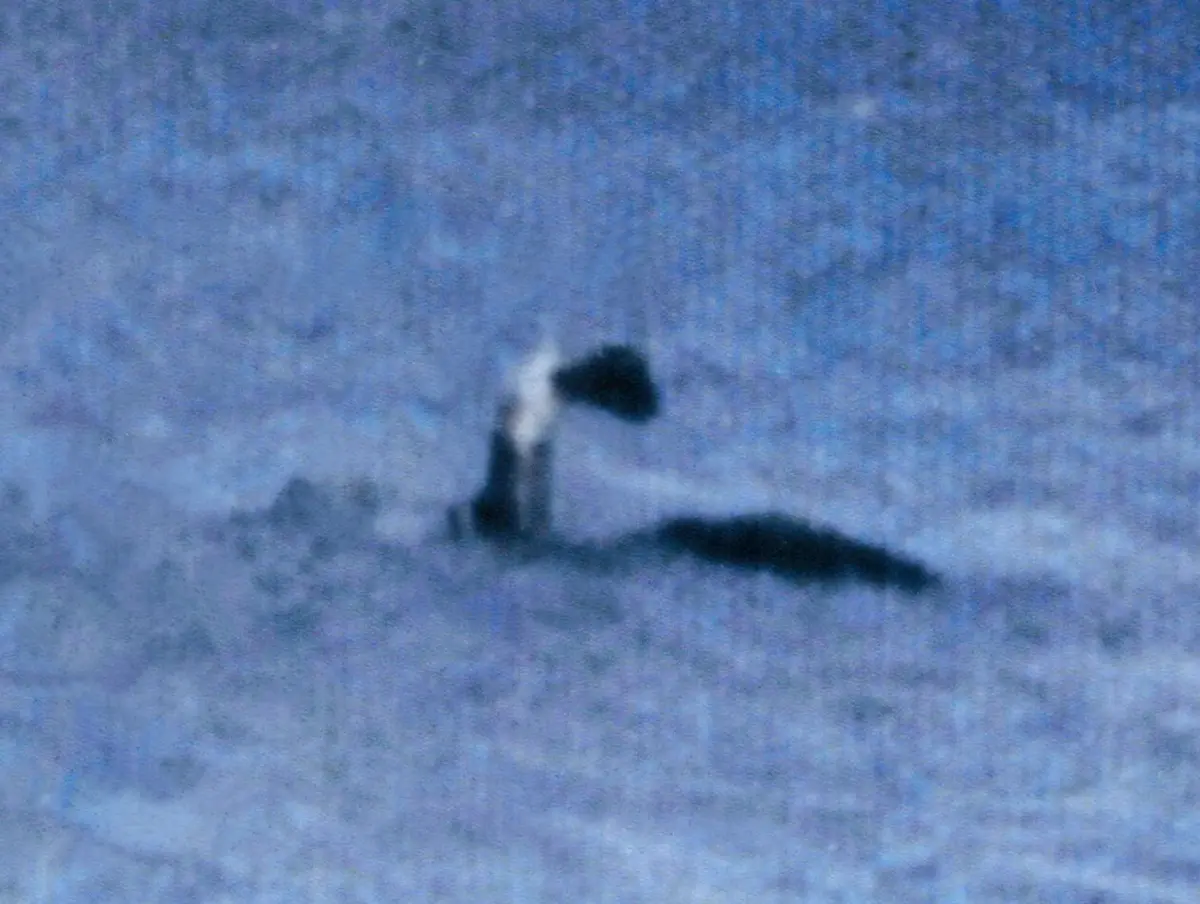
Local legends trace to accounts among the Abenaki and other Indigenous peoples of the region, who reportedly described a creature in the lake before European settlement, sometimes loosely linked to explorer Samuel de Champlain, though the tie to his own writings is disputed. The creature's modern fame rests on the 1977 photograph by Sandra Mansi, showing a dark, humped shape rising from the water, one of the most circulated lake-monster images of the century, which spurred further sightings, local festivals, and symbolic legal protections. Researchers generally attribute the photo and later sonar claims to floating logs, sturgeon, otter trails, or optical effects, with no biological evidence ever recovered. Champ endures mainly as a beloved regional legend.
What is the history of Champ (Lake Champlain Monster)?
Lake Champlain is an enormous body of water — more than 100 miles long — forming the boundary between Vermont and New York and reaching into Quebec. Its monster, Champ, has been appearing in the regional press since the nineteenth century: there are sighting clippings running from at least 1873 to 1929.
But the case rests, almost entirely, on a single photograph.
On 5 July 1977, Sandra Mansi of Bristol, Connecticut, was with her family on the lake shore when she photographed something rising from the water about 150 feet from where she was sitting. The image shows a dark, leathery-looking form with what appears to be a long neck and a small head lifting above the surface, with the far shore and sky behind.
The photograph was not made public immediately. When it was, years later, its effect was considerable: it has repeatedly been described as the best lake monster photograph ever taken, and it is certainly the sharpest and most compositionally convincing of the genre. It lacks the grainy ambiguity of most; it is a colour family snapshot from a summer afternoon with a perfectly visible object in the water.
That sharpness is precisely why it has lasted so long, and also why its chain of custody matters so much.
Timeline: the documented record of Champ (Lake Champlain Monster)
- 1870s–1880s In the reports catalogued by Joseph Zarzynski, recorded sightings rise in the 1870s and 1880s, to fifteen and twenty-three, after a single one before 1860, by Joe Nickell's count. In 1873 and 1887 the showman P. T. Barnum offers huge rewards for the monster, dead or alive.
- 5 July 1977 Sandra Mansi of Bristol, Connecticut photographs from the shore something rising from the water about 150 feet away. It is the image that will sustain the case for decades.
- 1980s The photograph is made public and is repeatedly described as the best lake monster image ever taken. It emerges that the negative was thrown away and that the shooting location cannot be located.
- 2013 Skeptical Inquirer publishes work bringing to light two previously undisclosed pieces of information about the photograph, casting further doubt on its authenticity.
Is there a rational explanation for Champ (Lake Champlain Monster)?
The Mansi photograph has a problem of method that does not depend on what it shows: the two things needed to test it are missing.
When the photograph surfaced in the autumn of 1979 it was sent to Philip Reines, a nautical expert at the State University of New York at Plattsburgh, who learned that Sandra Mansi had thrown away the negative and could not locate the spot where she took the picture. Robert E. Bartholomew, writing in Skeptical Inquirer in 2013, sets out what each would have allowed: the negative, magnifying the image "to see greater detail"; the location, establishing "the object's size and distance, and whether the photo was even taken on Lake Champlain". Without either, "it was impossible to determine with any degree of certainty what was in the photo". Yankee Magazine writes that the print was examined with technology that would detect doctoring and that it had not been doctored. An examination of the print can test for retouching, and it cannot give the distance to the object.
Bartholomew's article adds two pieces of information that, he writes, "had previously been withheld from the public". In August 1980 Vermont's official naturalist, Charles Johnson, recorded "a discrepancy over what happened to the negative": Sandra Mansi said they had thrown it away, as they did with all their negatives, while Anthony Mansi, talking to Johnson alone, said they had buried it, or burned it. And on 17 July 1980 the Champ researcher Joseph Zarzynski wrote to Reines that during a ten-day holiday in the area, planned partly so that they could find the site, "the Mansis did not look for the site". Bartholomew adds that the weather records for the last three days of that trip show fine conditions, and that Zarzynski knew both facts when he wrote Champ: Beyond the Legend (1984). The Mansis placed the sighting somewhere between St. Albans, Vermont, and the Canadian border, a stretch of about twenty miles.
Joe Nickell and Benjamin Radford of Skeptical Inquirer went to the lake in August 2002 and found a further difficulty in the depth charts. Along the eastern edge of Maquam Bay, north of St. Albans, the water at Mansi's estimated distance of 150 feet is "twelve feet or less", according to the hydrographic contour map they consulted, and the whole of Missisquoi Bay is no deeper than fourteen feet.
For the older sightings Nickell lists animals and objects that live in or cross the lake. Sturgeon there are generally five to six feet long and can grow to twice that; a local fisherman, Tom Forrest, saw a friend hook a longnose gar of about 6 feet 4 inches, and in 1998 Forrest's group took fright at a partly waterlogged tree trunk nearly forty feet long. A wildlife official, Jon Kopp, told Nickell that a "huge snakelike creature" he once watched turned out to be six or seven otters swimming in single file, and Nickell adds swimming deer, whose length is easy to overestimate when they leave a wake. A deckhand on the Valcour ferry told Nickell and Radford that Champ reports had declined with the end of large traffic on the lake, because a barge's wake often travelled across it and mystified anyone who did not see the barge. Nickell also points to the calendar: of the 224 reports catalogued by Zarzynski, only one, probably a spoof, comes from before 1860, and the count rises to fifteen in the 1870s and twenty-three in the 1880s.
Can you visit Champ (Lake Champlain Monster)?
Lake Champlain is one of the great natural destinations of the north-eastern United States, monsters aside. More than a hundred miles of water between Vermont's Green Mountains and New York's Adirondacks, with both ranges visible at once from the water on a clear day.
Burlington, Vermont is the natural base. Its waterfront and the ECHO Leahy Center for Lake Champlain, a science and nature centre devoted entirely to the lake, are the sensible starting point: they explain the valley's geology, the aquatic fauna — sturgeon included — and the lake's history far better than any cryptid trail.
On the New York side, Port Henry has for decades been Champ's unofficial capital, with a board of recorded sightings and an annual event devoted to the creature. It is modest, likeable roadside tourism.
The lake is crossed by ferry — there are several routes between Vermont and New York, and the crossing alone is worth the fare — and by cruise boats from Burlington. July and August are the season; the lake partly freezes in winter.
And there is something underwater that is documented and extraordinary: the Lake Champlain Underwater Historic Preserve, a group of protected wrecks — Revolutionary War gunboats, nineteenth-century schooners — accessible to certified divers. In a lake where people have spent a century and a half looking for a monster, what is actually on the bottom is a sunken fleet.
Sources consulted
- Joe Nickell, «Legend of the Lake Champlain Monster — los avistamientos del siglo XIX y sus explicaciones naturales» — Committee for Skeptical Inquiry, 2003 academic
- Yankee Magazine, «Champ sighting: Lake Champlain's mysterious photo» — New England / Yankee, 2021 newspaper archive
- Robert E. Bartholomew, «New information surfaces on 'world's best lake monster photo', raising questions» — Committee for Skeptical Inquiry, 2013 academic
- Linda Seccaspina, «Have you heard about Champ? Monster of Lake Champlain, con recortes 1873-1929» — Archivo hemerográfico, 2023 archive
Reviewed by V. Serrano on 2026-07-28 · How we verify our content
📎 Source: Folclore (curado)
💬 Field testimonies (0)
No testimonies yet. Add the first.
Add your testimony
🔒 Log in to add a testimony