🦶 CRYPTID SIGHTING · EXP. Nº9045
ACTIVE
Dover Demon
The Dover Demon is one of the shortest-lived but most vivid cryptid cases in American folklore, born from a single weekend in the quiet suburb of Dover, Massachusetts, in April 1977.
Where and when was Dover Demon sighted?
- Location
- Dover, Massachusetts, United States
- Date sighted
- 1977-04-21
- Coordinates
- 42.25, -71.28
- Last updated
LOCATION
What is Dover Demon?
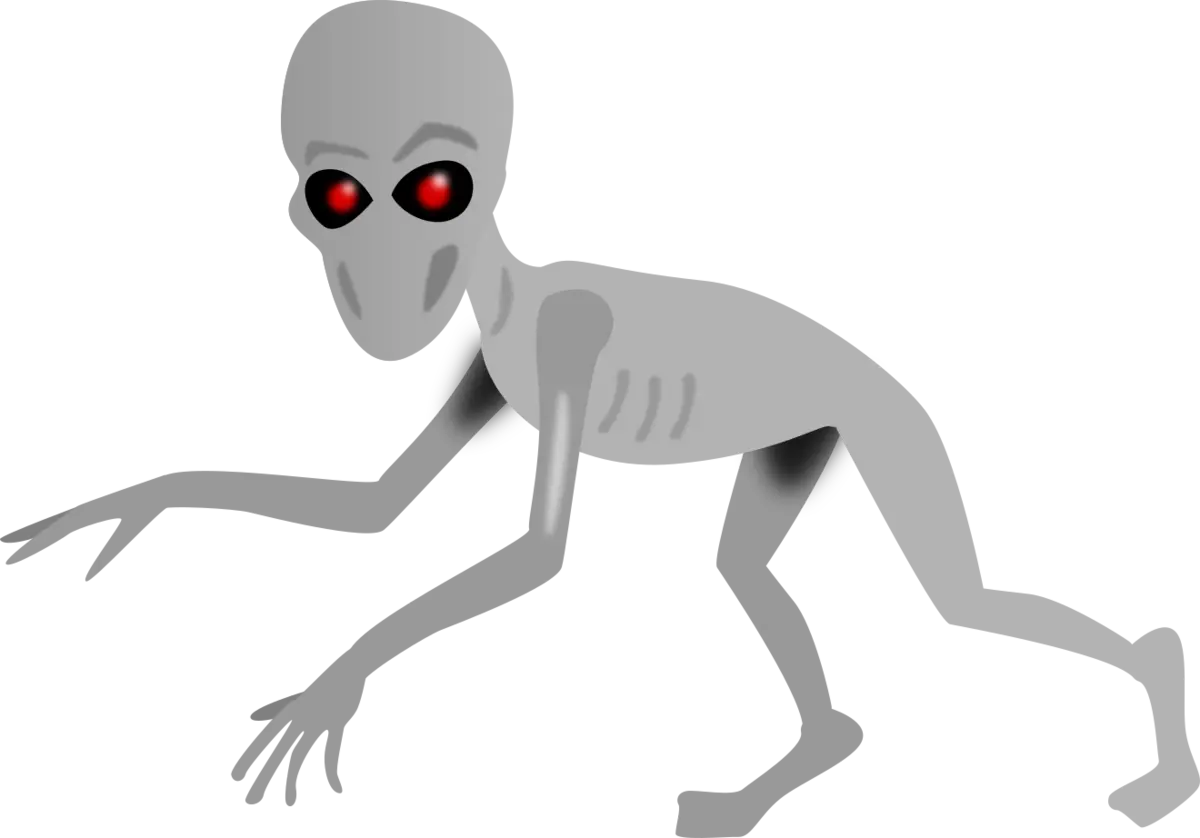
Over two consecutive nights, several teenagers independently described a small, hairless creature roughly three feet tall, with a large melon-shaped head, thin spindly limbs, and skin compared to wet sandpaper or peach fuzz; the first witness, Bill Bartlett, said its eyes shone like "two orange marbles" in his headlights. One witness even sketched it shortly after the sighting. No physical evidence or tracks ever surfaced, and the story might have vanished if not for local cryptozoologist Loren Coleman, who interviewed the teens and popularized the name. Skeptics point to a misidentified newborn moose calf, a foal, an owl seen at a bad angle, or simply an elaborate teenage prank, but the case endures as a textbook example of how a handful of consistent eyewitness accounts, however sincere, can calcify into enduring local legend.
What is the history of Dover Demon?
The Dover Demon is a short, tightly bounded case, and it has never been resolved.
Everything happened in the town of Dover, Massachusetts, outside Boston, which the Boston Globe described in 2006 as "a quiet community dotted with horse farms and one of the richest towns in the state", over about twenty-five hours on 21 and 22 April 1977. There were three sightings, and plotted on a map, the Globe noted, they lay in a straight line, all of them near water.
The first defines the case. At about 10:30 p.m. on 21 April, Bill Bartlett, seventeen, was driving his Volkswagen north along Farm Street with two friends, Mike Mazzocca and Andy Brodie, when the headlights lit something on a low stone wall. He described a creature three and a half to four feet tall, with an enormous watermelon-shaped head, two large round eyes that shone like "two orange marbles", a thin neck, an oblong torso, long, spindly limbs and skin "like wet sandpaper". He drew it, and wrote on the sketch: "I, Bill Bartlett, swear on a stack of Bible's that I saw this creature."
About two hours later John Baxter, fifteen, walking home from his girlfriend's house along Miller Hill Road, came within fifteen feet of a figure that scurried off the road and stood against a tree, its long fingers around the trunk; he drew it too. The next night Abby Brabham, fifteen, being driven home by Will Taintor, eighteen, saw a creature with a large head and long, spindly limbs on Springdale Avenue.
The case was investigated by the cryptozoologist Loren Coleman, who gave it the name "Dover Demon", interviewed the three witnesses within a week and assembled a team with Joseph Nyman, Ed Fogg and Walter N. Webb, whom Ronald Story's UFOs and the Limits of Science (1981) lists as assistant director of the Charles Hayden Planetarium in Boston.
In 2006 the Globe reported that no further sightings had been made.
Timeline: the documented record of Dover Demon
- 10:30 p.m., 21 April 1977 Bill Bartlett, 17, sees from his car on Farm Street a creature just over three and a half feet tall with an enormous watermelon-shaped head and eyes like two orange marbles. He draws it that same night.
- 21–22 April 1977 Two further independent sightings occur at different points in the town, by other teenagers, with descriptions agreeing in essentials. It all happens within about twenty-five and a half hours.
- Days later The cryptozoologist Loren Coleman investigates, gives the case the name Dover Demon and brings in Joseph Nyman, Ed Fogg and Walter Webb, assistant director of Boston's Hayden Planetarium.
- After April 1977 No further sighting is reported. Against the proposed natural explanation — a foal or a moose calf — Loren Coleman later said that no horse owner had reported a missing animal, that it was not foaling season and that only two moose were reported in Massachusetts in 1977 and 1978, both in the centre of the state.
Is there a rational explanation for Dover Demon?
The mundane explanations offered for the Dover Demon have not held up well, and the most detailed objections to them come from its chief investigator.
The explanation proposed from the start was a young animal seen in the dark: a foal or a moose calf. A young animal with long legs, a large head on a thin neck and eyes that throw back the glare of headlights would match parts of Bartlett's description, and the moose reading has a named advocate, Martin S. Kottmeyer, whose essay "The 'Dover Demon' Likely Was a Moose" is included in the Greenhaven Press anthology Mysterious Monsters (2004).
Loren Coleman answered both in the Boston Globe in 2006. He said that he had canvassed local horse owners after the sightings and that none had reported a missing horse, and that it was not foaling season. Only two moose were reported in Massachusetts in 1977 and 1978, he said, both in the centre of the state, and a yearling by late April would weigh more than 600 pounds and be "bigger than the Volkswagen Bartlett was in". On WBSM's Spooky Southcoast programme in 2007 he added that at the time Dover had more horses than people, and that no animal tracks were found. Bartlett has dismissed a mangy fox or dog in the same terms: "I know everything that could be mangy. This thing was larger."
The case's strength is that three teenagers seem to have seen the same thing independently, and that claim also rests on Coleman. He said the sightings fell in school vacation week, that the three did not know each other well and that "they had not contaminated each other by talking about it"; by his own account, it was "only the next week, a couple of days before I interviewed them, that they really each started to figure out that more than one of them had seen the thing". The interviews therefore came after the witnesses knew of one another. The two drawings, by Bartlett and by John Baxter, were made earlier: each boy drew what he had seen on his own.
The accounts also differ in detail. Bartlett saw eyes like "two orange marbles", Baxter eyes "glowing faintly but not with any color", and Abby Brabham green ones, a colour she insisted on to investigators. Brabham saw the creature on all fours, crossing the road; her driver, Will Taintor, glimpsed only something with a large head and a tan body crouched in the road; and neither of the two friends in Bartlett's car saw anything. Bartlett's own sighting lasted, by his estimate, seven or eight seconds, from a car doing 35 to 40 miles an hour.
No physical trace was ever found. The Boston Globe reported in 2006 that no sightings had been reported since, and recorded two loose ends: a year later Bartlett heard a thump on a parked car and made out a small figure leaving, which he allowed could have been a youngster playing a prank, and Mark Sennott of Sherborn said that he and his friends might have seen something at Channing Pond on Springdale Avenue in 1972, five years before. Coleman's own summary to the Globe was "It's OK to say we don't know."
Can you visit Dover Demon?
The pin of this file, 42.25° N 71.28° W, is a general point for the town of Dover, Massachusetts, about 21.5 km (13.3 miles) south-west of the State House in Boston in a straight line; GBH described the town in 2024 as "about 15 miles south of Boston".
Each of the three sightings is tied to a road. The Boston Globe of 29 October 2006, in a report by Mark Sullivan, places Bill Bartlett's on Farm Street near Bridge Street, on the way to Sherborn, with the creature "atop a broken stone wall". John Baxter's came two hours later beside a creek in a heavily wooded stretch of Miller Hill Road, and Abby Brabham's the next night at midnight on Springdale Avenue. The Globe adds that "all the sightings were made in the vicinity of water"; Bartlett told Jeff Belanger, in a clip broadcast by WBSM, that the three points "lined up almost in a direct line" on a map.
The same report describes Farm Street after dark "with woods lining the fieldstone walls", and calls it the second-oldest road in Dover. It quotes Frank Smith's town history Dover Farms (1914) on the "Polka rock" beside the road, where a man "thought he saw his Satanic Majesty" while riding past, and where there had been "considerable digging" by treasure hunters. In 2006 the town clerk, Barrie Clough, kept a file on the case at Town Hall beside the municipal reports.
The Dover Historical Society runs the Sawin Museum at 80 Dedham Street and the Caryl Farm at 107 Dedham Street. Its visit page, consulted on 24 September 2026, says both open in spring and autumn on the second Saturday of the month, from 1:00 to 4:00 pm. CBS Boston reported on 30 October 2025 that an exhibit on the Dover Demon, with memorabilia and activities for children, had opened at the Sawin Museum, visitable on the second Saturday of November and December or by appointment; the society's site does not say whether it remains on show. On GBH in 2024, Belanger recalled owning a society T-shirt with a cartoon of Bartlett's drawing and the words "Dover Demon, do you believe?".
Noanet Woodlands, a 607-acre reservation of the Trustees of Reservations whose listed coordinate is about 1 km east-south-east of the pin, has its car park on Powissett Street. Its page, consulted the same day, gives more than 16 miles of trails, a view of Boston from Noanet Peak and the preserved 24-foot dam of the Dover Union Iron Company mill. It is open daily from sunrise to sunset, with an $8 parking fee for non-members, and the car park holds 30 cars.
Sources consulted
- Mark Sullivan, «Decades later, the Dover Demon still haunts — retrospectiva con los tres avistamientos y sus testigos» — The Boston Globe, 2006 newspaper archive
- Tobias Wayland, «The Dover Demon — reconstrucción de la investigación de Loren Coleman» — The Singular Fortean Society, 2017 report
- Arun Rath (interview with Jeff Belanger), «Nearly half a century later, 'Dover Demon' mystery still puzzles enthusiasts» — GBH News, Boston, 2024 newspaper archive
- Tim Weisberg, «'Dover Demon' still mystifies Massachusetts 45 years later» — WBSM, Massachusetts, 2022 newspaper archive
- Jordyn Jagolinzer, «What is the Dover demon? Massachusetts exhibit takes deeper look at mystery — Dover Historical Society exhibit at the Sawin Museum» — CBS Boston (WBZ), 30 October 2025, 2025 newspaper archive
- Dover Historical Society, «Visit — Sawin Museum (80 Dedham Street) and Caryl Farm (107 Dedham Street), opening days» — Official site (consulted 24 September 2026), 2026 web
- The Trustees of Reservations, «Noanet Woodlands — acreage, trails, mill site, hours, parking fee and capacity» — thetrustees.org (consulted 24 September 2026), 2026 web
- Story, Ronald, with J. Richard Greenwell, «UFOs and the Limits of Science — lists Walter N. Webb as assistant director, Charles Hayden Planetarium» — New York: William Morrow, 1981 book
- Greenhaven Press (anthology), «Mysterious Monsters — includes Martin S. Kottmeyer, 'The "Dover Demon" Likely Was a Moose', and Jerome Clark, 'The Dover Demon Is an Unsolved Mystery'» — San Diego: Greenhaven Press / Thomson Gale, 2004 book
Reviewed by V. Serrano on 2026-07-28 · How we verify our content
📎 Source: Folclore (curado)
💬 Field testimonies (0)
No testimonies yet. Add the first.
Add your testimony
🔒 Log in to add a testimony