👻 HAUNTED PLACE · EXP. Nº9046
ACTIVE
Waverly Hills Sanatorium
Waverly Hills opened in 1910 as a small wooden hospital to treat Jefferson County's tuberculosis patients during an epidemic locals called the "White Plague," and demand grew so fast that a much larger five-story facility replaced it by 1926, eventually treating hundreds of patients at a time in the era before antibiotics.
Where is Waverly Hills Sanatorium?
- Location
- Louisville, Kentucky, United States
- Type
- Hospital / asylum
- Coordinates
- 38.13, -85.842
- Last updated
LOCATION
Why is Waverly Hills Sanatorium said to be haunted?
Death rates were high enough that the hospital built an underground tunnel — later nicknamed the "body chute" — reportedly to move deceased patients out of sight of the living without disturbing morale on the wards. Streptomycin's success against tuberculosis let the hospital close by 1961, and after a brief second life as a geriatric center that closed in 1982 amid allegations of neglect, the building sat abandoned for years. Ghost hunters now cite room 502, tied to a nurse's reported death by suicide, and the body chute itself as the site's most consistently reported hotspots.
What is the history of Waverly Hills Sanatorium?
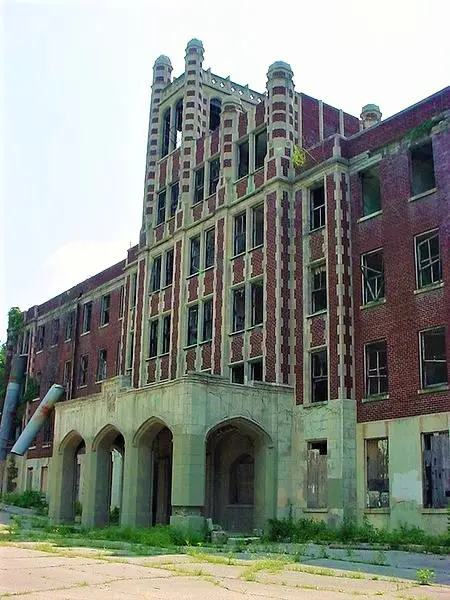
Waverly Hills was built to isolate and treat tuberculosis patients from Louisville and Jefferson County. A Board of Tuberculosis Hospital was set up in 1906, and the first sanatorium, a two-story wooden administration building with two open-air pavilions of 20 patients each, opened on 26 July 1910 on land that had belonged to Major Thomas H. Hays. The Kentucky historic resources inventory filed for the National Register records that bids for the first buildings were advertised in 1909 by the architect J. J. Gaffney, and that the main building, designed by Arthur Loomis with D. X. Murphy and Brother, was dedicated in October 1926.
Treatment before antibiotics relied on rest, fresh air and food. American Hauntings describes patients placed in front of huge windows or on open porches whatever the season, and old photographs of patients in chairs "literally covered with snow"; the surgery included the removal of muscles and ribs from the chest, a last resort that many did not survive. After the Second World War a small rise in new cases brought soldiers to Waverly Hills, and Dr. J. Frank Stewart, a former assistant medical director, wrote in his autobiography that many of them arrived too ill to live more than a week. The worst year was 1945, with 152 deaths.
Streptomycin was introduced in 1943 but reached Waverly patients only in 1949, after which new cases could be treated as outpatients. The inventory records that control of the sanatorium passed to Louisville and Jefferson County in 1942, and that in 1960 the Commonwealth of Kentucky assumed the care of tuberculosis patients and those at Waverly Hills were transferred to state institutions. The current owners' history and Kentucky Historic Institutions both date the closure to June 1961, and the owners add that the last patients were sent to Hazelwood Sanatorium in Louisville. The building reopened in 1962 as Woodhaven Geriatric Center, which the state closed in 1982 after a grand jury found patient abuse.
The tunnel that gave the place its modern reputation ran from the hospital to the railroad tracks at the bottom of the hill. According to American Hauntings, bodies were lowered through it so that patients would not see how many were leaving as corpses, because the doctors believed that their mental health was as important as their physical health.
Timeline: the documented record of Waverly Hills Sanatorium
- 1926 The main Waverly Hills building opens, designed entirely around the only available treatment for tuberculosis: fresh air, sunlight and rest. Hence the open solariums and wards exposed to the outside.
- 1945 The peak year of the epidemic, with 152 recorded deaths.
- 1949 Streptomycin, introduced in 1943, becomes available to Waverly Hills patients, and new cases can now be treated as outpatients in a regular hospital.
- 1961 It closes as a tuberculosis hospital: the number of patients had been falling since streptomycin reached Waverly in 1949.
- 2000s onward The private owners begin funding restoration through historical and night tours. The figure of 63,000 deaths circulates.
Is there a rational explanation for Waverly Hills Sanatorium?
The figure most often attached to Waverly Hills is 63,000 deaths, which the When It Was site gives as the "estimated total number of patients who died during the sanatorium's 51 years of operation". LiveScience, citing the hospital's surviving records and historians, calls claims of more than 60,000 deaths exaggerated and puts the real number closer to 8,000, with 152 deaths in 1945, the worst year of the epidemic. The American Hauntings account cites Dr. J. Frank Stewart, a former assistant medical director, for a highest single-year total of 152 deaths, records that the yearly toll had fallen to 42 by 1955, and gives an estimate of about 6,000 deaths based on the death certificates filed since 1911.
The arithmetic follows from those numbers. At the record rate of 152 deaths a year, 63,000 deaths would take about 414 years, and Waverly Hills treated tuberculosis from its opening on 26 July 1910 until it closed in June 1961. The legend's figure is about eight times the estimate cited by LiveScience and about ten times the one in American Hauntings.
The Room 502 stories have been checked against the building. American Hauntings states that the fifth floor never housed mentally ill patients, who were free to move about like patients on every other floor, and that no records exist of the 1928 hanging or the 1932 fall attributed to two nurses from that room. It adds that the room has no rafters, that the pipe over its door belonged to a sprinkler system installed in 1972, and that the light fixture hangs on a light decorative chain that would not hold a person's weight. Grunge reports that the only source ever cited for those stories is a former staff member, now dead, who would have been of elementary school age at the time of the alleged deaths.
The "body chute" has a plainer description in the same sources. American Hauntings describes an enclosed tunnel from the hospital to the railroad tracks at the bottom of the hill, with a motorized rail and cable system, used so that patients would not see how many were leaving as corpses. When It Was gives the tunnel a length of 500 feet.
Can you visit Waverly Hills Sanatorium?
Waverly Hills stands on a hill in south-west Louisville, Kentucky. Its postal address is 4400 Paralee Drive, but the operator's FAQ sends arrivals somewhere else: "Use the GPS address 4301 E. Pages Lane Louisville KY 40272 and drive past the golf course to Gate A", under the instruction "Only use apple maps or the waze app! DO NOT USE GOOGLE MAPS!"
The season is short and fixed. The FAQ, consulted on 9 September 2026, gives it as "Our regular season is March 1 – End of August", says tickets for the 2026 season went on sale on 1 January at midnight, and answers the question about refunds with a single word: "No."
Four ways in were listed that day. The Historical Tour is "Approximately 2 Hours – Guided, daytime Historical tour of the building". The Paranormal Tour is also about two hours and runs in the dark. The Public Investigation runs about six hours and is described as "semi-guided and geared towards the novice investigator". A private booking for a group of ten runs about eight hours, with the minimum charge for exclusive use of the building set at $1,000 and each extra person at $110 on arrival. The Pump House can be added as an overnight for $500 for ten guests or $250 for five or fewer, with check-out by 2 p.m. and no bedding provided.
The FAQ recommends a minimum age of 13 for tours and sets 18 as the minimum for the public investigations; ages 13 to 17 are admitted to the Junior Investigations with a parent or legal guardian. The building is not wheelchair accessible: "Due to the age of the building there are no working elevators." It can be "extremely warm in the summer months", and water is sold inside at a dollar a bottle. Pets are refused inside the building and in vehicles left on the property during tours. Ghost-hunting equipment is barred from the two-hour tours and allowed on the investigations. Flash photography of the exterior is prohibited on arrival after dark.
Two events fall outside the season and were on sale on 9 September 2026: a Ghost Town Gathering car show on Saturday 19 September with gates at 9 a.m., and the Waverly Hills Haunted House on Fridays and Saturdays from 25 September to 31 October, gates 7.30 p.m. to midnight. The building was bought in 2001 by Charles and Tina Mattingly, who set up the Waverly Hills Historical Society to fund the restoration; the society's copyright line closes the tour site.
The listing is on the National Register under reference 83002746, made in 1983 as "Waverly Hills Tuberculosis Sanatarium Historic Buildings". The Kentucky Historic Resources Inventory form behind it, prepared by Mary Jean Kinsman for the Jefferson County Office of Historic Preservation, gives the address of record as 8101 Dixie Highway and describes "a large four story brick and stone building with a curved plan and a square tower above the entrance" fronted by "a three-bay Gothic-arched entrance porch". The main building was "dedicated in October, 1926", to designs by Arthur Loomis with the firm of D.X. Murphy and Bro., chosen in 1924 to assist in the design and construction. The nominated site is "approximately 16 acres and includes three buildings", and its UTM midpoint on the form is 16/601580/4220780.
Sources consulted
- Grunge, «The disturbing true story of the Waverly Hills Sanatorium — cifras reales frente al mito» — Grunge, 2022 web
- When It Was, «Waverly Hills Sanatorium: the death tunnel and 63,000 ghosts — repite la cifra de 63.000 muertos sin dar su origen» — When It Was, 2024 web
- Waverly Seance, «History — página de Waverly Seance, un espectáculo de sesiones sobre el sanatorio; da unos 6.000 muertos frente a los 8.500 «rumoreados»» — waverlyseance.com, 2025 web
- National Register of Historic Places, «Waverly Hills Tuberculosis Sanitarium Historic Buildings — expediente de inscripción en el Registro Nacional (ref. 83002746)» — National Park Service, 1983 archive
- Tom Metcalfe, «Waverly Hills Sanatorium — claims of more than 60,000 deaths exaggerated; historians put the total closer to 8,000, with 152 deaths in 1945» — LiveScience, 'The most haunted places in the United States' (last updated 21 October 2022), 2022 newspaper archive
- American Hauntings, «Waverly Hills Sanatorium — Dr. J. Frank Stewart's figures (152 deaths in the worst year, 42 by 1955, about 6,000 from death certificates), the tunnel, and the Room 502 legends checked against the building» — American Hauntings Ink (web), 2026 web
- Kentucky Historic Institutions, «Waverly Hills Sanatorium — institutional history: opened 26 July 1910, streptomycin available from 1949, closed June 1961, Woodhaven Geriatric Center 1962-1982» — kyhi.org, 2026 web
- Waverly Hills Sanatorium, «About Us — Waverly Hills Sanatorium: history published by the current owners (closed June 1961, last patients sent to Hazelwood Sanatorium)» — thewaverlyhillssanatorium.com, 2026 web
Reviewed by V. Serrano on 2026-07-28 · How we verify our content
💬 Field testimonies (0)
No testimonies yet. Add the first.
Add your testimony
🔒 Log in to add a testimony