👻 HAUNTED PLACE · EXP. Nº9046
ACTIVE
Myrtles Plantation
Built in 1796 by planter David Bradford on land near St. Francisville, Louisiana, the Myrtles Plantation was worked by enslaved laborers before passing through several owners tied to a string of documented and rumored deaths, including at least one killing on the property's front gallery.
Where is Myrtles Plantation?
- Location
- Louisiana, United States
- Type
- House / mansion
- Coordinates
- 30.803, -91.388
- Last updated
LOCATION
Why is Myrtles Plantation said to be haunted?
Its most famous ghost story, that of an enslaved woman named "Chloe" who allegedly poisoned a birthday cake and killed members of the family, has never been substantiated in any historical record and is now widely regarded by researchers as a later embellishment layered onto the home's genuinely tangled and often violent past, added to draw tourists during 20th-century "haunted house" tours. Visitors nonetheless report a repeating handprint that reappears on a mirror no matter how often it is cleaned, and the sound of a phantom piano playing in empty rooms. Listed on the National Register of Historic Places since 1978, the plantation now operates as a bed-and-breakfast.
What is the history of Myrtles Plantation?
The Myrtles is a plantation house in St Francisville, Louisiana. David Bradford, who had fled Pennsylvania after the Whiskey Rebellion, acquired the land in 1796 and built a house he called Laurel Grove; the West Feliciana tourist commission gives 1796 as the building date, while Troy Taylor puts the house a year after the purchase. It is routinely billed as one of the most haunted houses in America, and most of that reputation rests on a single story that the records do not bear out.
In the legend, an enslaved woman named Chloe, a household servant, was caught eavesdropping on her owner Clark Woodruff, who had one of her ears cut off as punishment. Seeking revenge — or, in the softer version, seeking to make the family ill so she could nurse them and regain favour — she put oleander into a birthday cake. Woodruff's wife Sarah and two of the children ate it and died. The other enslaved people, fearing collective punishment, hanged Chloe and threw her body in the river. She is said to walk the house still, in a green turban covering the missing ear.
Taylor, who built his account on the archival work of David Wiseheart, traces the story to the 1950s. The house had been bought by Marjorie Munson, an Oklahoma widow. Lucile Lawrason, a granddaughter of the Williams family who owned the place before her, said her aunts used to laugh about the ghost of an old woman in a green bonnet who had no name; that family tale reached Munson, who wrote a song about it. According to Taylor, the poisoned cake and the severed ear were added in the 1970s, while the house belonged to Arlin Dease and Mr and Mrs Robert F. Ward.
The documented history is grimmer than the legend: Sarah Mathilda Woodruff died of yellow fever on 21 July 1823. Her son James died of the same disease on 15 July 1824, and her daughter Cornelia Gale that September. Jennifer Mack, citing the federal census, gives Clark Woodruff five enslaved people in 1820 and thirty-three in 1830, and his mother-in-law Elizabeth Bradford twenty-four and ten. Taylor reports that the Woodruff property records, on file in St Francisville, list the enslaved people the family owned, and that no Chloe and no Cleo appears among them.
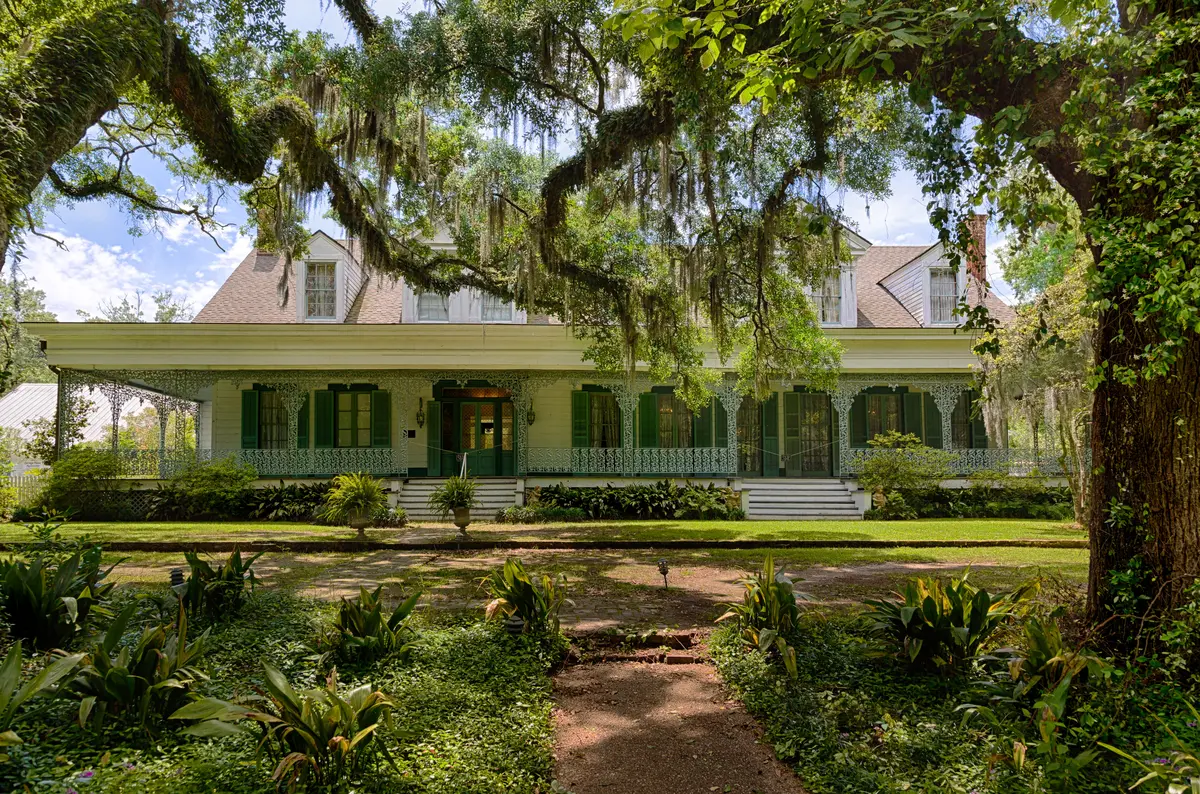
Ruffin Grey Stirling, who took the plantation over on 1 January 1834, roughly doubled Bradford's house: a central hall and a new southern section, a front gallery 107 feet long on cast-iron posts, and plaster cornices made from clay, Spanish moss and cattle hair, and the name changed to the Myrtles. The parish tourist commission lists it today as a bed and breakfast with a restaurant and tours.
Timeline: the documented record of Myrtles Plantation
- c. 1796 David Bradford's house, originally called Laurel Grove, is built in what later becomes St Francisville, Louisiana.
- 1820 According to the census figures cited by Jennifer Mack, Clark Woodruff holds five enslaved people and his mother-in-law Elizabeth Bradford twenty-four.
- 1824 James Woodruff dies of yellow fever on 15 July and his sister Cornelia Gale in September, a year after their mother, Sarah Mathilda, died of the same disease on 21 July 1823. Mary Octavia, the third child, survives into adulthood.
- 1830 The census now records thirty-three enslaved people held by Clark Woodruff and ten by Elizabeth Bradford. Like every federal census before 1850, it counts them without recording their names.
- 1950s Marjorie Munson buys the house. Jennifer Mack credits her with creating the Chloe legend out of a story about a "green turban woman" told to her by people in the town.
Is there a rational explanation for Myrtles Plantation?
The case against the Chloe story rests on two kinds of evidence: dates that nobody disputes, and a records search reported by Troy Taylor from the work of the researcher David Wiseheart.
Sarah Mathilda Woodruff died of yellow fever on 21 July 1823; James died of it on 15 July 1824 and Cornelia Gale in September 1824. The three deaths the legend places at a single birthday party were spread over fourteen months, and the dead were a woman and two children, a boy and a girl, where the legend has a wife and two daughters. The legend also has the wife pregnant when she died. Mary Octavia, the third child, had already been born; she married Lorenzo Augustus Besancon in 1838, and Clark Woodruff spent his last years on their plantation, dying there in 1851.
Taylor writes that the Woodruff property records, still on file as public record in St Francisville, list the enslaved people the family owned, and that neither a Chloe nor a Cleo is among them. The federal census cannot add to that: for 1790 to 1840 the National Archives notes that enslaved people were counted "statistically under the owner's name", with no names recorded, so the five people the 1820 return attributes to Clark Woodruff and the thirty-three of 1830 are tallies.
Taylor also dates the story itself, placing its start in the 1950s, when the family ghost of the previous owners — an old woman in a green bonnet, never named — reached the new owner, Marjorie Munson, and its poisoning and severed ear in the 1970s. Stephanie Summar, whose podcast episode draws on the historian Tiya Alicia Miles's Tales from the Haunted South, sets out what the finished story does: it gives a crime that never happened to an invented enslaved woman, in a house where the people actually enslaved are on record, and it is sold through the house's own merchandise.
The one killing documented at the Myrtles is that of William Winter, shot on the side gallery on 26 January 1871 by a rider who called him out of the house; a newspaper reported that a man named E. S. Webber was to stand trial, and Taylor found no record of an outcome.
Can you visit Myrtles Plantation?
The Myrtles is at 7747 US Highway 61, St Francisville, Louisiana 70775, in West Feliciana Parish. The operator answers on (225) 635-6277 and takes post at P.O. Box 1100. The house was listed on the National Register of Historic Places on 6 September 1978 under reference 78001439, as "Myrtles Plantation". The nomination gives 1797 as the specific date and General David Bradford as the builder. It measures the front elevation: "The main (east) frontal gallery is 107 feet long and the main facade is composed of ten irregular bays."
The property trades as a hotel as well as a tour house. Its own site describes "six historical rooms and suites inside the main home, modern and traditional hotel-like garden rooms, cozy cabins along our walking path". Restaurant 1796 operates on the grounds and takes its bookings through a separate system. Room rates are quoted only inside the reservation system, so none is given here.
Bookings run through FareHarbor, and on 9 September 2026 that system listed five tours. The Daily History Tour lasts 45 minutes and departed hourly from 9.30 a.m. to 4.30 p.m. on the date sampled. The Evening Mystery Tour lasts an hour and ran at 7 p.m. on the dates sampled; the site says it runs seven nights a week, with more times at weekends. The Private Mystery Tour is booked after normal hours for up to thirty people at "$99 flat fee and additional $20 per person". A self-guided tour of the house and an hour-long Garden and Grounds Tour complete the list. Per-person prices for the other four are published only inside the booking calendar.
The 1830 federal census records thirty-three enslaved people on this property. On 9 September 2026 none of the six descriptions in the operator's booking system mentioned them, and none mentioned Chloe either.
Sources consulted
- Visit St. Francisville, «Myrtles Plantation — información oficial de visita y alojamiento» — Oficina de turismo de St. Francisville, 2026 archive
- Jennifer Mack, «The Myrtles Plantation: Ghosts, Trauma and Truth — contraste entre la leyenda de Chloe y el registro censal» — Southern Strange, 2024 web
- Troy Taylor, «Myrtles Plantation: legends, lore and lies — investigación de archivo» — American Hauntings, 2019 web
- Stephanie Summar, «Historical horror and plantation tourism: Chloe, Cleo and the Myrtles Plantation» — Paranormal Pajama Party (pódcast), episodio 28; se apoya en Tales from the Haunted South de Tiya Alicia Miles, 2024 web
- National Archives and Records Administration, «African Americans and the Federal Census, 1790-1930 — los censos de 1790 a 1840 cuentan a las personas esclavizadas sin nombre, bajo el del propietario» — Reference Information Paper / research guide, archives.gov, 2026 web
Reviewed by V. Serrano on 2026-07-28 · How we verify our content
💬 Field testimonies (0)
No testimonies yet. Add the first.
Add your testimony
🔒 Log in to add a testimony